April 2026



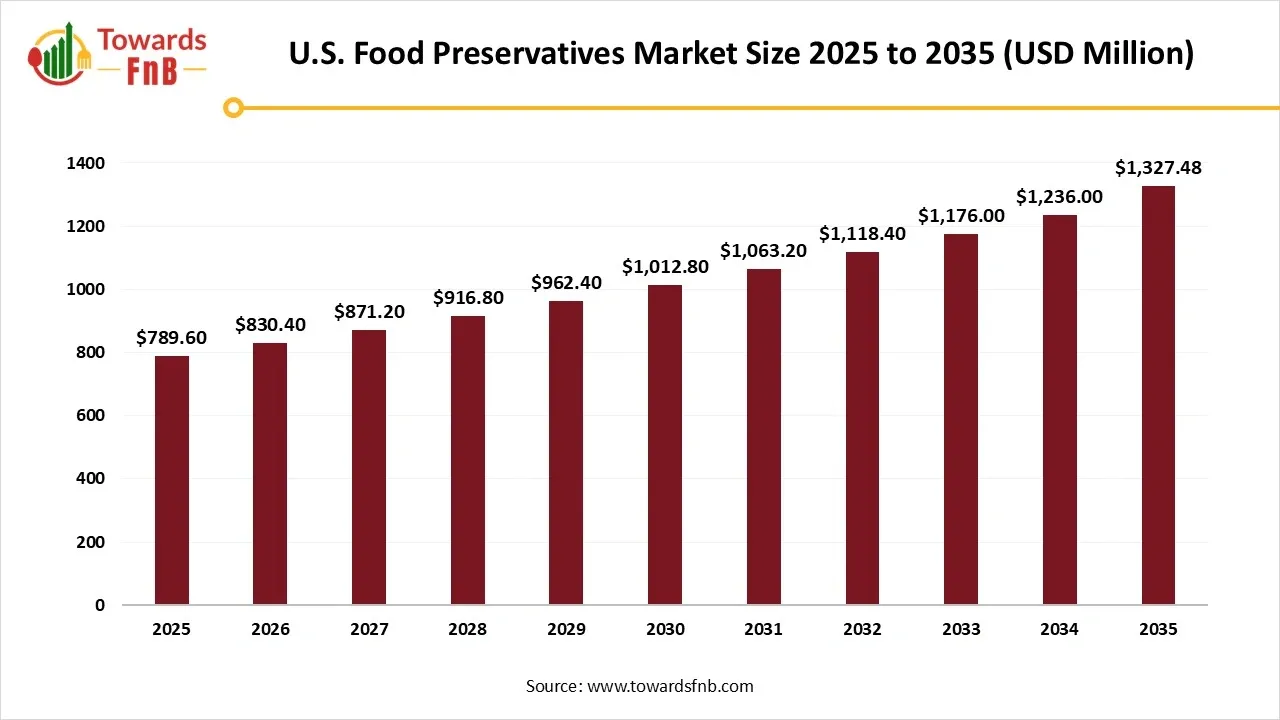
The U.S. food preservatives market size reached at USD 789.60 million in 2025 and is predicted to increase from USD 830.40 million in 2026 to nearly reaching USD 1,327.48 million by 2035, growing at a CAGR of 5.35% during the forecast period from 2026 to 2035. The market is driven by the increasing demand for convenient and processed foods to enhance consumer experience and satisfaction.
| Study Coverage | Details |
| Growth Rate from 2026 to 2035 | CAGR of 5.35% |
| Market Size in 2026 | USD 830.40 Million |
| Market Size in 2027 | USD 871.20 Million |
| Market Size by 2035 | USD 1,327.48 Million |
| Base Year | 2025 |
| Forecast Period | 2026 to 2035 |
The U.S. food preservatives market encompasses natural and synthetic chemical substances added to food and beverages products to prevent spoilage, extend shelf life, and maintain safety and freshness. These preservatives inhibit microbial growth, oxidation, enzymatic degradation, and rancidity in products such as bakery goods, meat, poultry, snacks, dairy, and beverages. The market growth is driven by the consumer demand for clean-label, natural preservatives, regulatory emphasis on food safety, expansion of the processed and packaged food industry, and continuous innovation in plant-based antimicrobial and antioxidant solutions.
The market is also attributed to the factors such as the increasing demand for convenience and processed food, increasing consumer focus on reducing food waste, increasing need for preservatives to comply with export standards and food safety regulations, increasing concerns about food waste, increasing consumer focus on clean-label and natural preservatives and increasing rapid consumption of frozen food, packaged snacks and ready-to-eat meals.
Development of Natural Preservatives: Growing preference for organic and plant-based solutions creates new business potential.
Expansion of Frozen Food Products: Increasing frozen food sales boosts preservative demand.
Growth of Online Grocery Channels: E-commerce expansion supports packaged food consumption.
Rising Demand for Non-GMO Products: Clean-label trends open opportunities for reformulated preservative products.
Innovation in Antimicrobial Solutions: Advanced preservation technologies offer strong investment potential.
Private Label Brand Expansion: Retail brands are creating new supply opportunities.
Export Growth of Processed Foods: International demand increases preservative usage in food production.
Sustainable and Eco-Friendly Solutions: Environmental focus encourages the development of green preservation methods.
The rising technological advancements is the major factor in the U.S. food preservatives industry include the rise of clean-label, advanced packaging and non-thermal and nanotechnology procedures to create allergen-free, non-GMO and organic food products. Advanced processing technologies such as physical treatments, improved extraction and AI-powered improvemization enhance product properties and procedures. These advancements improve the advanced pharmaceuticals, specialized food ingredients and versatile food preservatives for applications in bioplastics. Advanced packaging such as nanotechnology-enhanced barriers and modified atmosphere packaging (MAP) are further expected to revolutionize the growth of the U.S. food preservatives market.
Various major market players are concentrating on clean-label and organic food products, sustainability and new high-value applications such as pharmaceuticals and bioplastics via several strategies such as advanced integration, strategic collaborations, partnerships and new product launches. Technological advancements such as AI-generated systems, nanotechnology and enzymatic processing are further creating new functionality for food preservatives in the U.S. and enhancing product and product quality, which further increase the demand for food preservatives in the U.S.
The growing focus on environmental responsibility is influencing the development of sustainable preservative solutions in the U.S. to lessen their dependency on artificial chemicals. Food manufacturers are increasingly using natural and plant-based preservatives by employing eco-friendly production techniques and better sourcing practices. Businesses are also attempting to reduce their carbon footprint. Long-term market expansion is also supported by waste reduction and sustainable packaging techniques. Sustainability is increasingly important in product development and brand positioning in the food preservatives market as consumers grow more environmentally conscious.
Raw Material Procurement
Packaging and Branding
Waste Management and Recycling
| Country | Regulatory Body | Key Regulations | Focus Areas | Notable Notes |
| U.S. | Food and Drug Administration (FDA): Regulates various food products and food in interstate commerce, such as imports. | Food Safety and Standards (Packaging and Safety Regulations) and Licensing and Registration of Food Businesses) | Prevention control, traceability, modernization, chemical safety, and allergen management. Improving labelling for major allergens and preventing cross-contamination. | Emphasis on prevention: FSMA shifted the focus to a more risk-based and proactive approach to safety and regulations. |
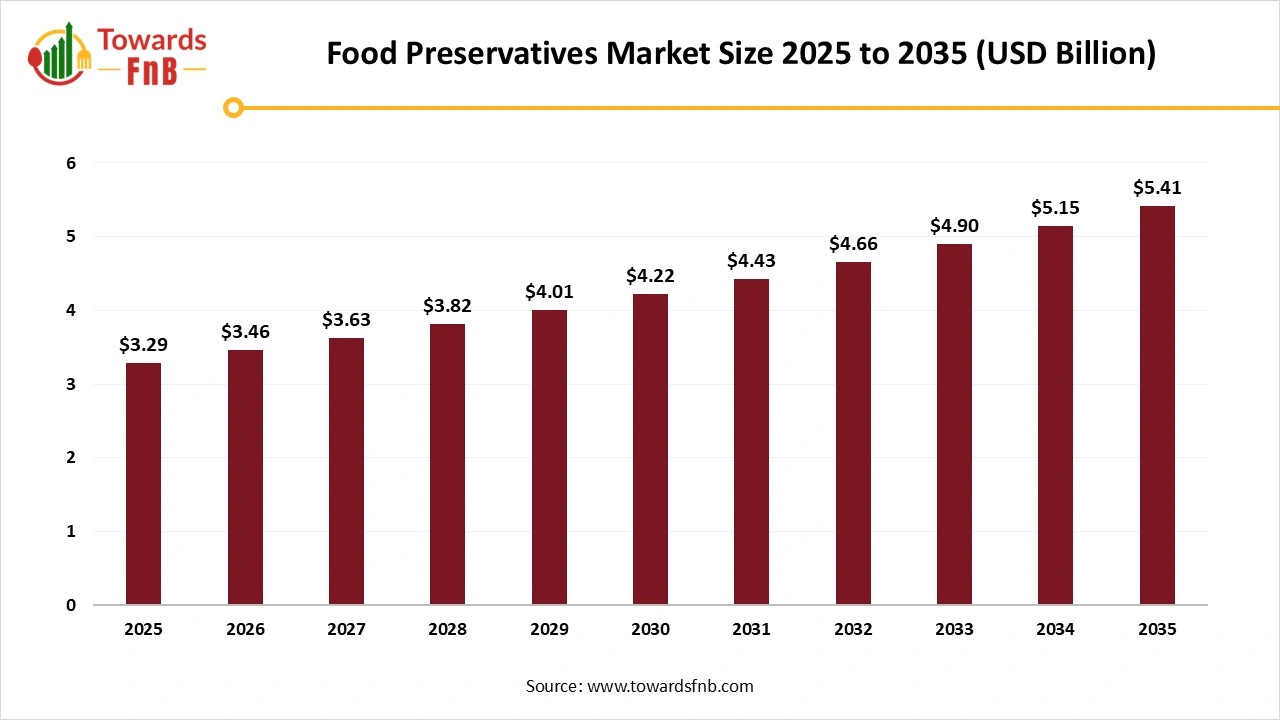
The global food preservatives market is valued at around USD 3.29 billion in 2025 and is expected to grow steadily from USD 3.46 billion in 2026 to reach approximately USD 5.41 billion by 2035, reflecting a CAGR of 5.1% during the forecast period. This growth is driven by the rising demand for processed foods, increasing consumption of meat and poultry products, and the growing need for food items with extended shelf life.
The U.S. Food Preservatives Market Trends
The market growth in the country is driven by factors such as increasing demand for processed and convenience food, increasing consumer focus on clean-label food products and health, increasing food safety regulations, increasing strict government regulations, and rising technological innovations in developing improved and new preservative technologies, such as natural options to meet regulatory standards and consumer demand.
Various major players have enhanced their market growth because of the increasing demand for organic preservatives. The increasing health awareness among consumers and increasing willingness of consumers to pay for high-quality food products are expected to drive the demand for natural food products.
U.S. Food Preservatives Market Share, By Type, 2025 (%)
| Segments | Shares (%) |
| Synthetic Preservatives | 58% |
| Natural Preservatives | 42% |
How Synthetic Preservatives Segments Dominates the U.S. Food Preservatives Market?
The synthetic preservatives segment dominated the U.S. food preservatives market revenue in 2025. Synthetic preservatives play an important role in market in the U.S. as they maintain food safety and quality, prevent microbial spoilage and extend food shelf life. They can also prevent oxidation and inhibit the growth of bacteria, which helps keeps it appealing to consumers, ensures food is safe to eat and reduce food waste. Synthetic preservatives are essential for making food last longer and delaying spoilage, which increases availability and reduces waste. They also enhance the growth of microorganisms such as yeast, mold and bacteria that cause food to soil, which is very important for high-risk foods such as seafood, dairy and meat. They also help prevent foodborne illnesses by controlling harmful microbes. Synthetic preservatives also preserve the sensory qualities of food, such as texture, flavor and color, which further expected to drive the segment growth.
The Natural Preservatives Segment is Expected to Grow Fastest During the Forecast Period
The segment growth in the U.S. food preservatives market is driven by various benefits such as increasing demand for clean-label food products, enhanced nutritional value, reduce food waste, improve food security, maintain food quality, prevent spoilage, and maintain color, texture and flavor. In addition, natural preservatives also maintain color, texture and flavor, limit oxidation and control microbial growth. Some natural preservatives also add nutritional value via antioxidants and vitamins to increase the consumer demand for organic and clean label products, which further expected to drive the segment growth in the U.S.
U.S. Food Preservatives Market Share, By Function, 2025 (%)
| Segments | Shares (%) |
| Antimicrobials | 46% |
| Antioxidants | 20% |
| Chelating Agents | 14% |
| Enzyme Inhibitors/Others | 20% |
Why Antimicrobials Segment Dominates the U.S. Food Preservatives Market Revenue in 2025?
The antimicrobials segment dominated the market revenue in the market in 2025. Antimicrobials in food preservatives significantly driven by ensuring food safety and extending shelf life by inhibiting the growth of microorganisms such as yeast, mold and bacteria. They achieve this protecting against food spoilage, preventing foodborne illnesses, and disrupting microbial cell walls and metabolic processes, which may accelerate the demand for antimicrobials in the U.S. In addition, the key benefits of antimicrobials are increased focus on sustainability, offer nutritional benefits, consumer preference for natural products, antioxidant properties, reduced need for physical processing, preservation of food quality, increased food safety and extended shelf life, which further expected to drive the segment growth in the U.S. market.
The Antioxidants Segment is Expected to Grow Fastest During the Forecast Period
Antioxidants play a crucial role in food preservatives, which maintains the nutrient content, color, flavor and quality of foods. By scavenging free radicals, they also add health benefits and protect against microbial spoilage. Antioxidants also help ensure the product remains nutritious, appealing and fresh from production to consumption, which may expected to drive the segment growth in the U.S.
What Factors Help Bakery and Confectionery Segment to Grow in 2025?
The bakery and confectionery segment dominated the U.S. food preservatives market revenue in 2025. The segment growth in the U.S. market attributed to the various benefits such as the prevent crystallization, improve product characteristics, control oxidation, maintain appearance and quality, ensure food safety and extend shelf life. They also help prevent spoilage and add other advantages, such as controlling oxidation, improving texture and retaining moisture. Food preservatives inhibit the development of yeast, bacteria and mold, which are highly used in baked products. Preservatives are crucial in maintaining overall product safety and preventing serious problems such as botulism. In addition, preservatives also help avoid the spoilage that cause to unwanted changes in texture, odor and color, which further expected to drive the segment growth.
The snacks and convenience foods segment is expected to grow fastest during the forecast period. The segment growth in the U.S. is driven by various benefits such as increased shelf life, reduced food waste, improved economic efficiency, increased versatility and enhanced product consistency.
U.S. Food Preservatives Market Share, By End User, 2025 (%)
| Segments | Shares (%) |
| Processed Food Manufacturers | 52% |
| Beverage Manufacturers | 15% |
| Meat & Poultry Processors | 13% |
| Bakery Producers | 10% |
| Others | 10% |
How Processed Food Manufacturers Segment Dominates the U.S. Food Preservatives Market Revenue in 2025?
The processed food manufacturers segment dominated the market revenue in 2025. Processed food manufacturers use preservatives to ensure safety, maintain product quality and enhance shelf life by avoiding microbial spoilage. Food preservatives can also help preserve a flavor, texture and appearance of products for consumers and enables for longer storage and broader distribution.
The Bakery Producers Segment is Expected to Grow Fastest During the Forecast Period
The segment growth in the market is attributed to the benefits such as enhanced commercial viability, reduced product returns, reduced food waste, maintain quality preservation, improved safety and extended shelf life. Food preservatives help minimize the amount of food that spoils before it can be consumed or sold, by keeping products fresh longer. In addition, preservatives also enable for the distribution and production of baked products over longer timeframes and wider geographical areas, which further expected to drive the segment growth in the U.S.
Jinx
The U.S. Food and Drug Administration
By Type
By Function
By Application
By End User



Principal Consultant
Vidyesh Swar, Senior Research Analyst at Towards Food & Beverages, specializes in market research, focusing on supply-demand evaluation, pricing analysis, alternative proteins, plant-based foods, and sustainable food technologies within the industry.
Learn more about Vidyesh Swar
Reviewed By
Aditi Shivarkar, with 14+ years in Food and Beverages market research, specializes in food, beverage, and eco-friendly packaging. She ensures accurate, actionable insights, driving Towards FnB's excellence in industry trends and sustainability.
Learn more about Aditi ShivarkarApril 2026
April 2026
April 2026
April 2026

U.S. Food Preservatives Market


 +1 804-441-9344
 Download Sample
 Schedule a Meeting