April 2026



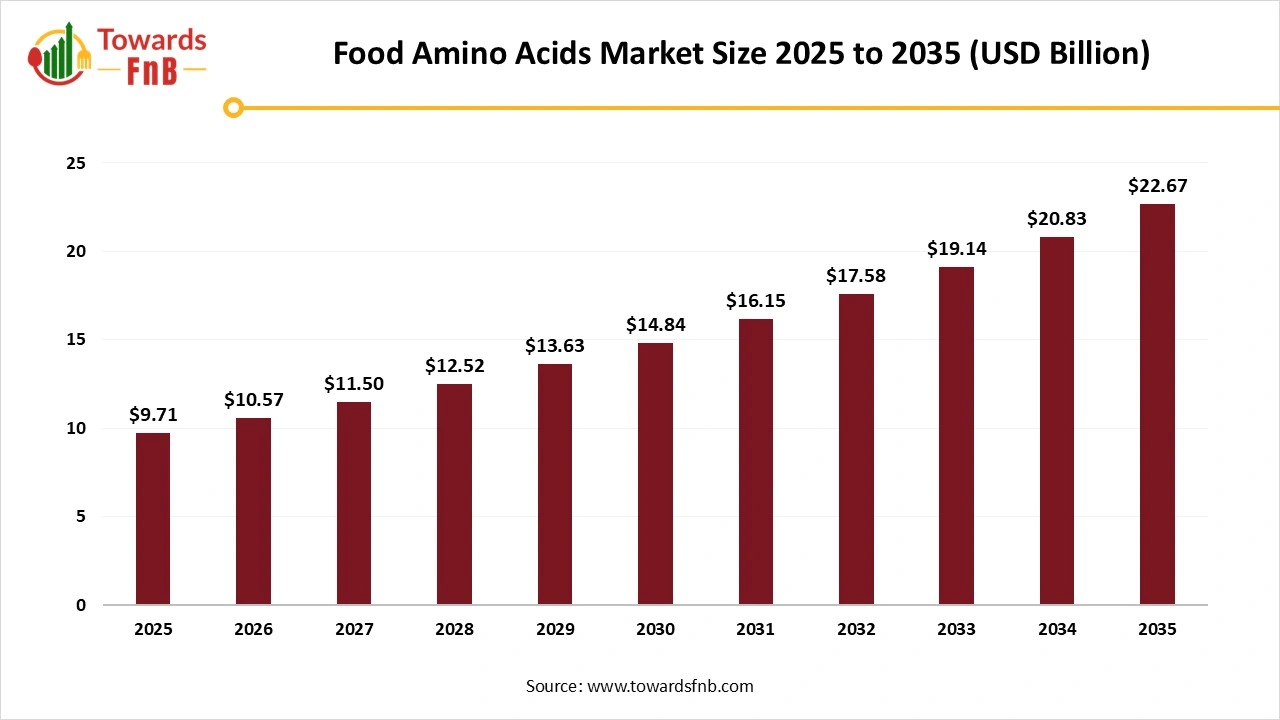
The global food amino acids market size reached at USD 9.71 billion in 2025 and is anticipated to increase from USD 10.57 billion in 2026 to an estimated USD 22.67 billion by 2035, witnessing a CAGR of 8.85% during the forecast period from 2026 to 2035. Rising demand for functional food and dietary supplements is driving the market.
| Study Coverage | Details |
| Growth Rate from 2026 to 2035 | CAGR of 8.85% |
| Market Size in 2026 | USD 10.57 Billion |
| Market Size in 2027 | USD 11.50 Billion |
| Market Size by 2035 | USD 22.67 Billion |
| Largest Market | North America |
| Base Year | 2025 |
| Forecast Period | 2026 to 2035 |
| Regions Covered | North America, Europe, Asia-Pacific, Latin America, and Middle East & Africa |
The rising consumer focus on health, wellness, and nutrition is a key driver of the food amino acids market. increasing awareness of the benefits of high-protein diets, such as muscle maintenance, weight management, and overall well-being, has motivated food manufacturers to formulate products with amino acids. The presence of major food and pharmaceutical producers boosts domestic demand. The market insights show sustained consumption across human nutrition applications, underpinned by high consumer awareness and purchasing power.
Advancements in amino acid science have allowed for more accurate and effective dietary formulations, focusing on growth promotion while considering environmental sustainability. Improved fermentation methods have made amino acid production more efficient and scalable, with innovations in microbial strain engineering and real-time process monitoring helping to reduce production costs and enhance product consistency. For instance, the Ajinomoto Group has been researching and applying amino acid functions for over 100 years, developing a wide variety of new materials, functions, technologies, and services.
Raw Material Procurement
Processing
Which Region Dominated the Food Amino Acids Market in 2025?
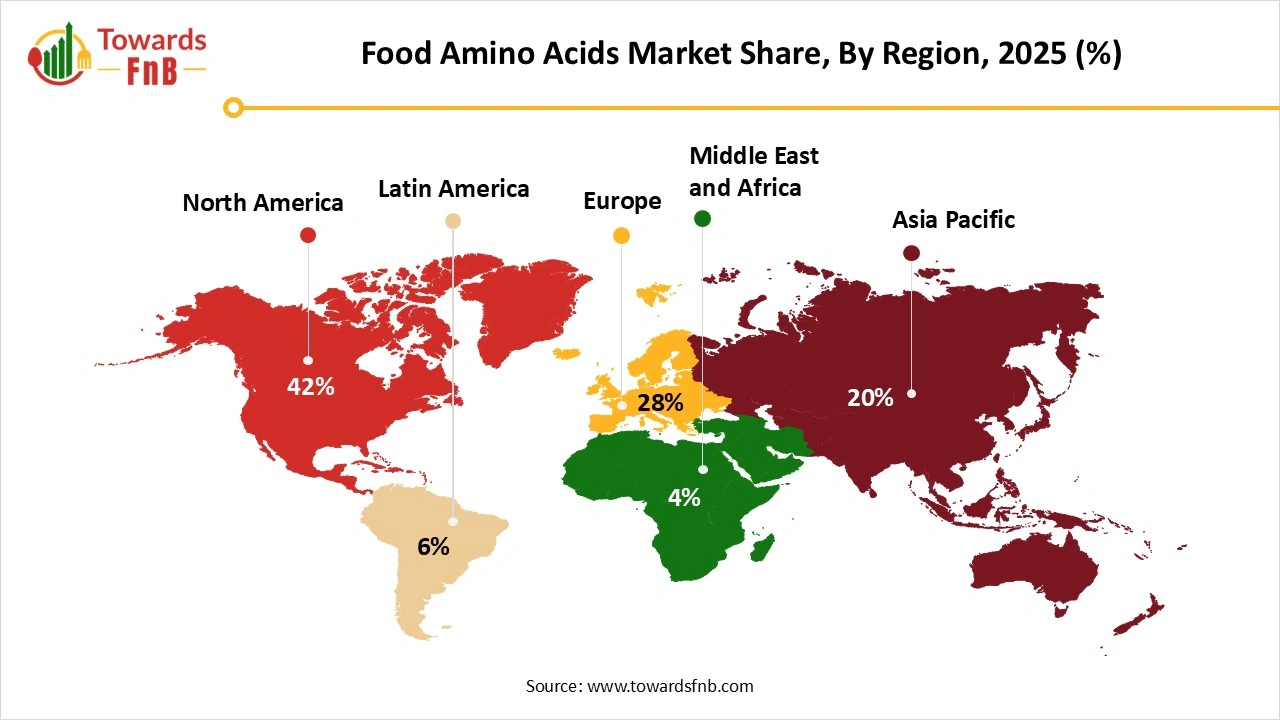
North America dominated the food amino acids market in 2025. The increasing demand for amino acids across various industries, including food and beverages, dietary supplements, cosmetics, and animal feed, is driving growth in the market. Additionally, advancements in biotechnology for amino acid production are further enhancing market growth. The growing acceptance of amino acids for their medicinal properties is boosting sales and profits for companies in the market, which is expected to continue driving growth.
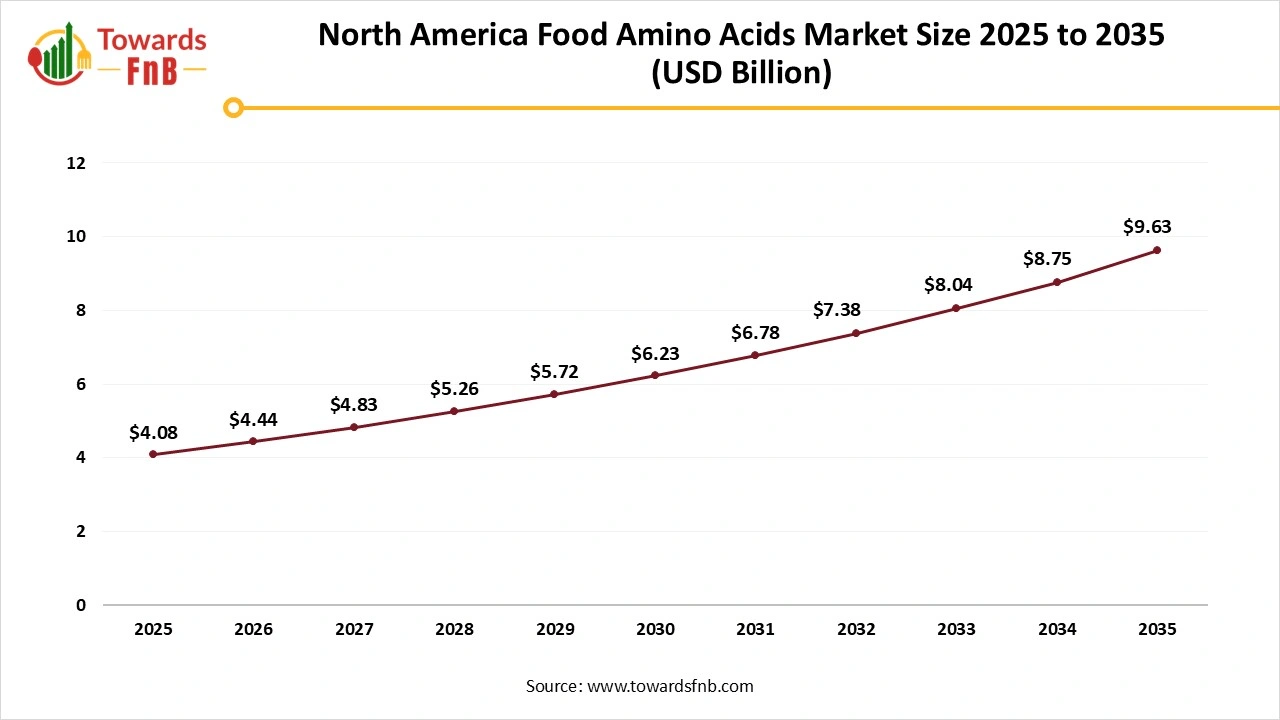
North America Food Amino Acids Market Size 2025 to 2035
The North America food amino acids market size was calculated at USD 4.08 billion in 2025 with projections indicating a rise from USD 4.44 billion in 2026 to approximately USD 9.63 billion by 2035, expanding at a CAGR of 8.97% throughout the forecast period from 2026 to 2035.
U.S. Food Amino Acids Market Trends
The demand for food amino acids is growing significantly in the U.S., primarily due to increased awareness of health, fitness, and nutrition. Amino acids play a vital role in muscle recovery, protein synthesis, and metabolic function, making them highly sought after in human nutrition and dietary supplements. Fitness enthusiasts, athletes, and health-conscious individuals are increasingly consuming amino acid-enriched products, such as protein bar, shakes, and nutritional drinks. The rise of functional food, along with a consumer focus on preventive healthcare, has also expanded the market for amino acids in the food and beverage sector.
For instance, in February 2026, GNC, a leader in health and wellness, introduced newly reformulated GNC AMP Wheybolic, a next-generation performance whey protein powder that delivers 50 grams of superior-quality whey protein and 6.2 grams of total leucine per serving. (Source: yahoo/finance)
How Big is the U.S. Food Amino Acids Market?
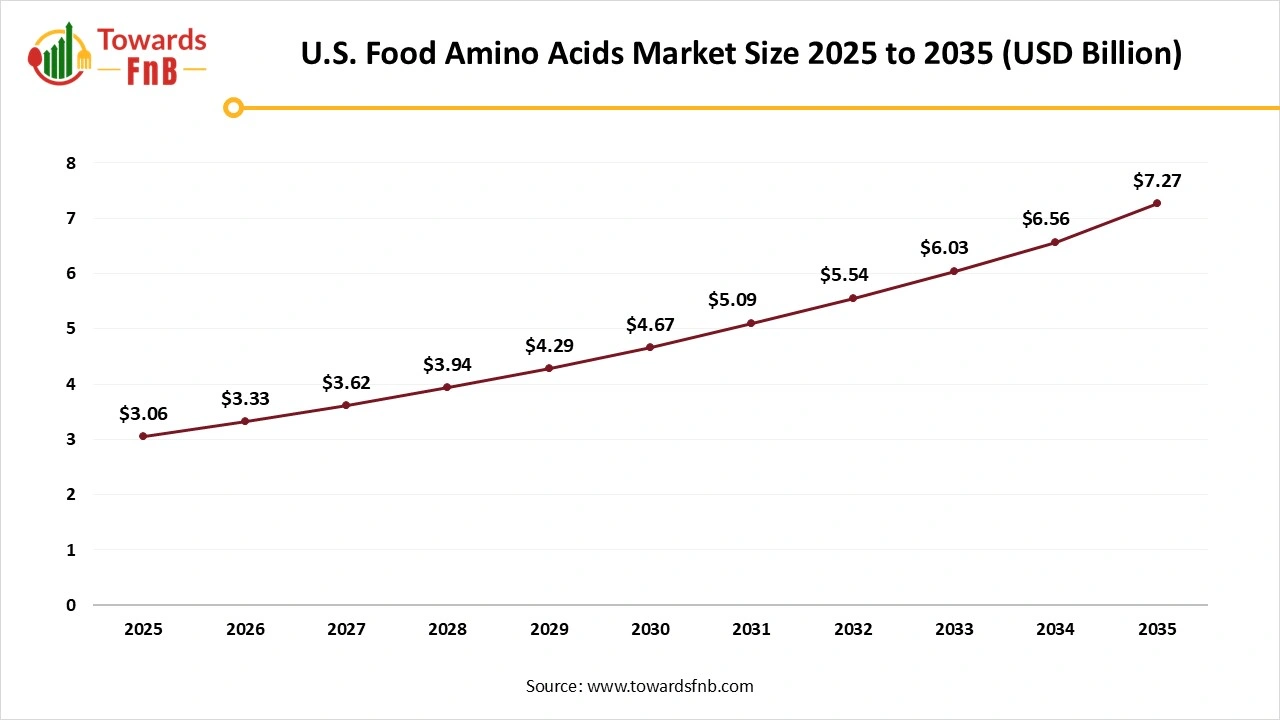
The U.S. food amino acids market size estimated at USD 3.06 billion in 2025 and is predicted to increase from USD 3.33 billion in 2026 to nearly reaching USD 7.27 billion by 2035, growing at a CAGR of 9.04% during the forecast period from 2026 to 2035.
Asia Pacific Food Amino Acids Market Trends
Asia Pacific expects the fastest growth during the forecast period. This robust market expansion can be attributed to the growing demand for dietary supplements and functional foods as consumer health consciousness rises. Plant-based amino acids are sourced from soy, peas, and other legumes, which are abundant in the region. The increasing awareness of the health benefits associated with plant-based protein, such as lower cholesterol levels, improved heart health, and better digestion, has further driven their demand.
India Food Amino Acids Market Trends
Indian diets are projected to see an increasing demand for high-quality protein foods, especially in the form of pulses and milk, over the next decade. The production and consumption of high-quality protein-rich foods are essential to improving diet quality and addressing the persistent issue of undernutrition in India. This growing demand for protein rich diet is fostering the India food amino acids market. Growing awareness of health and wellness is significantly shaping consumer behavior and influencing market trends. The focus on preventive healthcare is encouraging consumers to incorporate supplements into their daily routines.
Europe Food Amino Acids Market Trends
The food amino acids market in Europe is growing at a notable rate. In Europe, the demand for functional foods and beverages is rising as people become more aware of the health benefits associated with amino acids. However, the safety of long-term, high-dose amino acid consumption, often marketed as dietary supplements or functional foods, requires regulatory approval in the European Union through the novel food process. Products containing Branched-Chain Amino Acids (BCAAs), glutamic acid, and lysine are seeing increased demand for food formulations and sports nutrition. Additionally, advances in protein hydrolysates and fermentation-based amino acid synthesis are enhancing product availability and driving market demand.
Germany Food Amino Acids Market Trends
Germany has experienced a steady rise in the food amino acids market, fueled by growing consumer interest in health supplements and functional foods. The market has notably increased its imports of amino acids for use in food and beverage applications, reflecting a shift toward healthier dietary choices. The sports nutrition market in Germany is rapidly expanding, which is expected to significantly boost the demand for amino acids. The rising prevalence of lifestyle diseases in Germany is also projected to increase the demand for these nutrients.
Food Amino Acids Market Share, By Product Type, 2025 (%)
| Segments | Shares (%) |
| Valine | 18% |
| Leucine | 15% |
| Isoleucine | 12% |
| Tryptophan | 10% |
| Arginine | 12% |
| Lysine | 18% |
| Methionine | 10% |
| Citrulline | 3% |
| Others | 2% |
Why did the Valine Segment Dominate the Food Amino Acids Market in 2025?
The valine segment held the largest share of the food amino acids market in 2025. Valine is widely used in protein supplements and fortified foods due to its essential role in muscle repair and energy production, making it popular among athletes and health-conscious individuals. As an essential branched-chain amino acid that the body cannot produce on its own, valine must be obtained through dietary sources. Its importance in protein synthesis and muscle metabolism is driving its demand.
The Arginine Segment is Anticipated to Grow at the Fastest Rate During the Forecast Period
Arginine is essential for protein synthesis and is commonly used to improve circulation. In the body, L-arginine converts to a chemical called nitric oxide, which helps widen blood vessels and enhance blood flow. Additionally, L-arginine stimulates the release of growth hormone, insulin, and other vital substances. The increasing demand for arginine is driven by an aging population and growing lifestyle-related health concerns, with wellness and fitness becoming central priorities globally.
Food Amino Acids Market Share, By Application, 2025 (%)
| Segments | Shares (%) |
| Dietary Supplements | 30% |
| Functional Foods | 25% |
| Functional Beverages | 20% |
| Infant Foods | 10% |
| Other Non-food Applications | 15% |
Which Application Segment Dominated the Food Amino Acids Market in 2025?
The dietary supplements segment dominated the market with the largest share in 2025. Recognizing the significance of amino acids as building blocks in our diet allows us to make informed nutritional choices. These nutrients play a crucial role in overall health, and this category is experiencing significant growth. Contributing factors include increased consumer spending capacity, a focus on wellness, and a shift toward preventive care.
The Functional Beverages Segment is also Projected to Grow at a Notable Rate During the Forecast Period
The incorporation of amino acids into functional beverages is rapidly gaining popularity in the health and nutrition market. These amino acids, whether natural or artificial, not only enhance the flavor of drinks but also fulfill specific functional needs such as increasing energy, boosting immunity, promoting muscle repair, and improving brain function. Amino acids like leucine, glutamine, and arginine are commonly included in sports drinks to support post-exercise recovery, while glycine and tryptophan are popular in functional teas aimed at promoting relaxation and sleep.
Yendrink
Farmers Union
By Product Type
By Application
By Region





Principal Consultant
Vidyesh Swar, Senior Research Analyst at Towards Food & Beverages, specializes in market research, focusing on supply-demand evaluation, pricing analysis, alternative proteins, plant-based foods, and sustainable food technologies within the industry.
Learn more about Vidyesh Swar
Reviewed By
Aditi Shivarkar, with 14+ years in Food and Beverages market research, specializes in food, beverage, and eco-friendly packaging. She ensures accurate, actionable insights, driving Towards FnB's excellence in industry trends and sustainability.
Learn more about Aditi ShivarkarApril 2026
April 2026
April 2026
March 2026

Food Amino Acids Market


 +1 804-441-9344
 Download Sample
 Schedule a Meeting