April 2026



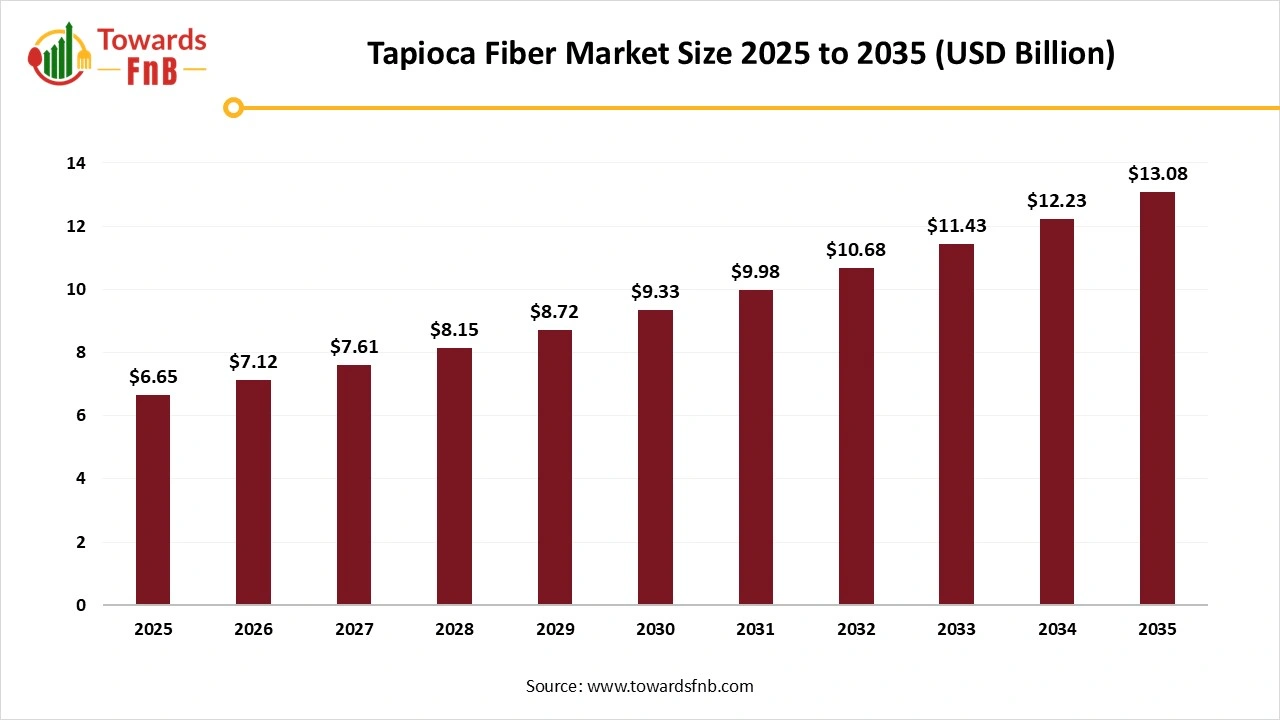
The global tapioca fiber market size estimated at USD 6.65 billion in 2025 and is predicted to increase from USD 7.12 billion in 2026 to approximately USD 13.08 billion by 2035, expanding at a CAGR of 7% from 2026 to 2035. The strong focus on enhancing digestive wellness and increasing gluten allergies drives market growth.
| Study Coverage | Details |
| Growth Rate from 2026 to 2035 | CAGR of 7% |
| Market Size in 2026 | USD 7.12 Billion |
| Market Size in 2027 | USD 7.61 Billion |
| Market Size by 2035 | USD 13.08 Billion |
| Largest Market | Asia Pacific |
| Base Year | 2025 |
| Forecast Period | 2026 to 2035 |
| Regions Covered | North America, Europe, Asia-Pacific, Latin America, and Middle East & Africa |
Tapioca fiber is a dietary fiber that is sourced from the cassava root. It has a neutral taste and consists of water-binding properties. It is a plant-based dietary fiber that dissolves easily. It consists of high fiber content, low GI, good digestibility, low calories, and neutral odor. Commonly, it is available in syrup and powder forms. Tapioca fiber offers benefits like supporting digestive health, maintaining blood sugar levels, and replacing sugar. It is widely used in applications like baked goods, paleo, dairy, sauces, protein bar, and other food products.
The tapioca fiber market growth is driven by increased consumption of gluten-free food, shift towards veganism, increased number of gluten sensitive peoples, strong focus on less-processed ingredients, growing use of binding agents, high spending on healthy food, and the increased consumption of tapioca-based products.
The tapioca fiber market is undergoing key technological changes driven by sustainable ingredients, processing efficiency, and superior texture. The various technological innovations are IoT integration, automation, big data, and blockchain enhances consistency and lower waste. The major technological change is the integration of AI, which enhances the efficiency of processing and accelerates product development.
AI enhances cassava productivity and easily diagnoses plant diseases. AI predicts tapioca yields and easily formulates tapioca fiber. AI minimizes the waste of tapioca powder and automates the quality checks. AI creates new tapioca fiber products and develops products with high nutritional value. AI lowers the crop loss and enhances fiber content. Overall, AI creates sustainable yields of tapioca fiber.
Raw Material Procurement
Processing and Preservation
Quality Testing and Certifications
| Country | Major Applications | Growth Drivers |
| India | Gluten-Free Food Savory Snacks Traditional Dishes Nutraceuticals |
Growing Health Consciousness Surging Plant-Based Food Demand |
| Canada | Dietary Supplements Keto Foods Functional Foods Smoothies |
Increased Health Awareness Gluten-Free Trends |
| Brazil | Gluten-Free Products Functional Foods |
Growing Clean-Label Foods Demand Popularity of Vegan Diets |
| Saudi Arabia | Functional Beverages Bakery Smoothies Processed Food |
Growing Lifestyle Disease Prevalence Focus of Government on Wellness |
Why Asia Pacific Dominates the Tapioca Fiber Market?
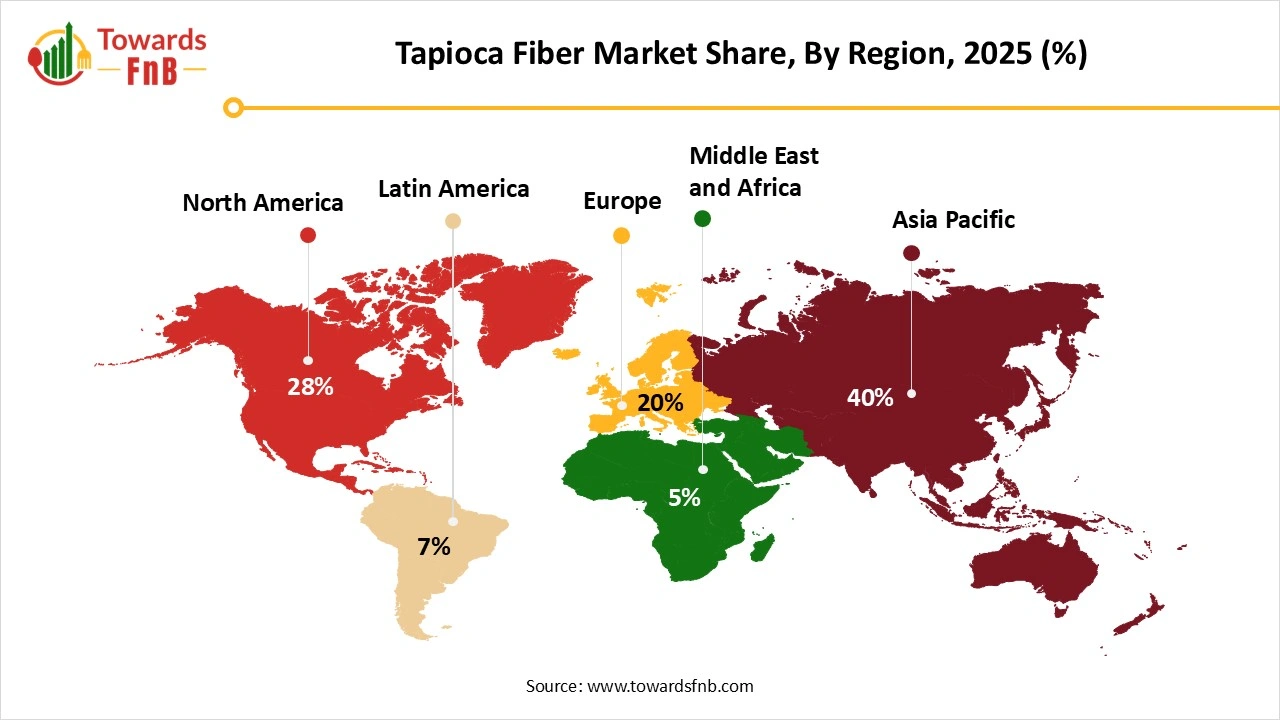
Asia Pacific dominated the tapioca fiber market in 2025. The growing expansion of the food processing industry and the increasing awareness of celiac disease increase demand for tapioca fiber. The increased cultivation of cassava in ASEAN countries and the presence of large processing plants increase demand for tapioca fiber. The rapid growth in the convenience food industry and the increasing need for gluten-free food increases adoption of tapioca fiber, driving the overall market growth.
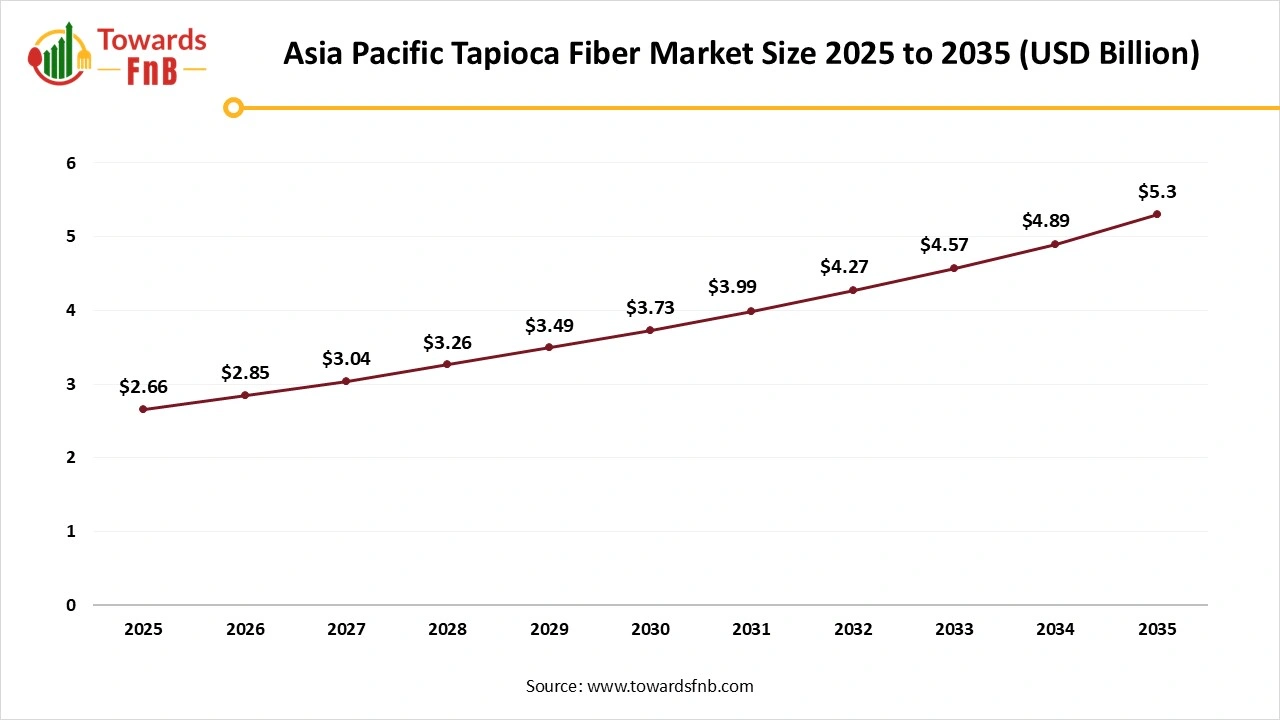
Asia Pacific Tapioca Fiber Market Size 2025 to 2035
The Aisa Pacific tapioca fiber market size was calculated at USD 2.66 billion in 2025 with projections indicating a rise from USD 2.85 billion in 2026 to approximately USD 5.3 billion by 2035, expanding at a CAGR of 7.14% throughout the forecast period from 2026 to 2035.
From Cassava to Tapioca Fiber: China’s Expanding Footprint
China is a key contributor to the market. The rapid growth in the plant-based food sector and the well-established tapioca starch production base increase demand for tapioca fiber. The availability of cassava raw materials and the cost-effective production base increase the production of tapioca fiber. The well-developed adhesive industries and the trending bubble tea increase demand for tapioca fiber, supporting the overall market growth.
North America Tapioca Fiber Market Trends
North America is experiencing the fastest growth in the market during the forecast period. The growing awareness of gut health wellness and the strong consumer focus on natural ingredients increases demand for tapioca fiber. The strong presence of gluten-free products and the increased baked goods production increases demand for tapioca fiber. The strong focus on the development of dairy substitutes and the surging bubble tea consumption increases the adoption of tapioca fiber, driving the overall market growth.
United States Footprint in Tapioca Fiber Production
The United States is a major contributor to the market. Consumer focus on low-sugar diets and the increasing need for additive-free products increases demand for tapioca fiber. The increasing use of bulking agents in food products and the high consumption of gluten-free starch increase demand for tapioca fiber. The strong focus on promoting gut health and the popularity of protein bars create higher demand for tapioca fiber, supporting the overall market growth.
Europe Tapioca Fiber Market Trends
Europe is growing substantially in the market. The trending general wellness and the increasing use of recognizable ingredients increase demand for tapioca fiber. The growing rate of celiac disease and the government backing for sustainable food systems increase demand for tapioca fiber. The growing need for sports nutrition and the increased development of supplement powders require tapioca fiber, driving the overall market growth.
France's Key Role in the Tapioca Fiber Landscape
France is growing in the tapioca fiber industry. The increased consumption of gluten-free processed food and the increased awareness about minimally processed ingredients increase demand for tapioca fiber. The increased incorporation of tapioca fiber in bakery product and the growing gluten allergies support the overall market growth.
Tapioca Fiber Market Share, By Product Form, 2025 (%)
| Segments | Shares (%) |
| Tapioca Fiber Powder | 40% |
| Tapioca Fiber Concentrate | 12% |
| Tapioca Soluble Fiber | 25% |
| Tapioca Insoluble Fiber | 15% |
| Functional Tapioca Fiber Blends | 8% |
Why the Tapioca Fiber Powder Segment Dominates the Tapioca Fiber Market?
The tapioca fiber powder segment dominated the tapioca fiber market in 2025. The focus on enhancing the texture of savory items and the increasing health-conscious consumer increases demand for tapioca fiber powder. The growing production of beverages and the increasing focus on fiber intake require tapioca fiber powder. The ease-of-incorporation, functional versatility, clean label, and cost-effectiveness of tapioca powder fiber drive the overall market growth.
The Tapioca Soluble Fiber and Functional Blends Segment is the Fastest-Growing in the Market During the Forecast Period.
The popularity of frozen dessert and the increased energy bars consumption increases demand for tapioca soluble fiber. Consumers focus on weight management, and the trending low-carb diets increase demand for tapioca soluble fiber. The increased production of low-glycemic products and the popularity of gluten-free baked goods require functional blends. The superior performance, excellent texture, neutral taste, and high tolerance of soluble fiber support the overall market growth.
Tapioca Fiber Market Share, By Source, 2025 (%)
| Segments | Shares (%) |
| Whole Cassava/Dietary Fiber Extracts | 50% |
| By-product Stream Fiber Fractions | 20% |
| Enzymatically Processed Fiber | 17% |
| Purified Insoluble/Soluble Fractions | 13% |
How did the Whole Cassava or Dietary Fiber Extracts Segment hold the Largest Share in the Tapioca Fiber Market?
The whole cassava or dietary fiber extracts segment held the largest revenue share in the tapioca fiber market in 2025. The increasing need for dairy alternatives and the focus on managing blood sugar regulation increase demand for whole cassava. The growing confectionery industry and the huge need for high-value dietary fiber increase demand for whole cassava. The allergen-friendly, superior texture management, high prebiotic content, and high solubility of whole cassava or dietary fiber extracts drive the overall market growth.
The Enzymatically Processed Fiber Segment is Experiencing the Fastest Growth in the Market During the Forecast Period.
The growing allergen-free diets and the increased production of diabetic-friendly products increase demand for enzymatically processed fiber. The focus on the production of healthy gut bacteria and the growing industrial processing increases the adoption of enzymatically processed fiber. The superior functionality, keto compatibility, and high digestive tolerance of enzymatically processed fiber support the overall market growth.
Which Application Segment Dominated the Tapioca Fiber Market?
The food and beverages segment dominated the tapioca fiber market in 2025. The increased consumption of clean-label foods and the growing awareness of prebiotic benefits increase demand for tapioca fiber. The popularity of instant foods and the focus on low-fat consumption require tapioca fiber. The popularity of smoothie and the increased production of gluten-free snacks increase demand for tapioca fiber. The expanding food processing sector drives the market growth.
The Nutraceuticals & Dietary Supplements Segment is the Fastest-Growing in the Market During the Forecast Period.
The focus on weight control and the increasing preventive healthcare increases demand for tapioca fiber. The development of resistance nutrition bars and the increased consumption of prebiotic supplements increases demand for tapioca fiber. The production of perfect keto supplements supports the overall market growth.
Roquette
Icon Foods
Beyond Meat
By Product Form
By Source/Extraction Type
By Application
By Region




Principal Consultant
Vidyesh Swar, Senior Research Analyst at Towards Food & Beverages, specializes in market research, focusing on supply-demand evaluation, pricing analysis, alternative proteins, plant-based foods, and sustainable food technologies within the industry.
Learn more about Vidyesh Swar
Reviewed By
Aditi Shivarkar, with 14+ years in Food and Beverages market research, specializes in food, beverage, and eco-friendly packaging. She ensures accurate, actionable insights, driving Towards FnB's excellence in industry trends and sustainability.
Learn more about Aditi ShivarkarApril 2026
April 2026
April 2026
April 2026

Tapioca Fiber Market


 +1 804-441-9344
 Download Sample
 Schedule a Meeting