April 2026



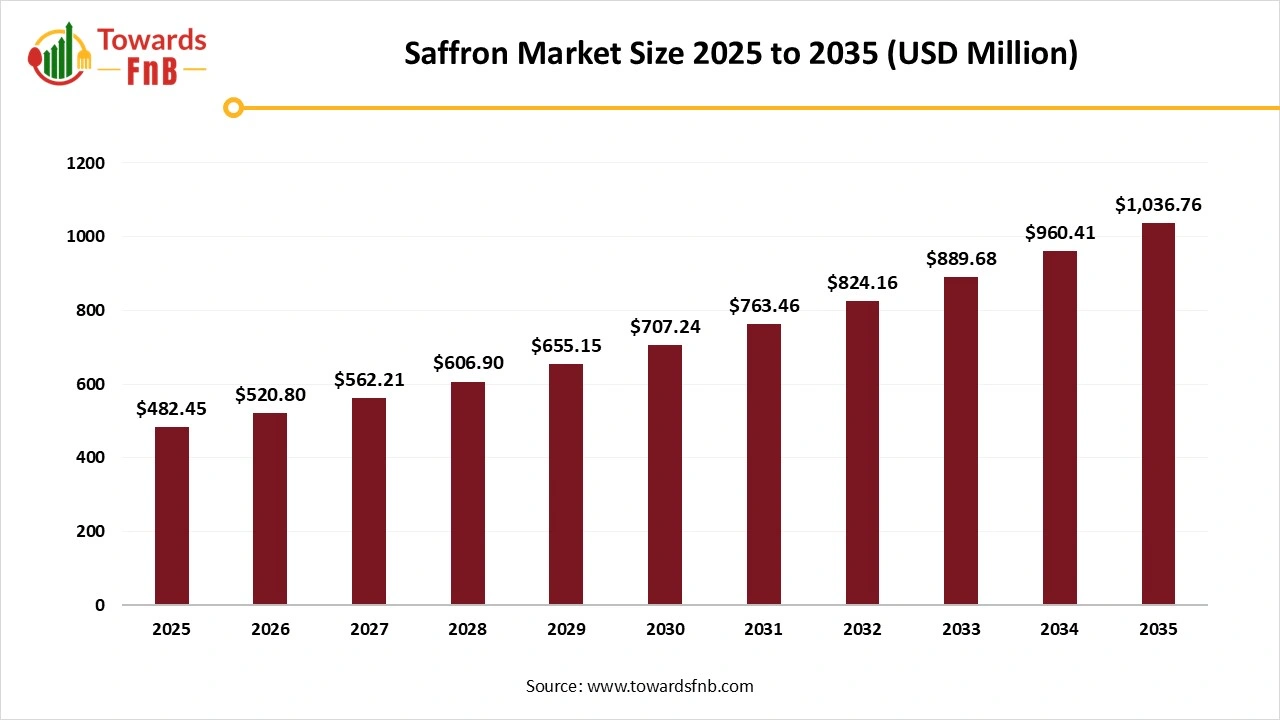
The global saffron market size reached at USD 482.45 million in 2025 and is anticipated to increase from USD 520.80 million in 2026 to an estimated USD 1,036.76 million by 2035, witnessing a CAGR of 7.95% during the forecast period from 2026 to 2035. Rising health consciousness and strong cultural demand for traditional cuisine are significantly driving the market.
| Study Coverage | Details |
| Growth Rate from 2026 to 2035 | CAGR of 7.95% |
| Market Size in 2026 | USD 520.80 Million |
| Market Size in 2027 | USD 562.21 Million |
| Market Size by 2035 | USD 1,036.76 Million |
| Largest Market | Asia Pacific |
| Base Year | 2025 |
| Forecast Period | 2026 to 2035 |
| Regions Covered | North America, Europe, Asia-Pacific, Latin America, and Middle East & Africa |
Saffron, considered one of the priciest spices globally, has captivated people for hundreds of years. In recent times, the need for saffron has increased significantly, resulting in a growing curiosity about its market price. As research continues into these health advantages, saffron's function in the wellness industry might enhance its increasing value. Consumers are growing increasingly aware of health, and purchasing saffron can be viewed as a commitment to lasting wellness. The worldwide demand for saffron is set to experience substantial expansion, fueled by technological advancements, shifting consumer trends, and a resurgence in the appreciation for traditional botanicals.
Innovative agri-tech companies are now utilizing advanced technologies to bring saffron production indoors. This shift aims to address the limitations of traditional farming, allowing for year-round harvests, improved yields, and consistent quality. The integration of AI into saffron cultivation represents a revolutionary approach, enhancing productivity, reducing labor demands, and laying the groundwork for long-term sustainability. AI analytics can predict optimal flowering periods based on real-time climatic and phenological models, helping farmers manage labor effectively, minimize stigma loss, and maximize harvest quality.
How did Asia Pacific Dominate the Saffron Market in 2025?
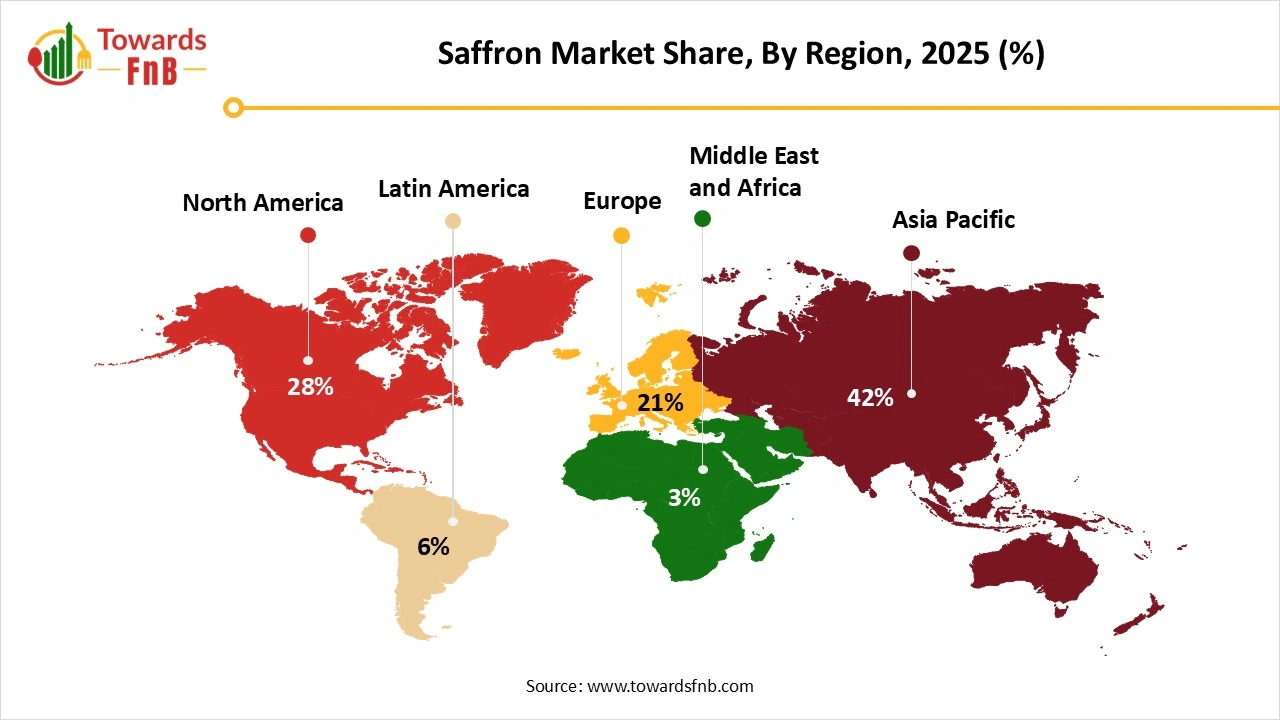
Asia Pacific dominated the saffron market in 2025. Saffron threads are widely used in the food industry, serving as a spice, herb, and flavoring agent. Saffron is a premium alternative to synthetic additives, offering nutritional benefits and contributing positively to market growth. It is preferred over artificial ingredients as a natural colorant and flavoring agent and is featured in various recipes across diverse cuisines worldwide.
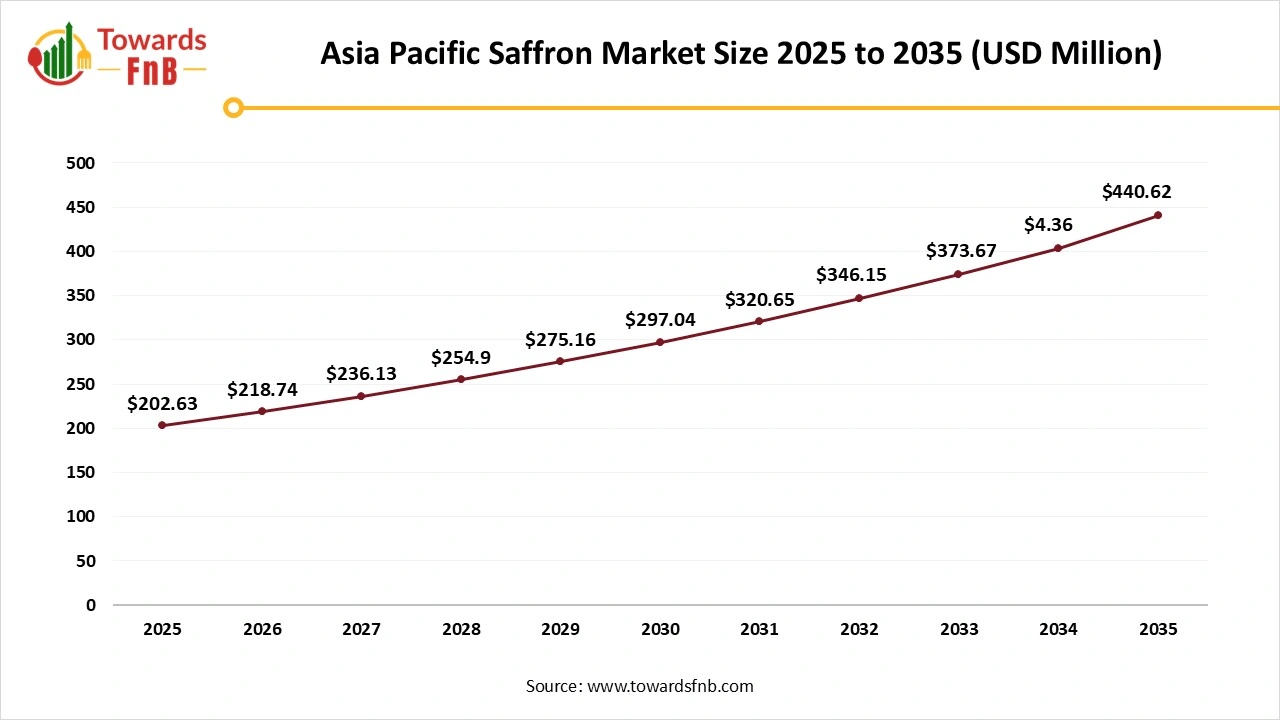
Asia Pacific Saffron Market Size 2025 to 2035
The Asia Pacific saffron market size estimated at USD 202.63 million in 2025 and is predicted to increase from USD 218.74 million in 2026 to nearly reaching USD 440.62 million by 2035, growing at a CAGR of 8.08% during the forecast period from 2026 to 2035.
India Saffron Market Trends
The growing popularity of traditional Indian cuisine, the increasing demand for saffron as an essential ingredient, the rising incorporation of saffron in beauty and cosmetics products, and the demand for ethically sourced saffron are key factors driving the market. Its cultivation in India mainly occurs in Himachal Pradesh and Jammu and Kashmir, with some farmers successfully growing saffron in Uttarakhand. As India’s agritech sector advances towards innovations such as hydroponic and aeroponic saffron farming are reshaping possibilities, enhancing quality, and making saffron cultivation more sustainable and profitable than ever. Approximately 90% of India's saffron production comes from Kashmir, where it has been cultivated for centuries.
The Middle East and Africa Saffron Market Trends
Middle East and Africa expects the fastest growth in the market during the forecast period. In the Middle East, saffron has traditionally been used to create an oil-based perfume, a mixture of saffron and sandalwood known as Zafran Attar. Iran is the leading producer of saffron globally, holding 85-90% of the global supply, and is known as a benchmark setter for quality standards. A staple in Middle Eastern cuisines, saffron imparts a vibrant color to various dishes and is a key ingredient in recipes like paella and biryani. Furthermore, the expansion of the pharmaceutical and cosmetic industries has heightened saffron's demand, as it is increasingly included in skincare and wellness products. To differentiate in the market, saffron growers in the Middle East and Africa are pursuing ISO 3632 standards, Geographical Indication certifications, and blockchain-enabled traceability.
South Africa Saffron Market Trends
The market in South Africa is driven by the increasing adoption of saffron in premium food applications, a growing awareness of its medicinal properties, and the country’s unique position as the single commercial producer of saffron in sub-Saharan Africa. The expansion of retail channels is significantly contributing to the growth of the market in South Africa. South Africa is emerging as a notable participant in the cultivation and exportation of saffron, recognized as the world's most expensive spice. This development presents a crucial opportunity for the South African economy, providing a substantial source of foreign income through exports.
North America Saffron Market Trends
North American market is experiencing a significant shift toward natural, plant-based, and functional ingredients in the food and wellness sectors. Consumers are becoming increasingly informed about the scientifically validated benefits of saffron, which include anti-oxidative properties, anti-inflammatory effects, and mood enhancement. This has led to its recognition as a premium ingredient in health products, herbal supplements, and clean-label food items.
U.S. Saffron Market Trends
Key drivers of the U.S. Saffron market include the escalating demand for natural and organic products among health-conscious consumers, the increasing culinary use of saffron, and ongoing food technological advancements in saffron cultivation and harvesting. The U.S. imports over 46 tons of saffron annually, with a expected annual growth rate of 5-12%. Recent research conducted in the United States indicates that saffron cultivation has the potential to generate over $100,000 per acre. (Source: AGC News)
Saffron Market Share, By Grade, 2025 (%)
| Segments | Shares (%) |
| Grade I (above 190) | 45% |
| Grade II (150–190) | 30% |
| Grade III (110–149) | 10% |
| Grade IV (less than 110) | 15% |
Which Grade Segment Dominated the Saffron Market in 2025?
The Grade I (above 190) segment led the market in 2025, as this category signifies a notable increase in potency. Grade I saffron, which often requires only a few threads to achieve the same effects as a larger quantity of lower-grade saffron, is ideal for gourmet culinary applications, high-end confectionery, and medicinal purposes where quality is paramount. The Pampore Kashmiri Kesar is a prominent variety within this grade, distinguished by its high crocin concentration and rich aroma.
The Grade II (ISO 150-190) Saffron Segment is Anticipated to Exhibit the Fastest Growth During the Forecast Period.
This grade is suitable for regular culinary use, particularly in restaurants and households where quality must be balanced with cost. Varieties such as the Kishtwar Gucchi Kesar, often sold as whole bunches, can be classified in this category; their structure helps retain natural oils and fragrances, thus making them popular in traditional culinary preparations.
Saffron Market Share, By Type, 2025 (%)
| Segments | Shares (%) |
| Organic | 25% |
| Traditional | 75% |
Why did the Traditional Segment Dominate the Saffron Market in 2025?
The traditional segment held the largest market share in 2025. Consumers favor traditional saffron for its unique taste, aroma, and color, making it a valuable ingredient in cooking, cosmetics, and traditional medicine. As demand rises across the food, pharmaceutical, and cosmetic industries, traditional saffron provides a practical combination of quality, affordability, and export readiness, thereby solidifying its role as the cornerstone of the saffron economy.
The Organic Segment is Projected to Experience Notable Growth During the Forecast Period.
As consumer demand for premium, natural, and functional ingredients escalates globally. Organic saffron, which is meticulously hand-picked and naturally processed to maintain its quality and medicinal attributes, is free from synthetic additives, making it a premium and safe spice for culinary and wellness applications.
How did Stigma Segment Dominate the Saffron Market in 2025?
The stigma segment dominated the saffron market with the largest share in 2025. Saffron stigmas contain over 150 volatile, non-volatile, and aromatic compounds, including carotenoids, flavonoids, vitamins such as riboflavin and thiamine, anthocyanins, amino acids, and proteins. The stigmas are characterized by four primary biologically active constituents: Safranal, picrocrocin, crocetin, and crocins. Consequently, the stigma form remains the most valued segment in the market.
The Liquid Form is Anticipated to Experience the Fastest Growth During the Forecast Period.
Liquid extracts facilitate seamless integration into beverages, syrups, and cosmetics, where consistent dosing and color dispersion are essential. The increasing demand for saffron in functional food, tea, and supplements supports the preference for liquid formats due to their ease of incorporation.
Which Product Segment Dominated the Saffron Market in 2025?
The food and beverages segment held the largest share of the market in 2025. Saffron is highly valued in cooking due to its unique flavor and vivid color. The demand for saffron has surged alongside the growing preference for organic and high-quality food products. Breweries are now incorporating saffron into their brews to create distinctive products that stand out from traditional beers. It is commonly used in dishes like risottos, paellas, curries, and baked goods, where its deep red color provides a striking visual contrast against other ingredients. Saffron is particularly popular in Mediterranean, Middle Eastern, and South Asian cuisines.
The Cosmetics Segment is Expected to Experience the Fastest Growth During the Forecast Period.
As saffron possesses excellent antioxidants properties, making it a preferred ingredient. In addition to this, saffron is widely used in beauty products for its numerous skin and body benefits. The growing demand for safe and natural brands is driving this trend, as consumers increasingly seek out medicinal herb and spice extracts.
Saffron Market Share, By Distribution Channel, 2025 (%)
| Segments | Shares (%) |
| B2B | 70% |
| B2C | 30% |
Which Distribution Channel Dominated the Saffron Market in 2025?
The B2B segment dominated the market in 2025, largely due to high-volume purchases by industries such as packaged food, beverages, pharmaceuticals, and cosmetics, all of which require bulk saffron for their processing and formulation needs. Long-term contracts and direct sourcing from farms or cooperatives contribute to the B2B segment’s dominance.
The B2C Segment is Expected to Grow Significantly During the Forecast Period.
Because transitioning to an online B2C strategy allows brands to expand their reach. B2C e-commerce offers a global platform, enabling even small businesses to sell directly to customers worldwide. Enhanced logistics support, including shipping assistance and 24/7 customer service, can save time and cut costs. A strong online platform ensures that saffron sales are smooth and reliable.
By Grade
By Type
By Form
By Product
By Distribution Channel
By Region




Principal Consultant
Vidyesh Swar, Senior Research Analyst at Towards Food & Beverages, specializes in market research, focusing on supply-demand evaluation, pricing analysis, alternative proteins, plant-based foods, and sustainable food technologies within the industry.
Learn more about Vidyesh Swar
Reviewed By
Aditi Shivarkar, with 14+ years in Food and Beverages market research, specializes in food, beverage, and eco-friendly packaging. She ensures accurate, actionable insights, driving Towards FnB's excellence in industry trends and sustainability.
Learn more about Aditi ShivarkarApril 2026
April 2026
April 2026
April 2026

Saffron Market

 +1 804-441-9344
 Download Sample
 Schedule a Meeting