April 2026



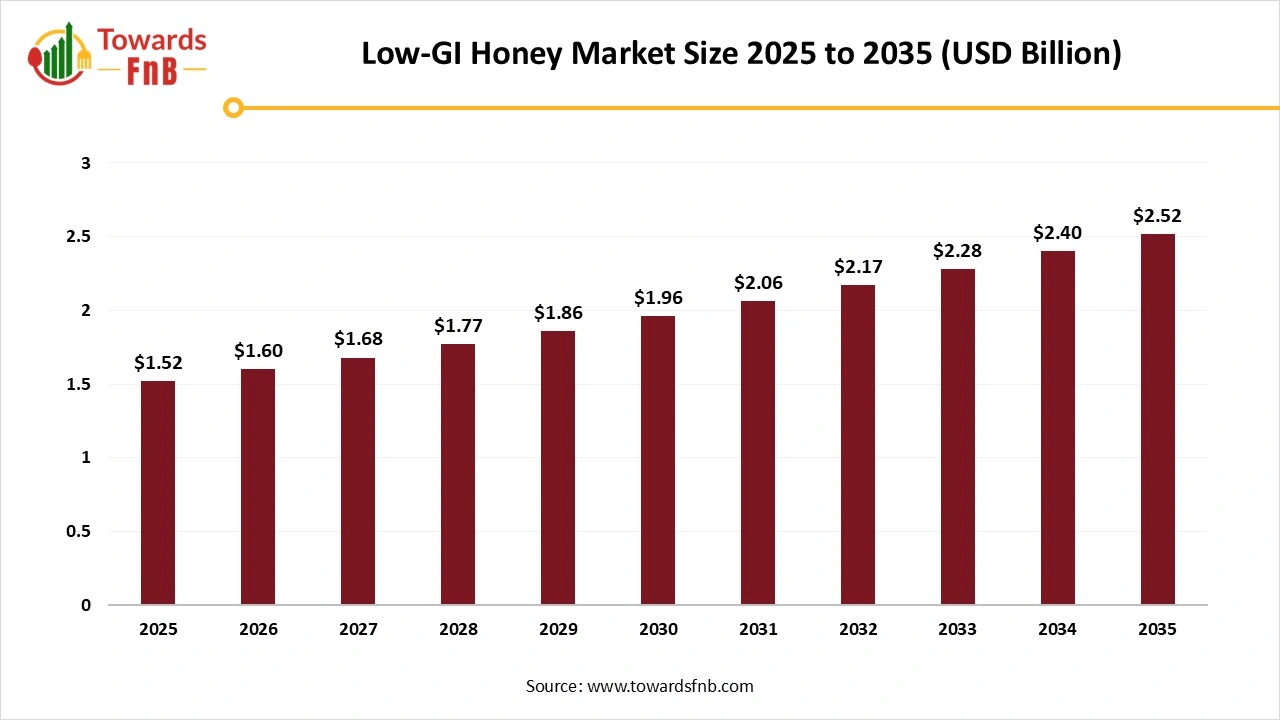
The global low-GI honey market size reached at USD 1.52 billion in 2025 and is anticipated to increase from USD 1.60 billion in 2026 to an estimated USD 2.52 billion by 2035, witnessing a CAGR of 5.2% during the forecast period from 2026 to 2035. The growing interest in weight-management diets and the focus on using refined sugar alternatives drive market growth.
| Study Coverage | Details |
| Growth Rate from 2026 to 2035 | CAGR of 5.2% |
| Market Size in 2026 | USD 1.60 Billion |
| Market Size in 2027 | USD 1.68 Billion |
| Market Size by 2035 | USD 2.52 Billion |
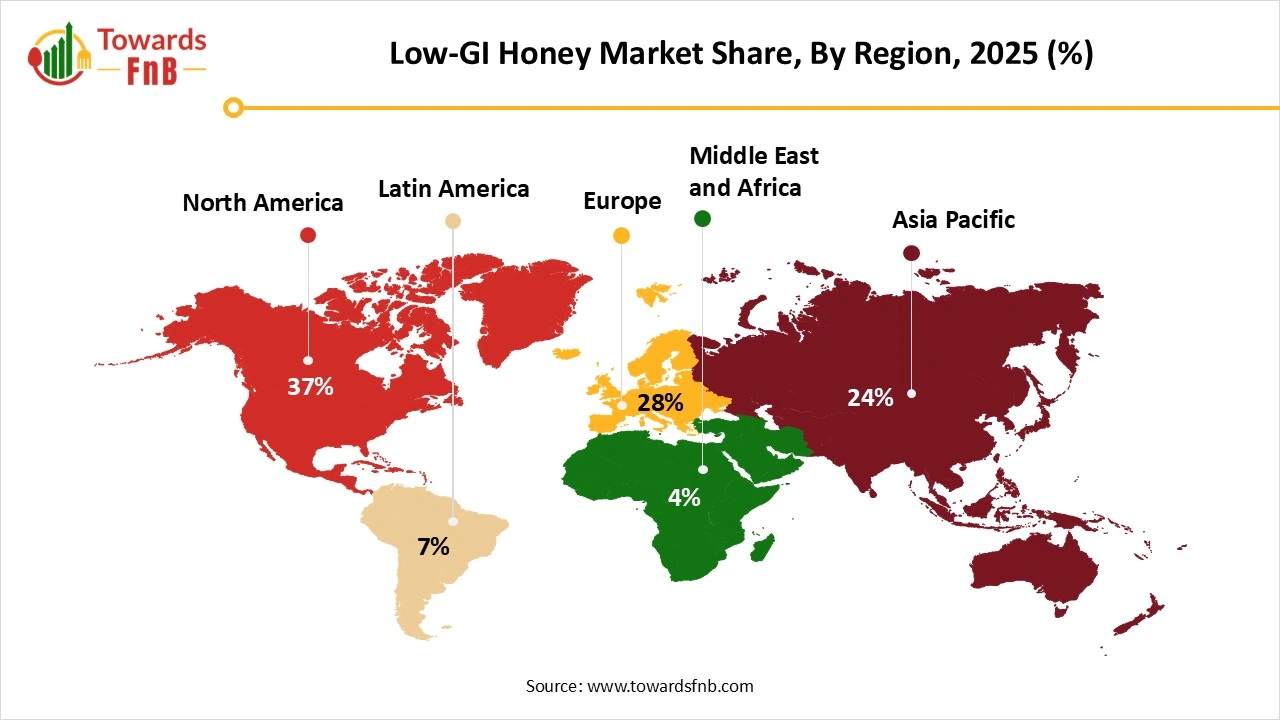
| Largest Market | North America |
| Base Year | 2025 |
| Forecast Period | 2026 to 2035 |
| Regions Covered | North America, Europe, Asia-Pacific, Latin America, and Middle East & Africa |
Low-GI honey is the type of honey with a GI rating below 55. It possesses characteristics like high fructose content, being rich in bioactives, slow energy release, and light appearance. It offers benefits like lowering total cholesterol, minimizing digestive issues, boosting immunity, controlling blood sugar, supporting weight management, and soothing throats. Low-GI honey is widely used in applications like bakery products, sports nutrition, functional foods, beverages, smoothie, and breakfast spreads.
The low-GI honey market growth is driven by the growing health issues, surging levels of blood glucose, transition to unprocessed products, move towards healthy lifestyles, increased use of low-GI sweeteners, high preference for organic honey, increased purchasing of premium honey, growing medicinal usage, and the growth in functional food.
The low-GI honey market is fueling technological innovations driven by demand for nutritional integrity, creation of premium products, and authenticity. The technological innovations like machine learning, smart beekeeping, IoT traceability, smart packaging, and blockchain help to monitor adulteration and the development of high-quality products. The key technological shift is that AI integration enables real-time quality assurance and precision beekeeping.
AI easily inspects pollen in low-GI honey and monitors hive health. AI inspects adulteration and improves bee genetics. It predicts the biological properties of honey and develops personalised strategies for marketing. It identifies various floral sources for honey production and optimizes the formulation. AI easily tracks supply chain operations and analyzes consumers' purchasing behavior. Overall, AI is a trusted technology for the production of high-quality low-GI honey.
Raw Material Procurement
Processing and Preservation
Quality Testing and Certifications
| Products | Properties | Examples |
| Acacia Honey | Mild and Sweet Taste Transparent Appearance High Flavonoid Levels Natural Antibacterial Properties Rich in Vitamin E, A, and C |
Shiva Organic Kashmiri Acacia Honey Raw7 Acacia Honey Nature’s Nectar Select Acacia Honey |
| Forest Honey | Dark Color Rich in Minerals Antibacterial Properties Rich in Prebiotics High Antioxidant |
Himalayan Forest Honey Nilgiri Forest Honey Wild Forest Honey |
| Thyme Honey | High Level of Thymol Liquid Form Aromatic Rich in Vitamins Healing Properties |
Meligyris Cretan Thyme Honey Greek Thyme Honey |
| Manuka Honey | Skin Healing High Antioxidant Nutrient Source Powerful Antimicrobial Action |
Comvita Certified UMF 18+ Manuka Honey Egmont Manuka Honey MGO 1200+ |
| Raw Honey | Antioxidant Power High Mineral Composition Antifungal Properties Strong Antibacterial Properties |
Jivika Naturals Raw Wild Berry Honey Organic India Honey |
Why North America Dominated the Low-GI Honey Market?
North America dominated the low-GI honey market in 2025. The growing number of health-conscious consumers and the shift towards organic products increase demand for low-GI honey. The growing understanding of honey benefits and a strong focus on minimizing spikes in blood sugar increase the adoption of low-GI honey. The high spending on high-quality honey and the increased popularity of breakfast spreads drive the market growth.
North America Low-GI Honey Market Size 2025 to 2035
The North America low-GI honey market size was calculated at USD 562.4 billion in 2025 with projections indicating a rise from USD 592 billion in 2026 to approximately USD 945 billion by 2035, expanding at a CAGR of 5.33% throughout the forecast period from 2026 to 2035.

Golden Innovation: Power of Low-GI Honey in the United States
The United States is a key contributor to the market in the North America region due to the growing diabetes rates. The strong focus on controlling blood sugars and the transition to organic options increases the adoption of low-GI honey. The trending functional foods and the increased need for refined sugar alternatives increases adoption of low-GI honey. The increased awareness of obesity and the development of health-oriented snacks fuel the market growth.
How Big is the U.S. Low-GI Honey Market?
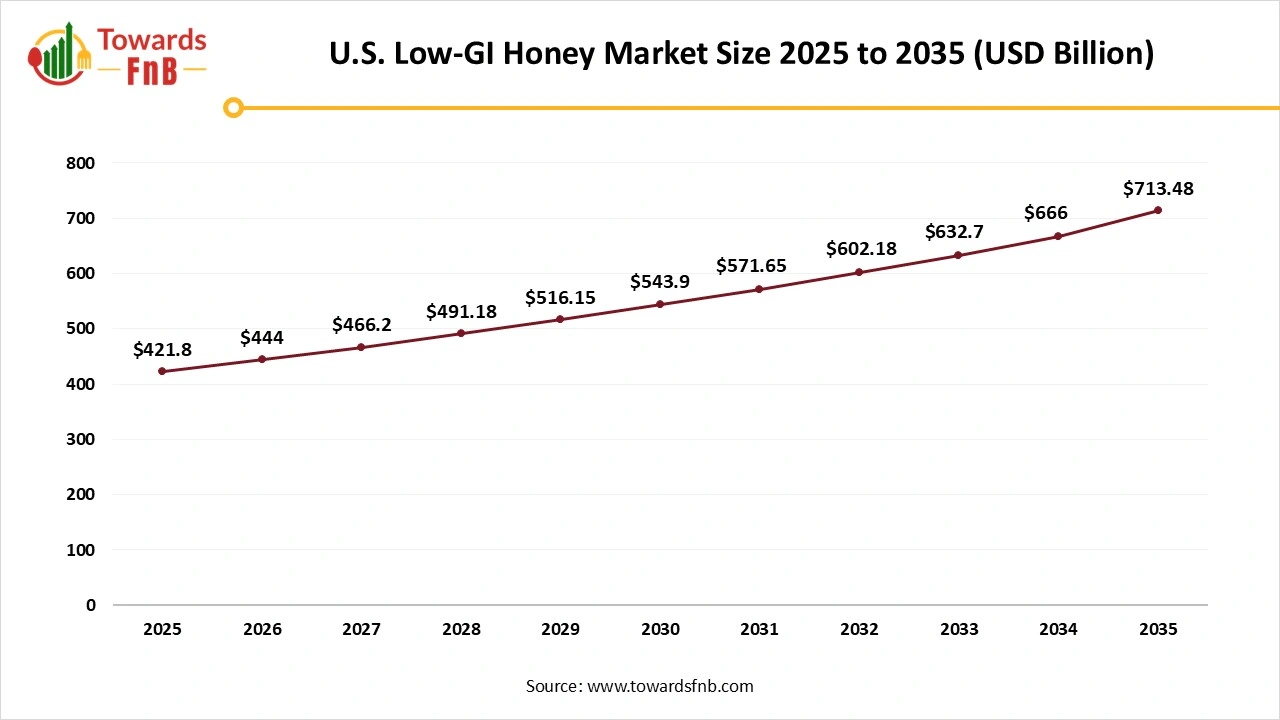
The U.S. low-GI honey market size was valued at USD 421.8 billion in 2025 and is expected to grow steadily from USD 444 billion in 2026 to reach nearly USD 713.48 billion by 2035, with a CAGR of 5.40% during the forecast period from 2026 to 2035.
Asia Pacific Low-GI Honey Market
Asia Pacific is experiencing the fastest growth in the market during the forecast period. The strong focus on managing obesity and the higher demand for natural sweeteners increases adoption of low-GI honey. The popularity of herbal medicines and the focus on preventing the prevalence of metabolic diseases increases consumption of low-GI honey. The well-established honey production infrastructure and the rising popularity of Manuka honey boost overall market growth.
Beekeeping to Health: China’s Role in Low-GI Honey
China is a major contributor to the market because transition away from processed sugar. The increased consumption of healthier diets and the production of nutrient-rich alternatives increase demand for low-GI honey. The growing health issues and the increased awareness of the nutritional benefits of honey increases adoption of low-GI honey. The presence of vast bee resources and the growing demand for healthier energy sources increases adoption of low-GI honey, driving the overall market growth.
Low-GI Honey Market Share, By Product Type, 2025 (%)
| Segments | Shares (%) |
| Raw Low-GI Honey | 55% |
| Organic Low-GI Honey | 20% |
| Flavored/Infused Low-GI Honey | 25% |
Why the Raw Low-GI Honey Segment Dominates the Low-GI Honey Market?
The raw low-GI honey segment dominated the low-GI honey market in 2025. The consumer focuses on buying antioxidant-rich products, and the increasing blood glucose level increases demand for raw low-GI honey. The proliferation of unadulterated products and the growing interest in natural products increase demand for low-GI honey. The superior nutritional integrity, excellent glycemic control, and functional benefits of raw low-GI honey drive market growth.
The Organic Low-GI Honey Segment is the Fastest-Growing in the Market During the Forecast Period
The focus on obesity management and the increased demand for pesticide-free products increases the consumption rate of organic low-GI honey. The increased production of personal care products and the move towards natural food diets increases adoption of organic low-GI honey. The high spending on authentic honey supports the market growth.
Low-GI Honey Market Share, By Source, 2025 (%)
| Segments | Shares (%) |
| Acacia Honey | 40% |
| Clover Honey | 20% |
| Wildflower Honey | 10% |
| Manuka Honey | 17% |
| Other Floral Sources | 13% |
How did the Acacia Honey Segment hold the Largest Share in the Low-GI Honey Market?
The acacia honey segment held the largest revenue share in the low-GI honey market in 2025. The strong focus on the appeal of honey and the consumer demand for high-purity honey increases demand for acacia honey. The slow crystallization process and anti-inflammatory process of acacia honey help with expansion. The high fructose content, mild flavor, lowest GI, and high nutritional value of acacia honey drive the market growth.
The Wildflower Honey Segment is Experiencing the Fastest Growth in the Market During the Forecast Period
The consumer focuses on the transparency of the product, and the high-nutrient profile increases demand for wildflower honey. The transition to cleaner sweeteners and higher demand for immunity-boosting products increases the adoption of wildflower honey. The sustainable appeal, unique nutritional profile, and low glycemic response of wildflower honey support the market growth.
Low-GI Honey Market Share, By Application, 2025 (%)
| Segments | Shares (%) |
| Food & Beverages | 70% |
| Nutraceuticals | 15% |
| Personal Care & Cosmetics | 10% |
| Pharmaceuticals | 5% |
Which Application Dominated the Low-GI Honey Market?
The food and beverages segment dominated the low-GI honey market in 2025. The increased consumption of dairy products and the development of daily diet foods increase demand for low-GI honey for sweetness. The popularity of yogurt and the growing interest in breakfast spreads require low-GI honey. The surging interest in health-focused foods and the rising snack production require low-GI honey, driving the overall market growth.
The Personal Care & Cosmetics Segment is the Fastest-Growing in the Market During the Forecast Period
The consumer focus on skin hydration and the shift away from synthetic products increases demand for low-GI honey-based skincare products. The increased use of cleansing milks and the trending honey skin requires low-GI honey. The consumer shift towards natural glow and the production of conditioners requires low-GI honey, supporting the overall market growth.
Recent Developments in the Low-GI Honey Market
Apis India
NATE’S Honey
Great Lakes Bee
By Product Type
By Source
By Application
By Region





Principal Consultant
Vidyesh Swar, Senior Research Analyst at Towards Food & Beverages, specializes in market research, focusing on supply-demand evaluation, pricing analysis, alternative proteins, plant-based foods, and sustainable food technologies within the industry.
Learn more about Vidyesh Swar
Reviewed By
Aditi Shivarkar, with 14+ years in Food and Beverages market research, specializes in food, beverage, and eco-friendly packaging. She ensures accurate, actionable insights, driving Towards FnB's excellence in industry trends and sustainability.
Learn more about Aditi ShivarkarApril 2026
April 2026
April 2026
April 2026

Low-GI Honey Market


 +1 804-441-9344
 Download Sample
 Schedule a Meeting