April 2026



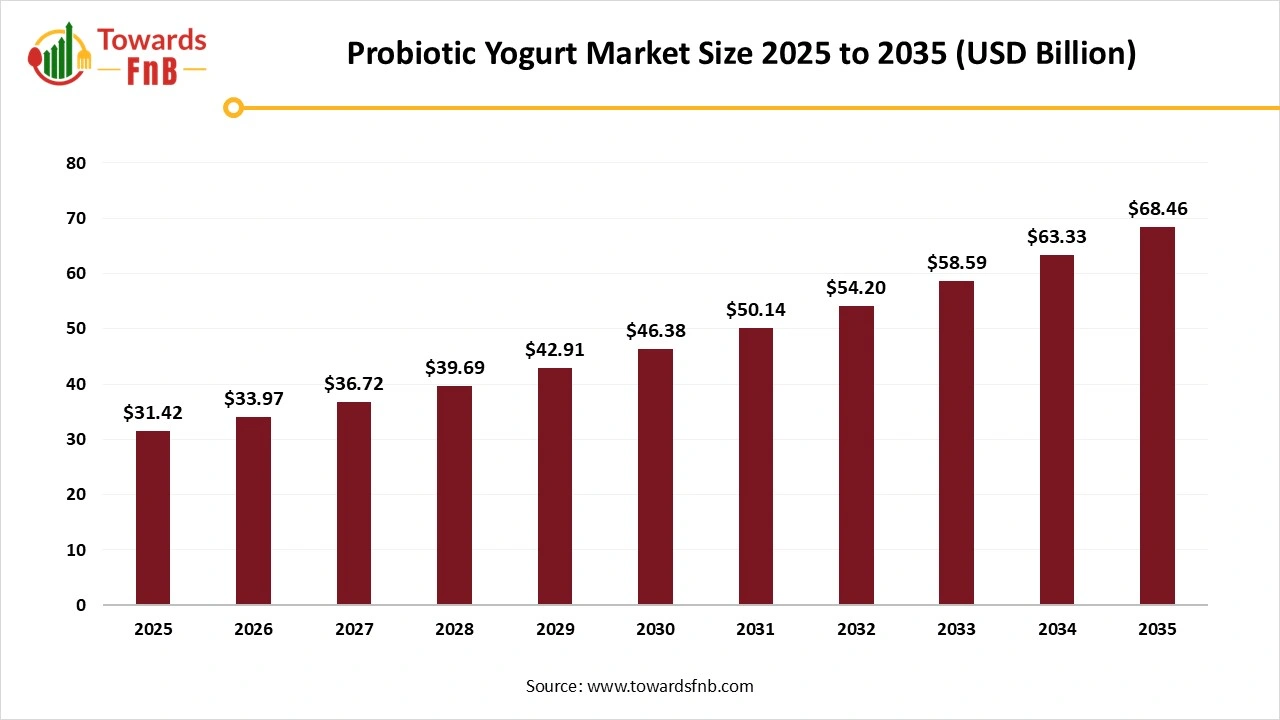
The global probiotic yogurt market size was calculated at USD 31.42 billion in 2025 and is expected to grow steadily from USD 33.97 billion in 2026 to reach nearly USD 68.46 billion by 2035, with a CAGR of 8.1% during the forecast period from 2026 to 2035. The growth of the market is driven by the increasing consumer awareness of immunity, gut health, and overall wellness.
| Study Coverage | Details |
| Growth Rate from 2026 to 2035 | CAGR of 8.1% |
| Market Size in 2026 | USD 33.97 Billion |
| Market Size in 2027 | USD 36.72 Billion |
| Market Size by 2035 | USD 68.46 Billion |
| Largest Market | North America |
| Base Year | 2025 |
| Forecast Period | 2026 to 2035 |
| Regions Covered | North America, Europe, Asia-Pacific, Latin America, and Middle East & Africa |
The probiotic yogurt market comprises fermented dairy and non-dairy yogurt products fortified with live probiotic cultures that support gut health, immunity, and overall wellness. These products are consumed globally as functional food and beverages, available in various formats, flavors, and bases (dairy and plant-based). Rising health awareness, demand for digestive-health solutions, convenience formats, and innovation in probiotic strains drive market growth across retail and online channels.
The market growth is also driven by factors such as the rising innovation in digital retail, convenient packaging, plant-based alternatives and flavors, increasing demand for functional food, natural or organic food options and consumer awareness regarding gut health.
The rise of technological advancements is driving the probiotic yogurt industry via the development of next-generation precision probiotics, advanced microencapsulation for strain viability and AI-driven personalization. Various companies are integrating these innovations to create disruptive business models and science-baked and targeted products. Machine learning and artificial intelligence are revolutionizing product development by allowing the analysis of complicated microbiome data. Based on an individual's unique gut flora profile, this enables startups to create highly personalized probiotic formulations, often through subscription models and at-home test kits. These technologies are expected to revolutionize the growth of the market.
Raw Material Procurement
Packaging and Branding
Waste Management and Recycling
| Country | Regulatory Body | Key Regulations | Focus Areas | Notable Notes |
| India | Food Safety and Standards Authority of India (FSSAI) | Food Safety and Standards (Packaging and Safety Regulations) and Licensing and Registration of Food Businesses) | Major focus areas in the probiotic yogurt market focuses on innovation for strategic distribution, sustainable packaging, nutrition and health-conscious and functional foods and targeting demographics such as Gen Z and millennials | The probiotic yogurt is witnessing rapid growth, driven by major trends in the probiotic yogurt market focus on immune and gut health, dairy-free and plant-based alternatives, high protein content, clean labels and fortification and product innovation. |
Why is North America Dominating the Probiotic Yogurt Market?
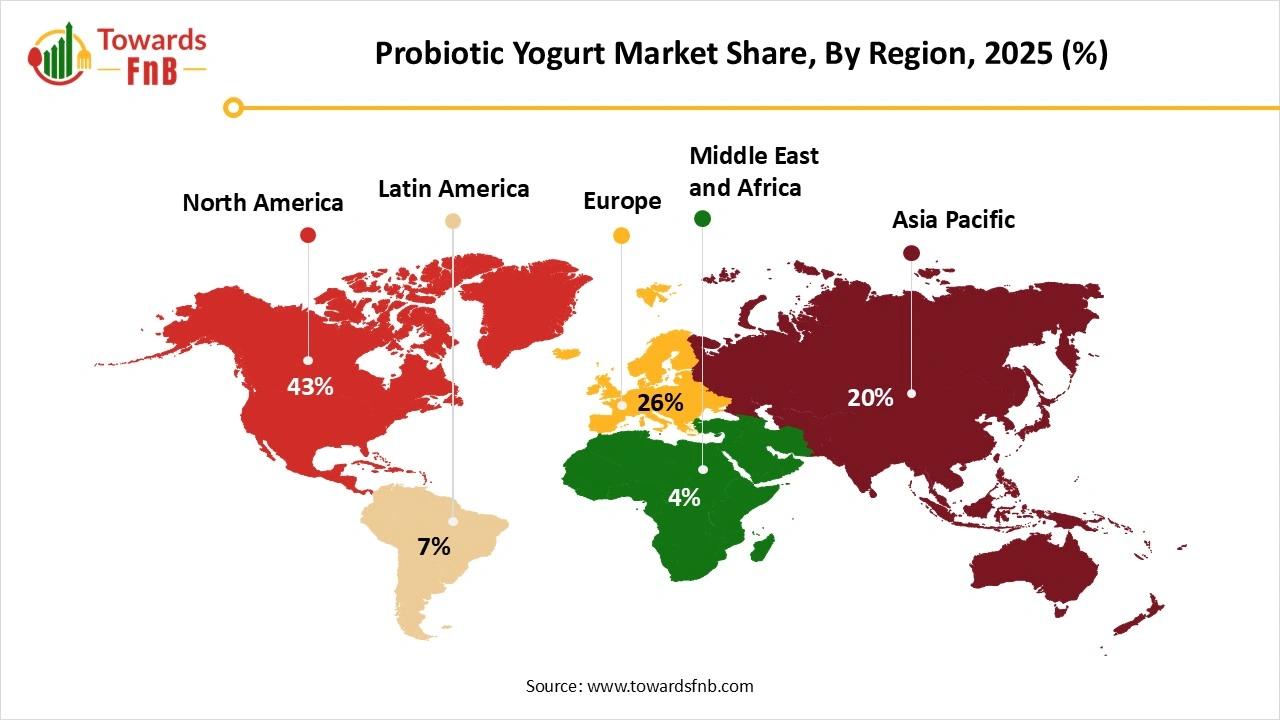
North America dominated the probiotic yogurt market with 43% share in 2025. The market growth is driven by the growing health-conscious consumers seeking natural and convenient options, rising innovation in new product launches, increasing popularity of probiotic drinks, increasing demand for functional foods, and high consumer awareness of immunity, digestive issues and gut health. The U.S. and Canada are dominating countries fueling the market growth in the region.
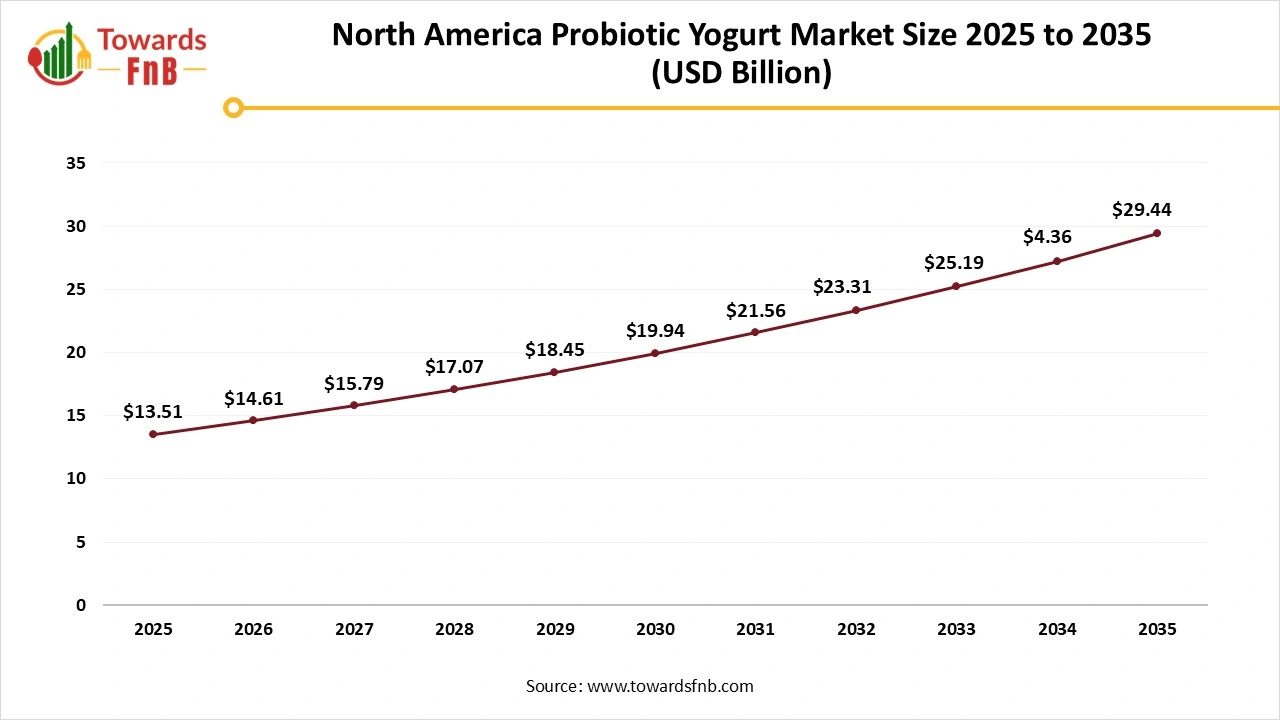
The North America probiotic yogurt market size estimated at USD 13.51 billion in 2025 and is predicted to increase from USD 14.61 billion in 2026 to nearly reaching USD 29.44 billion by 2035, growing at a CAGR of 8.1% during the forecast period from 2026 to 2035.
The U.S. Probiotic Yogurt Market Trends
The probiotic yogurt industry in the U.S. is witnessing rapid growth, driven by the expansion of online and retail channels, increasing strong demand for drinkable, organic, and plant-based formats, demand for functional foods and increasing consumer awareness of immunity, health and overall wellness. Major players such as Stonyfield, Danone and Chobani are catering to health-conscious consumers looking for dairy alternatives, dairy and convenient options.
How Big is the U.S. Probiotic Yogurt Market?
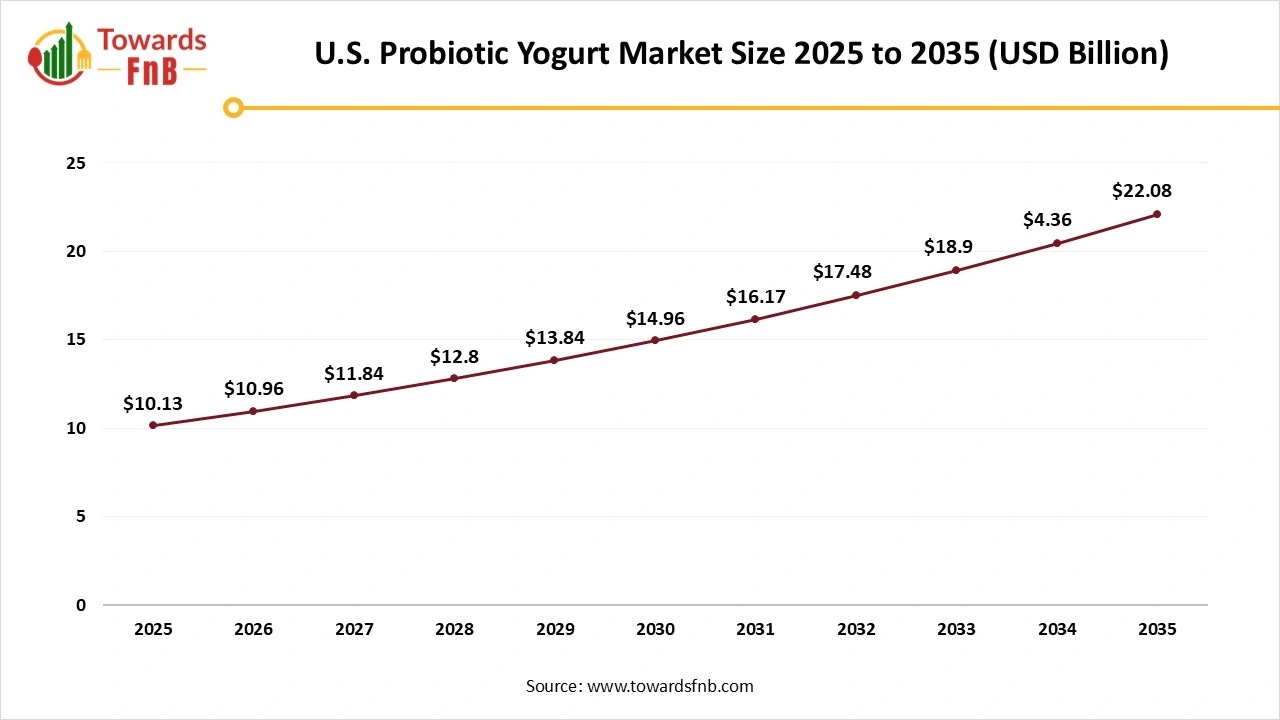
The U.S. probiotic yogurt market size was calculated at USD 10.13 billion in 2025 with projections indicating a rise from USD 10.96 billion in 2026 to approximately USD 22.08 billion by 2035, expanding at a CAGR of 8.1% throughout the forecast period from 2026 to 2035.
Asia Pacific is Expected to Grow Fastest During the Forecast Period
The market in the region, driven by increasing disposable incomes, rapid urbanization, demand for functional foods, rising health consciousness, busy urban lifestyle, product innovation, awareness of digestive wellness, immunity and gut health, introduction of new flavors and increasing consumer shift towards wellness-focused, nutritious and convenient foods. Countries such as Japan, India and China are the fastest growing countries driven by innovations in convenient packaging and flavors.
India Probiotic Yogurt Market Trends
India is expected to grow fastest during the forecast period. The market is showing rapid growth in India, driven by increasing consumer lifestyle changes, increasing demand for functional foods, increasing consumer health awareness, rise of product innovation in plant-based options and new flavors, growing e-commerce platforms, urban populations, increasing shift towards preventive and natural health solutions and consumer focus towards immunity, gut health and digestion to probiotics.
Why Does Europe Driving the Probiotic Yogurt Market?
Europe is expected to grow at a notable rate during the forecast period. The probiotic yogurt industry in the Europe is witnessing rapid growth, driven by the increasing demand for functional foods, increasing consumer focus on preventive care and gut health, increasing popularity of on-the-go and single-serve formats, growing lactose intolerance and veganism in non-dairy probiotic yogurts and demand for probiotic-rich foods. Major players such as Muller, Nestle and Danone are investing in personalized wellness, organic options and sustainable packaging.
The Germany Probiotic Yogurt Market Trends
The probiotic yogurt sector in Germany is witnessing rapid growth, driven by consumer trend towards organic and plant-based options, increasing demand for functional foods and increasing health awareness, with major expansion in both probiotic drink and yogurt, seeing major players innovate with various sustainable practices, textures and flavors.
How does the Middle East and Africa Boosting the Market?
The probiotic yogurt market is fast growing, driven by health-aware consumers, rapid urbanization, and demand for functional foods. Major drivers such as rising product innovations in convenient drinkable formats, plant-based options and flavors, increasing lactose intolerance, demand for gut health solutions and increasing consumer shift towards healthier lifestyles are further expected to drive the market growth in the region.
UAE Probiotic Yogurt Market Trends
The UAE probiotic yogurt industry is experiencing robust growth, driven by the increasing strong wellness focus, increasing demand for gut health, rising health awareness, increasing prevalence of digestive issues, shift towards preventive wellness and growing rapid population seeking healthy food choices. Major players such as AI Rawabi, Almarai, and international brands are innovating functional foods in the global market.
Why does South America is Fueling the Probiotic Yogurt Market
The market growth in the region is growing rapidly in South America is witnessing robust growth, attributed to the growing strong local dairy bases, increasing demand for functional foods, increasing health awareness, focus on gut health, and increasing growth in high-protein, low-sugar, lactose-free and plant-based yogurts. Various consumers are continuously seeking diverse and healthier options, and both drinkable formats and yogurt.
Brazil Probiotic Yogurt Market Trends
The probiotic yogurt industry in Brazil is witnessing double-digit and strong growth, driven by increasing consumer focus on immune and digestive health, and increasing consumer health awareness. Various consumers in the country are increasingly conscious of gut health’s role in overall weight management, immunity and wellness, further driving demand for probiotics.
Probiotic Yogurt Market Share, By Product, 2025 (%)
| Segments | Shares (%) |
| Spoonable Yogurt | 38.70% |
| Drinkable Yogurt | 24.50% |
| Greek Yogurt | 18.00% |
| Set Yogurt | 11.30% |
| Dairy-Free / Plant-Based Yogurt | 7.50% |
Why is Spoonable/Drinkable Yogurt Dominating the Probiotic Yogurt Market?
The spoonable/drinkable yogurt dominated the market by having 38.7% of revenue in 2025. The drinkable and spoonable yogurts play an important role in the market due to its significant traction for on-the-go nutrition, portability and convenience and versatility as a meal/snack base such as creamy textures and Greek yogurt. Spoonable yogurt offers richer formulations, creamy textures and satisfying textures that improve the eating experience and used as a ingredient, breakfast item, and standalone snack in smoothie or dressings.
The Plant-Based or Dairy-Free Yogurt Segment is Expected to Grow Fastest During the Forecast Period.
The segment growth in the market is driven by factors such as demand for perceived healthier options, environmental/ethical concerns, dairy allergies and increasing lactose intolerance, offering similar health benefits with innovative technologies and unique nutritional benefits making them feel and taste like dairy.
Probiotic Yogurt Market Share, By Flavor, 2025 (%)
| Segments | Shares (%) |
| Flavored | 67.8% |
| Unflavored | 32.2% |
How Does Flavored Yogurt Segment Dominating the Probiotic Yogurt Market?
The flavored yogurt segment dominated the market by having 67.8% of revenue in 2025. The flavored yogurt crucial in the market as it is transforming yogurt from a basic food to a popular functional snack, consumer desire for convenience and taste, offering indulgence, rising awareness regarding gut health and immunity, palatable for a huge audience and makes the tangy taste of probiotics. Flavors such as vanilla, mango and berries are meeting demands for health snacking, lower sugar, convenient and natural ingredients.
The Unflavored Yogurt Segment is Expected to Grow Fastest During the Forecast Period.
The segment growth in the market is driven by factors such as increasing concerns over sugar, increasing demand for versatile cooking ingredients, increasing awareness of gut health and increasing health-aware consumers seeking natural and low-additive options.
Probiotic Yogurt Market Share, By Distribution Channel, 2025 (%)
| Segments | Shares (%) |
| Adults | 57.8% |
| Children | 24.2% |
| Elderly | 18.0% |
What Factors Help Supermarkets/Hypermarkets Segment to Grow in 2025?
The supermarkets/ hypermarkets segment dominated the market with 47.8% share in 2025. The growth of the segment in the market is driven by increasing consumer demand for effective in-store promotions and convenient snacks, on-the-go and busy lifestyles, rising product innovation such as Greek/plant-based and flavors, demand for functional foods, focus on gut health and increasing consumer health consciousness.
The Online Retail Segment is Expected to Grow Fastest During the Forecast Period.
The online retail segment play an important role in the probiotic yogurt market by facilitating innovative sales models such as subscription services, acting as an educational hub and expanding market accessibility. E-commerce platforms make a wider variety of probiotic yogurt products such as plant-based, lactose-free and organic options available for consumers in international and on-urban markets.
Why is Adults Segment Dominating the Probiotic Yogurt Market?
The adults segment dominated the global market by having 57.8% of revenue in 2025. Adults play a crucial role in the probiotic yogurt industry, driven by increasing consumer desire to prevent or manage chronic health diseases and increasing awareness of health and wellness. Their influence spans general market trends, purchasing decisions, and consumption.
The Children Segment is Expected to Grow Fastest During the Forecast Period.
The segment growth in the market is driven by factors such as increasing concerns such as childhood obesity, rise of development in fun packaging, less sugar and flavors, demand for kid-specific yogurts, growing parents seeking better nutrition, immunity and gut health, and increasing consumer focus on product innovation.
Activia
Laki Laki
By Product Type
By Flavor
By Distribution Channel
By End-User
By Region





Principal Consultant
Vidyesh Swar, Senior Research Analyst at Towards Food & Beverages, specializes in market research, focusing on supply-demand evaluation, pricing analysis, alternative proteins, plant-based foods, and sustainable food technologies within the industry.
Learn more about Vidyesh Swar
Reviewed By
Aditi Shivarkar, with 14+ years in Food and Beverages market research, specializes in food, beverage, and eco-friendly packaging. She ensures accurate, actionable insights, driving Towards FnB's excellence in industry trends and sustainability.
Learn more about Aditi ShivarkarApril 2026
April 2026
April 2026
April 2026

Probiotic Yogurt Market


 +1 804-441-9344
 Download Sample
 Schedule a Meeting