April 2026



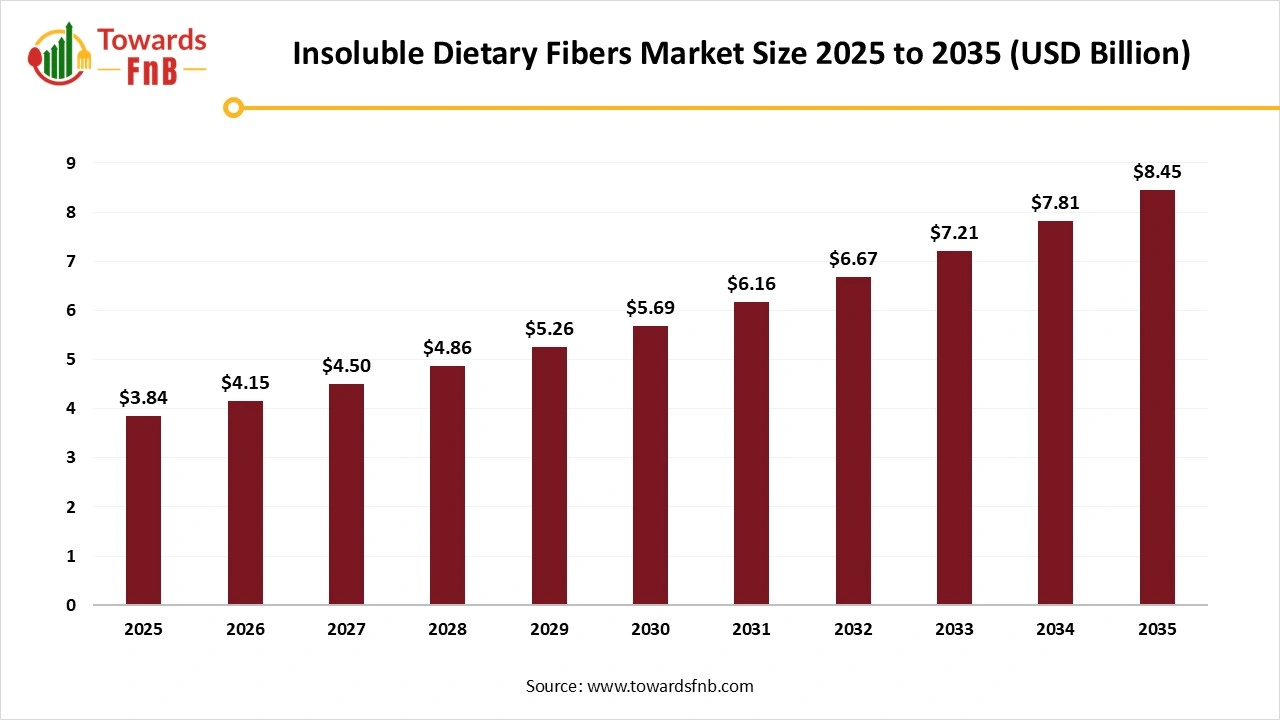
The global insoluble dietary fibers market size reached at USD 3.84 billion in 2025 and is expected to grow steadily from USD 4.15 billion in 2026 to approximately USD 8.45 billion by 2035, with a CAGR of 8.2% during the forecast period from 2026 to 2035. The consumer preference for enhancing digestive health and the increased integration of fibers in food products drive market growth.
| Study Coverage | Details |
| Growth Rate from 2026 to 2035 | CAGR of 8.2% |
| Market Size in 2026 | USD 4.15 Billion |
| Market Size in 2027 | USD 4.50 Billion |
| Market Size by 2035 | USD 8.45 Billion |
| Largest Market | North America |
| Base Year | 2025 |
| Forecast Period | 2026 to 2035 |
| Regions Covered | North America, Europe, Asia-Pacific, Latin America, and Middle East & Africa |
Insoluble dietary fibers are a type of fiber that is insoluble in water and available in plant-based food. They are made from lignin, cellulose, and hemicellulose. They help in stimulating intestinal movement and softening faeces. They offer benefits like prevention of diverticular disease, weight management, relieving constipation, preventing hemorrhoids, and developing a beneficial gut microbiome. They are available in food sources like green beans, pears, lentils, whole wheat flour, quinoa, leafy greens, berries, walnuts, and corn bran.
The growth of the insoluble dietary fibers industry is driven by the need to strengthen digestive health, growing obesity issues, and the rise in the incorporation of fibers with bakery items. The formulation of new ingredients, the shift to natural fibers, and growing constipation rates also drive market growth. Advancements in functional food, the development of dietary supplements, and the increasing use of physical modification foster the market.
The insoluble dietary fibers industry is fueling key technological shifts driven by the huge demand for improving the nutritional profile of food and enhancing functionality. Advancements, like 3D food printing, rheological modelling, simulation, digital modelling, and process optimization, help in maximizing functional properties and enhancing texture. Artificial intelligence (AI) technology is the prominent shift in the market, driven by demand for the development of personalized formulations and optimizing R&D.
AI enhances isolation methods and enhances the texture of insoluble dietary fibers. AI analyzes the purchasing behavior of consumers and identifies the combination of fibers. It lowers the waste of fiber and analyzes phenolic compounds. It develops fiber-enriched items and enhances the stability of fibers. AI also rapidly discovers ingredients and analyzes the nutritional profile of fibers. Overall, AI supports the development of cost-effective formulation.
Raw Material Procurement
Processing and Preservation
Quality Testing and Certifications
Why North America Dominated the Insoluble Dietary Fibers Market?
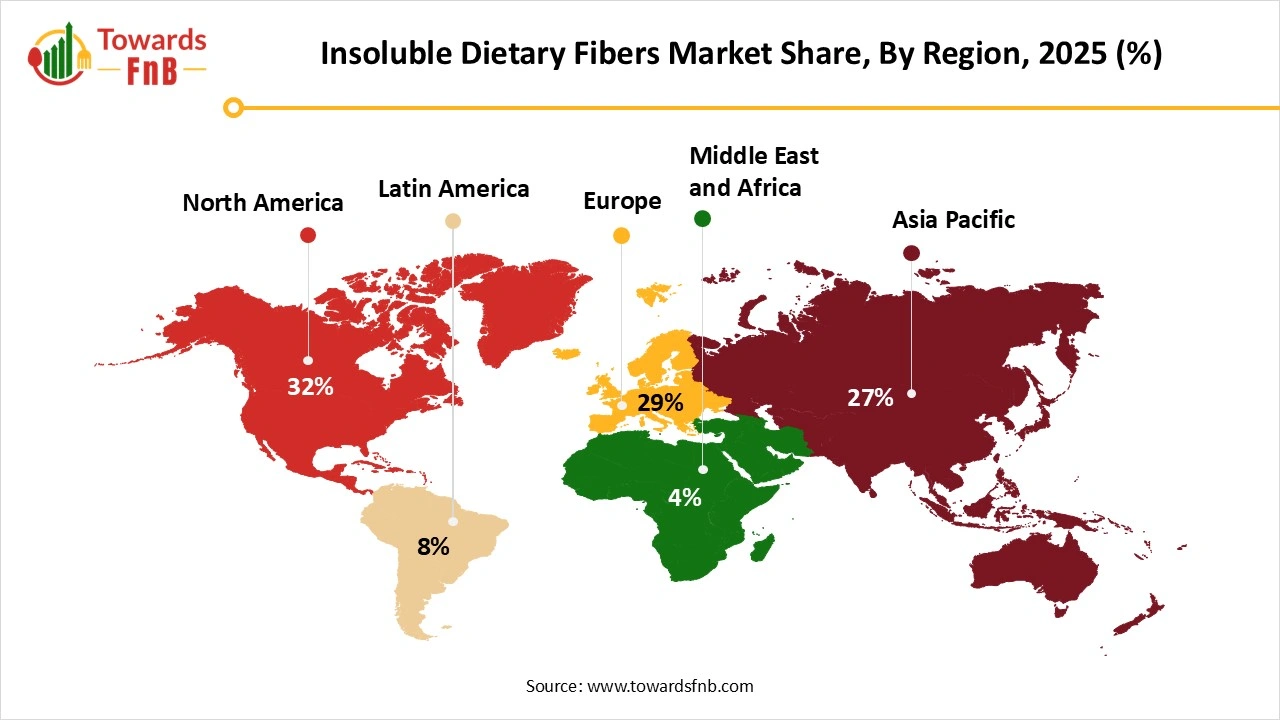
North America held a major market share of 32% in 2025 due to the well-established infrastructure for manufacturing functional foods. Consumer awareness about weight management and the increased rate of diabetes increases the adoption of insoluble dietary fibers. The rise in product fortification and the increased awareness of dietary needs increase demand for insoluble dietary fibers. The strong presence of the beverage sector drives the overall market growth.
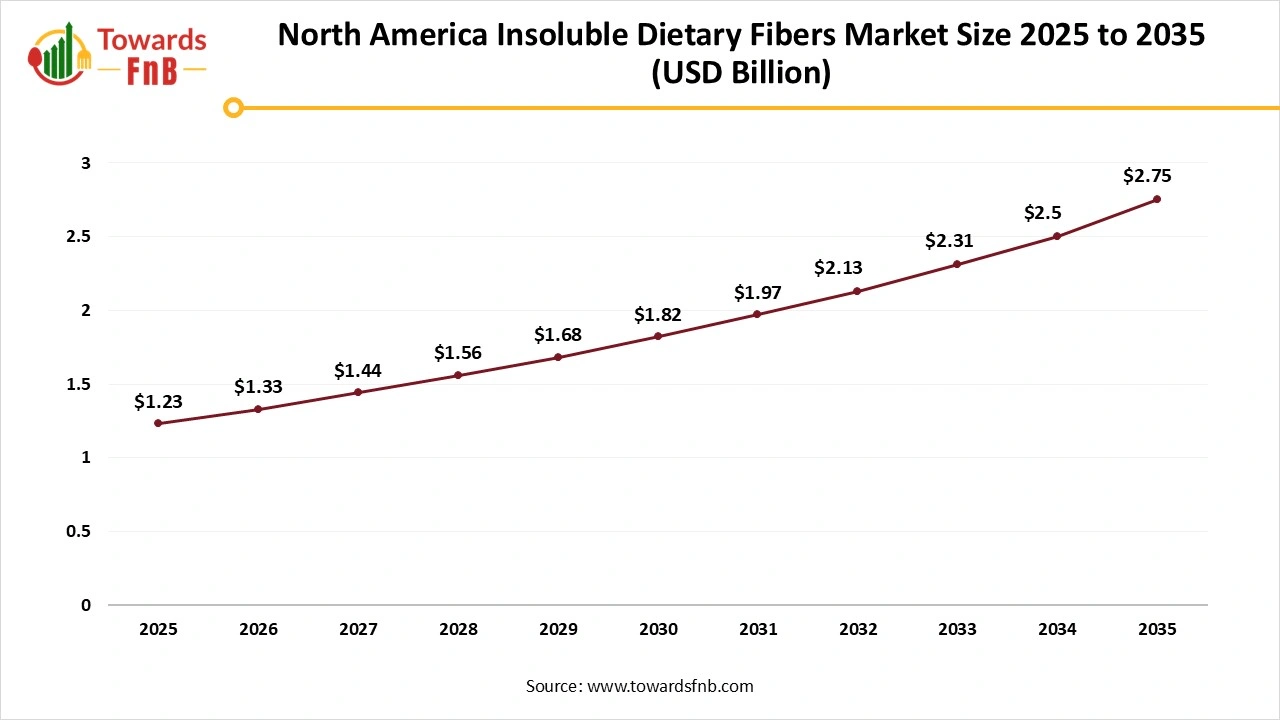
North America Insoluble Dietary Fibers Market Size 2026 to 2035
The North America insoluble dietary fibers market size was valued at USD 1.23 billion in 2025 and is expected to grow steadily from USD 1.33 billion in 2026 to reach nearly USD 2.75 billion by 2035, with a CAGR of 8.38% during the forecast period from 2026 to 2035.
United States Leadership in Insoluble Dietary Fiber
The United States is the top contributor to the market. The strong focus on enhancing metabolic health and the extensive food industry increases demand for insoluble dietary fibers. The huge demand for clean-label foods and the awareness about health guidelines increase the demand for insoluble dietary fibers. The expanding base of specialty diets supports the overall market growth.
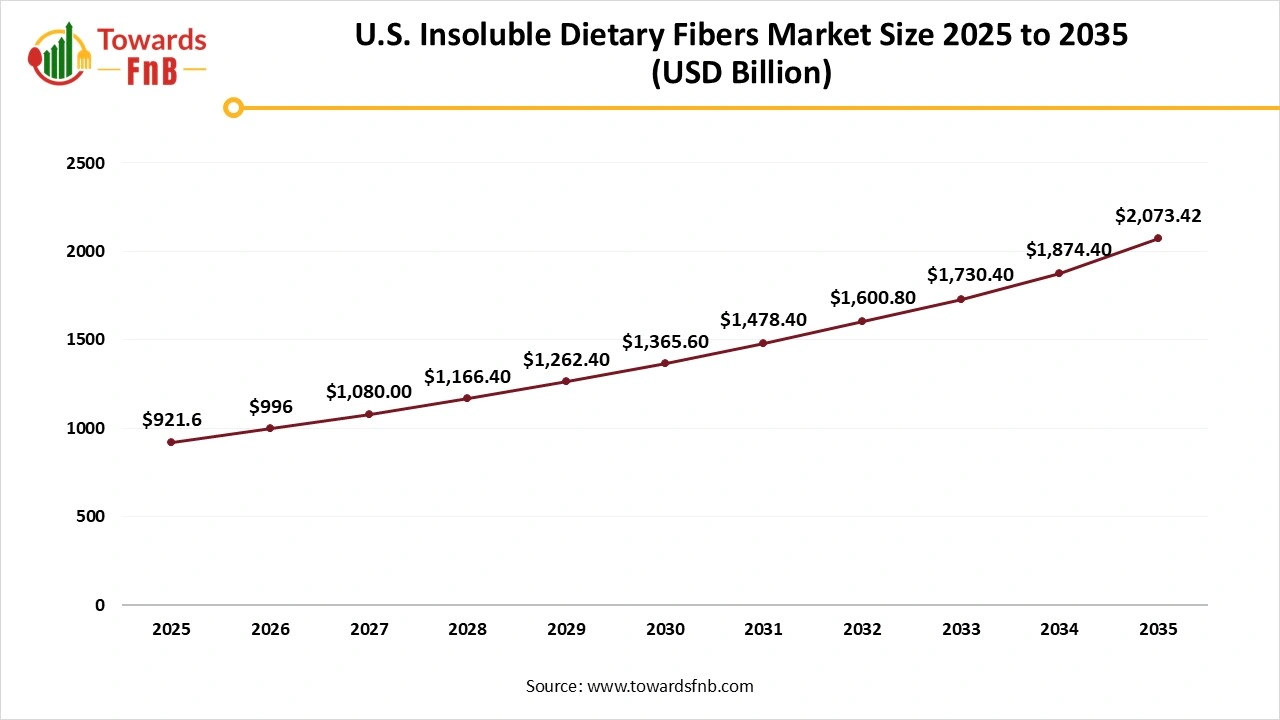
U.S. Insoluble Dietary Fibers Market Size 2026 to 2035
The U.S. insoluble dietary fibers market size was calculated at USD 921.6 billion in 2025 with projections indicating a rise from USD 996 billion in 2026 to approximately USD 2,073.42 billion by 2035, expanding at a CAGR of 8.45% throughout the forecast period from 2026 to 2035.
How is Asia-Pacific Growing in the Insoluble Dietary Fibers Market?
Asia-Pacific held 28% of the market share in 2025 and is expected to grow at the fastest CAGR of 9.6% during the forecast period due to the rapid dietary shifts. The availability of immune system knowledge and the surge in purchases of premium foods increase demand for dietary fibers. The health awareness in middle-class people and innovations in the food industry increase the adoption of insoluble dietary fibers. The strong traditional diet culture and the government backing for nutritional improvement boost market growth.
India’s Story of Insoluble Dietary Fibers
India is rapidly expanding in the market. The consumer shift to preventing chronic illness and the focus on lifestyle management increase demand for insoluble dietary fiber. The growth in nutritional supplements and the changing dietary patterns increases the adoption of insoluble dietary fibers. The easy availability of fiber fortified foods and the ongoing development of clean-label fiber-based items support the overall market growth.
The Cereals and Grains Segment Dominated the Market with 42% of Market Share in 2025
The cereals and grains segment dominated the insoluble dietary fibers market with a share of 42% in 2025 due to the strong availability and high abundance. The extensive bran manufacturing and the cost-efficient processing increase the adoption of cereals & grains. The integration of cereals & grains in popular food items and the increased global consumption of cereal items drive the segment’s growth.
The fruit and vegetables segment held the second-largest market share of 24% in 2025 and is expected to grow at the fastest CAGR of 8.9% during the forecast period due to the transition towards natural ingredients. The regulation of glucose and the focus on developing cost-effective fiber ingredients increase the use of fruits & vegetables. The increased versatility of fruit fibers boosts the segment’s growth.
The legumes segment held the third-largest market share of 14% in 2025 due to the trending plant proteins. The management of cardiovascular issues and the popularity of nutrient-dense modern diets increase demand for legumes. The expansion of meat-alternative sectors and the incorporation of legumes in food technology drive the segment’s growth.
The nuts and seeds segment held the fourth-largest market share of 10% in 2025 due to the increased use of flax fibers in food products. The rise in plant-based nutrition and the shift to clean-label staples increase demand for nuts & seeds. The healthy snackification and the explosive growth in consumption of nutrition bars increase the adoption of nuts & seeds, supporting the segment’s growth.
The Cellulose Segment Led the Market with 38% of Market Share in 2025
The cellulose segment led the insoluble dietary fibers market with a share of 38% in 2025 due to the extensive utilization of cellulose in processed food. The effective stabilizer demand and the need for excellent bulking in food items increase the adoption of cellulose. The increased use of cellulose as a meat substitute helps with expansion. The regulatory support, multifunctionality, superior processing, and low cost of cellulose drive the segment’s growth.
The resistant starch segment held the second-largest market share of 24% in 2025 and is expected to grow at the fastest CAGR of 9.3% during the forecast period due to the increased adoption of low-glycemic foods. The increased flour replacement in food products and the development of low-carb products increase the adoption of resistant starch. The resistant starch benefits in weight management support the segment’s growth.
The hemicellulose segment held the third-largest market share of 22% in 2025 due to its expansion in food fortification. The growing plant-based sector and the growing grain-based applications increase demand for hemicellulose. The growing demand for emulsion stabilizers and the production of SCFA increases the adoption of hemicellulose, supporting the overall segment’s growth.
The lignin segment held the fourth-largest market share of 16% in 2025 due to the increased use in pharmaceutical products. The focus on lowering waste in the food industry and the high-fiber trends increase demand for lignin. The explosive growth of natural fiber and improvement of meat stability uses lignin, boosting the overall segment’s growth.
The Food and Beverages Segment Held the Largest Market Share of 46% in 2025
The food and beverages segment held the largest revenue share of 46% in the insoluble dietary fibers market in 2025 due to the high consumption rate of fiber-enriched food items. The consumer demand for digestion-boosting foods and the expansion of functional fortification increase the demand for insoluble dietary fibers. The huge demand for cost-efficient food items and the focus on maintaining the structure of food drives the overall segment’s growth.
The dietary supplements segment held the second-largest market share of 20% in 2025 and is expected to grow at the fastest CAGR of 9.5% during the forecast period due to the increased production of digestive health products. The popularity of fiber supplements and the expansion of the elderly demographics increases adoption of insoluble dietary fibers. The preference for convenience dietary supplements supports the segment’s growth.
The animal feed segment held the third-largest market share of 14% in 2025 due to the focus on enhancing animal gut health. The increased humanization of pet diets and the need to enhance livestock health increase demand for insoluble dietary fibers. The expansion of specialized animal feed boosts the overall growth of the segment.
The pharmaceuticals segment held the fourth-largest market share of 12% in 2025 due to the increasing use in the healthcare sector. The development of herbal nutraceuticals and a focus on enhancing the stability of API increases use of insoluble dietary fibers. The need to enhance the hardness of the tablet and the manufacturing of fiber-based pharmaceuticals support the segment’s growth.
The Digestive Health Segment Contributed the Highest Market Share of 40% in 2025
The digestive health segment contributed the biggest revenue share of 40% in the insoluble dietary fibers market in 2025 due to increased preference for gut health solutions. The globally growing constipation risks and awareness about digestive maintenance increase the adoption of insoluble dietary fibers. The prevalence of age-based digestive issues and focus on relieving hemorrhoids increases the consumption of functional food enriched with fiber, driving the overall segment’s growth.
The weight management segment held the second-largest market share of 22% in 2025 and is expected to grow at the fastest CAGR of 8.8% during the forecast period due to the explosion of fitness trends. The growing weight-based disorders and the younger demographic awareness about weight management increase demand for insoluble dietary fibers. The benefits of appetite control support the overall segment’s growth.
The blood sugar control segment held the third-largest share of 20% in the market in 2025 due to high prevalence of diabetes. The strong focus on enhancing glycemic response and improving insulin sensitivity increases demand for insoluble dietary fiber. The management of prediabetes signs and the need to slow glucose absorption increase the consumption of insoluble dietary fibers, boosting the overall segment’s growth.
The cholesterol reduction segment held the fourth-largest market share of 18% in 2025 due to the awareness about minimizing LDL cholesterol levels. The need to lower the intake of calories and the growing atherosclerosis issue increase demand for insoluble dietary fibers. The focus on controlling cholesterol supports the segment’s growth.
The Powder Segment Dominated the Market with 55% of Market Share in 2025
The powder segment dominated the insoluble dietary fibers market with a 55% share in 2025 due to the growing industrial use. The compatibility of powder form with food formulations and efficient manufacturing process boosts market expansion. The excellent water-holding capacity, easy blending, smooth mouthfeel, reliable production, and enhanced satiety of powder form drive the segment’s growth.
The granules segment held the second-largest market share of 25% in 2025 due to the increased use in snack formulations. The development of premium food formulation and the focus on the prevention of texture alteration increases use of granules. The liquid-based food items and expanding cereal production increase the use of granules. The higher stability and improved processing of granules support the segment’s growth.
The capsules/tablets segment held the third-largest market share of 20% in 2025 and is expected to grow at the fastest CAGR of 9.1% during the forecast period due to the surging consumption of supplements. The growth in working professionals and the focus on controlled fiber intake increase the adoption of capsules/tablets. The development of convenient nutraceuticals and the rising knowledge about digestive wellness support the segment’s growth.
The B2B Segment Dominated the Market with 62% of Market Share in 2025
The B2B segment dominated the insoluble dietary fibers market with a 62% share in 2025 due to huge demand from large-scale manufacturers. The focus on product reformulation and the consistent requirement of product increases the adoption of B2B. The manufacturer's priority for cost-effective bulk buying and growing industrial applications increases adoption of B2B. The processing stability and long-term contracts of B2B drive the segment’s growth.
The B2C segment held the second-largest market share of 38% in 2025 and is expected to grow at the fastest CAGR of 9.2% during the forecast period due to the increased accessibility of online platforms. Consumer preference for fiber-rich diets and increased buying convenient product increases the adoption of B2C. The product innovation and growing retail demand support the overall segment’s growth.
Sankyo Foods
Ingredion
By Source
By Type
By Application
By Functionality
By Form
By Distribution Channel
By Region





Principal Consultant
Vidyesh Swar, Senior Research Analyst at Towards Food & Beverages, specializes in market research, focusing on supply-demand evaluation, pricing analysis, alternative proteins, plant-based foods, and sustainable food technologies within the industry.
Learn more about Vidyesh Swar
Reviewed By
Aditi Shivarkar, with 14+ years in Food and Beverages market research, specializes in food, beverage, and eco-friendly packaging. She ensures accurate, actionable insights, driving Towards FnB's excellence in industry trends and sustainability.
Learn more about Aditi ShivarkarApril 2026
March 2026
April 2026
March 2026

Insoluble Dietary Fibers Market


 +1 804-441-9344
 Download Sample
 Schedule a Meeting