April 2026



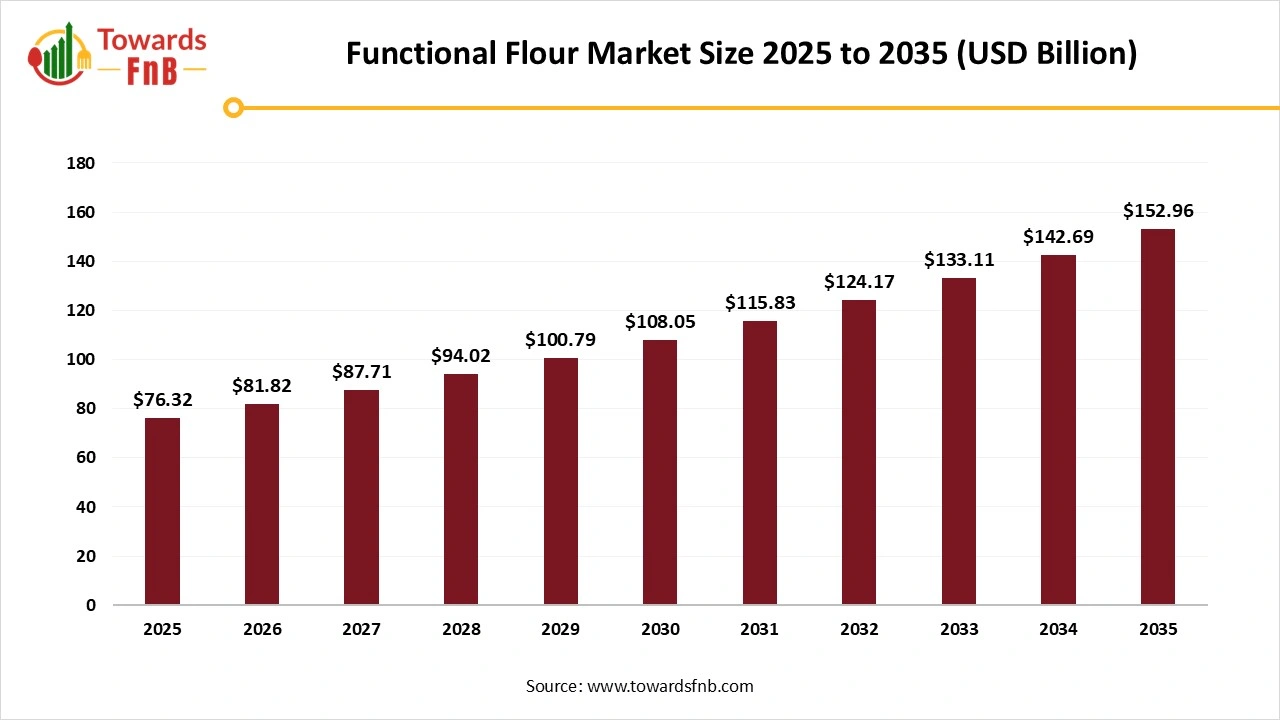
The global functional flour market size estimated at USD 76.32 billion in 2025 and is predicted to increase from USD 81.82 billion in 2026 to nearly reaching USD 152.96 billion by 2035, growing at a CAGR of 7.2% during the forecast period from 2026 to 2035. The rising interest in high-protein flours and the increased awareness of preventive nutrition drive market growth.
| Study Coverage | Details |
| Growth Rate from 2026 to 2035 | CAGR of 7.2% |
| Market Size in 2026 | USD 81.82 Billion |
| Market Size in 2027 | USD 87.71 Billion |
| Market Size by 2035 | USD 152.96 Billion |
| Largest Market | North America |
| Base Year | 2025 |
| Forecast Period | 2026 to 2035 |
| Regions Covered | North America, Europe, Asia-Pacific, Latin America, and Middle East & Africa |
Functional flour is flour made up of various ingredients like seeds, cereals, nuts, oilseeds, legumes, and others to offer nutritional benefits. It consists of properties like improved fiber content, enhanced oil absorption capacity, foaming, bulk density, water holding capacity, excellent stability, swelling capacity, and superior gelation. It offers benefits like lowering cholesterol, enhancing product texture, increasing shelf life, high protein content, and enhancing gut health. The examples of functional flour are coconut flour, chickpea flour, oat flour, millet flour, sprouted flour, almond flour, and many others. They are widely used in snacks, meat alternatives, bakery products, sauces, cereals, high-fiber foods, and convenience food.
The functional flour market growth is driven by the popularity of paleo diets, expansion of RTE snacks, surge of plant-based diets, shift away from refined flours, increased gluten-free flour production, growing food industry, strong preference for plant-based flours, rising popularity of nut-based flours, and shift towards keto diets.
The functional flour is undergoing key technological changes driven by demand for improving texture, sustainability, and enhancing nutritional value. Advancements like smart manufacturing, advanced processing, automation, IoT sensors, and digitalization enhance production efficiency, improve extensibility, and enhance functional properties. The AI incorporation is the major integration driven by demand for enhancing consistency, product innovation, and optimizing milling operations.
AI adjusts production parameters in real-time and detects imperfections in flours. It provides a precise blending of raw materials and optimizes the process of grain blending. It extends the machine's lifespan and lowers the use of energy. AI easily creates new formulations of flour and identifies consumer preferences. It easily discovers bioactive ingredients and manufactures specialized functional flours. Overall, AI easily performs complex tasks and produces high-quality products.
Raw Material Procurement
Processing and Preservation
Quality Testing and Certifications
| Type | Health Benefits | Application |
| Chia Flour | Weight Management Blood Sugar Regulation Heart Health Support |
Smoothies Oatmeal Baking Jams Beverages |
| Chickpea Flour | Lowers Disease Risk High Protein Source Blood Sugar Management |
Flatbreads Homemade Pasta Savory Batters Sauces |
| Sorghum & Millet Flour | Weight Loss Heart Health Improvement Diabetes Management |
Baking Goods Snacks Pasta |
| Green Banana Flour | Promotes Digestive Health Lowers Cardiovascular Risk Manages Sugar Intake |
Energy bars Baby Food Savory Dishes |
Why North America Dominates the Functional Flour Market?
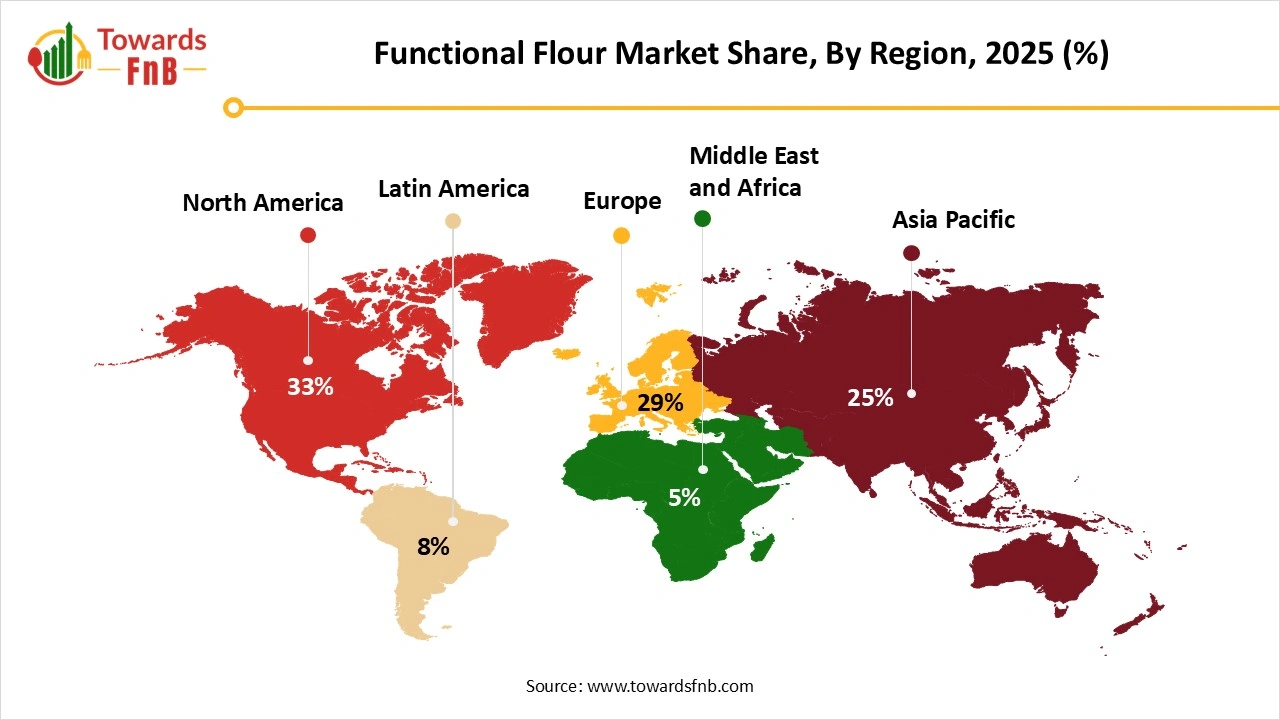
North America dominated the functional flour market in 2025. The consumer's strong focus on managing health disorders and the increased production of plant-based products increase demand for functional flour. The clean-label movement and the shift towards specialized diets increases adoption of functional flour. The thriving bakery industry and strong demand for convenient food require functional flour. The robust food manufacturing sector drives the overall market growth.
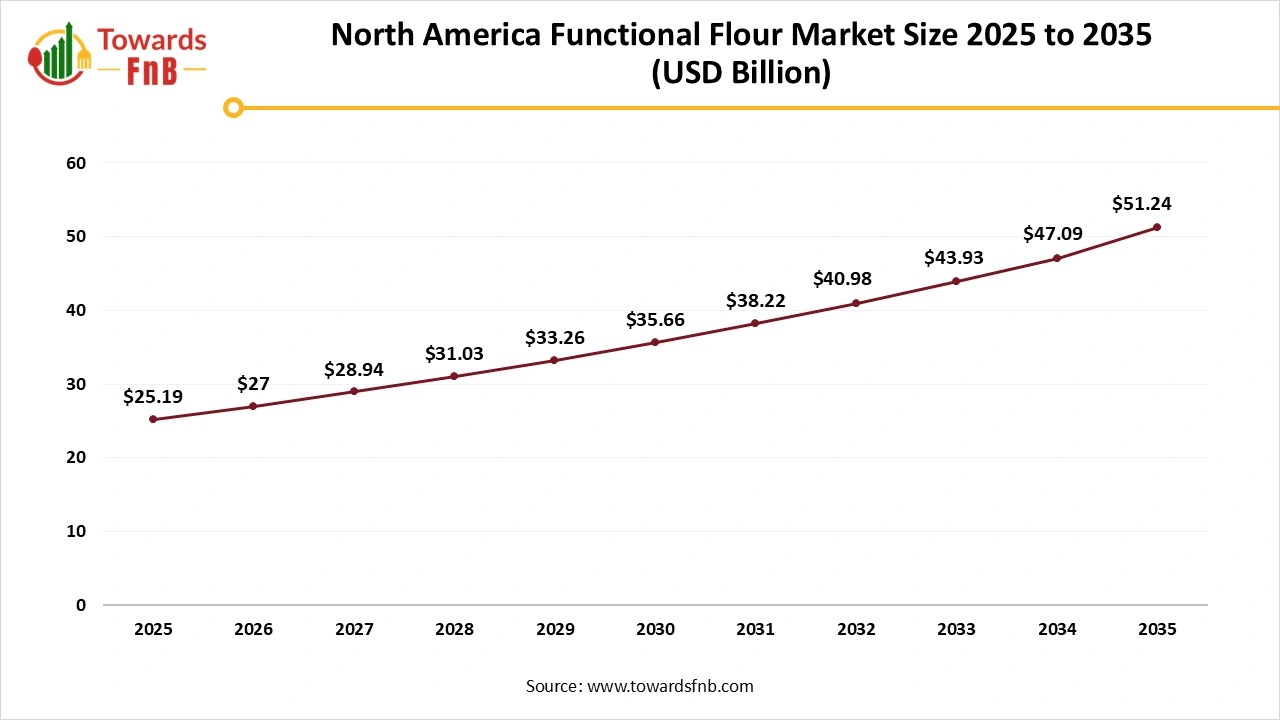
North America Functional Flour Market Size 2025 to 2035
The North America functional flour market size was calculated at USD 25.19 billion in 2025 with projections indicating a rise from USD 27 billion in 2026 to approximately USD 51.24 billion by 2035, expanding at a CAGR of 7.36% throughout the forecast period from 2026 to 2035.
Powering Nutrition: The United States Role in Functional Flour
The United States is a key contributor to the market. The move towards health-conscious diets and the growth in the gluten-free industry increase demand for functional flours. The presence of an advanced food manufacturing base and the increased consumption rate of fortified foods increase the adoption of functional flour. Companies like ADM, Bunge Limited, Cargill, and others support the overall market growth.
How Big is the U.S. Functional Flour Market?
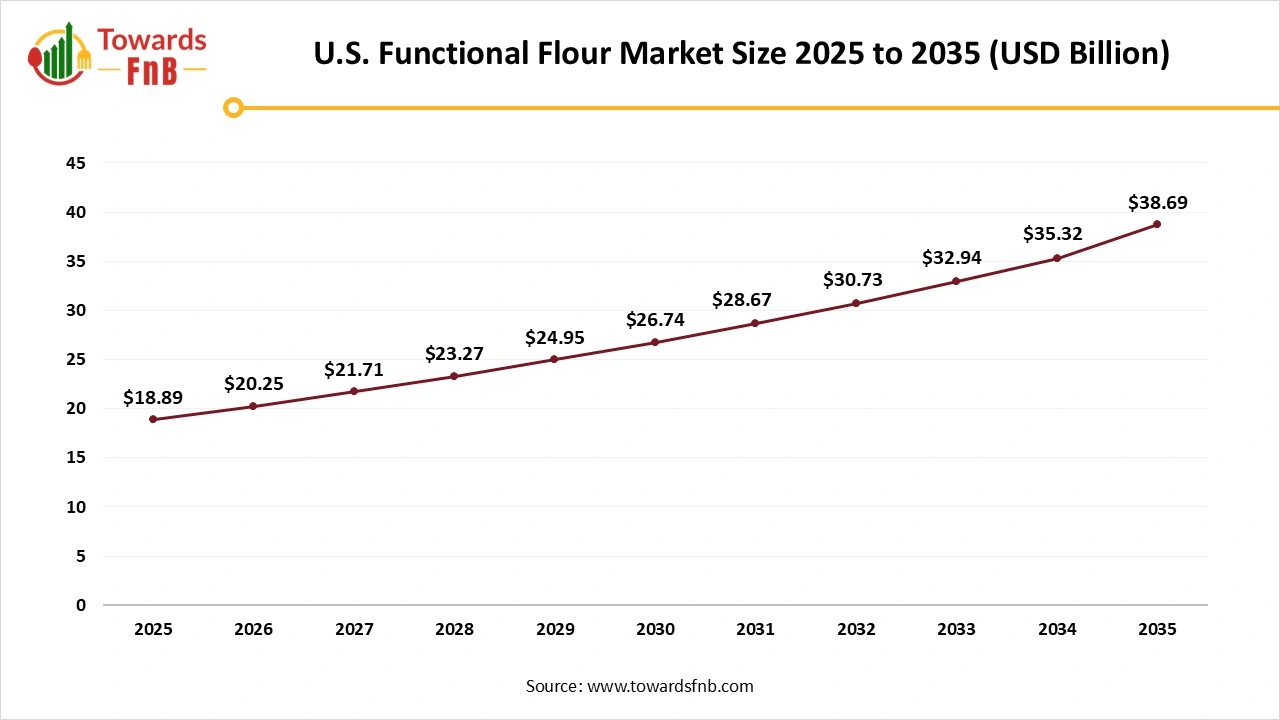
The U.S. functional flour market size was valued at USD 18.89 billion in 2025 and is expected to grow steadily from USD 20.25 billion in 2026 to reach nearly USD 38.69 billion by 2035, with a CAGR of 7.43% during the forecast period from 2026 to 2035.
Asia Pacific Functional Flour Market Trends
Asia Pacific is experiencing the fastest growth in the market during the forecast period. The increased rate of lifestyle-related disorders and the strong preference for RTE meals increase demand for functional flour. The higher-spending on gluten-free products and the expanding food processing industry increase the adoption of functional flour. The strong focus on preventing malnutrition and the increased purchasing of protein-enriched foods require functional flour, driving the overall market growth.
Nation Nourishment: Functional Flour Transformation in India
India is substantially growing in the market. The growing consumption of healthy diets and the booming millet products increases demand for functional flour. The growing innovations in the hydrothermal treatment and the move towards RTE foods increases adoption of functional flour. The increased awareness of food allergies and the growing demand for health-promoting foods require functional flour, supporting the overall market growth.
Functional Flour Market Share, By Product Type, 2025 (%)
| Segments | Shares (%) |
| Whole Wheat Flour | 40% |
| White Flour | 25% |
| Self-Raising Flour | 10% |
| Bread Flour | 10% |
| Multigrain Flour | 15% |
Why the Whole Wheat Flour Segment Dominates the Functional Flour Market?
The whole wheat flour segment dominated the functional flour market in 2025. The strong focus on non-GMO products and the need to combat obesity increase demand for whole wheat flour. The increased popularity of specialty baking and the strong focus on less processed food increases adoption of whole wheat flour. The increased consumption of nutrient-fortified products and the shift towards healthy baking increase demand for whole wheat flour, driving the overall market growth.
The White Flour Segment is the Fastest-Growing in the Market During the Forecast Period
The thriving growth of RTE products and a strong focus on functional enhancements of food products increase demand for white flour. The need for airy texture in baked goods and the fortification trends increases adoption of white flour. The longer shelf life, convenience, superior textural performance, and excellent texture of white flour support the overall market growth.
Functional Flour Market Share, By Application, 2025 (%)
| Segments | Shares (%) |
| Bakery Products | 40% |
| Confectionery Products | 12% |
| Sauces and Gravies | 8% |
| Snack Foods | 15% |
| Beverages | 10% |
How did the Bakery Products Segment hold the Largest Share in the Functional Flour Market?
The bakery products segment held the largest revenue share in the functional flour market in 2025. The strong focus on high-quality bakery products and the increased consumption of RTE bakery items increase demand for functional flour. The increased production of bread and the higher demand for bakery product feedstocks require functional flour. The increased pastry consumption and the need to enhance the moisture retention of bakery products increase the adoption of functional flour, supporting the overall market growth.
The Snack Foods Segment is Experiencing the Fastest Growth in the Market During the Forecast Period
The consumer shift towards portable snacks and the development of gluten-free snacks require functional flour. The increased production of plant-based snacks and the popularity of corn-based products increase demand for functional flour. The increased consumption of savory snacks supports the overall market growth.
Functional Flour Market Share, By End Use, 2025 (%)
| Segments | Shares (%) |
| Household | 60% |
| Food Service | 30% |
| Industrial | 10% |
Why did Household Segment Dominated the Functional Flour Market?
The household segment dominated the functional flour market in 2025. The strong focus on managing diabetes and the growing diet restrictions increases demand for functional flour. The rise in home-based cooking and the growing health-consciousness of families increases the adoption of functional flour. The rise in cooking experimentation and the robust growth in home pantries create higher demand for functional flour, driving the overall market growth.
The Food Service Segment is the Fastest-Growing in the Market During the Forecast Period
The growing number of restaurants and the strong focus on menu differentiation increase demand for functional flour. The development of on-the-go meals and the rise in consumption of pizza require functional flour. The availability of premium baked goods and the popularity of food service kitchens require functional flour, supporting the overall market growth.
Why Nutritional Fortification Segment hold the Largest Share in the Functional Flour Market?
The nutritional fortification segment held the largest revenue share in the functional flour market in 2025. The growing awareness of malnutrition and a strong focus on micronutrient intake increase demand for functional flour. The rise in school meal programs and the growing public health disorders require nutritional fortification of functional flour. The strong focus on social safety and the focus on preventing chronic disease drive the market growth.
The Gluten-Free Segment is Experiencing the Fastest Growth in the Market During the Forecast Period
The popularity of gluten-free diets and the focus on the consumption of healthy products increase demand for gluten-free functional flour. The rise in celiac disease and the focus on better digestion increase demand for gluten-free functional flour. The high rate of gluten-free flour consumption and the development of allergen-friendly options support the overall market growth.
Agrain and Deimos
ITC Ltd
Nutriearth
By Product Type
By Application
By End Use
By Functional Properties
By Region





Principal Consultant
Vidyesh Swar, Senior Research Analyst at Towards Food & Beverages, specializes in market research, focusing on supply-demand evaluation, pricing analysis, alternative proteins, plant-based foods, and sustainable food technologies within the industry.
Learn more about Vidyesh Swar
Reviewed By
Aditi Shivarkar, with 14+ years in Food and Beverages market research, specializes in food, beverage, and eco-friendly packaging. She ensures accurate, actionable insights, driving Towards FnB's excellence in industry trends and sustainability.
Learn more about Aditi ShivarkarApril 2026
April 2026
April 2026
April 2026

Functional Flour Market


 +1 804-441-9344
 Download Sample
 Schedule a Meeting