
April 2026



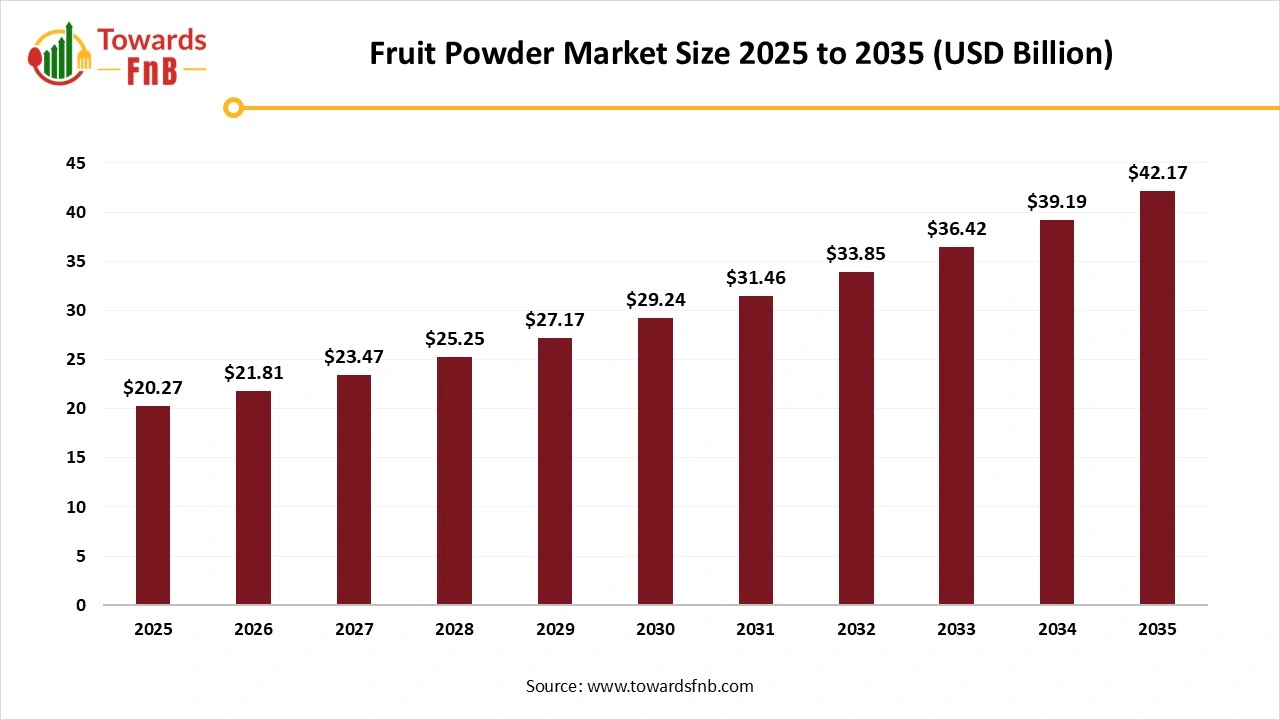
The global fruit powder market size estimated at USD 20.27 billion in 2025 and is anticipated to increase from USD 21.81 billion in 2026 to nearly reaching USD 42.17 billion by 2035, witnessing a CAGR of 7.6% during the forecast period from 2026 to 2035. Rising demand for healthier and natural ingredients is primarily driving the market.
| Study Coverage | Details |
| Growth Rate from 2026 to 2035 | CAGR of 7.6% |
| Market Size in 2026 | USD 21.81 Billion |
| Market Size in 2027 | USD 23.47 Billion |
| Market Size by 2035 | USD 42.17 Billion |
| Largest Market | Asia Pacific |
| Base Year | 2025 |
| Forecast Period | 2026 to 2035 |
| Regions Covered | North America, Europe, Asia-Pacific, Latin America, and Middle East & Africa |
The fruit powder market pertains to the worldwide sector manufacturing fruit in powdered formats, sourced through freeze drying, spray drying, vacuum drying, and various dehydration methods. Fruit powders are appreciated for their extended shelf life, practicality, concentrated nutrients, ease of use, and adaptability in food and beverages, confections, baking, dietary supplements, dairy products, and nutraceuticals. The market is propelled by increasing demand for clean-label and functional foods, trends focused on consumer convenience, and the expansion of the worldwide health and wellness sector
Innovations such as vacuum freeze-drying, microencapsulation, and nanoencapsulation promise improvements in nutrient retention and flavor stability, enhancing product quality. Hybrid technologies that combine spray drying with methods like vacuum drying or ultrasound pretreatment show potential for processing fruits with high sugar content or heat sensitivity. Computational fluid dynamics modeling allows for precise customization of drying chamber designs tailored to specific fruit powder, optimizing airflow patterns and temperature distribution for superior results.
Raw Material Procurement
Processing
Distribution
What Made the Asia Pacific a Dominant Region in the Fruit Powder Market?
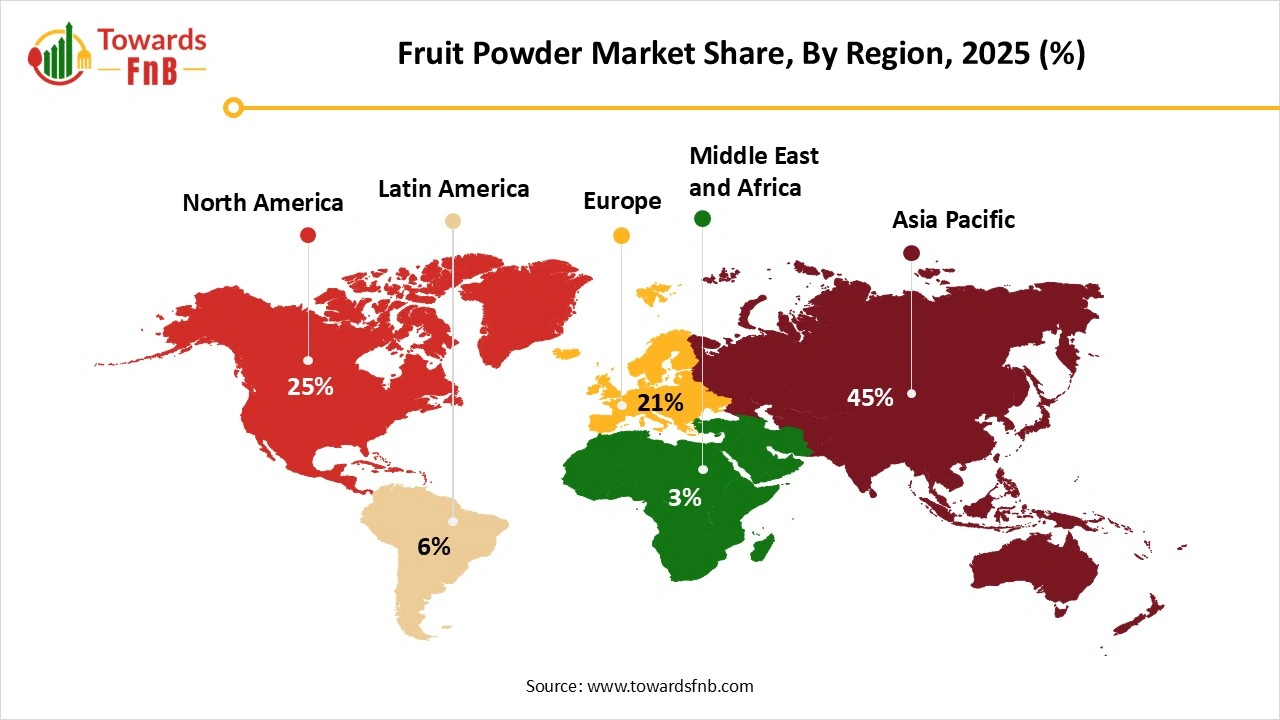
Asia Pacific dominated the market with approximately 45% share in 2025. The Asia Pacific fruit powder market is experiencing significant growth, driven by rapid urbanization in key economies such as China, India, and Southeast Asian nations. As urban populations expand, the demand for convenient, health-oriented food products rises, contributing to the growth of the market. Main drivers of this regional growth include the acceptability, accessibility, and affordability of fruit powders.
Asia Pacific Fruit Powder Market Size 2025 to 2035
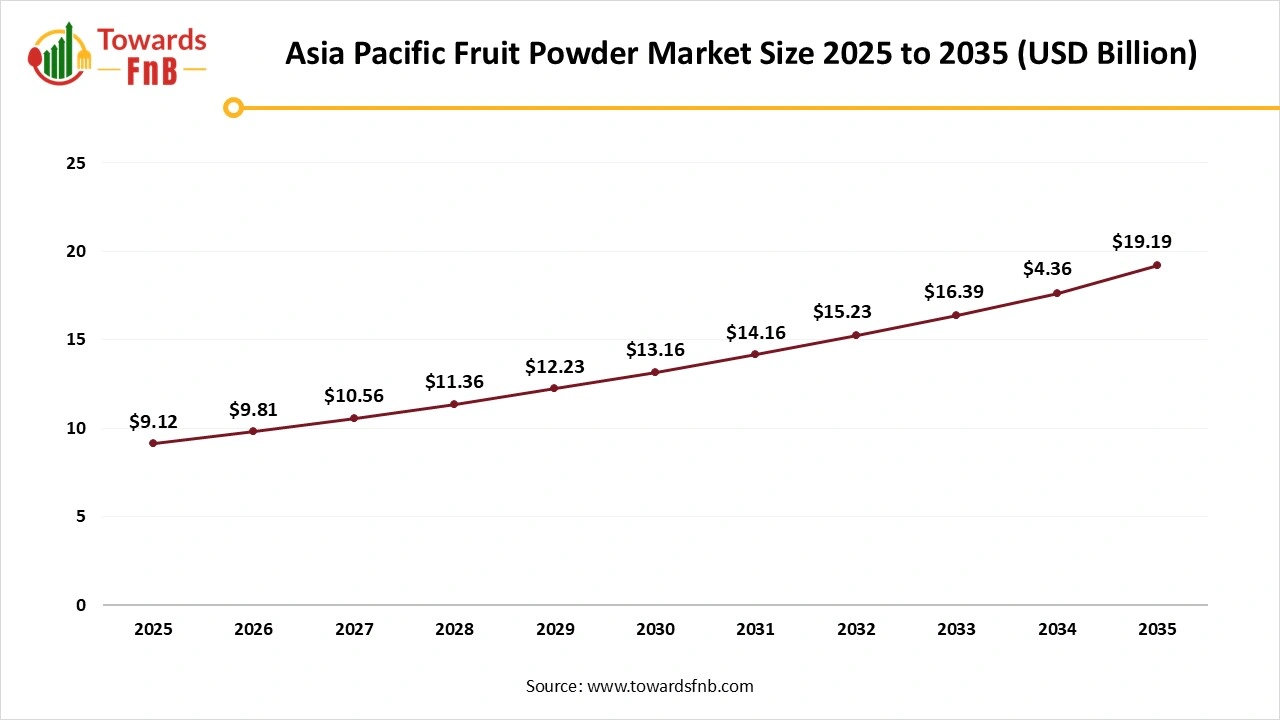
The Asia Pacific fruit powder market size was calculated at USD 9.12 billion in 2025 with projections indicating a rise from USD 9.81 billion in 2026 to approximately USD 19.19 billion by 2035, expanding at a CAGR of 7.72% throughout the forecast period from 2026 to 2035.
India Fruit Powder Market Growth Drivers
In India, increased health consciousness among consumers is a primary driver of the growing demand for fruit powders. Superfruits like pomegranate, blueberries, strawberries, and acai berries, which are rich in antioxidants, vitamins, and minerals, are particularly popular among health-conscious individuals. Additionally, the expanding application of fruit powders in the food and beverage sector is crucial to the Indian market. Fruit powders are versatile ingredients used in a wide range of products, including bakery items, dairy products, confectionery, and ready-to-drink beverages. The year-round availability of diverse fruits and vegetables provides a robust raw material base for processing industries, presenting ample opportunities for processing and preserving products with significant export potential.
The Fastest Expansion of the North America Fruit Powder Market
North American fruit powder market is experiencing fastest growth during the forecast period, driven by growing consumer demand for natural, healthy, and convenient food ingredients. As a subset of the broader functional food and nutraceutical sectors, fruit powders are gaining popularity because of their concentrated nutrient profiles, extended shelf life, and versatility in different food applications. The region's growing health-conscious demographic, along with increasing awareness about the benefits of plant-based ingredients, is boosting market expansion. Additionally, the food and beverage industry’s shift towards clean-label and minimally processed products further drives the adoption of fruit powders.
United States Fruit Powder Market Growth
The United States fruit powder market has become a dynamic sector within the broader functional food and health supplement industry. Driven by increasing consumer demand for natural, convenient, and nutrient-dense products, fruit powders have gained significant traction across retail, food service, and industrial sectors. The market's growth trajectory is fueled by rising awareness of the health benefits associated with fruit consumption, innovations in processing technologies, and the expanding popularity of plant-based diets.
Europe Fruit Powder Market Growth
Demand for fruit powders in Europe is expected to grow. Their ability to provide concentrated nutrition, along with natural flavor and color stability, has positioned them as a preferred choice across various product categories. Food and beverage manufacturers are increasingly incorporating fruit powders into ready-to-mix drinks, fortified snacks, and functional confectionery items to meet the rising demand for clean-label, plant-based formulations. Nutraceutical companies are also integrating fruit powders as active ingredients in supplements, leveraging their antioxidant and vitamin profiles to support immune health and energy metabolism.
Germany Fruit Powder Market Trends
The Germany fruit powder market is experiencing significant growth due to the rising consumer demand for convenient and healthy food options. One key trend is the increasing popularity of organic and natural fruit powders, driven by growing health consciousness among consumers. Additionally, there is a trend toward using fruit powders in various applications, including beverages, bakery products, confectionery, and dietary supplements, further fueling market growth.
The Middle East and Africa Fruit Powder Market Expansion
The Middle East and Africa (MEA) fruit powder market is witnessing steady expansion due to the consumer shift toward natural and clean-label food products. The rising demand for shelf-stable, nutrient-dense alternatives, particularly in urban centers, is accelerating the adoption of fruit and vegetable powders in various end-use applications, such as beverages, bakery items, confectionery, soups, and infant nutrition. Furthermore, the region's growing food processing industry, supported by government initiatives in agri-tech and value-added agricultural exports, is bolstering the market outlook.
UAE Fruit Powder Market Analysis
A major driver of the UAE fruit powder market is the increasing demand for convenient and nutritious food products. The ease of storage and longer shelf life of fruit powders make them a popular choice among consumers and food manufacturers. Additionally, the UAE's growing health-conscious population significantly drives the fruit powder market. As consumers seek healthier and more natural food options, the demand for fruit powders continues to rise steadily.
South America Fruit Powder Market Trends
Key trends propelling the South America fruit powder market include a growing demand for healthy and organic food products. The increasing desire for confectionery and baked goods made from clean, natural ingredients is contributing to the growth of the South America fruit powder market. Moreover, the expanding middle class with higher disposable incomes supports premium and innovative product offerings. The availability of a wide variety of fruit flavors and the growing popularity of functional drinks with added health benefits also influence market growth.
Brazil Fruit Powder Market Study
Brazil's fruit powder market is thriving, not only because of tropical mangoes and sweet acai berries but also due to booming global demand, tech-driven innovation, and strategic investment. As the industry evolves, it faces dynamic challenges from policy shifts and weather impacts. Brazilian fruits have long been synonymous with diversity, bold flavors, and rich nutrition. Now, in powdered form, they are capturing the attention and trust of the global market.
Fruit Powder Market Share, By Fruit Type, 2025 (%)
| Segments | Shares (%) |
| Citrus Fruits | 38% |
| Berries | 25% |
| Tropical Fruits | 15% |
| Apple & Pear | 12% |
| Exotic / Superfruit Powders | 10% |
Why did the Citrus Fruit Segment Dominate the Fruit Powder Market in 2025?
The citrus fruit segment led the fruit powder market with approximately 38% share in 2025. As consumers increasingly avoid synthetic flavorings and preservatives, they are opting for natural alternatives. Citrus powders, derived from fruits like oranges, lemons, limes, and grapefruits, perfectly meet this demand due to their rich nutritional profiles and natural origins. Their high vitamin C content and antioxidant properties make them popular choices in the food and beverage sector, further propelling market growth. Citrus is one of the major fruit crops globally, cultivated in over 140 countries, which boosts demand even further.
The Exotic/Superfruit Powders Segment is Observed to Grow at the Fastest Rate During the Forecast Period.
There is growing demand for superfruit powders, giving a value addition for added energy, digestive, and immunity benefits. Personal nutrition is a growth trend that has opened an avenue for superfruits in powder form that is tailored to the health needs and preferences of each individual.
Fruit Powder Market Share, By Form, 2025 (%)
| Segments | Shares (%) |
| Freeze-Dried | 42% |
| Spray-Dried | 20% |
| Vacuum-Dried | 15% |
| Hot Air-Dried | 10% |
| Spray-Freeze-Dried & Specialty Powders | 13% |
Which Form of the Fruit Powder Dominated the Fruit Powder Market in 2025?
The freeze-dried segment held the dominating the market with approximately 42% share in 2025. As global health awareness continues to rise, individuals are increasingly seeking nutrient-dense food options. Freeze-dried fruit powders present an advantageous solution due to their high retention of vitamins and minerals. Furthermore, advancements in freeze-drying technology have enhanced product quality and reduced production costs, thereby increasing accessibility for manufacturers. These fruit powders serve as a natural and additive-free alternative for flavoring and coloring in diverse food and beverage applications.
The Spray-Freeze-Dried and Specialty Powders Segment is Projected to Experience Significant Growth During the Forecast Period.
This growth is attributed to the unique combination of the nutritional benefits associated with freeze-drying, such as excellent retention of nutrients, flavor, and color, with the cost-effectiveness of spray-drying, which is efficient for large-scale production. This dual advantage effectively addresses the demand for premium, healthy, and convenient products, including supplements, cosmetics, and clean-label foods, despite their higher costs compared to solely spray-dried options.
Fruit Powder Market Share, By End-Use, 2025 (%)
| Segments | Shares (%) |
| Food & Beverages | 50% |
| Dietary Supplement Manufacturers | 12% |
| Pharmaceutical & Nutraceutical | 8% |
| Cosmetic & Personal Care | 5% |
| E-commerce / Direct-to-Consumer Packaged Products | 25% |
Which End-Use Segment Dominated the Fruit Powder Market in 2025?
The food and beverage segment dominated the market with approximately 50% share in 2025. Fruit powders, which contain no artificial coloring or preservatives, are ideally suited for various formats, including beverages, coffee drinks, powdered protein shakes, fermented alcohol, juices, and smoothies. Depending on the grade selected, fruit powders can also be utilized in products such as biscuits, cereals, teas, and infusions. The myriad benefits of fruit powders have contributed to their extensive application across the food and beverage industry.
The E-commerce/Direct-to-Consumer Packaged Products Segment is Expected to Exhibit the Fastest Growth During the Forecast Period.
This growth is driven by increasing health consciousness, a rising demand for natural and plant-based ingredients, the convenience of online shopping, and the expansion of e-commerce platforms. Direct-to-consumer brands are capitalizing on these trends to offer a broader array of specialized or exotic products, responding to niche market needs through personalized formulations that provide benefits beyond fundamental nutrition.
Dole with Givaudan
Piping Rock Health Products
Zest Element
By Fruit Type
By Form
By End-Use Industry
By Region




Principal Consultant
Vidyesh Swar, Senior Research Analyst at Towards Food & Beverages, specializes in market research, focusing on supply-demand evaluation, pricing analysis, alternative proteins, plant-based foods, and sustainable food technologies within the industry.
Learn more about Vidyesh Swar
Reviewed By
Aditi Shivarkar, with 14+ years in Food and Beverages market research, specializes in food, beverage, and eco-friendly packaging. She ensures accurate, actionable insights, driving Towards FnB's excellence in industry trends and sustainability.
Learn more about Aditi ShivarkarApril 2026
April 2026
April 2026
April 2026

Fruit Powder Market


 +1 804-441-9344
 Download Sample
 Schedule a Meeting