April 2026



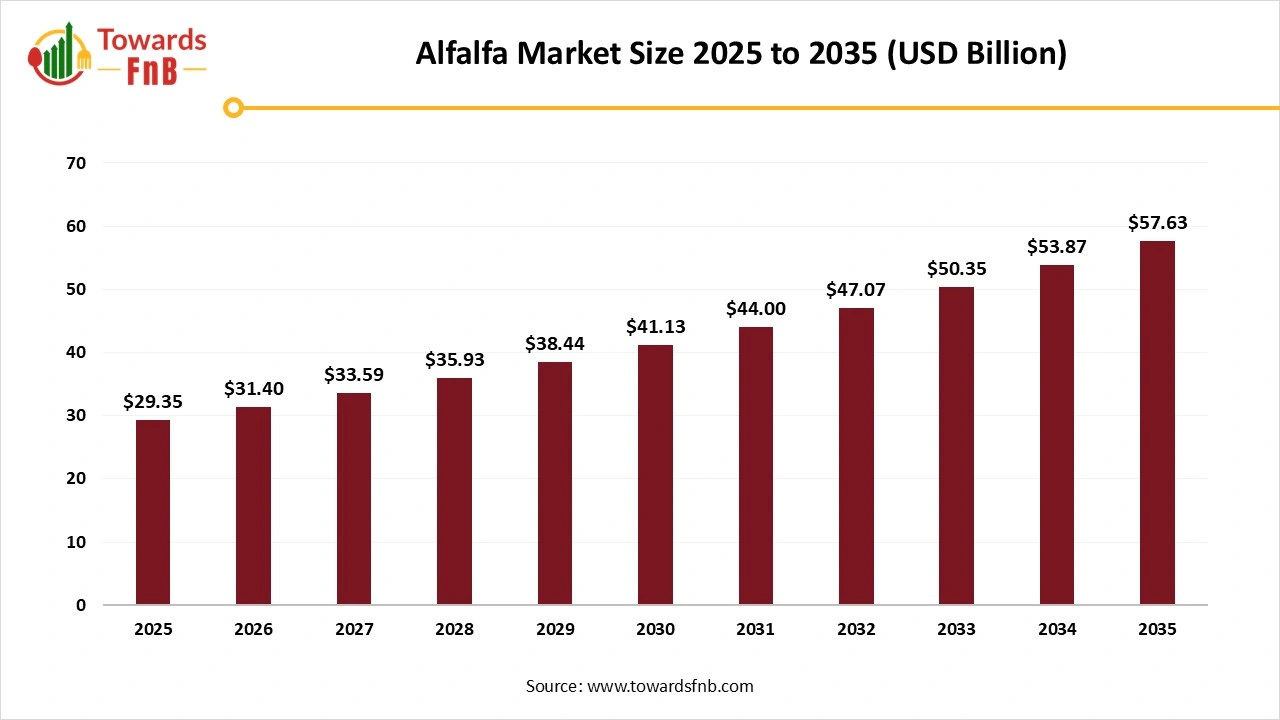
The global alfalfa market size stood at USD 29.35 billion in 2025 and is anticipated to increase from USD 31.40 billion in 2026 to an estimated USD 57.63 billion by 2035, witnessing a CAGR of 6.98% during the forecast period from 2026 to 2035. Market growth is largely driven by increased global demand for high-quality animal feed, particularly from the dairy and beef industries.
| Study Coverage | Details |
| Growth Rate from 2026 to 2035 | CAGR of 6.98% |
| Market Size in 2026 | USD 31.40 Billion |
| Market Size in 2027 | USD 33.59 Billion |
| Market Size by 2035 | USD 57.63 Billion |
| Largest Market | North America |
| Base Year | 2025 |
| Forecast Period | 2026 to 2035 |
| Regions Covered | North America, Europe, Asia-Pacific, Latin America, and Middle East & Africa |
The alfalfa market covers the production, processing, and trade of Medicago sativa, a perennial forage crop widely used for animal feed due to its high protein content, digestibility, and nutritional value. It is primarily sold as hay, pellets, cubes, or seeds, and is an essential input for dairy, beef, poultry, equine, and aquaculture feed industries.
Market growth is driven by rising global demand for high protein forage, expanding dairy and livestock sectors, and sustainable crop rotations improving soil fertility. Increasing adoption of dehydrated alfalfa for feed efficiency and export demand from Asia and the Middle East are key growth accelerators.
Advancements in breeding methods and genetic alterations increase yield capacity and disease resilience, rendering alfalfa a more appealing choice for farmers. These developments not only enhance crop yields but also lead to increased profitability for farmers. The incorporation of precision farming technologies enhances alfalfa production, promoting effective resource utilization. Consequently, the market is ready for expansion. The integration of technology for monitoring soil, analyzing crops, and optimizing irrigation is enhancing productivity while decreasing water consumption.
Raw Material Procurement
Processing of Alfalfa
Logistic and Distribution
Significant potential exists in creating alternative uses for alfalfa, including biofuel generation and functional food products. With efforts from governments and industry participants to lower carbon emissions and advance renewable energy, alfalfa's substantial biomass production and quick growth render it a compelling feedstock for bioenergy initiatives. The growing consumer appetite for natural and functional ingredients is also fueling interest in alfalfa-derived nutraceuticals, dietary supplements, and pet food items. Businesses that utilize these emerging trends and invest in value-adding processing abilities are poised to create new revenue sources and enhance their market standing.
Water shortages and drought situations greatly impede the expansion of the alfalfa market. Alfalfa requires a significant amount of water and relies greatly on sufficient irrigation. In areas facing water shortages or extended drought, like sections of the western United States and Australia, alfalfa cultivation is significantly impacted. For instance, the recent intense drought in California has resulted in a decrease in alfalfa farmland and output. The scarcity of water resources hinders farmers from sustaining alfalfa crops, thus limiting market expansion.
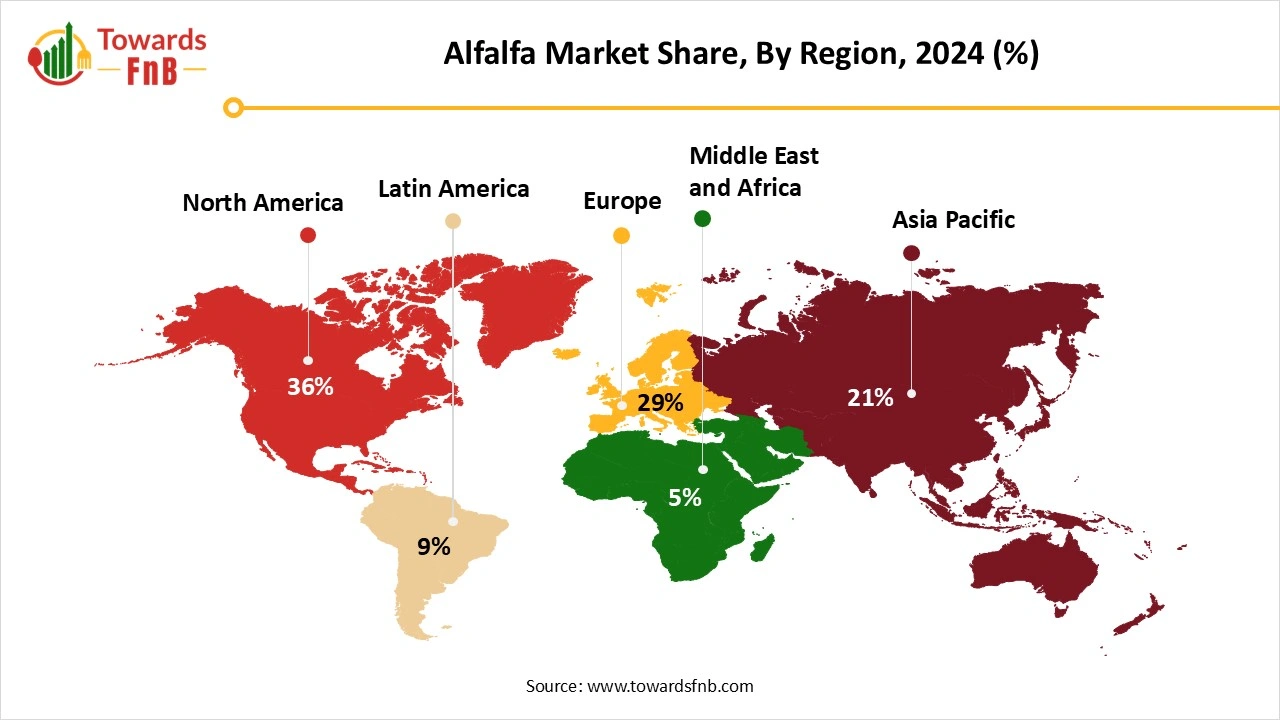
North America Dominated the Alfalfa Market in 2025
The North American market flourishes because of a growing demand for dairy and animal products, limited land for grazing, and the heightened feed needs of high-yielding and bred cattle. The rise of industrialized animal farming has boosted the need for alfalfa hay as feed. Alfalfa has emerged as a significant livestock feed choice, ranking as the fourth-largest crop by acreage in the United States, behind corn, soybeans, and wheat. In 2023, the American Feed Industry Association reported that alfalfa farming spanned 20 million acres nationwide.
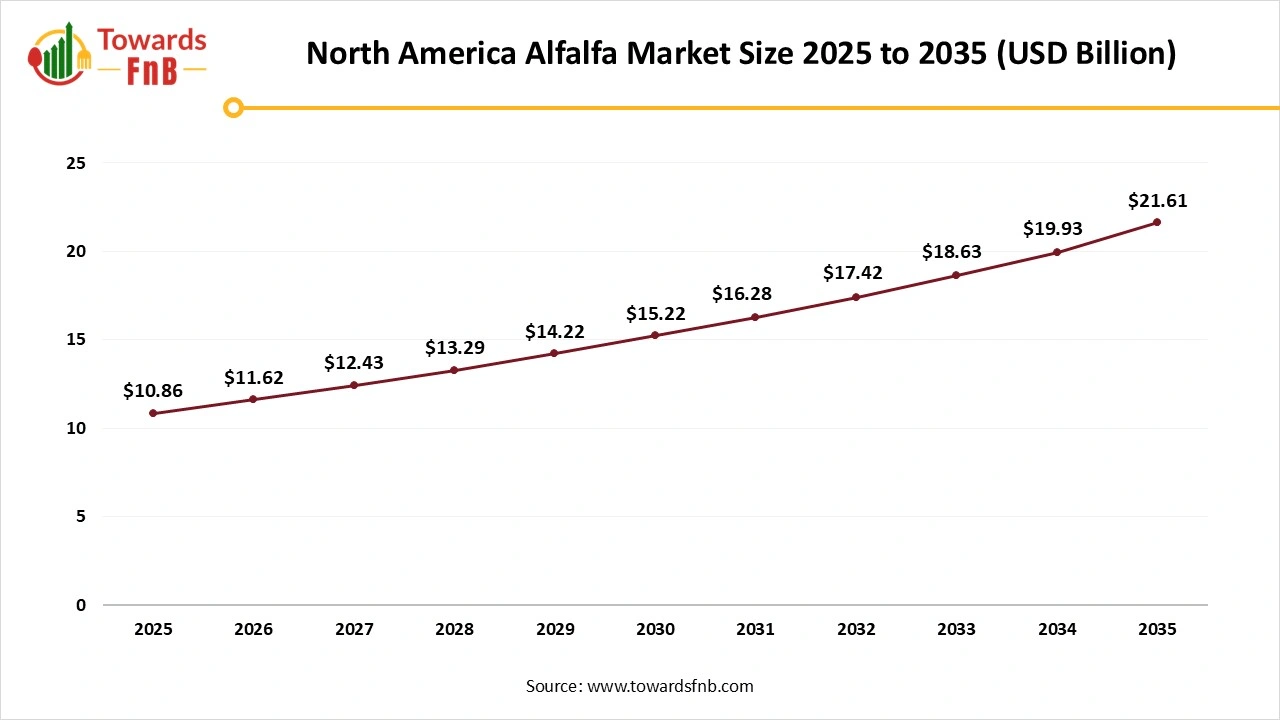
North America Alfalfa Market Size and Growth 2025 to 2035
The North America alfalfa market size was valued at USD 10.86 billion in 2025 and is anticipated to increase from USD 11.62 billion in 2026 to an estimated USD 21.61 billion by 2035, witnessing a CAGR of 7.12% during the forecast period from 2026 to 2035.
U.S. Alfalfa Market Trends
The U.S. market is primarily fueled by the increasing need for high-protein animal feed, especially in the dairy and beef sectors, where alfalfa plays a crucial role in enhancing livestock nutrition. Furthermore, boosting alfalfa hay exports to nations like China, Japan, and Saudi Arabia has enhanced production and trade prospects for U.S. farmers, thereby promoting market growth. Furthermore, continuous technological improvements in irrigation and harvesting methods have enhanced yield efficiency, increasing the profitability of alfalfa farming, which has driven the growth of the alfalfa market in the U.S.
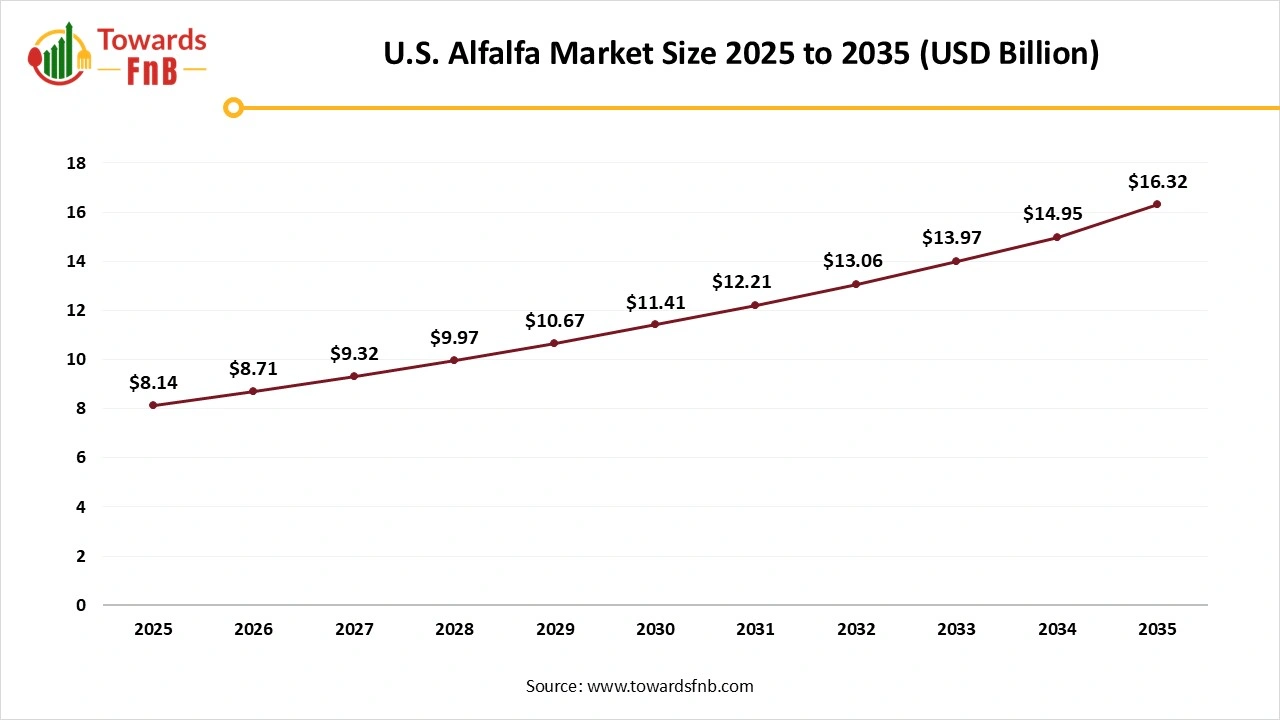
U.S. Alfalfa Market Size and Growth 2025 to 2035
The U.S. alfalfa market size was calculated at USD 8.14 billion in 2025 and is anticipated to increase from USD 8.71 billion in 2026 to an estimated USD 16.32 billion by 2035, witnessing a CAGR of 7.2% during the forecast period from 2026 to 2035.
Asia Pacific Expects the Significant Growth During the Forecast Period
Increasing demand for meat and dairy is fueling the expansion of the alfalfa market, as it serves as an essential component in animal feed. Chinese and Indian government initiatives are encouraging alfalfa farming to boost local feed production and lessen dependence on imports. Improvements in production methods, like precision farming and mechanization, are enhancing efficiency and crop yields. India ranks as the top milk producer globally, and its dairy sector is vital in driving the demand for alfalfa. The extensive milk production demands a significant quantity of premium feed, such as alfalfa.
India Alfalfa Market
The alfalfa market in India has been developing quickly, fueled by rising demand from the livestock sector, especially for dairy farming. Alfalfa, an exceptionally nutritious legume forage, plays a vital role in enhancing the productivity of livestock like dairy cows, beef cattle, and various other ruminants. In 2023, alfalfa was primarily produced in India within states such as Rajasthan, Haryana, Punjab, and Madhya Pradesh. These regions possess beneficial agro-climatic factors for alfalfa growth, with areas experiencing moderate precipitation and appropriate soil for its cultivation.
Which Form of the Alfalfa Dominated the Alfalfa Market in 2025?
Hay (Baled Alfalfa) segment led the alfalfa market in 2025. The increasing global appetite for dairy and meat has heightened the need for protein-rich animal feed, making alfalfa hay a sought-after forage due to its rich nutritional value. Growth in the livestock industry, particularly in emerging markets, reinforces this trend even more. The decline in grazing land because of overgrazing and poor productivity is forcing livestock farmers to depend increasingly on premium supplements such as alfalfa hay. Countries with constrained resources, such as Japan and Saudi Arabia, are significant importers.
Others (Extracts & Meal) Segment is Observed to Grow at the Fastest Rate During the Forecast Period
The increasing recognition of the health advantages of alfalfa extract is a key element driving this market expansion. Consumers are progressively opting for natural and organic products, driving the demand for alfalfa extract in multiple applications. Alfalfa meal is a nutrient-rich resource that provides various advantages for your plants and soil. Alfalfa meal provides a high amount of nitrogen, phosphorus, and potassium, typically exhibiting an N-P-K ratio of 3-1-2. This makes it a superb fertilizer to replenish nitrogen that has been depleted from soil.
Alfalfa Market Share, By Type, 2025 (%)
| Segments | Shares (%) |
| Non-GMO Alfalfa | 79% |
| GMO/Transgenic Alfalfa | 21% |
Why did the Non-GMO Alfalfa Segment Dominate the Alfalfa Market in 2025?
Non-GMO alfalfa segment held the dominating share of the market in 2025. This positive trend is propelled by rising consumer interest in organic and non-GMO food items, influenced by heightened health awareness and worries about environmental sustainability. The combination of these elements is driving substantial expansion in the Non-GMO Alfalfa market. Non-GMO alfalfa is vital for crop rotation and soil vitality, serving as a key element in sustainable agricultural practices. Alfalfa is additionally utilized in functional food, dietary supplements, and herbal products, with non-GMO status frequently favored, thereby increasing demand.
GMO/Transgenic Alfalfa Segment is Seen to Grow at a Notable Rate During the Predicted Timeframe
GMO alfalfa is mainly utilized as feed for cattle, particularly dairy cows. The majority of GMO alfalfa is tolerant to herbicides, enabling farmers to apply sprays to safeguard the crops from harmful weeds that can diminish alfalfa yield and decrease the hay's nutritional value. Certain GMO alfalfa types are engineered to possess reduced lignin levels, enhancing digestibility for animals such as cattle. Genetic engineering can enable alfalfa to generate new compounds that may be useful for industrial or pharmaceutical purposes.
Alfalfa Market Share, By Distribution Channel, 2025 (%)
| Segments | Shares (%) |
| Direct Sales / Contract Farming | 57% |
| Feed Processors & Distributors | 20% |
| Retail / Co-ops / Agri-input Stores | 15% |
| Online Trading Platforms / Commodity Exchanges | 8% |
Which Distribution Channel Dominated the Alfalfa Market in 2025?
Direct sales/contract farming (B2B) segment dominated the market with the largest share in 2025, due to the essential advantages it provides that secure the supply chain, guarantee product quality, and reduce market fluctuations for farmers and large-scale purchasers. This setup offers a more dependable and effective model compared to selling via disjointed retail networks or depending on unpredictable spot markets. Farming companies frequently supply farmers with premium seeds, fertilizers, and expert advice. Contracts can give farmers access to loans or cash prepayments, which can fund production expenses and assist in growing their businesses.
Online Trading Platforms/Commodity Exchanges Segment is Expected to Grow at the Fastest Rate in the Market During the Forecast Period
Due to their enhancement of market access, transparency, and pricing efficiency, along with offering essential risk management tools. Online trading streamlines the supply chain by eliminating unneeded intermediaries, which enhances profit margins for farmers and encourages a more efficient movement of goods. Commodity exchanges establish quality and delivery standards that serve as benchmarks, enhancing farmers' awareness of quality and guaranteeing a reliable, high-quality product for purchasers. The market is experiencing greater vertical integration, as companies are purchasing farmland and managing various stages of the supply chain.
Which End Use Segment Held the Largest Share of the Alfalfa Market in 2025?
Animal Feed segment held the largest share of the market in 2025, as it is a highly digestible and nutrient-dense forage, perfect for ruminants such as dairy and beef cattle, goats, and sheep. Its rich protein and fiber levels promote optimal growth and wellness, directly enhancing milk production and meat quality, while also benefiting rumen health in ruminants. The rising worldwide need for meat and dairy products further contributes to this dominance. The accessibility of alfalfa in formats such as hay bales facilitates transportation, storage, and feeding to animals, thereby strengthening its market prevalence.
Nutraceutical/Pharmaceutical Uses Segment is Observed to Grow at the Fastest Rate During the Forecast Period
Pharmaceuticals and nutraceuticals made from alfalfa demonstrate the plant's adaptability in enhancing human well-being. Alfalfa (Medicago sativa) includes bioactive substances, such as phytoestrogens and antioxidants, which may possess therapeutic benefits. Studies investigate its application in conventional medicine for numerous health issues. Certain research indicates that substances found in alfalfa might aid in cholesterol management, positioning it as a focus in drug development linked to heart health. Consequently, the sector is anticipated to experience considerable expansion throughout the projected timeframe.
Alfalfa Market Share, By Harvesting Method, 2025 (%)
| Segments | Shares (%) |
| Conventional (Sun-dried, Mechanically Baled) | 69% |
| Dehydrated (Drum-dried / Heat-treated) | 31% |
Which Harvesting Method Segment Dominated the Alfalfa Market in 2025?
Conventional segment led the market in 2025. Traditional baling is simple for current agricultural setups, making it a dependable and practical choice for storage and distribution. In developing regions, particularly, farmers favor hay bales instead of expensive, processed options. Traditionally harvested alfalfa serves as a nutritious feed abundant in protein, fiber, and minerals, thus playing an essential role in the diet of different livestock, especially dairy and beef cattle.
Dehydrated Segment is Seen to Grow at a Notable Rate During the Predicted Timeframe
Dried alfalfa is made by drying fresh alfalfa to maintain its nutrients, making it a popular feed choice for animals, especially in dairy and beef cattle operations. A key element influencing the market is the dehydration method used to produce these items, which retains vital nutrients while decreasing moisture levels and prolonging shelf life. This procedure is essential since it allows alfalfa to be moved over great distances without deterioration, providing access to areas that cannot cultivate it.
Rä Foods
Alternative Bank, and Plateau State University, and the Federal Ministry of Livestock Development
Wild About Sprouts
By Form
By Type/Variety
By Distribution Channel
By End Use
By Harvesting Method
By Region





Principal Consultant
Vidyesh Swar, Senior Research Analyst at Towards Food & Beverages, specializes in market research, focusing on supply-demand evaluation, pricing analysis, alternative proteins, plant-based foods, and sustainable food technologies within the industry.
Learn more about Vidyesh Swar
Reviewed By
Aditi Shivarkar, with 14+ years in Food and Beverages market research, specializes in food, beverage, and eco-friendly packaging. She ensures accurate, actionable insights, driving Towards FnB's excellence in industry trends and sustainability.
Learn more about Aditi ShivarkarApril 2026
April 2026
April 2026
April 2026

Alfalfa Market


 +1 804-441-9344
 Download Sample
 Schedule a Meeting