April 2026



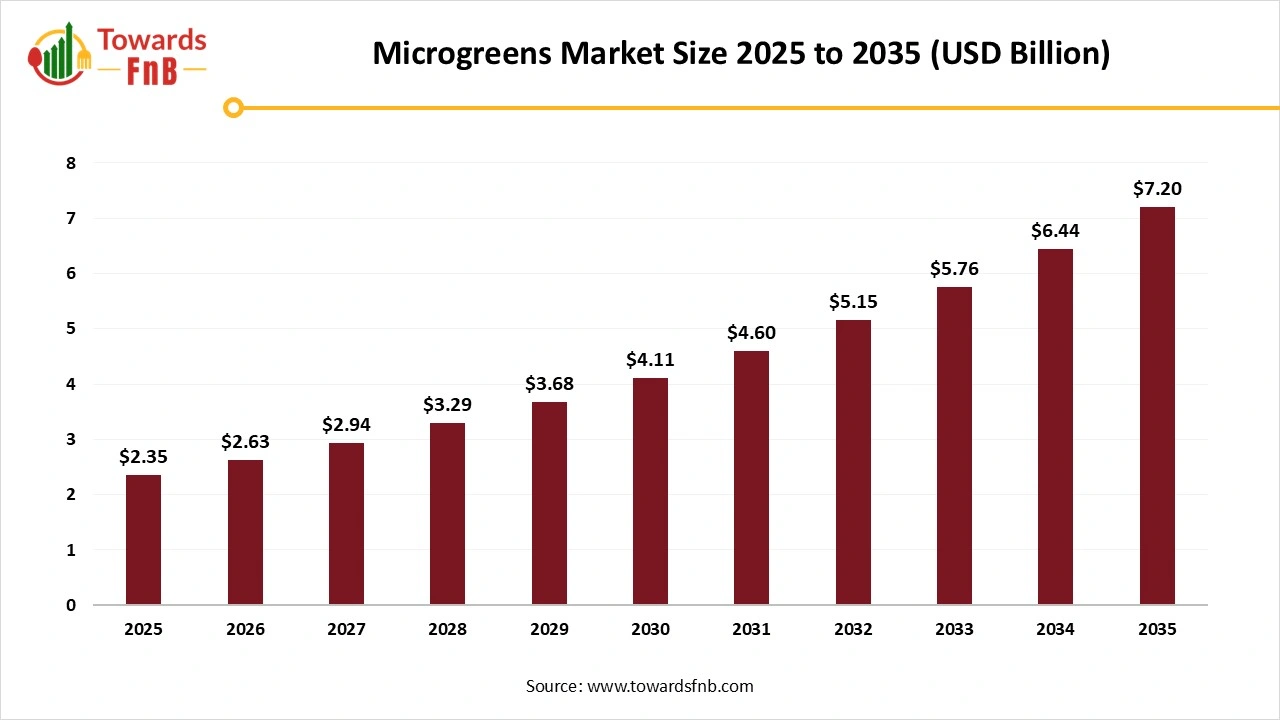
The global microgreens market size stood at USD 2.35 billion in 2025 and is predicted to increase from USD 2.63 billion in 2026 to approximately USD 7.20 billion by 2035, expanding at a CAGR of 11.85% from 2026 to 2035. The expansion of vertical farming and the growing gourmet food services drive market growth.
| Study Coverage | Details |
| Growth Rate from 2026 to 2035 | CAGR of 11.85% |
| Market Size in 2026 | USD 2.63 Billion |
| Market Size in 2027 | USD 2.94 Billion |
| Market Size by 2035 | USD 7.20 Billion |
| Largest Market | North America |
| Base Year | 2025 |
| Forecast Period | 2026 to 2035 |
| Regions Covered | North America, Europe, Asia-Pacific, Latin America, and Middle East & Africa |
Microgreens are nutrient-dense plants that are accumulated after the cotyledon leaves. They are considered superfoods and are fast-growing. They require more light and are packed with essential nutrients. They possess intense flavor and have a delicate texture. They offer benefits like reducing body weight, enhancing the immune system, preventing cancer, and improving digestion. They are widely used in applications like sandwiches, raw salads, soups, sushi, smoothie, pasta, and juices. They include radish, kale, basil, cauliflower, broccoli, arugula, cilantro, pea shoots, and others.
The microgreens industry growth is driven by surging urban farming, the rise of eco-conscious consumption, the shift to healthy eating, the availability of high-end chefs, growth in specialized retail, the rising number of urban growers, integration with LED technologies, increased use of live packaging, and the increased demand for fresh produce.
The microgreens industry is experiencing major technological shifts driven by demand to enhance sustainability, lower resource consumption, and maximize yield. Technological shifts like smart farming, automation, data-driven farming, IoT devices, and advanced LED lighting help lower water usage, optimize growth cycles, and predict harvest times. The AI integration is a robust shift driven by demand for highly profitable operations and optimizing taste.
AI easily adjusts environmental conditions and enhances the germination rates. AI performs daily operational tasks and detects fungal outbreaks. It analyzes profitable crops and predicts current market conditions. It enhances vertical farming efficiency and optimizes the uptake of nutrition. It also predicts seeding rates and minimizes crop failures. Overall, AI helps in improving the sustainability of urban farming.
Raw Material Procurement
Processing and Preservation
Quality Testing and Certifications
How North America Dominated the Microgreens Market?
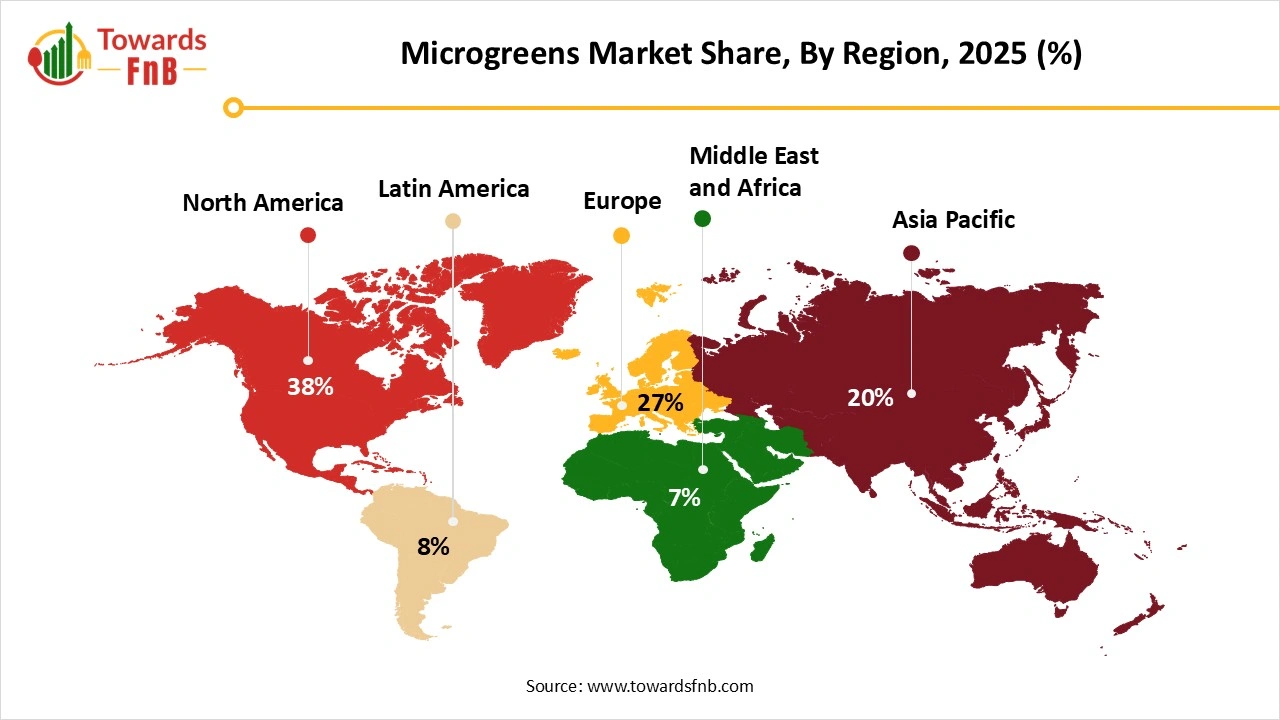
North America held a major market share of 38% in 2025 due to strong health awareness. The increased consumption of nutrient-dense superfoods and the higher demand for pesticide-free products increase the adoption of microgreens. Strong commercial greenhouse operations and the presence of high-end restaurants increase the adoption of microgreens. Innovations in indoor farming technologies drive the overall market growth.
North America Microgreens Market Size and Growth 2025 to 2035
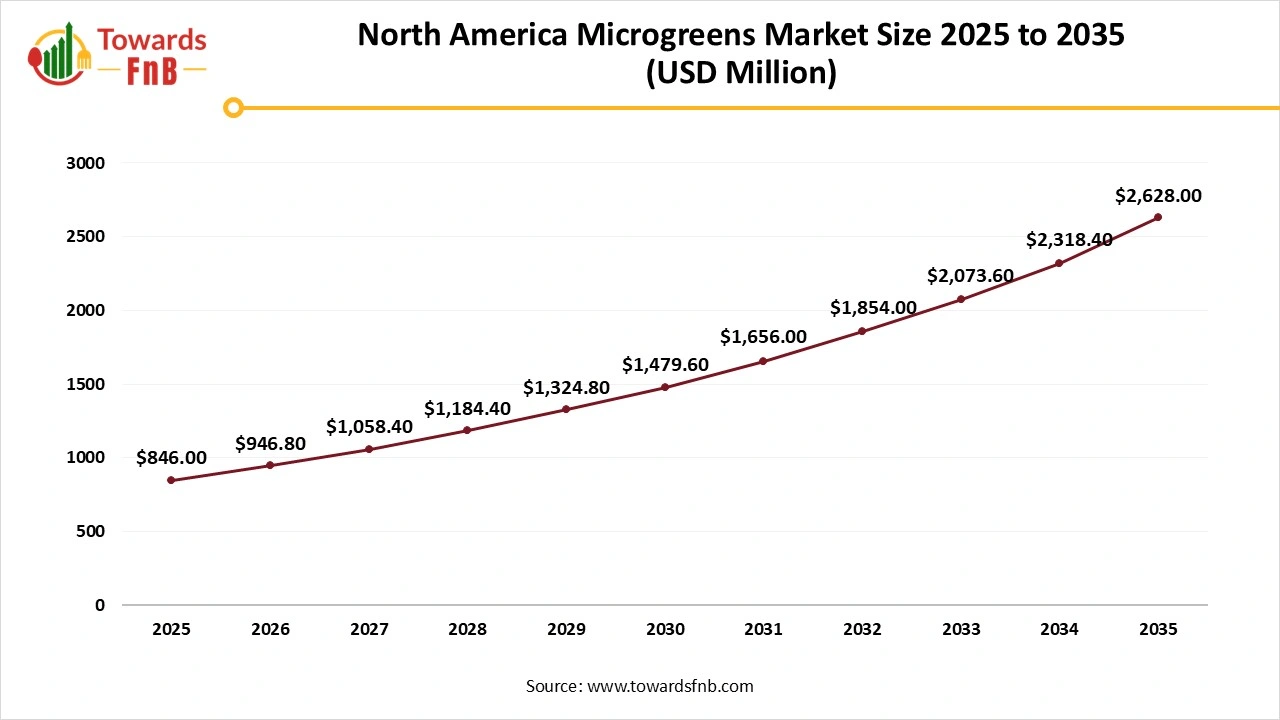
The North America microgreens market size was valued at USD 846 million in 2025 and is predicted to increase from USD 946.80 million in 2026 to approximately USD 2,628 million by 2035, growing at a CAGR of 12% from 2026 to 2035.
United States Role in Microgreens
The U.S. is a major player in the market. Advancements in hydroponic techniques and the strong focus on nutrition increase demand for microgreens. The need for upscaling restaurants and the growth in local growers increase the production of microgreens. The presence of companies like Bowery Farming, AeroFarms, and Gotham Greens supports the market growth.
U.S. Microgreens Market Size and Growth 2025 to 2035
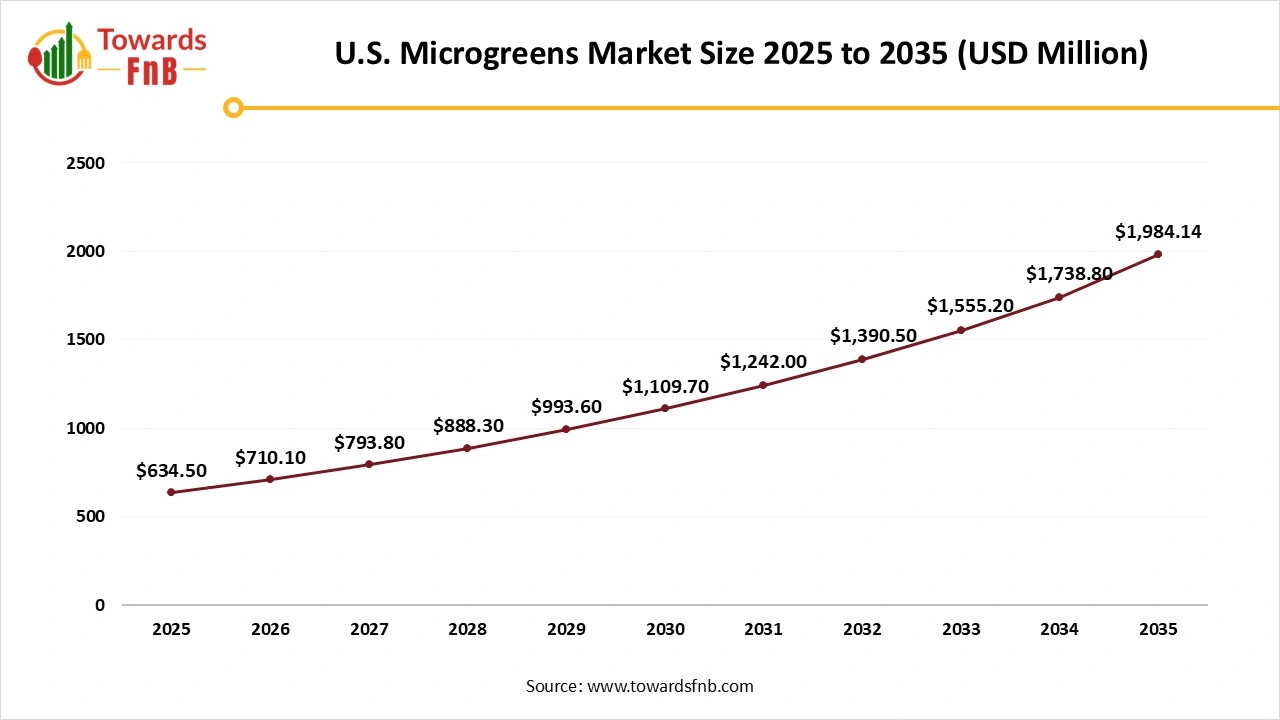
The U.S. microgreens market size was calculated at USD 634.50 million in 2025 and is predicted to increase from USD 710.10 million in 2026 to approximately USD 1,984.14 million by 2035, growing at a CAGR of 12.08% from 2026 to 2035.
How is Asia-Pacific Growing in the Microgreens Market?
Asia-Pacific held 20% of the market share in 2025 and is expected to grow at the fastest CAGR of 13.5% in the market during the forecast period due to the increased adoption of indoor farming. Limited agricultural spaces and the changing culinary habits increase demand for microgreens. The growing demand for gourmet food and the transition to sustainable agriculture increase the adoption of microgreens. Rising nutrition awareness and the expansion of gourmet dining drive the market growth.
Rise of Microgreens in India
India is prominently growing in the market. The preference for antioxidant-rich foods and the popularity of urban farming increase demand for microgreens. The robust growth in fine dining restaurants and the rise in the number of small-scale growers increase the adoption of microgreens. The robust growth of vertical farming and the expanding hospitality industry supports the overall market growth.
The Broccoli Segment Dominated the Market with 22% Market Share in 2025
The broccoli segment dominated the microgreens market with a 22% share in 2025 due to the increased consumption of nutrient-dense foods. The focus on lowering inflammation and the growing garnishing applications increases demand for broccoli. The broccoli’s easy integration with sandwiches and salads helps with expansion. The high sulforaphane content, mild flavor, high profitability, and farming ease of broccoli drive segment growth.
The radish segment held the second-largest market share of 18% in 2025 and is expected to grow at the fastest CAGR of 12.5% during the forecast period due to the increased adoption of spicy flavor. The huge demand for essential vitamins and the growing number of commercial growers increase the production of radish. The cultivation ease, high profitability, and vibrant appearance of radish support segment growth.
The pea shoots segment held the third-largest market share of 15% in 2025 due to its growing versatility in culinary. The heavy consumption of salads and the higher demand for low-calorie foods increase the adoption of pea shoots. The unique culinary appeal, high nutritional value, fast turnaround, and exceptional ease of pea shoots boost segment growth.
The sunflower segment held the fourth-largest market share of 13% in 2025 due to its high protein content. The demand for raw snacks and the creation of long-lasting dishes appeal increase the adoption of sunflower. The integration of sunflowers in sandwiches helps with segment expansion. The commercial popularity, simple production, and unique culinary appeal of sunflowers boost segment growth.
The Indoor Vertical Farming Segment Led the Market with 48% Market Share in 2025
The indoor vertical farming segment led the microgreens market with a 48% share in 2025 and is expected to grow at the fastest CAGR of 13.2% during the forecast period due to the expansion of urban farming. The need to maximize yield and the production of premium-quality microgreens increases the adoption of indoor vertical farming. The huge agri-tech investments and fast harvest cycle drive the segment growth.
The greenhouse farming segment held the second-largest market share of 32% in 2025 due to moderate capital requirements. The high-quality microgreens production and a focus on consistent revenue increase the adoption of greenhouse farming. The high turnaround, space optimization, minimal investment, reduced risks, and high profitability of greenhouse farming support segment growth.
The outdoor farming segment held the third-largest market share of 20% in 2025 due to its lower operational cost. The focus on minimizing energy cost and the higher demand for sustainability increases the adoption of outdoor farming. The natural quality, reduced pests, space versatility, and organic appeal of outdoor farming boost segment growth.
The Retail Segment Held the Largest Market Share of 46% in 2025
The retail segment held the largest revenue share of 46% in the microgreens market in 2025 due to the growth in the organic section. The growing regular grocery tips and the focus on perishability management increase the adoption of retail. The expansion of specialty retailers and the growing availability of microgreens in supermarkets help with expansion. Perishability management, consumer confidence, and convenience of retail drive segment growth.
The foodservice segment held the second-largest market share of 34% in 2025 and is expected to grow at the fastest CAGR of 12.6% during the forecast period due to the popularity of gourmet dishes. Focusing on improving the aesthetic appeal of dishes and developing a healthier menu in restaurants supports expansion. The burgeoning fine-dining culture supports segment growth.
The online channels segment held the third-largest market share of 20% in 2025 due to increased use of direct-to-consumer models. The rise in online grocery purchasing and the focus on reducing losses are driving the adoption of online channels. Enhanced reach, direct access, niche targeting, and availability of value-added products in online channels boost segment growth.
The Household Consumption Segment Contributed the Highest Market Share of 41% in 2025
The household consumption segment contributed the biggest revenue share of 41% in the microgreens market in 2025 due to robust growth in home gardening. The increased awareness of immunity-boosting foods and the expansion of sustainability focus in households increase demand for household consumption. The increased uptake of fresh foods and the consumers nutritional consciousness increase the adoption of household consumption, driving the overall segment growth.
The commercial use segment held the second-largest market share of 59% in 2025 and is expected to grow at the fastest CAGR of 12.4% during the forecast period due to the expanding food service sector. The focus on upscale entrees and the increased need for low-impact food increase the adoption of microgreens. The robust growth in high-end chefs and the surging nutraceutical companies support segment growth.
The Clamshell Packaging Segment Dominated the Market with 52% Market Share in 2025
The clamshell packaging segment dominated the microgreens market with a 52% share in 2025 due to its ability to maintain product freshness. A strong focus on lowering product rehydration and logistical efficiency increases the adoption of clamshell packaging. Tamper resistance, high visibility, excellent product protection, and high marketing value of clamshell packaging drive segment growth.
The bags & pouches segment held the second-largest market share of 28% in 2025 and is expected to grow at the fastest CAGR of 12.8% during the forecast period due to its low transportation cost. The preservation of microgreens and the prevention of premature wilting increase the adoption of bags & pouches. Ongoing eco-friendly innovations and the rise in the online delivery support segment growth.
The bulk packaging segment held the third-largest market share of 20% in 2025 due to the increased use by foodservice providers. The focus on plastic waste reduction and the need to simplify supply chains increases demand for bulk packaging. The growing commercial demand and operational efficiency of bulk packaging boost segment growth.
The Food & Beverages Segment Held a Dominant Market Share of 68% in 2025
The food & beverages segment held a dominant revenue share of 68% in the microgreens market in 2025 due to increased garnishing demand. The production of health beverages and the focus on enhancing the visual appeal of gourmet dishes increase demand for microgreens. The focus on providing a unique taste to meals and healthy eating habits increases the use of microgreens. The ongoing culinary innovation drives segment growth.
The nutraceuticals segment held the second-largest market share of 20% in 2025 and is expected to grow at the fastest CAGR of 13% during the forecast period due to the increased consumption of natural health products. The focus on enhancing glucose homeostasis and the need for malnutrition solutions increases the adoption of nutraceuticals. The superior nutritional concentration, high value, and efficient production of nutraceuticals support segment growth.
The cosmetics & personal care segment held the third-largest market share of 12% in 2025 due to its superior antioxidant properties. The increased use of anti-aging creams and the focus on protecting skin from pollution increase the adoption of microgreens. The development of sunscreens and the production of waterless formulations increase the use of microgreens. The trend of organic cosmetics boosts segment growth.
AeroFarms
BrightFresh
Wild About Sprouts
By Type
By Farming Method
By Distribution Channel
By End User
By Packaging Type
By Application
By Region





Principal Consultant
Vidyesh Swar, Senior Research Analyst at Towards Food & Beverages, specializes in market research, focusing on supply-demand evaluation, pricing analysis, alternative proteins, plant-based foods, and sustainable food technologies within the industry.
Learn more about Vidyesh Swar
Reviewed By
Aditi Shivarkar, with 14+ years in Food and Beverages market research, specializes in food, beverage, and eco-friendly packaging. She ensures accurate, actionable insights, driving Towards FnB's excellence in industry trends and sustainability.
Learn more about Aditi ShivarkarApril 2026
April 2026
April 2026
April 2026

Microgreens Market


 +1 804-441-9344
 Download Sample
 Schedule a Meeting