April 2026



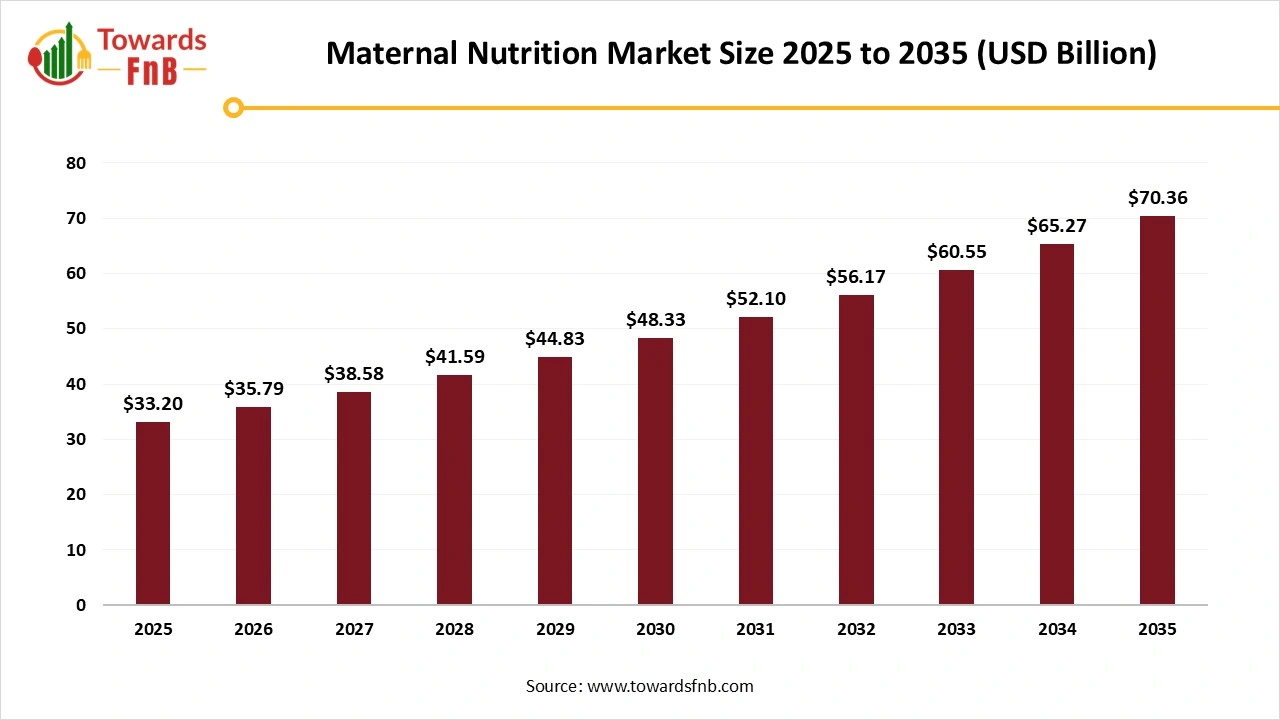
The global maternal nutrition market size was valued at USD 33.20 billion in 2025 and is expected to grow steadily from USD 35.79 billion in 2026 to reach nearly USD 70.36 billion by 2035, with a CAGR of 7.8% during the forecast period from 2026 to 2035. The growth of the market is driven by increasing consumer awareness regarding nutrition needs during the gestation period.
| Study Coverage | Details |
| Growth Rate from 2026 to 2035 | CAGR of 7.8% |
| Market Size in 2026 | USD 35.79 Billion |
| Market Size in 2027 | USD 38.58 Billion |
| Market Size by 2035 | USD 70.36 Billion |
| Largest Market | Asia Pacific |
| Base Year | 2025 |
| Forecast Period | 2026 to 2035 |
| Regions Covered | North America, Europe, Asia-Pacific, Latin America, and Middle East & Africa |
The maternal nutrition market encompasses dietary products formulated to meet the increased nutritional requirements of women during preconception, pregnancy, and the postnatal period. These products support maternal health, fetal development, and lactation by providing essential vitamins, minerals, proteins, fatty acids, and functional nutrients. The market includes supplements, fortified foods, and specialized nutritional formulations distributed through retail, pharmacies, and online channels, driven by rising health awareness, medical recommendations, and increasing focus on preventive infant and maternal healthcare.
The market is driven by factors such as the increasing government supportive initiatives, increasing prevalence of nutrient deficiencies increasing awareness of the importance of maternal nutrition and health, growing high birth rates, increasing focus on preventive healthcare, increasing disposable incomes and growing e-commerce platforms and product innovation.
The rise of technological advancements in the maternal nutrition industry is significantly focused on personalization via genetic testing and data analytics and improved nutritional delivery systems, with the huge adoption of digital health tools such as wearables and apps. Intelligent technologies analyze data from lifestyle factors, genetic profiles, and digital health records to create supplement recommendations and highly tailored dietary plans for individual mothers. AI can also analyze potential health issues, including specific nutrient deficiencies and premature birth, enabling early intervention, further expected to revolutionize the growth of the maternal nutrition market.
Maternal undernutrition is the major health problem in the world with 24% of women in South Asia have low body mass index (BMI). In addition, 37% of pregnant women and 30% of women of reproductive age are anaemic. WHO guidelines on Antenatal care (ANC) recommend 49 interventions, of which 14 are nutrition interventions.
Raw Material Procurement
Packaging and Branding
Waste Management and Recycling
| Country | Regulatory Body | Key Regulations | Focus Areas | Notable Notes |
| India | Food Safety and Standards Authority of India (FSSAI) | Food Safety and Standards (Packaging and Safety Regulations) and Licensing and Registration of Food Businesses) | Major focus areas in the maternal nutrition market focuses on dietary interventions, folic acid and micronutrient supplements, driven by the increasing health strategies and increasing awareness and health focus. | Maternal nutrition are highly utilized in the clean-label and personalized for their capacity to enhance the efficiency, consistency and quality of high-quality food options products, to enhance postpartum journey, immune system and health and wellness of newly mothers. |
How is Asia Pacific Dominating the Maternal Nutrition Market?
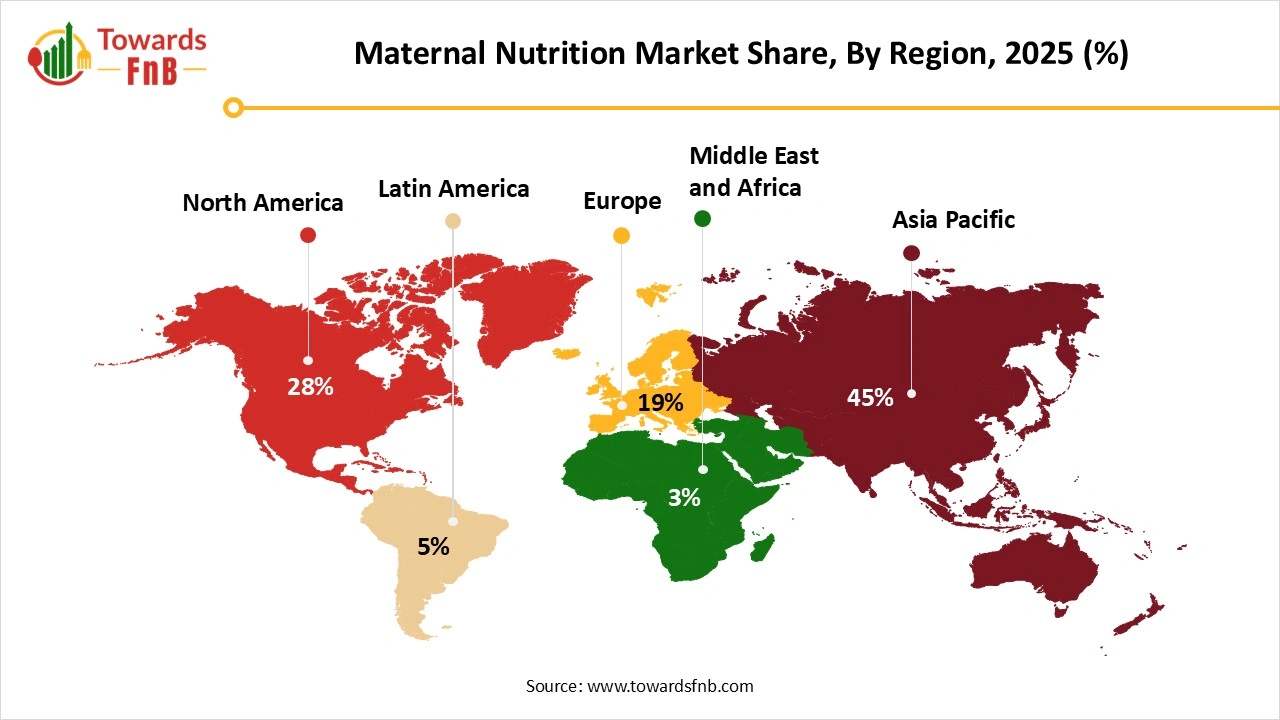
Asia Pacific dominated the global market with 45% share in 2025. The maternal nutrition industry in the region is experiencing rapid growth, driven by increasing disposable incomes, health trends, increasing demand for breastfeeding helps, functional foods, prenatal/postnatal supplements, and increasing consumer health awareness. Major trends focusing on plant-based options, clean labels, personalized nutrition and immunity, particularly in major markets such as India and China. The online channels and pharmacies dominate sales, with major opportunities in addressing cultural dietary habits and leveraging digital platforms.
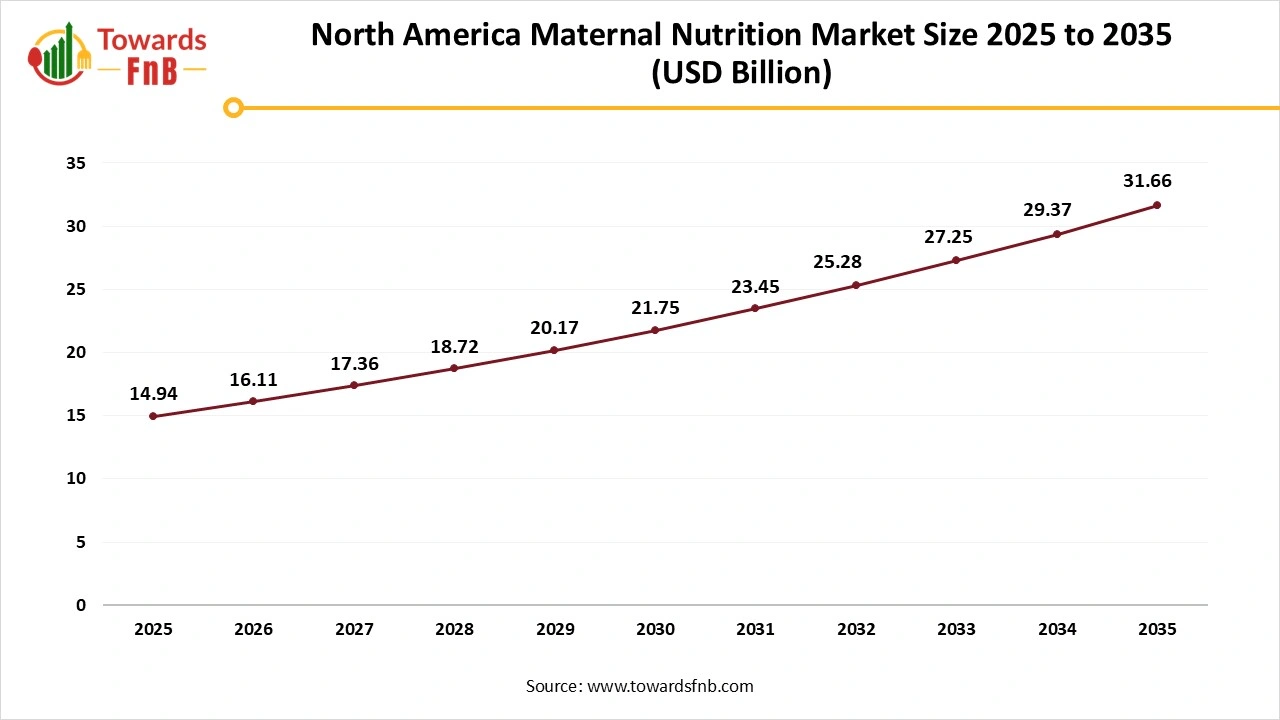
The North America maternal nutrition market size was calculated at USD 14.94 billion in 2025 with projections indicating a rise from USD 16.11 billion in 2026 to approximately USD 31.66 billion by 2035, expanding at a CAGR of 7.8% throughout the forecast period from 2026 to 2035.
India Maternal Nutrition Market Trends
The maternal nutrition market in India is rapidly growing, driven by increasing busy lifestyles, increasing government programs such as POSHAN Abhiyan, increasing demand for supplements such as multivitamins, calcium, folic acid and iron, higher pregnancy monitoring and increasing health awareness.
North America is Expected to Grow Fastest During the Forecast Period
The maternal nutrition market growth in the region is experiencing rapid growth, driven by increasing demand for functional food, demand for major nutrients in supplements and increasing high health awareness. Key drivers such as technological innovations in delivery such as nanotechnology and gummies, strong demand for multivitamins, DHA, Calcium, Iron and Folic Acid, higher rates of pregnancy monitoring, focus on child development and demand for convenient delivery systems.
The U.S. Maternal Nutrition Market Trends
The maternal nutrition industry in the U.S. is witnessing rapid growth, driven by the better prenatal care access, incraesing demand for postnatal/prenatal supplements and incraesing consumer health awareness. Major trends such as increasing disposable incomes, increasing focus on immune or digestive health and rising technological integration of AI, enabling dynamic and premium products, which further drives the market growth.
Why Does Europe Driving the Maternal Nutrition Market?
Europe is expected to grow at a notable growth during the forecast period. The market growth in the region is driven by the increasing focus on functional, plant-based and clean-labels foods, increasing demand for tailored supplements such as multivitamins, DHA, iron, and folic acid for healthier pregnancies, better prenatal care and increasing consumer health awareness. Major trends such as focus on preconception health, AI integration and personalized nutrition, further drives the market growth.
The Germany Maternal Nutrition Market Trends
The maternal nutrition industry in Germany is growing significantly, driven by the increasing demand for supplements beyond regular diet, increasing awareness of nutrition role in pregnancy, younger parents seeking quality nutrition, increasing health awareness and demand for organic, clean-label and scientifically backed products in convenient forms such as powders with specialized formulas and online retail.
Why does the Middle East and Africa Driving the Market?
The maternal nutrition market growth in the region, driven by increasing high demand for supplements, demand for pregnancy care products, rapid urbanization, increasing health awareness, rising malnutrition issues such as anemia due to poor diets due to fast food, greater product availability and increasing demand for quality and convenient nutritional products.
UAE Maternal Nutrition Market Trends
The maternal nutrition industry in UAE is growing significantly, driven by the increasing consumer focus towards sustainability, increasing health awareness, growing multicultural population, increasing demand for multivitamins in functional food, increasing government supportive programs on prenatal care, health-conscious food products, growing e-commerce platforms, strong retail pharmacies and increasing consumer demand for conventional and functional foods.
Why does South America is Transforming the Maternal Nutrition Market
The market growth in the region is growing rapidly in Brazil, driven by increasing trends towards supplements and functional foods, rising demand for major supplements such as DHA, calcium, folic acid and iron, better prenatal care access and increasing maternal health awareness.
Brazil Maternal Nutrition Market Trends
The maternal nutrition industry in Brazil is a rapidly growing sector, driven by the demand for multivitamins, better prenatal care access, increased health awareness, rising understanding for pregnancy nutrion needs, better prenatal care and monitoring and increasing demand for functional products.
Maternal Nutrition Market Share, By Product, 2025 (%)
| Segments | Shares (%) |
| Prenatal Supplements | 40.4% |
| Postnatal Supplements | 20% |
| Maternal Milk & Milk-Based Formulas | 20% |
| Fortified Foods & Beverages | 19.6% |
Why is Prenatal Supplements Dominating the Maternal Nutrition Market?
The prenatal supplements segment dominated the global market by having 40.4% of revenue in 2025. Prenatal supplements play a crucial role in the maternal nutrition industry as they ensuring healthy pregnancy outcomes, supporting fetal growth, reducing maternal anemia, preventing birth defects and bridge nutrient gaps. The prenatal supplements segment is driven by the increasing need for crucial vitamins, increasing demand in online stores and pharmacies, increasing demand for nutrients such as DHA, calcium, folate and iron, and supports maternal and fetal health, which further drives the market growth.
The Postnatal Supplements is Expected to Grow Fastest During the Forecast Period.
Postnatal supplements are necessary in the market for ensuring baby’s development, combating fatigue, supporting demanding breastfeeding and replenishing nutrients lost during birth or pregnancy. The demand for postnatal supplements is also driven by the rising innovations in personalized and clean-label nutrition, increasing health awareness, demand for clean-label, convenient and doctor-recommended foods and growing rapid birth rates, further drives the market.
How is Vitamins and Minerals Segment Dominating the Maternal Nutrition Market?
The vitamins and minerals segment dominated the global market by having 46.5% of revenue in 2025. Vitamins and minerals play an important role in maternal nutrition, driven by supporting lactation, reducing risks such as preterm birth, ensuring healthy fetal development, and preventing deficiencies that cause major infant or maternal issues such as growth restriction, neural tube defects, preeclampsia and anemia. These crucial functions make micronutrient supplements such as multivitamins and iron-folic acid a cornerstone of prenatal care, driving a major and large market.
The Omega-3 Fatty Acids Segment is Expected to Grow Fastest During the Forecast Period.
Omega-3 fatty acids are essential in the market for boosting infant immunity, lowering postpartum depression, improving maternal mood, reducing preterm low or birth weight. The increasing awareness of omega-3s' advantages drives demand for supplements such as fortified foods, algae oil and fish oil. In addition, omega-3 fatty acids meet major concerns in infant and maternal health and make them a high value product in the prenatal nutrion industry.
Maternal Nutrition Market Share, By Form, 2025 (%)
| Segments | Shares (%) |
| Tablets & Capsules | 42.5% |
| Powders | 20% |
| Liquids | 20% |
| Gummies | 17.5% |
What Factors Help Tablets & Capsules Segment to Grow in 2025?
The tablets and capsules segment dominated the maternal nutrition market by having 42.5% of revenue in 2025. Tablets and capsules play an important role in the global market, offering high absorption, consistent dosing and convenience for busy mothers and delivering necessary nutrients such as calcium, iron, and folic acid to improve maternal health, support fetal growth and prevent birth defects. They provide critical micronutrients often ensuring optimal development for both baby and mother and missing from diets, with increasing demand due to government programs and health awareness.
The Gummies Segment is Expected to Grow Fastest During the Forecast Period.
The segment growth in the market is driven by factors such as improved palatability and adherence, ease of use and convenience, enhanced targeted formulations, and increasing on-the-go lifestyles. Gummies also play a crucial role in the market by driving adherence to supplement regimens due to their ability, convenience and palatability to mitigate common pregnancy symptoms such as nausea. They also offer a more pleasant alternative to traditional and large pills.
Maternal Nutrition Market Share, By End Use, 2025 (%)
| Segments | Shares (%) |
| Preconception | 10% |
| Pregnancy | 42.6% |
| Postpartum & Lactation | 47.4% |
Why is Pregnancy Segment Dominating the Maternal Nutrition Market?
The pregnancy segment dominated the global market by having 42.6% of revenue in 2025. The segment growth in the global market is driven by factors such as the increasing obesity concerns among females, increasing demand for fortified foods and supplements, growing high birth rates, increasing government initiatices focused on maternal health, growing emphasis on nutrition and increasing prevalence of obesity and malnutrition.
The Postpartum & Lactation Segment is Expected to Grow Fastest During the Forecast Period.
The maternal nutrition industry for lactation and postpartum is booming, driven by increasing consumer needs for holistic, focus of lactation, lactation support and recommendations for breastfeeding. Products focus on reducing postpartum depression, bone health, immunity, hormonal balance and recovery, aiming to enhance both infant and maternal growth.
Health Ministry
Western Cape Government
By Product Type
By Nutrient Type
By Form
By End User
By Region




Principal Consultant
Vidyesh Swar, Senior Research Analyst at Towards Food & Beverages, specializes in market research, focusing on supply-demand evaluation, pricing analysis, alternative proteins, plant-based foods, and sustainable food technologies within the industry.
Learn more about Vidyesh Swar
Reviewed By
Aditi Shivarkar, with 14+ years in Food and Beverages market research, specializes in food, beverage, and eco-friendly packaging. She ensures accurate, actionable insights, driving Towards FnB's excellence in industry trends and sustainability.
Learn more about Aditi ShivarkarApril 2026
April 2026
April 2026
April 2026

Maternal Nutrition Market

 +1 804-441-9344
 Download Sample
 Schedule a Meeting