April 2026



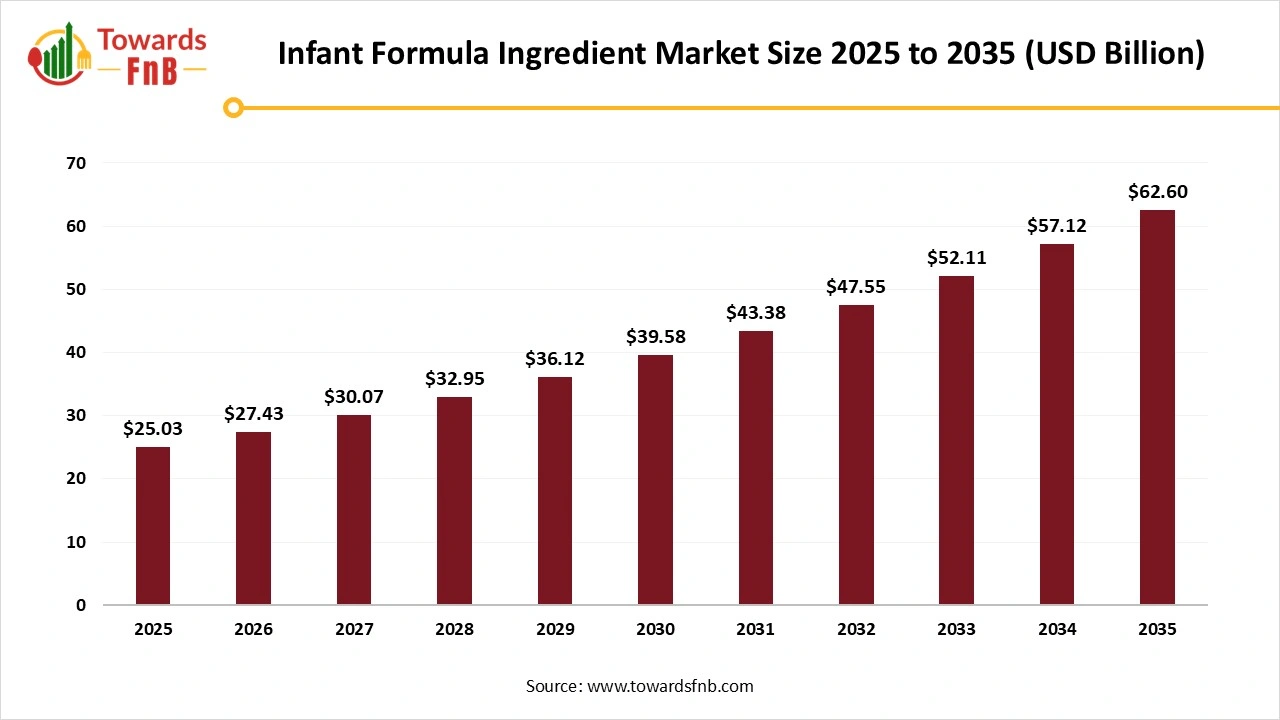
The global infant formula ingredient market size reached at USD 25.03 billion in 2025 and is anticipated to increase from USD 27.43 billion in 2026 to an estimated USD 62.60 billion by 2035, witnessing a CAGR of 9.6% during the forecast period from 2026 to 2035. The rising issues of gastrointestinal concerns, food allergies, and metabolic chaos among infants have specifically grown the demand for such highly specialized and functional products, which makes specialty formula a rapidly growing segment within the infant nutrition market.
| Study Coverage | Details |
| Growth Rate from 2026 to 2035 | CAGR of 9.6% |
| Market Size in 2026 | USD 27.43 Billion |
| Market Size in 2027 | USD 30.07 Billion |
| Market Size by 2035 | USD 62.60 Billion |
| Largest Market | North America |
| Base Year | 2025 |
| Forecast Period | 2026 to 2035 |
| Regions Covered | North America, Europe, Asia-Pacific, Latin America, and Middle East & Africa |
Infant formula is completely made up of protein, mostly from cow milk, that has been scientifically modified to closer to human milk. Several infant formulas include formulas consisting of added nutrients like Iron, which empowers accurate growth and development, Omega-3, fatty acids which assist in eyesight and brain development, and lastly, prebiotics and probiotics, which promote healthy bacteria inside the intestines. So factors when considering Infant formula has a lot of elements that need to be considered like Accessibility which carries where the formula needs to be purchased in-store, online, or with the help of subscription services, Cost-like specialized formulas and the latest brands have unique ingredients alike organic infant formula or European formulations which are usually most expensive.
Several formulas utilize formulas with special certifications like USDA Organic or CleanLabel Project Purity, certified to make sure the product aligns with specific production standards and quality assurances, too. Powdered formulas are economical but require mixing. Liquid concentrates are easy to make but more expensive than powder. Ready-to-feed formulas are the easiest but the priciest option.
The future of infant formula includes genetically engineered components, bioactive ingredients, and advanced prebiotics and probiotics whose goal is to develop digestive health, cognitive development, and immune function. Although infant formula serves necessary nutrients, it lacks several bioactive compounds found in breast milk. The breast milk includes antimicrobial peptides, immune-modulating molecules, and live maternal microbiota whose formula doesn’t yet reproduce. On the other hand, the addition of nanosized vesicles, which are high in microRNAs, proteins, and other bioactive molecules, and milk-derived exosomes in intercellular communication, which may assist in regulating infant immune feedback and gut-brain communication creates the further growth opportunity in the infant formula ingredient market expansion.
Also, the possibility of infant formula revolves around precision nutrition, where formulations are customized to individual infant needs. Current research has given importance to bioactive compounds in baby formulas, like prebiotics and probiotics. Furthermore, bioactive compounds, another rising trend in baby formula research, is the discovery of novel ingredients that come from natural resources. Novel ingredients include protein, choline, fats, gangliosides, Lactoferrin, lutein, taurine, and Human Milk oligosaccharides.
Health claims mentioned on infant formula packaging are crucial and assure nutritional advantages that assist infants’ growth and development. However, the challenge includes meticulous scientific validation, which requires going back to these claims. Contaminated formulas, which include germs like Cronobacter, can cause capable in infants. As per the CDC, an immediate sign of Cranobacter infection in infants consists of low energy, fever, and excessive crying. It can ultimately lead to meningitis, which is a condition in which the membranes that are the linings of the spine and brain start to swell. Even non-fatal infections can lead to long-term and serious issues in the brain. Thus, the awareness regarding the side effects limits the adaptation of the product and hampers the infant formula ingredient market growth.
Raw Material Procurement
Processing
Distribution
North America Dominated the Infant Formula Ingredient Market in 2025
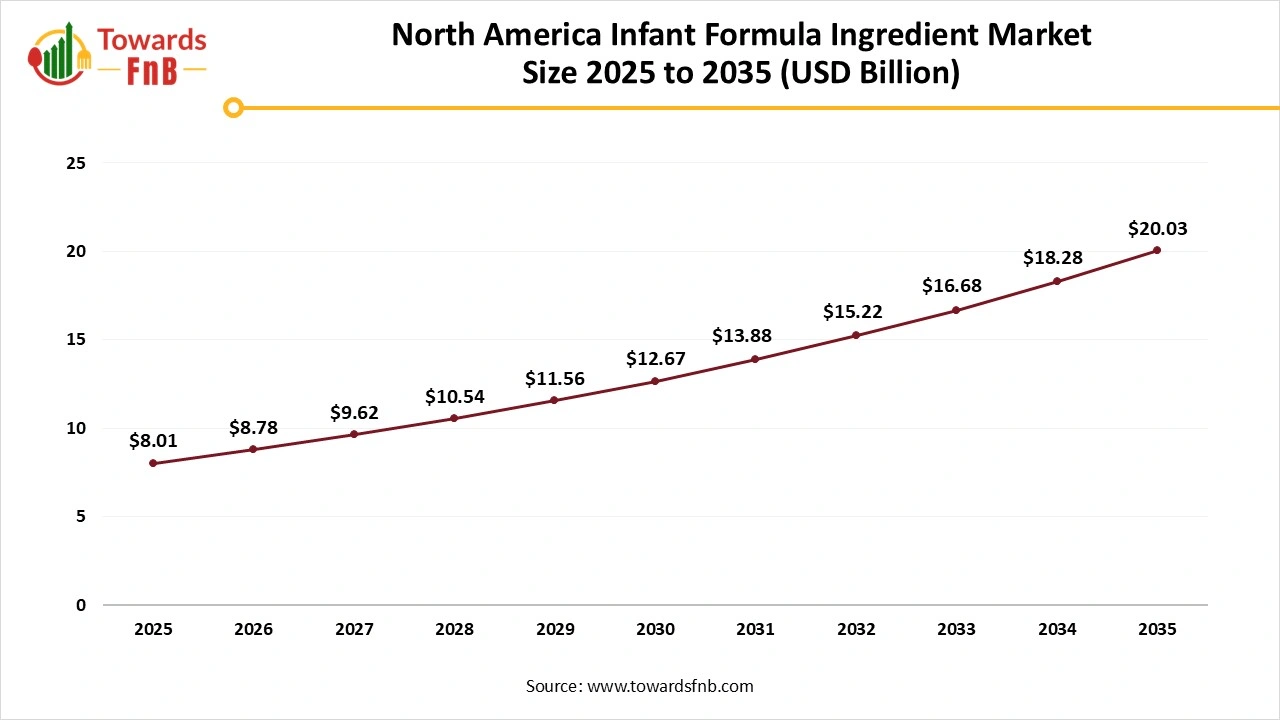
The North America infant formula ingredient market size reached at USD 8.01 billion in 2025 and is anticipated to increase from USD 8.78 billion in 2026 to an estimated USD 20.03 billion by 2035, witnessing a CAGR of 9.6% during the forecast period from 2026 to 2035.
Due to busy lifestyles and the rising number of working parents, the demand for ready-to-use food, easy, and infant formula is on the rise. On the other hand, on-the-go snacks, single-serving pouches, and easy-to-mix formula pouches are provisions to parents who are seeking nutritious and yet time-efficient feeding solutions.
Growing Infant Formula Ingredient Market In Canada
The high rate of female employment in Canada contributes significantly to this demand. Many working moms struggle with breastfeeding due to time constraints and insufficient workplace assistance, causing them to prefer formula feeding as a more practical alternative. Furthermore, cultural transformations have made formula feeding more socially acceptable, giving parents more options for sharing feeding responsibilities.
Asia Pacific Expects Significant Growth in the Infant Formula Ingredient Market During the Forecast Period
The paramount importance of this region is due to rising consumer awareness with respect to the negative effects of chemical ingredients and the benefits of organic products. Also, the food introduces have begun to make clean-label claims with no added preservatives. This growth is also due to factors such as rising disposable incomes, high birth rates, and growing awareness of infant nutrition in countries like India, China, and Southeast Asia.
India’s infant formula ingredient market is growing due to factors such as malnutrition, Low birth weight, and chronic and genetic health conditions, which have ultimately led to increased attention for parents and medical professionals towards infant nutrition and its related advantages. On the other hand, urbanization and transforming family dynamics have driven a growth in consumer choice towards packaged baby foods. As the urbanization level reaches 35%, working parents are rising and completely depend on ready-to-eat and fortified products to align with the infant's dietary needs. The term known as “Gripe water “is an over-the-counter liquid supplement provided to infants to evaluate and serve to infants to ease symptoms of stomach discomfort and colic. Gus and hiccups, too. The original formula was made in England in the year 1850, which contains sugar and alcohol, but today’s commercial preparations are alcohol-free.
.webp "Infant Formula Ingredient Market Share, By Region, 2025 (%)")
The market for infant formula ingredients in Europe is significantly influenced by a rising awareness regarding infant health, the increasing demand for organic and clean-label products, and the growing population of health-conscious parents. Stringent food safety regulations within various regions bolster consumer confidence in packaged baby food. Moreover, advancements in plant-based and allergen-free formulations cater to the evolving dietary needs. Urban living and the prevalence of dual-income families further enhance the demand for convenient, ready-to-eat options that prioritize both time savings and product quality. Companies are strategically responding to these dynamics by providing tailored solutions and sustainable packaging, which collectively contribute to the expanding market share of baby food and infant formula in Europe.
Germany, as a member of the European Union, complies with rigorous food safety and ingredient transparency standards dictated by the European Food Safety Authority (EFSA) and national regulatory bodies. Recent changes in regulatory frameworks have introduced elevated standards for allergen labeling, imposed restrictions on synthetic additives, and established new guidelines concerning health claims related to infant nutrition. The increasing inclination towards organic and clean-label formulations, along with innovations such as probiotic-infused ingredients and personalized nutrition solutions, is projected to create new revenue opportunities and foster market differentiation in the coming years.
Middle east and Africa expects the notable growth in the market. The growing recognition of the benefits associated with infant formula ingredients is propelling demand in the infant nutrition sector. Rising birth rates and the expanding middle class in key markets are contributing to the growth of this segment. Notable trends indicate an increased preference for plant-based and hypoallergenic formulas, driven by lactose intolerance, as well as for organic and fortified products that incorporate functional ingredients like prebiotics. Major industry players such as Nestlé, Danone, and Abbott are actively engaging with markets in regions including the UAE and Saudi Arabia.
The UAE market for infant formula ingredients is experiencing rapid expansion, fueled by the increasing number of working mothers, urbanization, and evolving consumer preferences. In various parts of the world, infant formula is perceived as a vital product to ensure proper nutrition for infants who are unable to be exclusively breastfed. Additionally, the rising awareness surrounding infant nutrition and the growing availability of specialized formulas tailored to specific dietary requirements are further driving the demand for baby infant formula ingredients.
The Latin American market has witnessed substantial growth in recent years, owing to the recognized health benefits associated with child nutrition, including reduced cholesterol levels, lower risk of cardiovascular diseases, healthy growth, improved digestive health, and increased demand for specific nutritional components. The growing emphasis on prebiotics and certain dairy protein fractions, propelled by population growth, are critical factors contributing to the ongoing development of the Latin American infant formula ingredients market. Ensuring that the nutritional content remains intact throughout the shelf life of infant formulas is an essential requirement. In the forthcoming years, specialized formulas are anticipated to gain increased momentum among industry players.
The Brazilian infant formula ingredients market is also experiencing robust growth, driven by rising urbanization and heightened maternal awareness regarding infant nutrition. Government initiatives aimed at enhancing child health outcomes are further stimulating innovation and investment within this sector. The increasing consumer preference for organic, non-GMO, and fortified ingredients reflects a broader trend toward sustainable and health-conscious consumption. The growth of urban demographics and rising maternal employment rates are expanding the demand for convenient, nutritionally advanced infant formulas.
Infant Formula Ingredient Market Share, By Source, 2025 (%)
| Segments | Shares (%) |
| Cow Milk | 70% |
| Soy | 20% |
| Protein Hydrolysates | 6% |
| Others | 4% |
The Cow Milk Segment Dominated the Infant Formula Ingredient Market in 2025
Cow milk-based infant formula became popular due to its nutritional adaptability, availability, and scientific support. Cow’s milk, when modified, can closely mimic the essential components of human breast milk, such as proteins, fats, vitamins, and minerals, making it a suitable alternative for infants who cannot be breastfed. Its wide availability and relatively low cost made it a practical choice for large-scale production. Over time, advancements in nutritional science allowed for the development of formulas that are safe and tailored to meet the specific dietary needs of infants. Historically, cow's milk had already been used in various cultures to feed infants, and this traditional use laid the foundation for modern formula development. Medical professionals and paediatricians have also supported the use of cow milk-based formulas when breastfeeding is not possible, further boosting its acceptance and popularity among parents worldwide.
The Soy Segment is Expected to Grow at the Fastest Rate in the Infant Formula Ingredient Market During the Forecast Period
It was created to provide complete nutrition; Soy formulas are a famous alternative to cow’s milk formulas for infants with cow’s milk allergy. They are an accurate substitute for cow’s milk formula, which is nearly 10-14% of infants who have an allergy to cow milk protein, who also have an allergy to soy protein. Soy-based infant formulas are infused with the necessary amino acids.
Infant Formula Ingredient Market Share, By Ingredient, 2025 (%)
| Segments | Shares (%) |
| Oil & Fats | 12% |
| Carbohydrates | 5% |
| Proteins | 50% |
| Prebiotics | 15% |
| Vitamins | 8% |
| Minerals | 6% |
| Others | 4% |
The Protein Segment Dominated the Infant Formula Ingredient Market in 2025
Formulas are presently divided into the types of protein they contain. These have soy protein, cow milk protein, partially hydrolyzed, amino-acid-based formulas, and extensively hydrolyzed. Usual conceptions about the advantages of these different proteins are frequently not well grounded by evidence. So, intact proteins are whole proteins that are primarily found in standard infant formulas like cow’s milk or goat milk infant formulas. Partially broken-down proteins are uncomplicated for digestion. These infant formulas are generally marketed as “gentle” formulas. While extensively hydrolyzed proteins are inactive and are utilized for babies with cow milk protein allergy. These formulas are usually labelled as hypoallergenic. Proteins are initially in infant nutrition as their amino acid favors tissue development, neurological development, and enzyme synthesis too.
The Prebiotics Segment is Expected to Grow at the Fastest Rate in the Infant Formula Ingredient Market During the Forecast Period
Prebiotics are non-digestible food elements which promote the development of beneficial bacteria in the gut. They serve food as the perfect bacteria, probiotics, which play a crucial role in maintaining a healthy digestive system. Prevalent prebiotics include fructooligosaccharides (FOS) and galactooligosaccharides (GOS), which are initially added in infant formulas to simulate the advantageous effects of human milk oligosaccharides, which are found in breast milk. There are several benefits to prebiotics, such as improved gut health, enhanced immune function, reduction in gastrointestinal concerns, improved nutrient absorption, and potential cognitive benefits. Acids such as carnitine, methionine, and taurine. Their fat element is initially acquired from vegetable oils such as palm, soy, sunflower, safflower, olein, and coconut oils.
Infant Formula Ingredient Market Share, By Application, 2025 (%)
| Segments | Shares (%) |
| Standard Infant Formula | 60% |
| Growing-up Milk | 17% |
| Speciality Formula | 10% |
| Follow-on Formula | 13% |
The Standard Infant Formula Segment Dominated the Infant Formula Ingredient Market in 2025
Standard infant formulas are gaining attention due to the popularity of their scientific backing, constant quality, and alignment with modern parenting needs. These formulas are carefully grown to meet the nutritional requirements of infants who are not breastfed, which offers a balanced mix of required nutrients such as fats, proteins, vitamins, carbohydrates, and minerals too. Their formulation is guided by huge research and must adhere to strict regulatory standards, which are set by bodies like the FDA or EFS, which ensures safety and nutritional adequacy for infant development.
The Growing-up Milk Segment is Expected to Grow at the Fastest Rate During the Forecast Period
The growing-up milk is also known as toddler milk or follow-up formula, which is gaining popularity due to use in the infant formula ingredient market because of many key factors. These milk-based products are specially crafted for children aged 1 to 3 years and are filled with necessary nutrients such as calcium, iron, vitamins, and omega fatty acid which support healthy growth and development during early childhood days. As parents become more attentive to the nutritional needs of toddlers and find easy, reliable sources of balanced nutrition, growing-up milk serves as a practical solution.
Bobbie
Kabrita
Perrigo
COCo2
Arla
By Source
By Ingredient
By Application
By Region


.webp)

Principal Consultant
Vidyesh Swar, Senior Research Analyst at Towards Food & Beverages, specializes in market research, focusing on supply-demand evaluation, pricing analysis, alternative proteins, plant-based foods, and sustainable food technologies within the industry.
Learn more about Vidyesh Swar
Reviewed By
Aditi Shivarkar, with 14+ years in Food and Beverages market research, specializes in food, beverage, and eco-friendly packaging. She ensures accurate, actionable insights, driving Towards FnB's excellence in industry trends and sustainability.
Learn more about Aditi ShivarkarApril 2026
February 2026
February 2026
March 2026

Infant Formula Ingredient Market


 +1 804-441-9344
 Download Sample
 Schedule a Meeting