March 2026



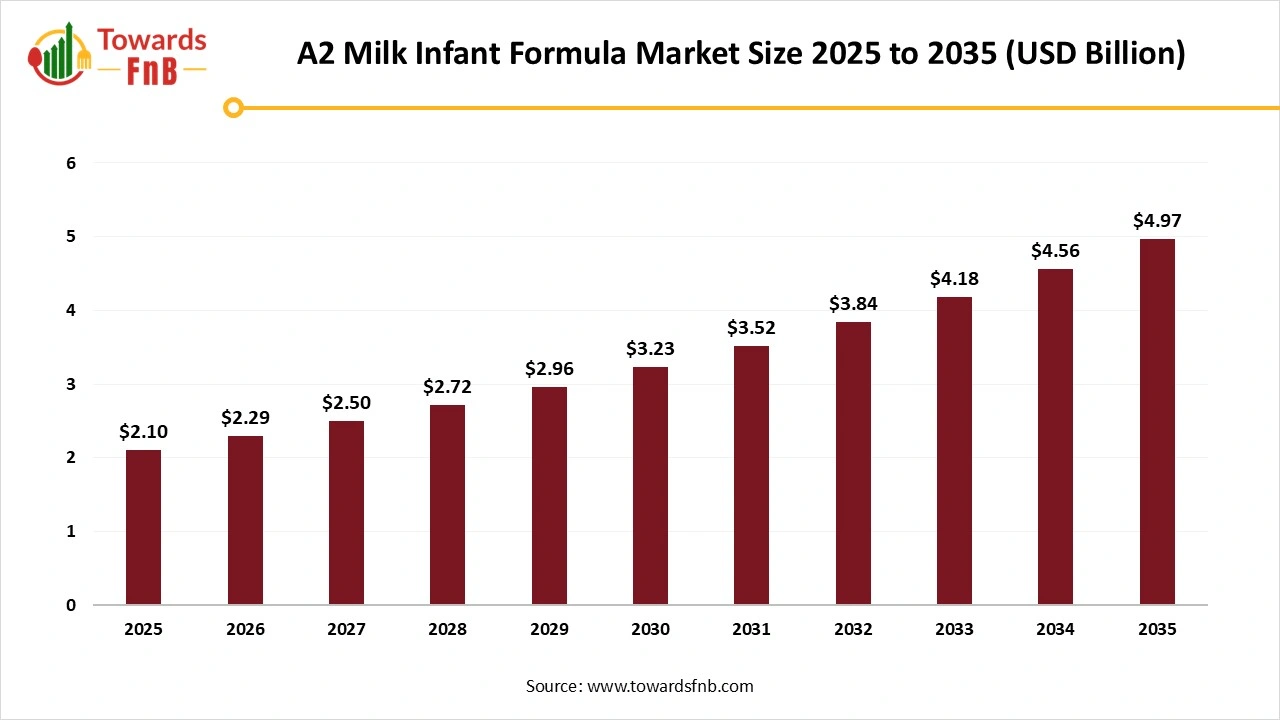
The global A2 milk infant formula market size reached at USD 2.10 billion in 2025 and is predicted to increase from USD 2.29 billion in 2026 to reach approximately USD 4.97 billion by 2035, expanding at a CAGR of 9% from 2026 to 2035. Rising health consciousness among parents and growing demand for easy-to-digest dairy alternatives are driving the market.
| Study Coverage | Details |
| Growth Rate from 2026 to 2035 | CAGR of 9% |
| Market Size in 2026 | USD 2.29 Billion |
| Market Size in 2027 | USD 2.50 Billion |
| Market Size by 2035 | USD 4.97 Billion |
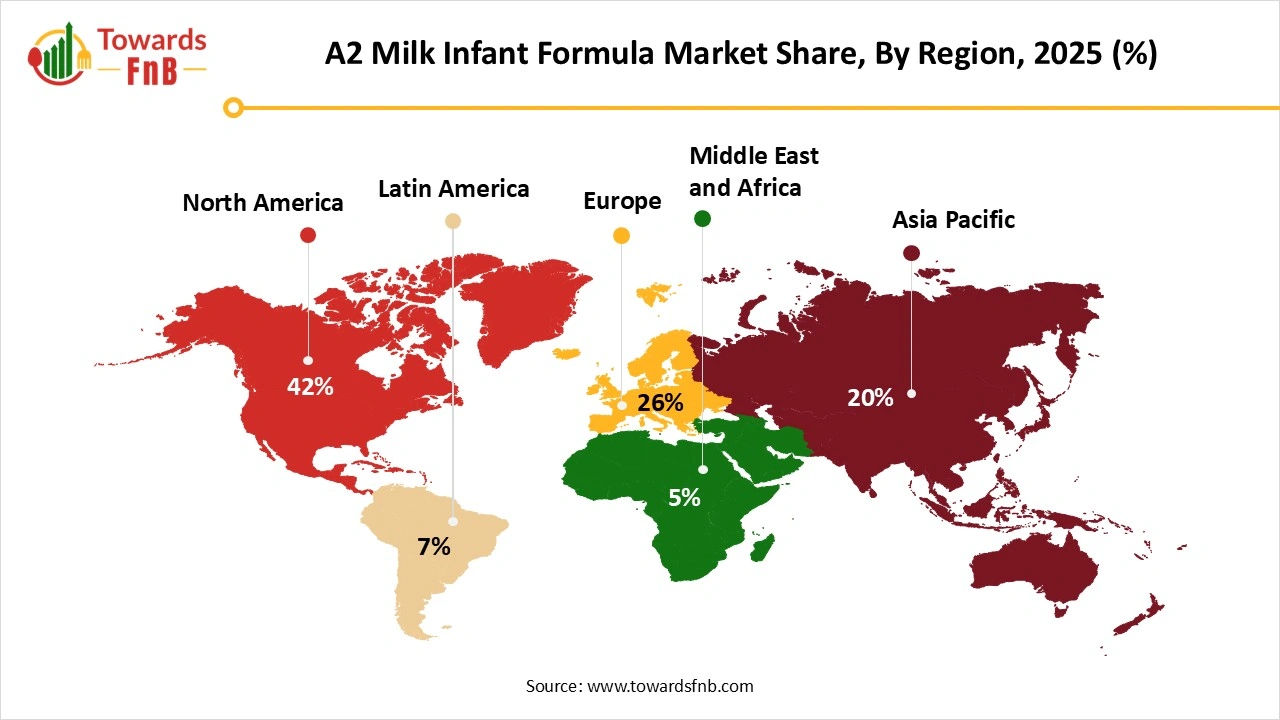
| Largest Market | North America |
| Base Year | 2025 |
| Forecast Period | 2026 to 2035 |
| Regions Covered | North America, Europe, Asia-Pacific, Latin America, and Middle East & Africa |
Proper nutrition is fundamental to fostering healthy development in children, and A2 milk presents an advantageous option for parents seeking purity, digestibility, and nutritional value in every serving. When it comes to choosing the right milk for infants, parents are increasingly turning to A2 milk infant formula. One of the important growth factors for the A2 milk infant formula market is the increasing prevalence of lactose intolerance and milk allergies among infants. Another significant factor boosting the market growth is the rising number of working mothers and the increasing female workforce participation.
| Market Driver | (~) % Impact on CAGR Forecast | Geographic Relevance | Impact Timeline |
| Growing awareness of A2 protein digestive benefits | +3.5% to +4.5% | Asia Pacific, North America & Europe driven by parental wellness trends | Medium to Long term (2025–2035) |
| Premiumisation & clean label nutrition preferences | +2.5% to +3.5% | North America & Europe with established premium infant nutrition markets; rising in APAC | Medium (2025–2030) |
| Expanding pediatric endorsements & scientific validation | +2.0% to +3.0% | Global, especially where pediatric professionals influence formula selection | Medium (2025–2030) |
| Retail & e commerce distribution expansion | +1.5% to +2.5% | North America & Europe lead; Asia Pacific grows rapidly via online platforms | Short to Medium term (2025–2030) |
| Market Restraint | (~) % Impact on CAGR Forecast | Geographic Relevance | Impact Timeline |
| Higher premium pricing vs conventional formulas | ~ 2.0% to 3.0% | Asia Pacific & Latin America price sensitive markets where cost limits broad adoption | Short term (2025–2028) |
| Supply chain & limited A2 protein sourcing capacity | ~ 1.5% to 2.5% | Global — especially where A2 milk production infrastructure is nascent | Medium term (2025–2032) |
| Regulatory compliance & quality standards for infant nutrition | ~ 1.2% to 1.8% | North America & Europe with strict infant formula regulatory environments | Medium term (2025–2030) |
| Competition from established premium formula brands | ~ 1.0% to 1.5% | Global, particularly large markets like China and Europe | Long term (2025–2035) |
Manufacturers employ genetic testing methodologies to identify cows that naturally produce A2 beta-casein, thereby ensuring that the raw materials utilized in A2-specific formulas are suitable. This genetic screening process minimizes the necessity for extensive processing at later stages. Additionally, artificial intelligence is increasingly integral to the formulation of A2 Milk Infant Formula, as AI technologies facilitate the analysis of extensive datasets, predicting optimal product formulations based on factors such as infant age, health conditions, and genetic predispositions.
Raw material Procurement
Processing
Distribution
How did North America Dominate the A2 Milk Infant Formula Market?
North America dominated the market in 2025, bolstered by advanced processing capabilities, a strong retail infrastructure, and a rapid ascent of e-commerce, which now complements traditional distribution methods. Increasing health consciousness propels significant growth in products such as high-protein milk and specialty items, including lactose-free offerings, A2 milk varieties, and organic clean-label formulations that cater to both lactose-intolerant infants and health-oriented parents seeking superior nutritional value and digestibility.
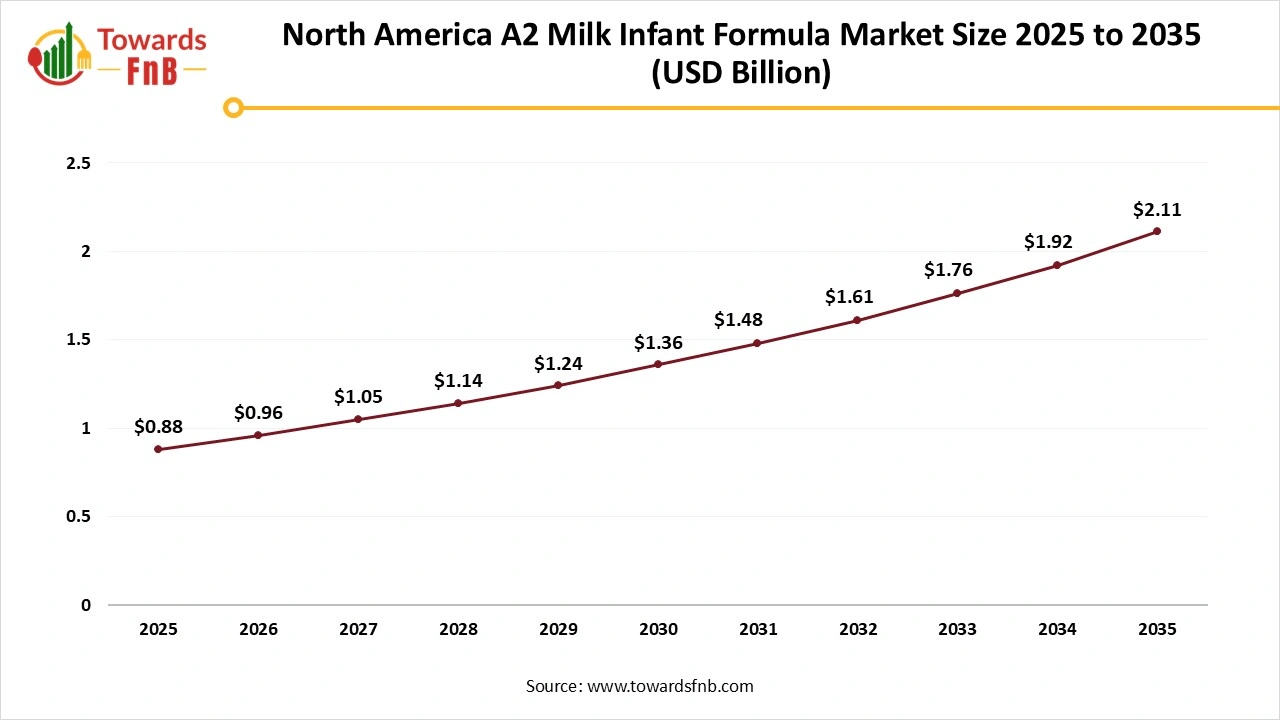
North America A2 Milk Infant Formula Market Size 2025 to 2035
The North America A2 milk infant formula market size was valued at USD 0.88 billion in 2025 and is predicted to increase from USD 0.96 billion in 2026 to reach approximately USD 2.11 billion by 2035, expanding at a CAGR of 9.14% from 2026 to 2035.
U.S. A2 Milk Infant Formula Market Trends
The principal advantage of A2 milk infant formula is its enhanced digestibility for certain infants, contributing to the market expansion in the U.S. Parents and caregivers may consider A2 baby formula if their child experiences gastrointestinal discomfort, such as gas or bloating, when consuming traditional cow milk formula. Some A2 baby formulas are certified organic, guaranteeing that the milk utilized originates from cows not treated with antibiotics or growth hormones and produced following organic farming standards. For instance, Similac Organic with A2 Milk is an example of gentle nutrition that is USDA-certified organic and crafted from A2 milk, providing an easy-to-digest option formulated with cow’s milk containing A2 protein produced exclusively by specific cows.
Asia Pacific A2 Milk Infant Formula Market Trends
Asia Pacific expects the fastest growth in the market during the forecast period. The region is primarily driven by an increasing consumer awareness concerning digestive health and the rise of lactose intolerance. The expanding middle class and heightened disposable income in various Asia Pacific nations are driving demand for premium products, including A2 milk. This trend is especially notable as A2-based infant formulas gain favor among parents seeking gentler nutritional alternatives for their children.
China A2 Milk Infant Formula Market Trends
The A2 milk infant formula sector in China is impacted by consumer demand for premium, easily digestible products, particularly for infants, following a notable increase in birth rates. In 2024, births in China rose by more than half a million, encouraging optimism regarding the segment’s future growth potential. Manufacturers are competing to develop infant formula that accurately matches the nutritional value of maternal milk, with significant regulatory advancements, such as China's recent approval for the inclusion of human milk oligosaccharides (HMOs) in infant formula, presenting new avenues for product innovation. By 2030, it is projected that China's middle class will expand by an additional 80 million individual. In 2024 alone, per capita income in China increased by 5.3% to ¥41,314, as reported by the national statistics bureau, boosting the market expansion. (Source: English.scio.gov.cn)
Europe A2 Milk Infant Formula Market Trends
Trends in Europe’s A2 milk infant formula market are evolving in response to consumer preferences and technological advancements. The continent enforces strict regulations regarding infant formula, ensuring high standards for product quality. Parents select infant formulas to provide their babies and children with essential nutrients necessary for healthy growth and development. Kabrita, a company specializing in goat milk-based infant formula, is gaining acceptance among parents. There is a rising consumer interest in premium, traceable dairy products, with Germany and France leading the way in adoption.
Germany A2 Milk Infant Formula Market Trends
In Germany, the A2 milk infant formula market is experiencing significant growth due to an increasing preference for A2 protein-based formulas over traditional A1 formulas. Technological advancements in manufacturing processes and supply chain management are improving product availability and reducing costs. Key market players are focusing on innovation, including the introduction of organic and non-GMO A2 milk variants to cater to health-conscious parents.
Why did the Powder Formula Segment Dominate the A2 Milk Infant Formula Market in 2025?
The powder formula segment dominated the market in 2025. The powdered formula is the least expensive choice. It is available in containers with a scoop as well as in compact bags for convenience while traveling. This kind of formula usually provides a longer shelf life than liquid formulas, making it the preferred option for many babies who consume formula
The liquid/ready-to-feed formula segment is expected to grow at the fastest rate during the forecast period. This convenient option is especially appealing for parents on the go, as it simplifies nighttime feedings and eliminates clumping issues that some powdered formulas may cause.
Which Age Segment Dominated the A2 Milk Infant Formula Market In 2025?
The infant formula (0-6 months) segment held the largest share of the market in 2025, as A2 beta-casein protein is structurally closer to breast milk. In cases where breastfeeding is not feasible or needs supplementation, infant formulas offer a safe alternative, providing comprehensive nutrition critical for growth, cognitive development, and immune support.
The growing-up/toddler formula (12-36 months) segment is experiencing notable growth during the forecast period. Parents prefer these formulas for toddlers as they offer a specialized blend of nutrients to support immune health and overall development, driven by increasing awareness of proper nutrition in early childhood.
Why did the Supermarkets and Hypermarkets Segment Dominate the A2 Milk Infant Formula Market in 2025?
Supermarkets and hypermarkets segment held the largest market share in 2025. These large, self-service grocery stores provide various foods and household supplies, which enhances the visibility of infant formulas and is expected to boost sales. Supermarkets and hypermarkets offer a wide variety of infant formula under one roof.
The online/e-commerce segment is projected to grow at the fastest rate during the forecast period. This channel is particularly appealing to new parents due to its convenience. A highlight in this area is Meiji, which emerged as the best-selling infant formula brand on Vietnamese e-commerce platforms in the first five months of 2023.
a2 Milk
Abbott
By Product Type
By Age / Stage
By Distribution Channel
By Region




Principal Consultant
Vidyesh Swar, Senior Research Analyst at Towards Food & Beverages, specializes in market research, focusing on supply-demand evaluation, pricing analysis, alternative proteins, plant-based foods, and sustainable food technologies within the industry.
Learn more about Vidyesh Swar
Reviewed By
Aditi Shivarkar, with 14+ years in Food and Beverages market research, specializes in food, beverage, and eco-friendly packaging. She ensures accurate, actionable insights, driving Towards FnB's excellence in industry trends and sustainability.
Learn more about Aditi ShivarkarMarch 2026
February 2026
February 2026
March 2026

A2 Milk Infant Formula Market


 +1 804-441-9344
 Download Sample
 Schedule a Meeting