April 2026



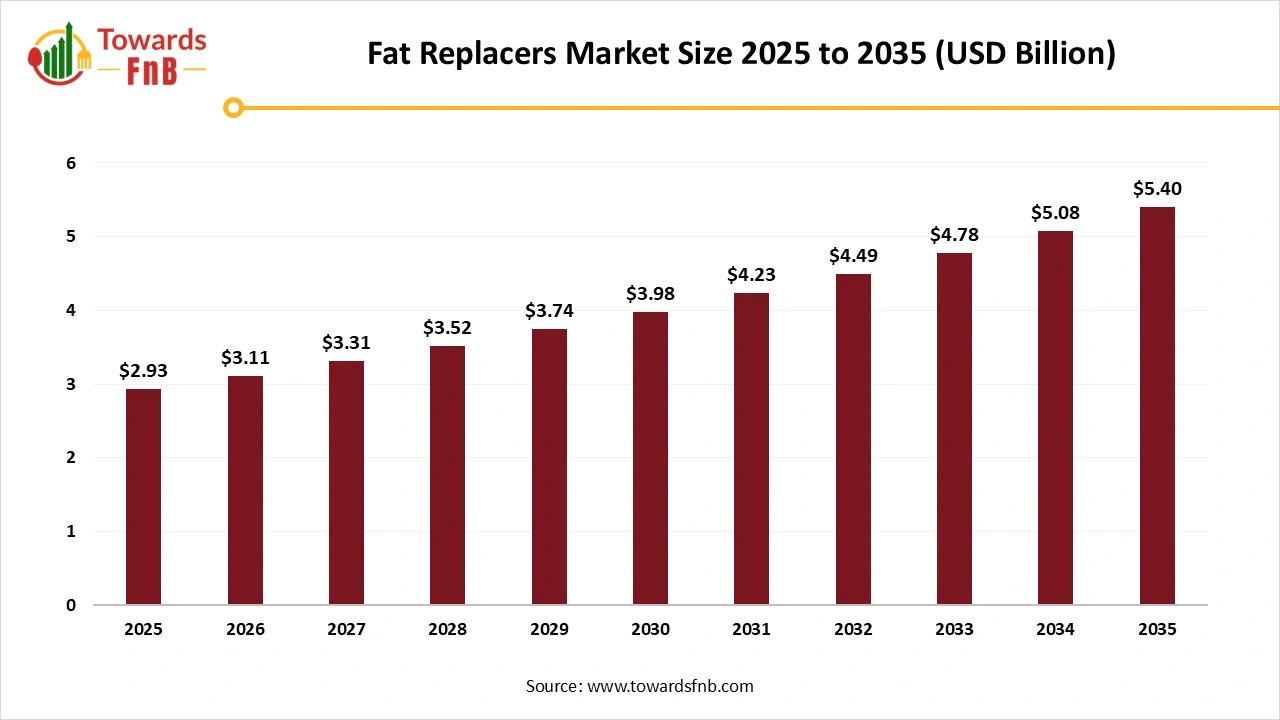
The global fat replacers market size estimated at USD 2.93 billion in 2025 and is predicted to increase from USD 3.11 billion in 2026 to nearly reaching USD 5.40 billion by 2035, growing at a CAGR of 6.3% during the forecast period from 2026 to 2035. The growth of the market is driven by growing health consciousness, obesity concern and demand for low-calorie food.
| Study Coverage | Details |
| Growth Rate from 2026 to 2035 | CAGR of 6.3% |
| Market Size in 2026 | USD 3.11 Billion |
| Market Size in 2027 | USD 3.31 Billion |
| Market Size by 2035 | USD 5.40 Billion |
| Largest Market | North America |
| Base Year | 2025 |
| Forecast Period | 2026 to 2035 |
| Regions Covered | North America, Europe, Asia-Pacific, Latin America, and Middle East & Africa |
The fat replacers market is a growing global industry focused on substances that mimic fat's texture, flavor, and mouthfeel in foods, allowing for lower-calorie, low-fat products to meet consumer demand for healthier options. The fat replacer market experienced significant growth driven by rising health consciousness and increasing recognition of fat replacers as important ingredients for healthy food manufacturing and calorie-reduction applications. The market developed as food manufacturers and health-focused brands recognized the potential for these products to improve nutritional profiles while maintaining taste quality and improving consumer appeal.
Advancements in extraction methods, emulsion stabilization, and fat simulation are crucial to the market's development. Cutting-edge processing methods, such as enzyme applications and membrane filtering, are enhancing the functional characteristics of plant oils, aligning their taste and texture more closely with those of animal fats. AI and machine learning are speeding up formulation optimization, lowering R&D expenses, and decreasing time-to-market. For example, MicroLub has tested the technology in reduced-fat yogurts, panna cotta, soft cheese, vegetable soup, white sauce, and chocolate ganache, substituting up to 75% of the fat content.
Raw Material Procurement
Processing
Distribution
What made the Asia Pacific a dominant region in the Fat Replacers Market in 2025?
Asia Pacific dominated the market in 2025. This expansion is driven by a mix of elevated obesity levels, rising health consciousness, and greater disposable incomes in countries such as China and India. The area's craving for low-fat processed food is increasing, spurred by urban lifestyles and Western eating habits, and additionally backed by investments in advancements in food processing. The increasing need for dairy products, along with healthy eating practices, is expected to drive growth in the area. The changing environment of the food industry in the area is expected to drive the need for more sophisticated food ingredients such as fat substitutes.
China Fat Replacers Market Analysis
The market for fat replacers in China is witnessing swift expansion fueled by growing health awareness, heightened demand for low-fat food alternatives, and advancements in technology. With increasing awareness of dietary health among consumers, producers are concentrating on creating innovative fat substitutes that preserve sensory attributes while lowering fat levels. Moreover, the rising occurrence of lifestyle-related illnesses has boosted the need for functional food that include fat substitutes to comply with health criteria.
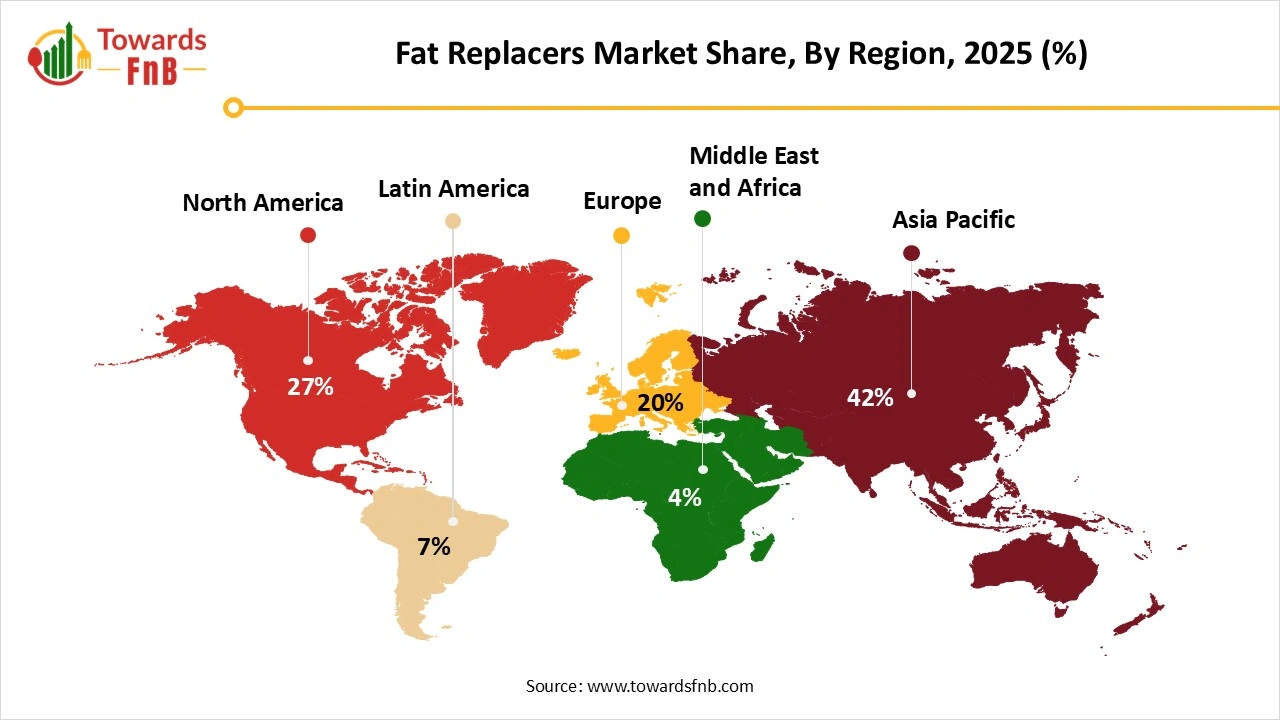
North America expects fastest growth during the forecast period.
The North American fat replacers market is undergoing a significant change influenced by shifting consumer health interests and regulatory demands. The rising need for clean-label and natural ingredients has driven manufacturers to create plant-based and minimally processed fat substitutes, thus altering competitive dynamics. Moreover, improvements in extraction and formulation methods are facilitating the creation of more efficient and adaptable fat substitutes, increasing competition among industry competitors.
U.S. Fat Replacers Market Analysis
The growing preference of consumers for healthier diet choices is fueling the market in the U.S. With increasing health awareness, the need for low-calorie food choices has risen significantly. The growth of veganism and plant-based eating is notably affecting the fat replacers industry. With an increasing number of consumers embracing these dietary choices, the demand for plant-based fat replacers that can replicate the texture and taste of conventional fats has risen. For example, Lypid is a startup in the US that creates plant-based fat. Since fat is essential for the flavor in animal-derived foods, plant-based options must incorporate a substitute that mimics the properties of animal fat.
Europe: A Notably Growing Region in the Fat Replacers Market
A fat replacer is present in European cuisine, including baked goods, cheeses, sour cream, yogurt, margarine, salad dressings, sauces, and gravies, posing no health risks and resembling natural fat while containing fewer calories. The increasing desire for low-calorie and low-fat diets among Europeans is recognized as a key driving force for the market. The transition to clean-label and sustainable ingredients drives market growth, positioning it as a vital focus for food manufacturers and investors looking for innovative options that match changing consumer demands.
Germany Fat Replacers Market Analysis
Germany stands as one of the largest and most developed food and beverages markets in Europe, noted for a strong consumer consciousness regarding health and wellness trends. The rising incidence of lifestyle-related health concerns like obesity, heart disease, and high blood pressure has fueled the need for healthier food formulations, including fat replacers. Self-reported data from 2019-2020 indicates that 46.6% of women and 60.5% of men in Germany are impacted by being overweight (including obesity). Almost 20% of adults (19%) are classified as obese. Advancements in fiber-based and protein-derived fat replacers are broadening product ranges in the bakery, dairy, and confectionery industries.
Growing Fat Replacers Market in the Middle East and Africa
The market for fat replacers in the Middle East and Africa has slowly transformed from a niche, specialized sector into a consistently growing component of the local food industry. This market's evolution started when international ingredient providers launched fat substitutes in countries like Saudi Arabia, the United Arab Emirates, and South Africa to meet the increasing need for low-fat and reduced-calorie food items. As consumers in the area became increasingly conscious of lifestyle-related diseases like obesity, diabetes, and heart problems, the need for healthier options increased, leading to a more organized market for fat substitutes.
Saudi Arabia Fat Replacers Market Analysis
The fat replacers market in Saudi Arabia is witnessing consistent growth due to increasing demand in the food processing industry, shifting consumer preferences towards healthier options, and broadening industrial uses. Advancements in natural fat replacers, including plant-based fibers and proteins, are facilitating the development of healthier, enjoyable fat-free items that satisfy consumer taste preferences. In 2022, the UAE's demand for plant-based protein ingredients, measured by volume, was greatest in staple food categories, particularly in baked products. Shoppers are seeking healthier, lower-fat choices, driving innovation and growth in the market for plant-based and low-calorie fat replacers.
South America Fat Replacers Market Transformation
The South American fat replacers market is undergoing a notable transformation towards healthier food choices, influenced by heightened awareness of health risks associated with obesity and a demand for nutritious options. Government and health entities are progressively advocating for healthier food choices, fostering an environment that benefits the growth of the market. Cutting-edge food technology is facilitating the creation of improved and efficient fat substitute solutions, rendering healthier food choices more appealing and available.
Brazil Fat Replacers Market Analysis
Brazil has established itself as the frontrunner in the South American market, propelled by the growth of its food and beverage production industry, increased health consciousness among consumers, and robust domestic demand for nutritious, low-fat food options. The Brazil fat replacers market is expected to expand consistently as consumer demand for plant-based options rises, fueled by health awareness and sustainability issues. Supportive regulations for sustainable food innovation and the emergence of health-focused policies in Brazil are fostering a positive landscape for market growth.
Fat Replacers Market Share, By Product, 2025 (%)
| Segments | Shares (%) |
| Protein-based | 15% |
| Fat-based | 20% |
| Carbohydrate-based | 65% |
Why did the Carbohydrate-Based Segment Dominate the Fat Replacers Market in 2025?
The carbohydrate-based segment led the market in 2025, providing cost-effective and adaptable options for different food categories by replicating the appealing characteristics of fats. Carbohydrate-based fat substitutes provide similar properties to fats, such as texture, mouthfeel, and moisture retention, making them a popular option for food producers looking for low-fat alternatives.
The protein-based segment is seen to expand at the highest CAGR throughout the projected period.
Protein-based fat replacers, obtained from sources such as whey, soy, and pea proteins, provide the advantages of lowering fat levels while improving the nutritional quality of food items. Their versatility with various foods and minimal impact on overall calorie count make them very attractive. Additionally, innovations in protein extraction and modification methods have enhanced the functional characteristics of fat replacers, rendering them more efficient and adaptable.
Fat Replacers Market Share, By Application, 2025 (%)
| Segments | Shares (%) |
| Bakery and Confectionery | 30% |
| Dairy & Frozen Desserts | 10% |
| Beverages | 10% |
| Processed Meat | 5% |
| Dressings, Margarines, and Spreads | 10% |
| Convenience Foods | 10% |
| Others | 25% |
Which Application Segment Dominated the Fat Replacers Market in 2025?
The bakery and confectionery segment held the largest share of the market in 2025. Bakery and confectionery products are normally rich in sugar and fat; therefore, this is a high-growth potential for fat replacers. The development of fat replacers that can retain the texture, mouthfeel, and moisture of foods such as cookies, cakes, and chocolates without sacrificing taste is important. Increased adoption across bakery, dairy, snacks, and confectionery sectors, positioning it as a vital ingredient in the global health-centric food industry.
The processed meat segment is seen to grow at a notable rate during the predicted timeframe.
Due to the rising popularity of low-calorie and reduced-fat foods like low-fat meat products in these markets. Busy lives increase the need for convenient processed foods, yet consumers seek healthier alternatives. Fat replacers emulate the creamy texture, moisture, and taste of fat in items such as burgers, sausages, and deli meats.
MicroLub
Schouten Europe
By Product
By Application
By Region



Principal Consultant
Vidyesh Swar, Senior Research Analyst at Towards Food & Beverages, specializes in market research, focusing on supply-demand evaluation, pricing analysis, alternative proteins, plant-based foods, and sustainable food technologies within the industry.
Learn more about Vidyesh Swar
Reviewed By
Aditi Shivarkar, with 14+ years in Food and Beverages market research, specializes in food, beverage, and eco-friendly packaging. She ensures accurate, actionable insights, driving Towards FnB's excellence in industry trends and sustainability.
Learn more about Aditi ShivarkarApril 2026
April 2026
April 2026
April 2026

Fat Replacers Market


 +1 804-441-9344
 Download Sample
 Schedule a Meeting