
April 2026



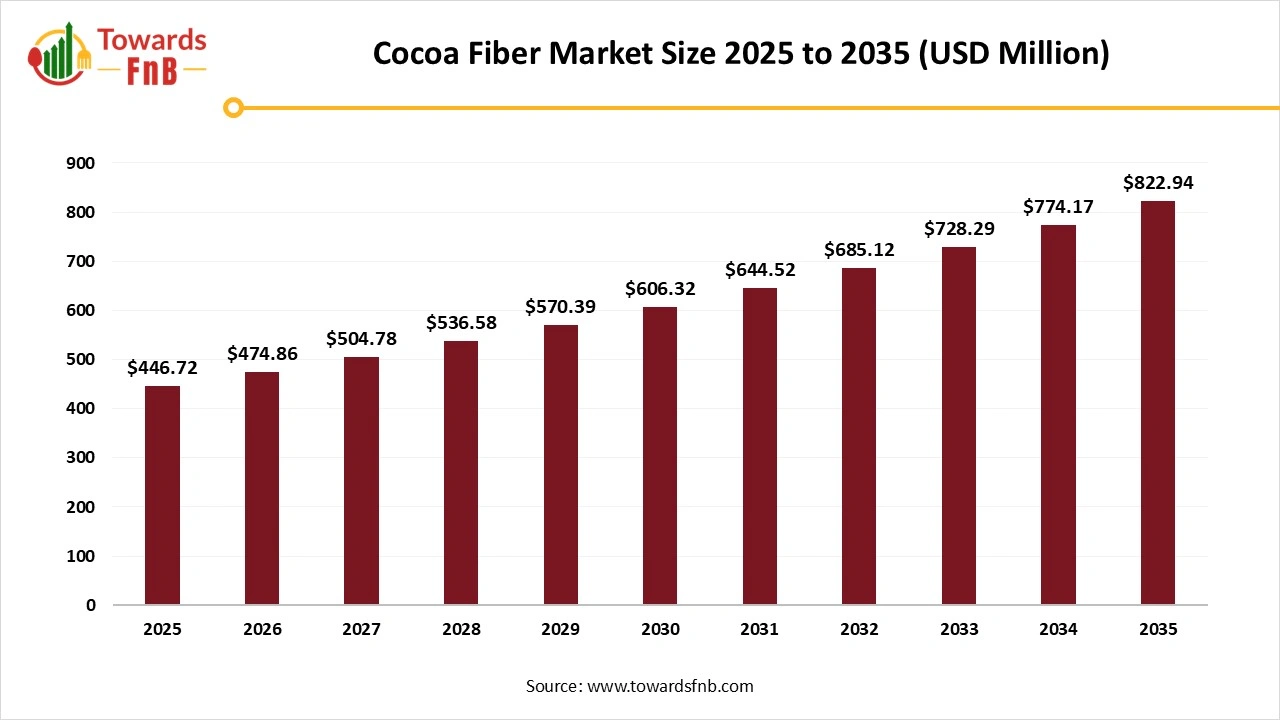
The global cocoa fiber market size was calculated at USD 446.72 million in 2025 and is expected to grow steadily from USD 474.86 million in 2026 to reach nearly USD 822.94 million by 2035, with a CAGR of 6.3% during the forecast period from 2026 to 2035. The growth of the market is driven by the increasing demand for fiber-enriched confectionery and bakery products.
| Study Coverage | Details |
| Growth Rate from 2026 to 2035 | CAGR of 6.3% |
| Market Size in 2026 | USD 474.86 Million |
| Market Size in 2027 | USD 504.78 Million |
| Market Size by 2035 | USD 822.94 Million |
| Largest Market | North America |
| Base Year | 2025 |
| Forecast Period | 2026 to 2035 |
| Regions Covered | North America, Europe, Asia-Pacific, Latin America, and Middle East & Africa |
The cocoa fiber market growth is also driven by the increasing demand for plant-based, clean-label and healthy products, demand for eco-friendly and functional products, increasing consumer awareness, growing sustainable applications in mattresses or textiles, and increasing focus towards texture and nutrition in foods such as supplements, drinks and bakery. In addition, rising innovation in food applications, increasing demand for plant-based, clean label diets, and increasing consumer trend towards health and wellness are further driving the market growth.
The rise of technological advancements in the cocoa fiber industry focus on integrating AI/ precision farming for sustainability, creating novel applications such as biopolymers and biofuels, enhancing functionality and improving purification and extraction such as ultrasound, microwave and enzymes, all aiming for waste reduction, cost-efficiency, higher quality and new products such as fiber-enhanced foods, biofuels and biochar, further driving a preference to a circular economy. Methods such as ultrasound treatments, subcritical water, hydrothermal and microwave-assisted treatments, further ensuring safety and reduce contaminants, which may expected to revolutionize the growth of the cocoa fiber market in the coming years.
Raw Material Procurement
Packaging and Branding
Waste Management and Recycling
| Country | Regulatory Body | Key Regulations | Focus Areas | Notable Notes |
| India | Food Safety and Standards Authority of India (FSSAI) | Food Safety and Standards (Packaging and Safety Regulations) and Licensing and Registration of Food Businesses) | Major focus areas in the cocoa fiber market are the industrial applications in the plant-based and clean label food product industries, driven by demand for functional foods, high-quality and the innovative properties of p products. | Cocoa fiber are highly utilized in the plant-based and upcycled ingredients for their capacity to enhance the efficiency, consistency and quality of high-quality food options products, to enhance functionality, immune system and health and wellness. |
How is North America Dominating the Cocoa Fiber Market?
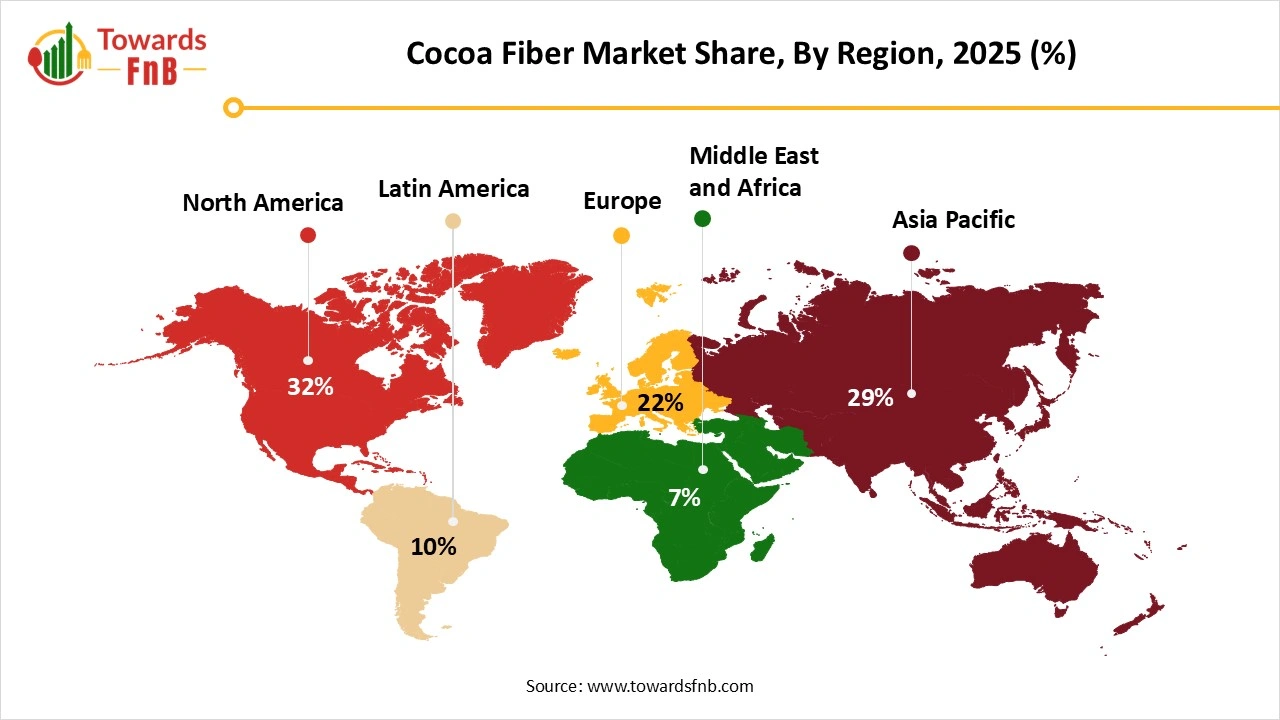
North America dominated the global market revenue in 2025. The cocoa fiber industry in the region is experiencing rapid growth, driven by increasing disposable incomes, health trends, demand for natural fiber, increasing popularity of plant-based diets, and growing well-developed chocolate industry Major drivers such as increasing focus towards health benefits, gourmet trends and sustainability, increasing consumer trend towards health and wellness, increasing demand for clean-label and natural ingredients, and increasing growth in nutraceuticals, dairy and bakery are further driving the market growth in the region.
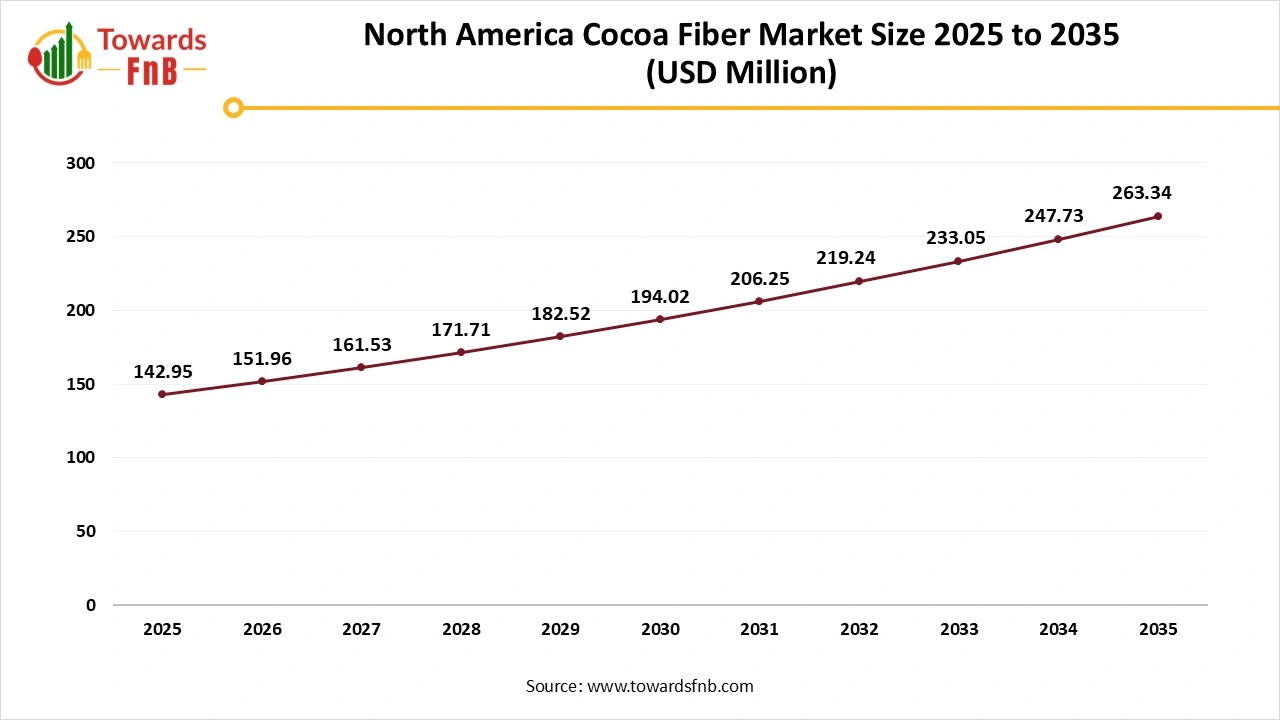
The North America cocoa fiber market size reached at USD 142.95 million in 2025 and is anticipated to increase from USD 151.96 million in 2026 to an estimated USD 263.34 million by 2035, witnessing a CAGR of 6.3% during the forecast period from 2026 to 2035.
The U.S. Cocoa Fiber Market Trends
The cocoa fiber industry in the U.S. is robust, growth driven by the increasing consumer health awareness, consumers seeking for health and nutrition, urbanization, application in nutraceuticals, snacks, bakery and cosmetics, demand for sustainability trends and clean-labels, integration of eco-friendly profile, natural chocolate flavor, and nutritional value.
Europe is Expected to Grow Fastest During the Forecast Period.
The market growth in the region is experiencing rapid growth, driven by increasing demand for functional foods, strong confectionery or bakery sectors and increasing high health awareness. Key drivers such as growing e-commerce platforms, increasing health awareness towards functional and plant-based products, and rising innovation in product development and sustainable sourcing, increasing consumer interest in natural ingredients, sugar reduction and digestive health and production in functional and specialty products. The UK, France and Germany are the fastest growing countries propelling the market growth.
Germany Cocoa Fiber Market Trends
Germany is expected to grow fastest during the forecast period. Due to the proximity to cocoa sources, health-aware consumers and large food processing sector, Germany leads the European cocoa fiber market. The market growth in the country is driven by the growing food and beverage industry, focus on circularity and sustainability, increasing demand for confectionery, bakery and baked products, demand for cocoa sources, and increasing consumer health consciousness.
Why Does Asia Pacific Driving the Cocoa Fiber Market?
Asia Pacific is expected to grow at a notable growth during the forecast period. The market for cocoa fiber in Asia Pacific is experiencing rapid growth, driven by the increasing use in nutraceuticals, confectionery and bakery, consumer focus towards sustainability and clean-labels, rapid urbanization, increasing disposable incomes, demand for functional foods and rising health consciousness.
The India Cocoa Fiber Market Trends
The cocoa fiber industry in India shows rapid growth by organic/ sustainable, personal care and food and beverage demand. The market growth in India is driven by the increasing demand for healthier diets, rising innovation in high-fiber or low-fat products such as fitness bars and dark chocolate, consumer preference for “better-for-you" options, increasing clean-label and functional foods trends and health conscious.
Why are the Middle East and Africa Fueling the Market?
The market growth in the region is driven by factors such as the increasing consumer shift towards eco-friendly and clean-label preferences, demand for plant-based and functional food options, potential government push for healthier diets, and increasing health awareness. Major players such as Cargill and Nestle are significantly investing in innovations in plant-based and high-quality upcycled food ingredients.
UAE Cocoa Fiber Market Trends
The cocoa fiber industry in UAE is growing significantly, driven by the increasing consumer focus towards sustainability and environmental awareness, demand for plant-based and clean-label products, increasing demand for fiber-rich and natural ingredients in functional foods, bars and snacks, increasing government green initiatives, health-conscious food products and increasing consumer demand for conventional foods.
Why does South America Revolutionize the Cocoa Fiber Market
The market growth in the region is growing rapidly in Brazil, driven by growing e-commerce, increasing health awareness and increasing consumer preference towards fitness culture, with major growth expected in clean-label, plant-based options and sustainability ingredients, further expected to expansion of cocoa fiber industry in the country.
Brazil Cocoa Fiber Market Trends
The market for cocoa fiber in Brazil is growing significantly, driven by rising local innovation, focus on heart health, blood sugar and digestion and increasing consumer health trends such as clean-labels and functional foods across the globe, creating opportunities for natural and high-yield ingredients, expanding large-scale and sustainable farms and leveraging vast cocoa potential.
Cocoa Fiber Market Share, By Nature, 2025 (%)
| Segments | Shares (%) |
| Conventional | 85% |
| Organic | 15% |
Why is Conventional Segment Dominating the Cocoa Fiber Market?
The conventional segment dominated the global market revenue in 2025. The conventional segment plays an important role due to its easy availability and affordability. This cocoa fiber is readily available at wholesalers or retailers across the market and produced via conventional farming practices. In addition, the increasing consumer preferences for healthy food options and minimized cost of production, increasing health consciousness, growing food and beverage industry and rising technological advancements in processing, sustainability and upcycling and focus on health benefits, which further drives the segment growth.
The Organic Segment is Expected to Grow Fastest During the Forecast Period.
The organic cocoa fiber’s significance lies in offering high fiber for digestive health in beverages, supplements and foods and booming demand for clean-label and natural ingredients, rise in plus eco-friendly use in agriculture and packaging. Organic cocoa fiber also provides a sustainable alternative, reduces sugar and boost nutrition, making it a strategic choice for brands targeting environmentally aware and health-conscious consumers.
Cocoa Fiber Market Share, By Application, 2025 (%)
| Segments | Shares (%) |
| Food & Beverage | 60% |
| Pharmaceuticals | 17% |
| Personal Care & Cosmetics | 10% |
| Animal Feed | 13% |
How Does Food and Beverage Segment Dominating the Cocoa Fiber Market?
The food and beverage segment dominated the global market revenue in 2025. The segment growth in the global market is driven by the factors such as rising innovation in premiumization and low-fat/sugar products, expansion in supplements, snacks, beverages and baked goods, increasing trend towards sustainable, indulgent and clean label ingredients, increasing demand for vegan/plant-based diets and functional foods such as blood sugar control and digestive health and increasing consumer health awareness.
The Pharmaceutical Segment is Expected to Grow Fastest During the Forecast Period.
Pharmaceuticals use cocoa fiber for its rich mineral content, antioxidant, dietary fiber as a dietary supplement for cardiovascular benefits, cholesterol control and digestive health, and acting as a functional ingredient in nutraceuticals, capsules and pills. Major applications such as excipients in drug delivery due to its components in skincare for anti-aging, potential natural antimicrobial agents and pectin’s properties, integrating polyphenols and flavonoids from cocoa by-products such as shells and husks.
WK Kellogg
Compound Foods
By Nature
By Application
By Region




Principal Consultant
Vidyesh Swar, Senior Research Analyst at Towards Food & Beverages, specializes in market research, focusing on supply-demand evaluation, pricing analysis, alternative proteins, plant-based foods, and sustainable food technologies within the industry.
Learn more about Vidyesh Swar
Reviewed By
Aditi Shivarkar, with 14+ years in Food and Beverages market research, specializes in food, beverage, and eco-friendly packaging. She ensures accurate, actionable insights, driving Towards FnB's excellence in industry trends and sustainability.
Learn more about Aditi ShivarkarApril 2026
April 2026
April 2026
April 2026

Cocoa Fiber Market


 +1 804-441-9344
 Download Sample
 Schedule a Meeting