April 2026



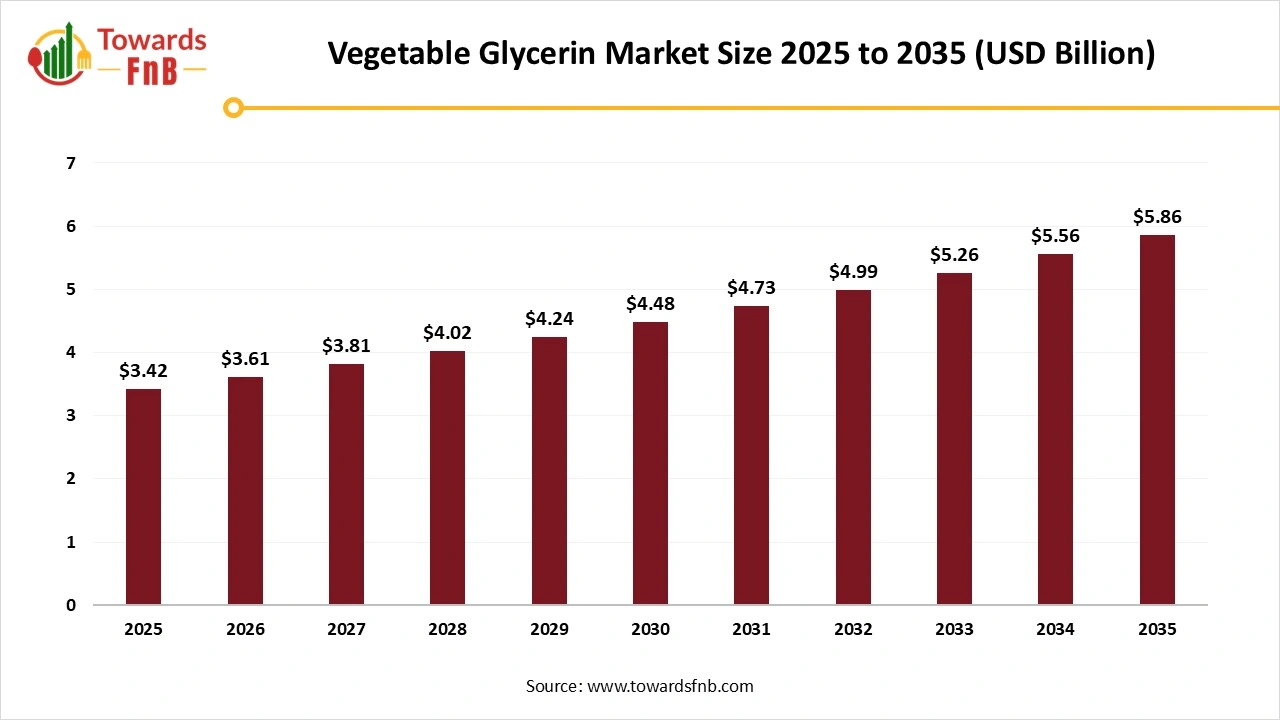
The global vegetable glycerin market size estimated at USD 3.42 billion in 2025 and is predicted to increase from USD 3.61 billion in 2026 to nearly reaching USD 5.86 billion by 2035, growing at a CAGR of 5.54% during the forecast period from 2026 to 2035. The high preference for the clean beauty movement and the growing nutraceutical products drive market growth.
| Study Coverage | Details |
| Growth Rate from 2026 to 2035 | CAGR of 5.54% |
| Market Size in 2026 | USD 3.61 Billion |
| Market Size in 2027 | USD 3.81 Billion |
| Market Size by 2035 | USD 5.86 Billion |
| Largest Market | North America |
| Base Year | 2025 |
| Forecast Period | 2026 to 2035 |
| Regions Covered | North America, Europe, Asia-Pacific, Latin America, and Middle East & Africa |
Vegetable glycerin is a clear liquid obtained from plant oils. It offers a mildly sweet taste and is widely known as glycerol. It is non-toxic in nature, and its chemical formula is C3H8O3. It is a viscous liquid and insoluble in oils. It possesses characteristics like being a colorless liquid, easily dissolving in water, being chemically stable, and having antimicrobial qualities. It offers benefits like intense skin hydration, relieves constipation, heals minor wounds, and enhances hair health. It is widely used across applications like hair care, pharmaceuticals, skincare, vaping, cosmetics, and food.
The vegetable glycerin market growth is driven by the growing use of natural humectants, the popularity of non-toxic ingredients, the growth in medicinal preparations, the rising worldwide production of biodiesel, the increasing use of preservatives, the transition to green chemistry, the development of tobacco products, the growth in natural cosmetics, and the expansion of vaping.
The vegetable glycerin market is experiencing technological advancements driven by demand for sustainability, enhanced purity, and manufacturing optimization. The ongoing innovations like smart factories, advanced purification, IoT sensors, and digitalization enhance production efficiency and enable predictive maintenance. The incorporation of AI is a major transformation in the industry, driven by demand for forecasting accuracy and lowering operational costs.
AI manufactures high-purity vegetable glycerin and lowers the wastage of materials. AI helps in the boosting profit margins and offers enhanced tracking. It supports better management of inventory and customized glycerin according to industrial needs. AI helps to improve sustainability in the production and minimizes maintenance costs. AI innovates new products very rapidly and ensures a high-quality supply. Overall, AI ensures sustainability and regulatory compliance.
Raw Material Procurement
Processing and Preservation
Quality Testing and Certifications
Why North America Dominates the Vegetable Glycerin Market?
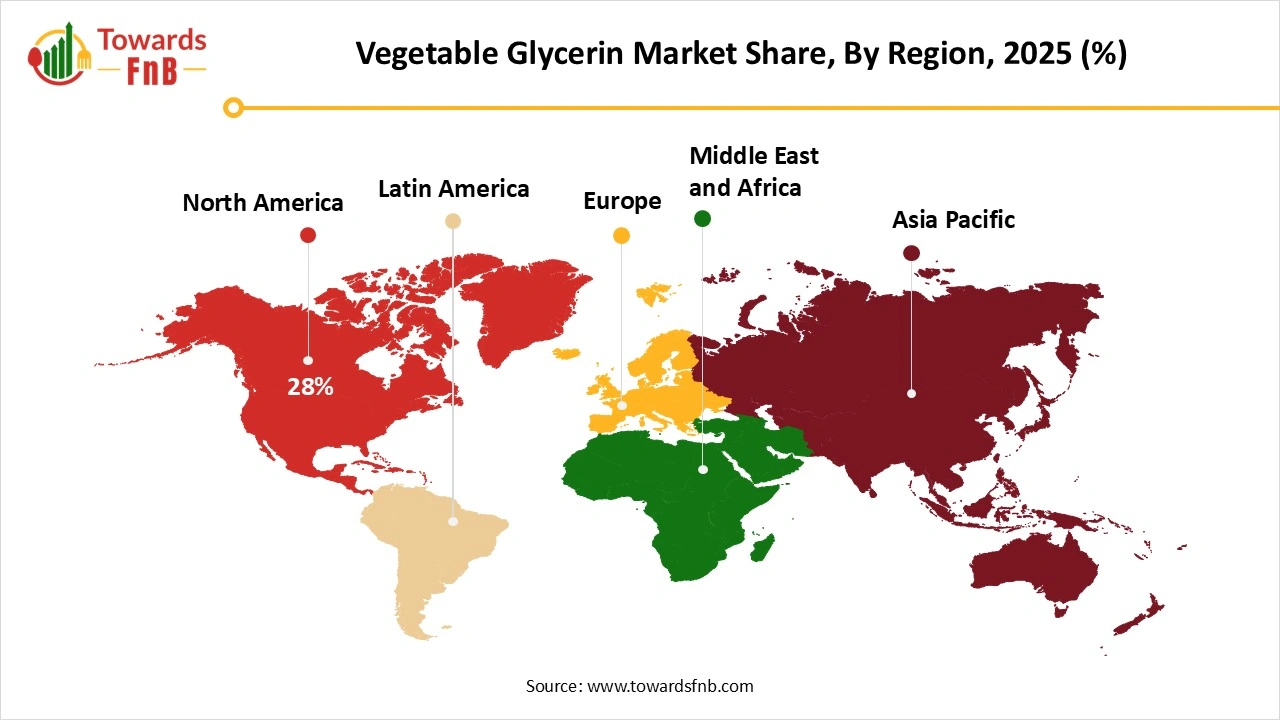
North America dominated the vegetable glycerin market in 2025. The greater utilization of personal care and the move to vegan products increases demand for vegetable glycerin. The strong demand for high-grade products and the preparation of bakery items require vegetable glycerin. The trend of sustainable chemicals and the higher production of biodiesel increases demand for vegetable glycerin. The increased use of refined glycerin drives the market growth.
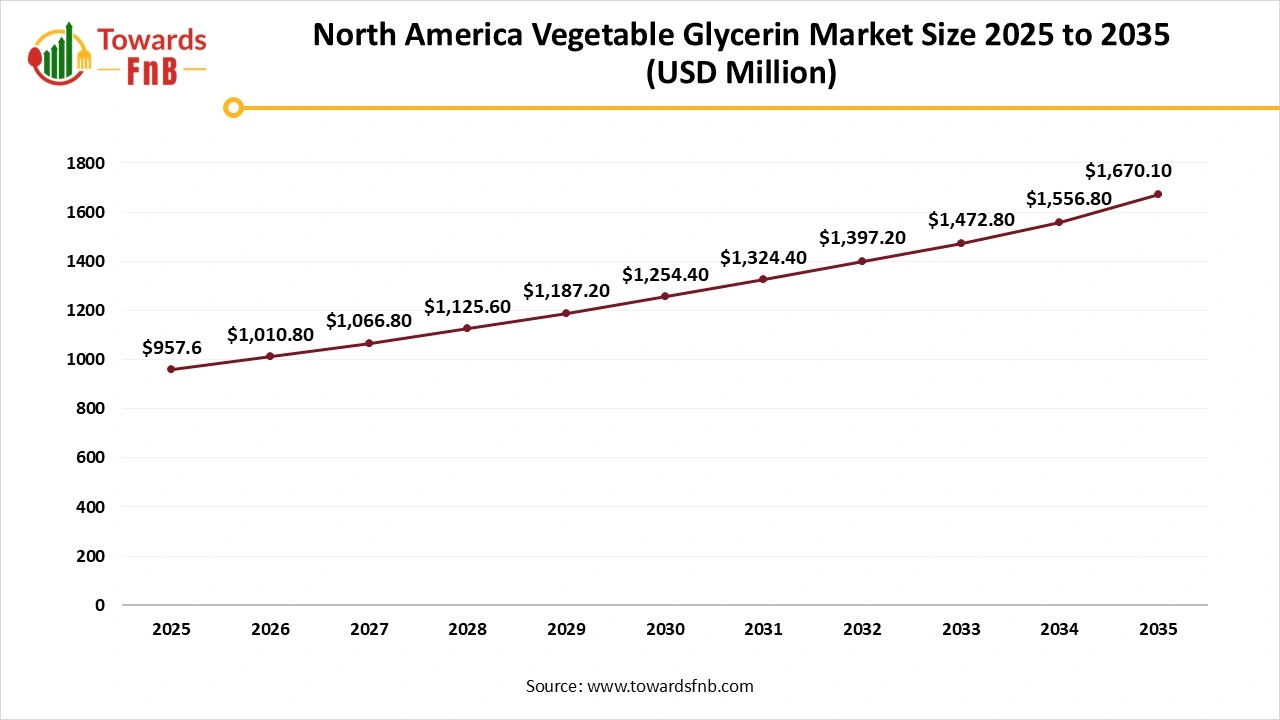
North America Vegetable Glycerin Market Size 2025 to 2035
The North America vegetable glycerin market size was calculated at USD 957.6 million in 2025 with projections indicating a rise from USD 1,010.80 million in 2026 to approximately USD 1,670.10 million by 2035, expanding at a CAGR of 5.72% throughout the forecast period from 2026 to 2035.
Green Innovation: United States Rise in Vegetable Glycerin
The United States is a major contributor to the vegetable glycerin industry. The strong pharmaceutical base and the growth in clean-label food increase demand for vegetable glycerin. The expanding biodiesel sector and the government support for the development of pharmaceutical products create huge demand for vegetable glycerin. The shift to plant-based chemicals and the heavy investment in sustainable glycerin support market growth.
U.S. Vegetable Glycerin Market Size 2025 to 2035
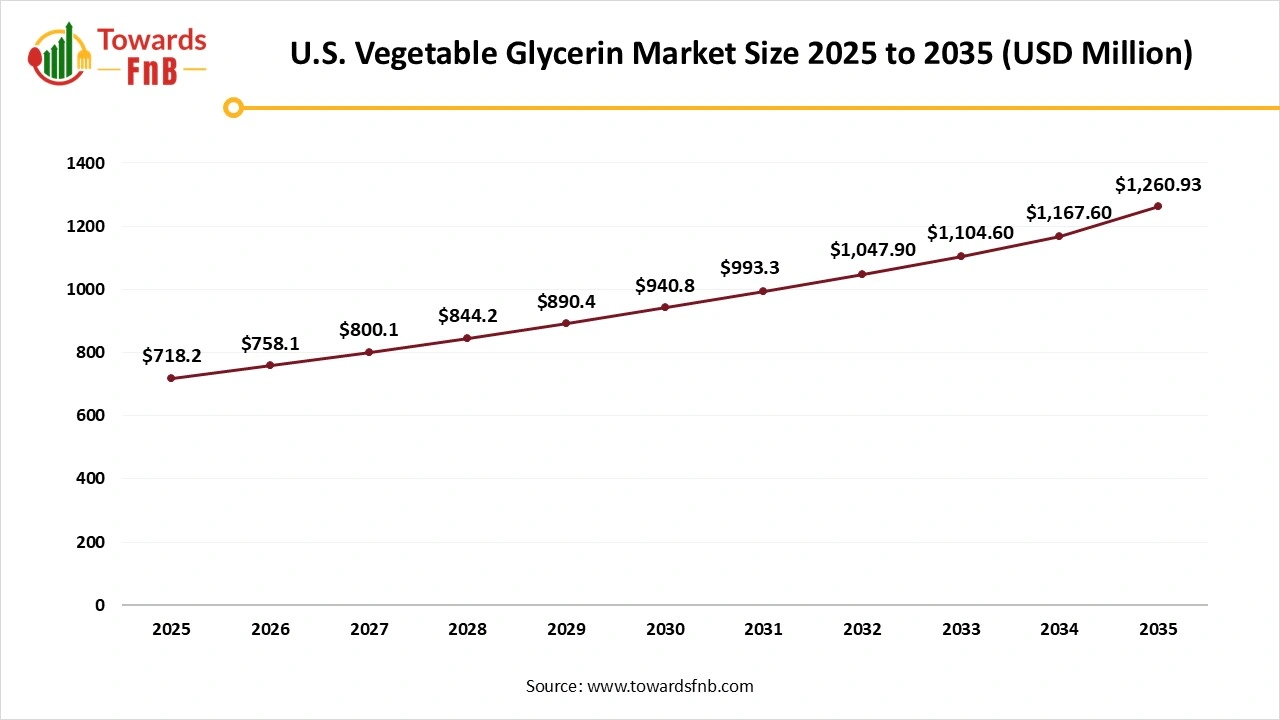
The U.S. vegetable glycerin market size was valued at USD 718.2 million in 2025 and is expected to grow steadily from USD 758.1 million in 2026 to reach nearly USD 1,260.93 million by 2035, with a CAGR of 5.79% during the forecast period from 2026 to 2035.
Asia Pacific Vegetable Glycerin Market Trends
Asia Pacific is experiencing the fastest growth in the market during the forecast period. The strong demand for skincare products and the rising local production of biodiesel increases adoption of vegetable glycerin. The expanded processed food and the development of topical medical products increase demand for vegetable glycerin. The expansion of oleochemical clusters and the growing industrial applications create demand for vegetable glycerin, driving the overall market growth.
China: Powering the Production of Vegetable Glycerin
China is a robust contributor to the market due to the growing pharma base. The development of green energy and the growing chemical sector increases demand for vegetable glycerin. The shift to greener manufacturing and the wide development of cosmetics increase the adoption of vegetable glycerin. The expansion of Chinese biodiesel and the growth in infrastructures increases adoption of vegetable glycerin, supporting the overall market growth.
Europe Vegetable Glycerin Market Trends
Europe is notably growing in the market. The rise in biodiesel manufacturing and the rising use of superior moisturizing products increase demand for vegetable glycerin. The growth in chemical synthesis and the development of coatings increases the adoption of glycerin. The innovation in high-quality refining facilities drives market growth.
Germany's Influence on Vegetable Glycerin
Germany is substantially growing in the market. The development of plant-derived cosmetics and the increased use of polymers increases demand for vegetable glycerin. The expansion of the food-grade applications and the development of skin creams increase the adoption of vegetable glycerin. The growing industrial processes support the overall market growth.
Vegetable Glycerin Market Share, By Source, 2025 (%)
| Segments | Shares (%) |
| Palm Oil | 40% |
| Soybean Oil | 15% |
| Coconut Oil | 7% |
| Rapeseed Oil | 12% |
| Sunflower Oil | 8% |
| Biodiesel-derived | 13% |
| Other Vegetable Oils | 5% |
What made the Palm Oil Segment Dominate the Vegetable Glycerin Market?
The palm oil segment dominated the vegetable glycerin market in 2025. The rising development of palm-based oleochemicals and the increased production of pharmaceutical goods increase demand for palm oil-based vegetable glycerin. The growth in food processing and the huge pharmaceutical goods production creates demand for palm oil-based vegetable glycerin. The cost-effectiveness, high yield, abundance, and versatility of palm oil drive market growth.
The Biodiesel-Derived Segment is the Fastest-Growing in the Market During the Forecast Period
The development of bio-based chemicals and the higher need for preservatives increases demand for biodiesel-derived vegetable glycerin. The higher purchasing of personal care and the shifting away from toxic ingredients increases adoption of biodiesel-derived vegetable glycerin. The innovations in purification methods and the sustainability trends support the overall market growth.
Vegetable Glycerin Market Share, By Grade, 2025 (%)
| Segments | Shares (%) |
| Refined Grade | 70% |
| Crude Grade | 30% |
How did the Refined Grade Segment hold the Largest Share in the Vegetable Glycerin Market?
The refined grade segment held the largest revenue share in the vegetable glycerin market in 2025. The increased consumption of cough syrups and the development of skin-friendly products increase demand for refined grade. The growth in the utilization of humectants in natural foods and the trend of organic beauty increases adoption of refined grade. The consumer preference for moisturizer and the rising use of topical creams increase demand for refined grade, driving the market growth.
The Crude Grade Segment is Experiencing the Fastest Growth in the Market During the Forecast Period
The global shift towards renewable fuels and the rising use of detergents increase demand for crude grade. The expansion of animal feed and the growth in agricultural byproducts increase the production of crude grade vegetable glycerin. The rise in wastewater treatment and the development of chemical intermediates require crude grade, supporting the overall market growth.
Vegetable Glycerin Market Share, By Application, 2025 (%)
| Segments | Shares (%) |
| Personal Care & Cosmetics | 40% |
| Pharmaceuticals | 20% |
| Food & Beverages | 15% |
| Tobacco (e-liquids, etc.) | 5% |
| Industrial (resins, antifreeze, coatings) | 10% |
| Animal Feed | 6% |
| Others | 4% |
Which Application Dominated the Vegetable Glycerin Market?
The personal care & cosmetics segment dominated the vegetable glycerin market in 2025. The consistent demand for skin hydration products and consumers moving towards plant-based products increases demand for vegetable glycerin. The increased use of toothpastes and the increasing use of budget-friendly cosmetics increases the adoption of vegetable glycerin. The increased use of hair-care products and the move away from synthetic products increases demand for vegetable glycerin, driving the overall market growth.
The Pharmaceuticals Segment is the Fastest-Growing in the Market During the Forecast Period
The high manufacturing rate of effective drugs and the rise in long-term medications increase demand for vegetable glycerin. The expansion of ophthalmic preparations and the need for high-purity anesthetics increases adoption of vegetable glycerin. The higher need for key pharmaceutical ingredients and the rise in drug formulations support the overall market growth.
Louis Dreyfus Company
ADM
OliviaUmma
Argent Energy
By Source
By Grade
By Application
By Region





Principal Consultant
Vidyesh Swar, Senior Research Analyst at Towards Food & Beverages, specializes in market research, focusing on supply-demand evaluation, pricing analysis, alternative proteins, plant-based foods, and sustainable food technologies within the industry.
Learn more about Vidyesh Swar
Reviewed By
Aditi Shivarkar, with 14+ years in Food and Beverages market research, specializes in food, beverage, and eco-friendly packaging. She ensures accurate, actionable insights, driving Towards FnB's excellence in industry trends and sustainability.
Learn more about Aditi ShivarkarApril 2026
April 2026
April 2026
April 2026

Vegetable Glycerin Market


 +1 804-441-9344
 Download Sample
 Schedule a Meeting