April 2026



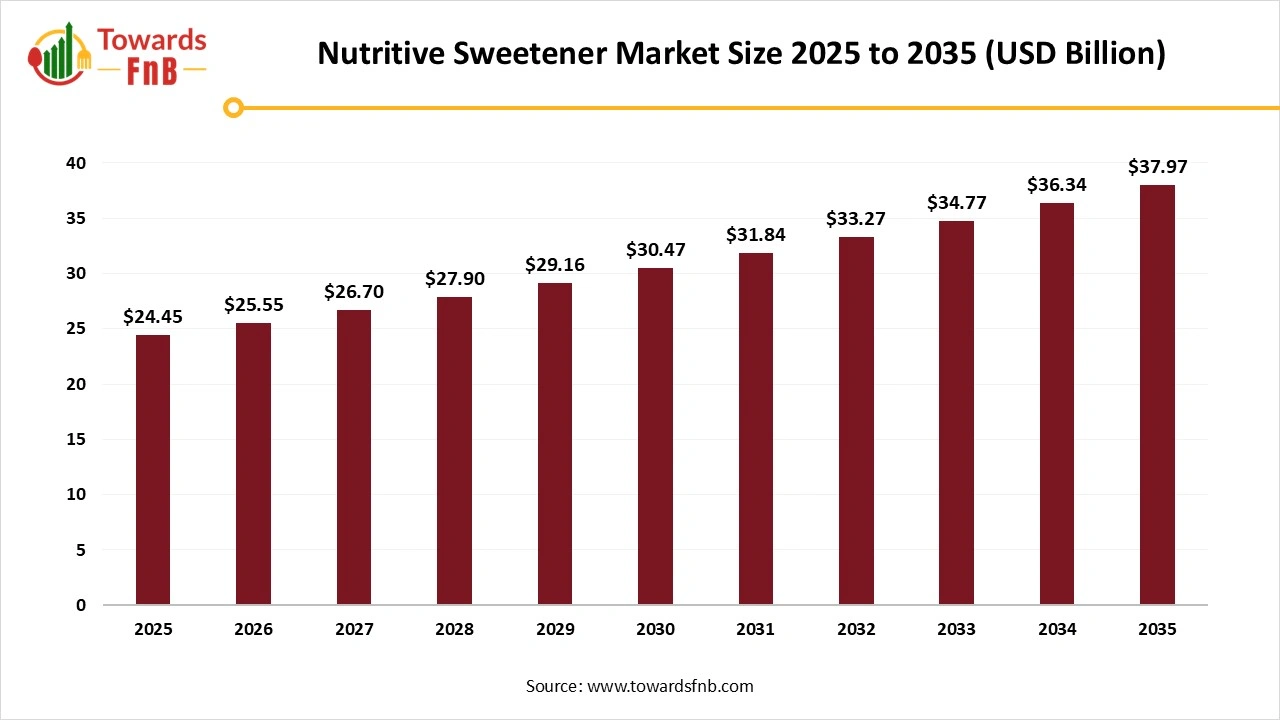
The global nutritive sweetener market size estimated at USD 24.45 billion in 2025 and is predicted to increase from USD 25.55 billion in 2026 to nearly reaching USD 37.97 billion by 2035, growing at a CAGR of 4.5% during the forecast period from 2026 to 2035. Growing demand for processed food and clean-label, organic products is driving the nutritive sweetener market.
| Study Coverage | Details |
| Growth Rate from 2026 to 2035 | CAGR of 4.5% |
| Market Size in 2026 | USD 25.55 Billion |
| Market Size in 2027 | USD 26.70 Billion |
| Market Size by 2035 | USD 37.97 Billion |
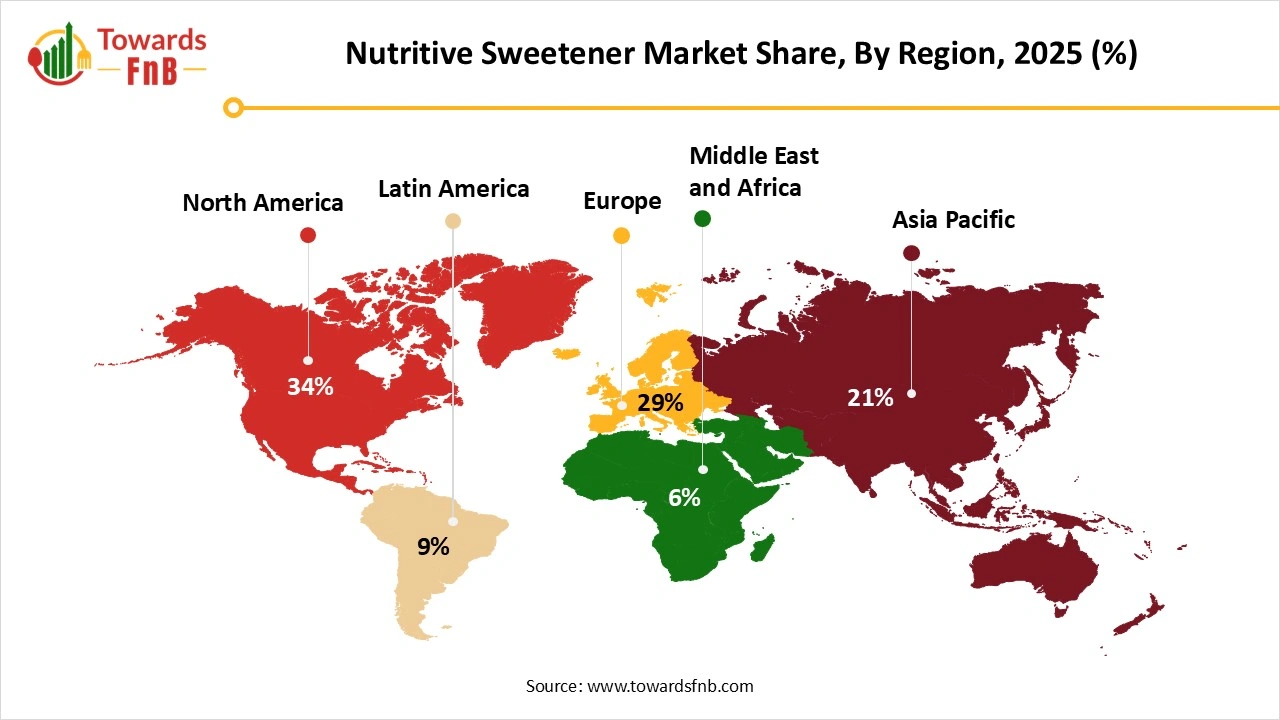
| Largest Market | North America |
| Base Year | 2025 |
| Forecast Period | 2026 to 2035 |
| Regions Covered | North America, Europe, Asia-Pacific, Latin America, and Middle East & Africa |
Nutritive sweeteners such as sugars and sugar alcohols add carbohydrates to food and calories to your diet that contain few vitamins or minerals. Nutritive sweeteners include glucose, fructose, corn syrup, high-fructose corn syrup, and sugar alcohols such as sorbitol, mannitol, and xylitol. Rising awareness about obesity, diabetes, and the negative impacts of processed sugar fuels demand for alternatives like a nutritive sweetener. Broad usage in bakery, confectionery, beverages, dairy, and nutraceuticals expands the market.
| Market Driver | (~) % Impact on CAGR Forecast | Geographic Relevance | Impact Timeline |
| Rising processed food & beverage consumption | +3.0% to +4.0% | Global – particularly North America & Europe, rising Asia Pacific intake | Medium (2025–2032) |
| Growing demand for natural & clean label nutritive sweeteners | +2.5% to +3.5% | Global, with high relevance in Europe & North America; rising in Asia Pacific | Medium to Long term (2025–2035) |
| Food industry formulation flexibility & taste enhancement needs | +2.0% to +3.0% | Global – especially in food processing hubs | Short to Medium term (2025–2030) |
| Expansion of retail & foodservice channels | +1.5% to +2.5% | North America & Europe lead; growing in APAC | Short to Medium term (2025–2030) |
| Market Restraint | (~) % Impact on CAGR Forecast | Geographic Relevance | Impact Timeline |
| Ongoing health concerns over high caloric content | ~ 2.0% to 3.0% | North America & Europe where health centric diets drive sugar reduction | Short term (2025–2028) |
| Regulatory pressure for sugar reduction & labeling | ~ 1.5% to 2.5% | Europe & North America with strict nutritional labeling standards | Medium term (2025–2032) |
| Price competition from alternative sweetener categories (e.g., non nutritive) | ~ 1.2% to 1.8% | Global – especially in markets expanding sugar alternatives | Medium term (2025–2030) |
| Supply chain volatility (corn, beet sugar & sweetener feedstock) | ~ 1.0% to 1.5% | Global, pronounced where agricultural inputs are fluctuant | Medium to Long term (2025–2035) |
Continuous innovation in the sweetener industry is evident, with efforts directed toward developing new natural sweetener sources and ensuring sustainable production throughout the year. Recently, biosynthesis using engineered microbial cell factories has emerged as a green alternative for producing natural sugar substitutes. Advances in food processing technology enable precise control over sweetness intensity and functional performance, while improved blending, crystallization, and enzymatic processing techniques allow for reduced usage levels without compromising taste or texture.
How did North America Dominate the Nutritive Sweetener Market in 2025?
North America dominated the nutritive sweetener market in 2025. The North American nutritive sweetener market is significant, driven by growing consumer demand for healthier sugar alternatives. As the food and beverage industry in the region continues to evolve, the search for healthier, low-calorie alternatives remains a major factor in market growth. Nutritive sweeteners are viewed as ideal solutions to meet consumer desires for sugar reduction. Rising health consciousness, concerns about obesity, and the prevalence of diabetes are fueling the demand for these sweeteners across North America.
North America Nutritive Sweetener Market 2025 to 2035
The North America nutritive sweetener market size was calculated at USD 8.39 billion in 2025 with projections indicating a rise from USD 8.76 billion in 2026 to approximately USD 13.21 billion by 2035, expanding at a CAGR of 4.64% throughout the forecast period from 2026 to 2035.

U.S. Nutritive Sweetener Demand
In the U.S., the demand for nutritive sweeteners is increasing due to a heightened focus on healthier, lower-calorie alternatives to sugar in food and beverage products. The rise of health-conscious consumers, alongside a growing prevalence of lifestyle diseases related to sugar consumption, is driving this trend. Additionally, the increasing interest in functional food and beverages is further propelling market growth. Consumers are increasingly seeking sweeteners that offer not only taste but also nutritional benefits, prompting manufacturers to incorporate nutritive sweeteners into their products.
How Big is the U.S. Nutritive Sweetener Market?
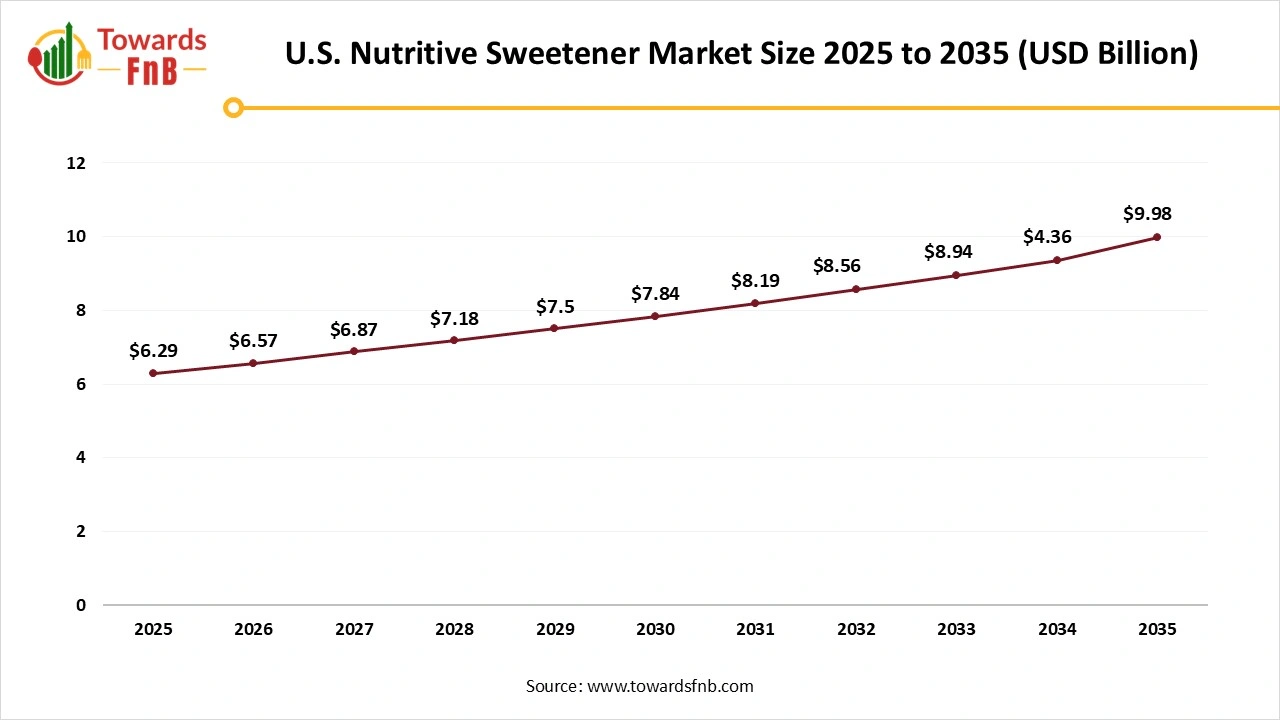
The U.S. nutritive sweetener market size was valued at USD 6.29 billion in 2025 and is expected to grow steadily from USD 6.57 billion in 2026 to reach nearly USD 9.98 billion by 2035, with a CAGR of 4.72% during the forecast period from 2026 to 2035.
Which Region Will Grow at the Fastest Rate in the Nutritive Sweetener Market?
Asia Pacific expects the fastest growth during the forecast period. In the Asia-Pacific region, particularly in countries like China, India, and Japan, the demand for nutritive sweeteners is rapidly increasing. This growth is largely driven by heightened health awareness among consumers, especially in urban areas. The expanding middle-class population in Asia and increasing disposable income are significant contributors to the rising demand for healthier food and beverage options, including those featuring alternative sweeteners.
Japan's Nutritive Sweetener Market Growth
In Japan, consumers have become increasingly health-conscious, preferring food products that contain natural ingredients and support their health and dietary needs, therefore boosting nutritive sweetener demand. The Japanese food and beverage industry is adapting by increasingly using these sweeteners to align with evolving consumer demand for healthier options, creating substantial growth opportunities for the nutritive sweetener sector in the coming years. Demand for natural, clean-label ingredients is growing, further contributing to the rising interest in alternative sweeteners perceived as healthier options. Japan's Consumer Affairs Agency (CAA) has stated that the nutrient labeling standards will be revised based on the latest data from the Japanese Dietary Intake Standards 2025 report to better meet local needs.
Europe Nutritive Sweetener Market Drivers
The major drivers of growth in the nutritive sweetener market are growing consumer demand for healthier and more natural products, rising rates of obesity and diabetes in Europe, and the increasing popularity of flavoured soft drinks. Consumer awareness of natural products is rising in Europe, and the number of applications in food and drink products is growing. Various sweeteners with similar properties, such as barley malts, maple syrup, agave juice and coconut sugar, present a growing market.
UK Nutritive Sweetener Demand
Demand for nutritive sweeteners in the United Kingdom is anticipated to continue progressing as the food industry responds to health trends and regulatory influences shape product formulation. Clean label reformulation programs and significant use of natural ingredient alternatives are expected to sustain the growth of nutritive sweetener use across multiple sectors. Growth rates are expected to be supported by sustained consumer interest in products that balance sweetness with recognizable ingredients, particularly in sectors such as beverages, bakery, and confectionery, where taste remains a priority.
Why did the Fructose Segment Dominate the Nutritive Sweetener Market in 2025?
The fructose segment led the nutritive sweetener market in 2025. Fructose is considered one of the safest sweeteners available on the market. It has been approved by several food control organizations worldwide. Many food and beverage manufacturers have been using fructose for decades, and it is completely safe, with no side effects. Fructose adds no calories, which is why it is commonly found in many low-sugar products.
The Sucrose Segment is Expected to Grow at the Fastest Rate During the Forecast Period.
Sucrose has historically played an important role in nutrition and enhancing the palatability of foods. It has been widely used in both natural and refined forms. The increasing consumption of processed and packaged foods in emerging economies, driven by urbanization and changing dietary habits, continues to boost global demand for traditional nutritive sweeteners like sucrose.
Which Nature Segment Dominated the Nutritive Sweetener Market in 2025?
The conventional segment held the majority share of the nutritive sweetener market in 2025. This dominance was largely because of the extensive use of conventional sweeteners in packaged food, beverages, and confectionery products, where consistency, availability, and price stability are essential. Food manufacturers continue to rely on conventional options because of well-established supply chains and predictable performance in processing.
The Organic Segment is Projected to Grow at a Notable Rate During the Forecast Period.
Organic sweeteners are considered cleaner and safer because they come from crops grown without chemicals. These sweeteners are less processed, retaining more of the natural minerals and plant nutrients that refined sugar loses. They provide a balanced sweetness that is easier for the body to digest. Being broken down more slowly, organic sweeteners help maintain steady energy levels rather than causing sharp spikes in blood sugar. This makes them a better choice for snacks, drinks, and everyday foods. Organic sweeteners also align well with vegan, gluten-free, and clean label products.
Which End Use Segment Dominated the Nutritive Sweetener Market?
The food processing segment dominated the market with the largest share in 2025. Consumers can take advantage of a wide range of sweeteners available in various food and beverages. Nutritive sweeteners can easily fit into a healthful eating plan and align with current dietary guidelines. Added sugars enhance flavor and texture in processed foods and can also extend shelf life, being used for sweetening, texture, and preservation in baked goods, beverages, dairy products, and confectionery.
The Household/Retail Segment is Expected to Experience the Fastest Growth During the Forecast Period.
Nutritive sweeteners, such as table sugar, honey, and maple syrup, are primarily used in households to provide sweetness while also offering functional properties for cooking and baking. There is growing consumer interest in premium and specialty nutritive sweeteners to support home cooking and artisanal food preparation.
Which Distribution Channel Dominated the Nutritive Sweetener Market?
The store-based retail segment accounted for the largest market share in 2025. Supermarkets, hypermarkets, and convenience stores are the primary sources for most consumers grocery needs, offering extensive product accessibility. These stores are conveniently located near residential areas, allowing customers to quickly and easily obtain the items they need.
The Indirect Sales Segment is Expected to Grow at the Fastest Rate During the Forecast Period.
As it enables manufacturers to achieve wider market penetration, leverage existing logistics infrastructure, and reduce operational costs and risks. This is crucial for scaling in a diverse and health-conscious global market.
Layn Natural Ingredients
Pure Maple
By Product Type
By Nature
By End Use
By Distribution Channel
By Region





Principal Consultant
Vidyesh Swar, Senior Research Analyst at Towards Food & Beverages, specializes in market research, focusing on supply-demand evaluation, pricing analysis, alternative proteins, plant-based foods, and sustainable food technologies within the industry.
Learn more about Vidyesh Swar
Reviewed By
Aditi Shivarkar, with 14+ years in Food and Beverages market research, specializes in food, beverage, and eco-friendly packaging. She ensures accurate, actionable insights, driving Towards FnB's excellence in industry trends and sustainability.
Learn more about Aditi ShivarkarApril 2026
April 2026
April 2026
April 2026

Nutritive Sweetener Market


 +1 804-441-9344
 Download Sample
 Schedule a Meeting