April 2026



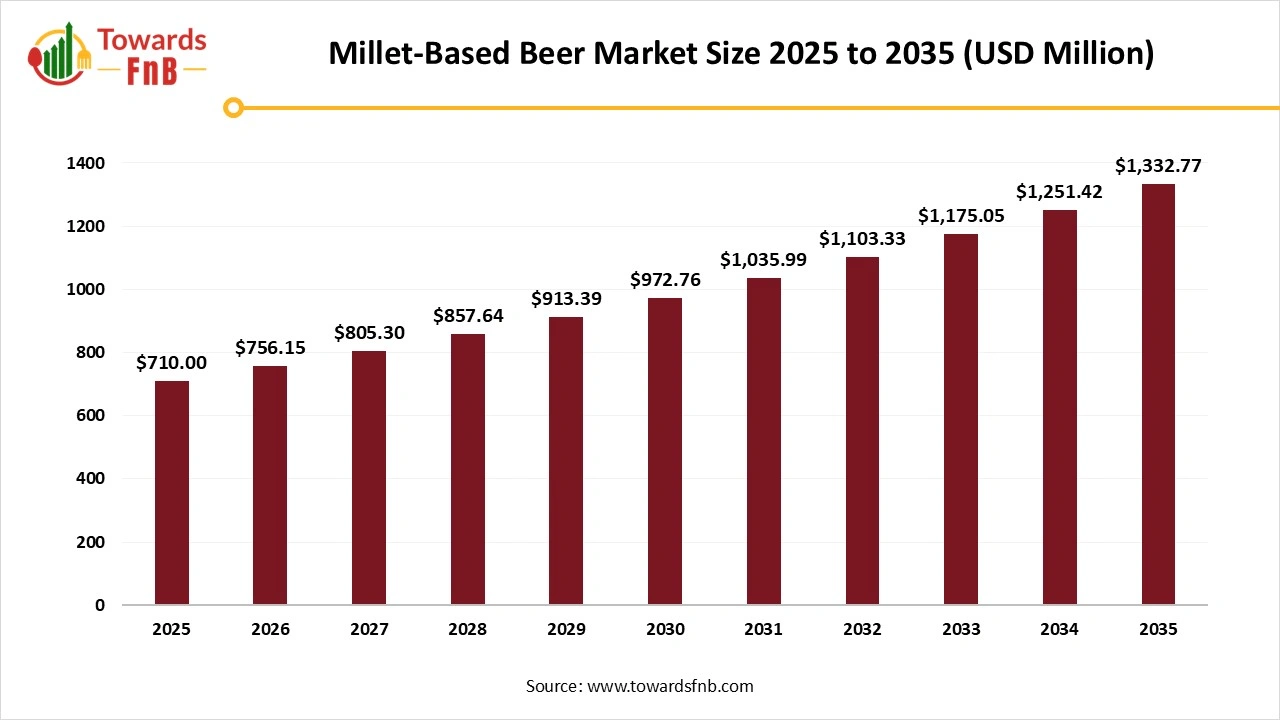
The global millet-based beer market size was valued at USD 710 million in 2025 and is expected to grow steadily from USD 765.15 million in 2026 to reach nearly USD 1,332.77 million by 2035, with a CAGR of 6.5% during the forecast period from 2026 to 2035. The growing interest in fermented beverages and the popularity of craft brewers drive market growth.
| Study Coverage | Details |
| Growth Rate from 2026 to 2035 | CAGR of 6.5% |
| Market Size in 2026 | USD 765.15 Million |
| Market Size in 2027 | USD 805.30 Million |
| Market Size by 2035 | USD 1,332.77 Million |
| Largest Market | Asia Pacific |
| Base Year | 2025 |
| Forecast Period | 2026 to 2035 |
| Regions Covered | North America, Europe, Asia-Pacific, Latin America, and Middle East & Africa |
Millet-based beer is a type of beer made from fermented millet grains. They are high in fiber, lighter in flavor, thicker in texture, and higher in husk content. This kind of beer is made up of millets like ragi, jowar, bajra, and foxtail millet. They offer benefits like boosting immunity, supporting bone health, removing body toxins, increasing nutrition, enhancing digestibility, improving gut health, and lowering blood pressure. The traditional manufacturing process of millet beer is malting, milling, mixing, boiling to remove bacteria, fermentation, and serving. The diverse varieties of millet beers, like Tchapalo, Shakparo, Pito, Modern, Millet Beers, and Chang, are present across regions like West Africa, the U.S., India, Turkey, and others.
The millet-based beer market growth is driven by growing gluten intolerance, growth in sustainable farming, advancement in craft brewers, rise in millet cultivation, development of nutrient-rich beverages, the shift towards low-alcohol options, development of unique beer flavors, increased popularity of traditional drinks, and innovations in brewing technology.
The millet-based beer market is undergoing key technological shifts driven by demand for climate-resilient ingredients, improving malting, and standardized production. The innovations include smart fermentation, advanced malting, IoT integration, and DPUs supports quality control, real-time monitoring, and enhance efficiency. The AI incorporation is the key shift in the industry, driven by demand for enhancing flavor profiles and optimizing the production process.
AI optimizes the growth of millet and creates unique recipes of beer. AI easily detects chemical composition and monitors the entire brewing process. AI minimizes the costly downtime of machines and predicts demand for millet-based beer. AI optimizes the malting process and easily monitors the fermentation process. AI easily analyzes sales data and selects specific millet combinations. Overall, AI manufactures higher-quality millet beers.
Raw Material Procurement
Processing and Preservation
Quality Testing and Certifications
| Country | Key Millet Used | Companies Present |
| United States | Proso Millet Sorghum |
Sprecher Brewery Lakefront Brewery Bard’s Tale Beer Company Grouse Malt House |
| China | Foxtail Millet Proso Millet |
Great Leap Brewing Jing-A Brewing Tongba |
| India | Pearl Millet Sorghum |
Toit Brewpub Great State Aleworks Mannheim Craft Brewery |
| Canada | Proso Millet | Grey Fox Brewing Glutenberg |
| Germany | Pearl Millet Foxtail Millet |
Schnitzer Brau Riedenburger Brauhaus |
What Made Asia Pacific Dominate the Millet-Based Beer Market?
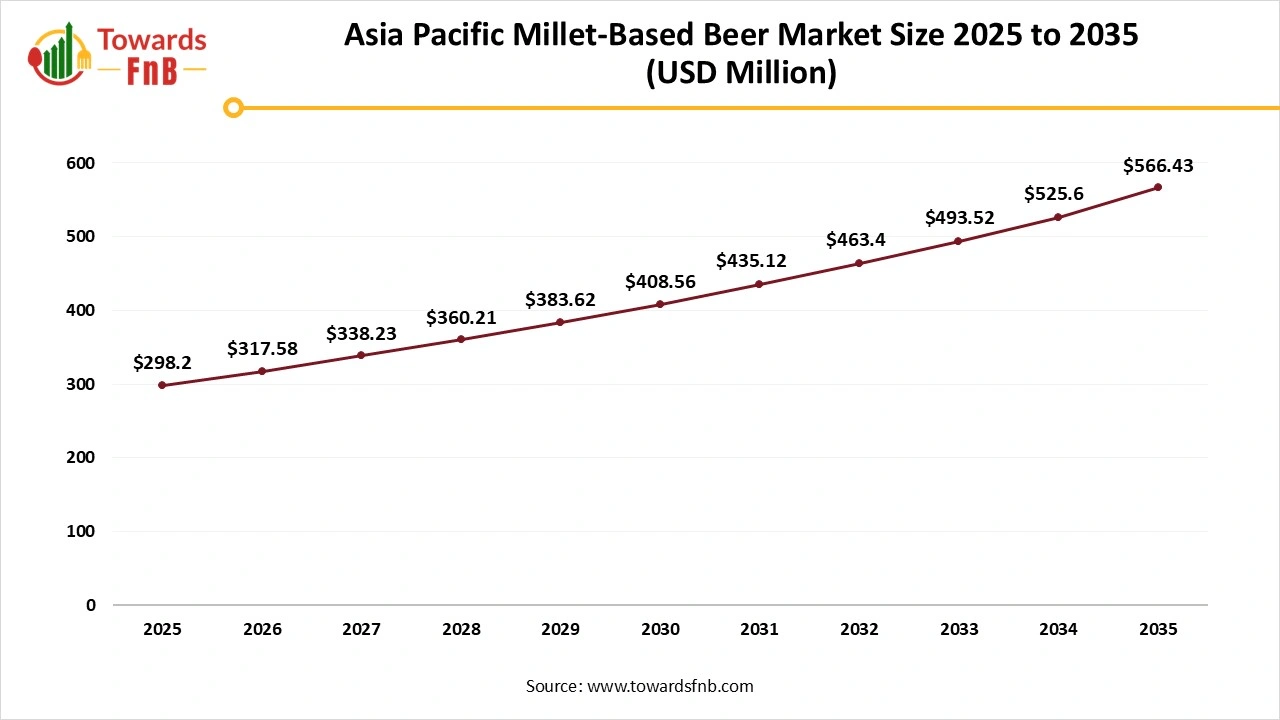
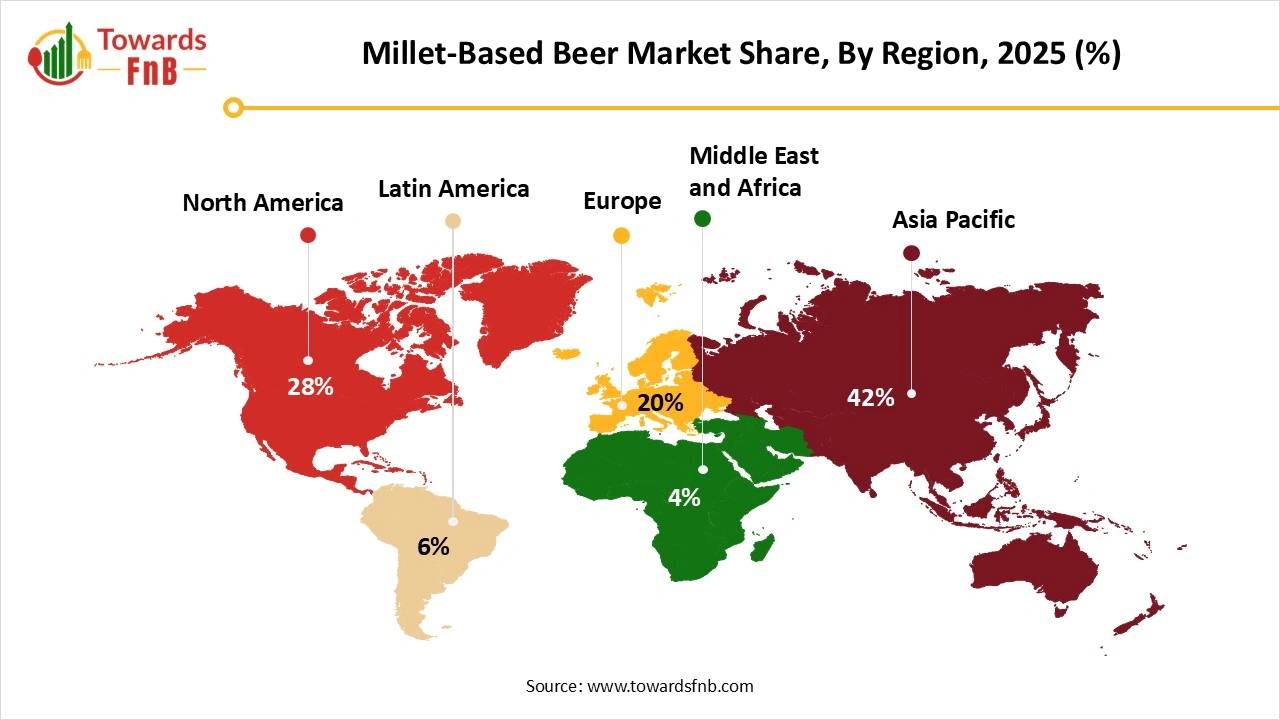
Asia Pacific dominated the millet-based beer market with approximately 42% share in 2025. The strong focus on the development of healthier beer options and the increased cultivation of organic millet increases demand for millet-based beer. The changing lifestyle of the consumer and the well-established brewing culture increase the adoption of millet-based beer. The raw material abundance and the growing health-consciousness among consumers increase production of millet-based beers, driving the overall market growth.
Asia Pacific Millet-Based Beer Market Size 2025 to 2035
The Asia Pacific millet-based beer market size was calculated at USD 298.2 million in 2025 with projections indicating a rise from USD 317.58 million in 2026 to approximately USD 566.43 million by 2035, expanding at a CAGR of 6.63% throughout the forecast period from 2026 to 2035.
Millet to Brew: India’s Influence on Millet-Based Beer Production
India is robustly growing in the market. The strong agricultural infrastructure and the government backing for millet consumption increase the production of millet-based beer. The ongoing advancement in microbreweries and the consumer shift towards nutrient-dense options increase demand for millet-based beer. The expanding craft beer culture and the rise in breweries require millet-based beer, supporting the overall market growth.
North America Millet-Based Beer Market Trends
North America is experiencing the fastest growth in the market during the forecast period. The growing popularity of natural gluten-free products and the high rate of breweries increases demand for millet-based beer. The health trends and the shift towards eco-friendly options require millet-based beer. The high consumption rate of mass-produced lagers and the increased rate of gluten intolerance increases development of millet-based beer, driving the overall market growth.
Modern Brewing: Rise of Millet-Based Beer in the United States
The United States is a major contributor to the market. The consumer focuses on the consumption of artisanal beer, and the gluten-free trends increase demand for millet-based beer. The transition towards eco-friendly farming and the push for sustainable brewing increase the development of millet-based beers. The adoption of a low-calorie lifestyle and the robust growth in alcoholic beverages increase demand for millet-based beers, supporting the overall market growth.
Why Sorghum & Millet Blends Segment Dominates the Millet-Based Beer Market?
The sorghum & millet blends segment held the largest share of approximately 58% in 2025. Millet contributes a light body, subtle sweetness, and smooth mouthfeel, while sorghum enhances enzymatic activity, improves sugar availability for fermentation, and adds a slightly tart, earthy character. Sorghum generally has higher diastatic power when malted, which helps break down starches from both grains into fermentable sugars, leading to better alcohol yield.
The Pure Millet Beer Segment is the Fastest-Growing in the Market During the Forecast Period
The growing popularity of gluten-free lifestyles and the growth in eco-conscious consumers increase demand for pure millet beer. The ongoing innovations in craft beer and the popularity of indigenous ingredients increases production of pure millet beer. The focus on boosting gut health and the growing dietary restrictions among consumers requires pure millet beer, supporting the overall market growth.
How did the Plain or Traditional Segment hold the Largest Share in the Millet-Based Beer Market?
The plain or traditional segment held the largest revenue share of approximately 72% in the millet-based beer market in 2025. The growing consumption of beer in social rituals and a strong focus on spontaneous fermentation increases consumption of plain beer. The consumer focuses on raw taste, and the high preference for clean label requires traditional beer. The cost-effectiveness, sustainability, authenticity, and efficient processing of plain or traditional beer drive the overall market growth.
The Flavored Segment is Experiencing the Fastest Growth in the Market During the Forecast Period
The younger generation focuses on enhancing the desirability of beers, and the transition to lower-alcohol alternatives increases demand for flavored beer. The robust growth in craft beer customization and the rising adventurous drinkers increases demand for flavored beer. The growing fruit infusions in beers and the growth in sour beers support the overall market growth.
Why the Glass Bottles Segment Dominated the Millet-Based Beer Market?
The glass bottles segment dominated the millet-based beer market with approximately 46% share in 2025. The need to prevent oxidation and maintaining stability of beer increases demand for glass bottles. The focus on enhancing brand image and the company's conscious shift increases the adoption of glass bottles. The quality preservation, premiumization, reusability, aesthetic experience, and sustainability of glass bottles drive the market growth.
The Cans Segment is Experiencing the Fastest Growth in the Market During the Forecast Period
The strong focus on preventing skunking and the need to lower carbon emissions increase the adoption of cans. The growing number of outdoor activities and the need for creative branding increase demand for cans. The efficiency, portability, superior preservation, and convenience of cans support the overall market growth.
Which Distribution Channel held the Largest Share in the Millet-Based Beer Market?
The offline retail segment held the largest revenue share of approximately 62% in the millet-based beer market in 2025. The temperature-controlled storage and the strong focus on enhancing customer experience increase buying from offline retail. The higher demand for in-hand beer access and the rise in impulse buying activities increases adoption of offline retail. The high visibility, stringent licensing, customer trust, and immediate availability of beer in offline retail drive the market growth.
The Online Retail/E-Commerce Segment is the Fastest-Growing in the Market During the Forecast Period
The transition to eco-friendly products and the focus on sustainable sourcing increase buying from e-commerce. The easy access to premium beer on online retail helps market expansion. The convenience, targeted marketing, doorstop delivery, and detailed information on online retail/e-commerce supports the market growth.
Great State Aleworks
Mount Everest Breweries
By Product Type
By Flavor Profile
By Packaging
By Distribution Channel
By Region




Principal Consultant
Vidyesh Swar, Senior Research Analyst at Towards Food & Beverages, specializes in market research, focusing on supply-demand evaluation, pricing analysis, alternative proteins, plant-based foods, and sustainable food technologies within the industry.
Learn more about Vidyesh Swar
Reviewed By
Aditi Shivarkar, with 14+ years in Food and Beverages market research, specializes in food, beverage, and eco-friendly packaging. She ensures accurate, actionable insights, driving Towards FnB's excellence in industry trends and sustainability.
Learn more about Aditi ShivarkarApril 2026
April 2026
April 2026
April 2026

Millet-Based Beer Market


 +1 804-441-9344
 Download Sample
 Schedule a Meeting