April 2026



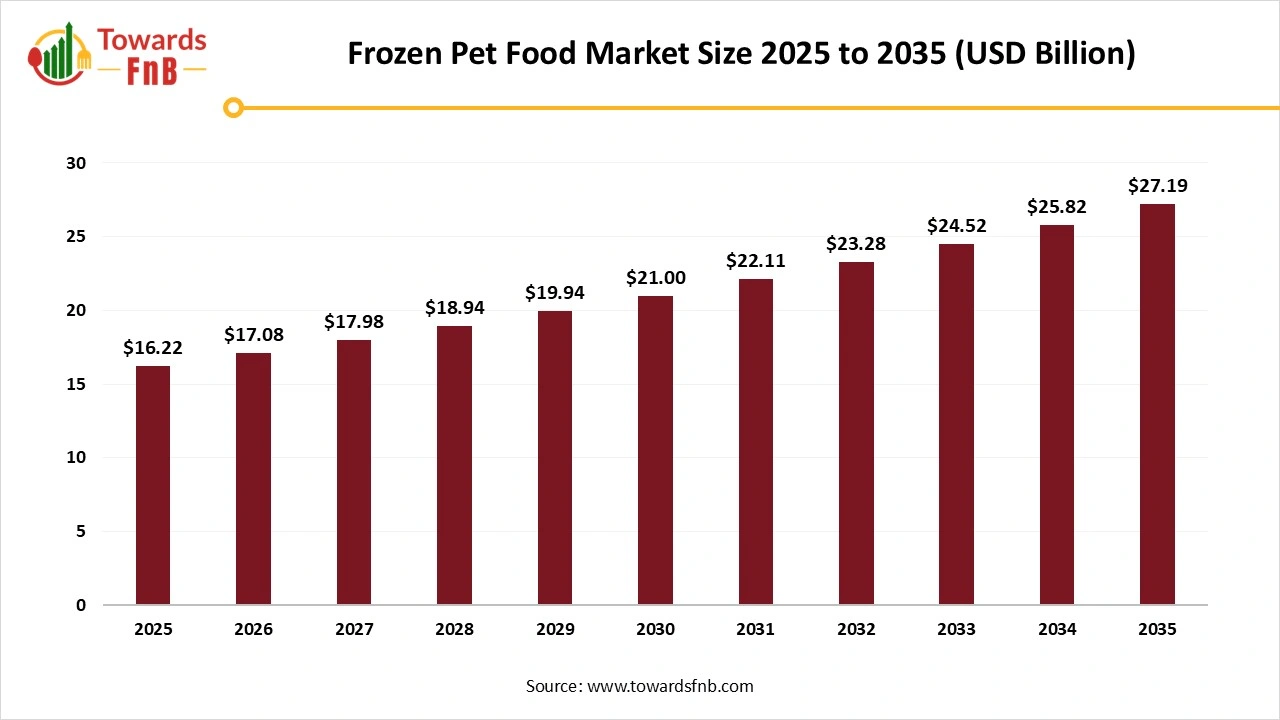
The global frozen pet food market size was valued at USD 16.22 billion in 2025 and is expected to grow steadily from USD 17.08 billion in 2026 to reach nearly USD 27.19 billion by 2035, with a CAGR of 5.3% during the forecast period from 2026 to 2035. Significant growth of the frozen pet food is driven by increasing pet ownership, rising focus on pet health and nutrition, and increasing consumer preference for premium and preservative-free products.
| Study Coverage | Details |
| Growth Rate from 2026 to 2035 | CAGR of 5.3% |
| Market Size in 2026 | USD 17.08 Billion |
| Market Size in 2027 | USD 17.98 Billion |
| Market Size by 2035 | USD 27.19 Billion |
| Largest Market | North America |
| Base Year | 2025 |
| Forecast Period | 2026 to 2035 |
| Regions Covered | North America, Europe, Asia-Pacific, Latin America, and Middle East & Africa |
Frozen pet food diets provide the nutrition of freshly made foods with the convenience of thaw-and-serve preparation. They are ideal for pet parents seeking easy-to-feed and store options. Freezing preserves nutrients without preservatives, and some products can last a year or more in the freezer. Typically, minimally processed, frozen pet foods maintain their nutritional value and reduce the risk of bacterial contamination.
Technological advancements are also influencing the market. Innovations in freezing techniques, packaging solutions that enhance shelf life, and improved supply chain logistics are enabling companies to deliver high-quality raw diets more efficiently. Moreover, the introduction of novel protein sources and tailored formulations is allowing manufacturers to address specific dietary requirements, thereby boosting consumer interest. The integration of artificial intelligence in pet food production represents not merely a technological enhancement, but a strategic transition towards a more efficient, sustainable, and competitive future. AI-driven software can optimize pet food recipes based on animal nutritional requirements, manage inventory through demand forecasting, and streamline ingredient procurement and production processes.
Raw Material Procurement
Processing of Frozen Pet Food
Packaging of Frozen Pet Food
Why did the North America Region Dominate the Frozen Pet Food Market in 2025?
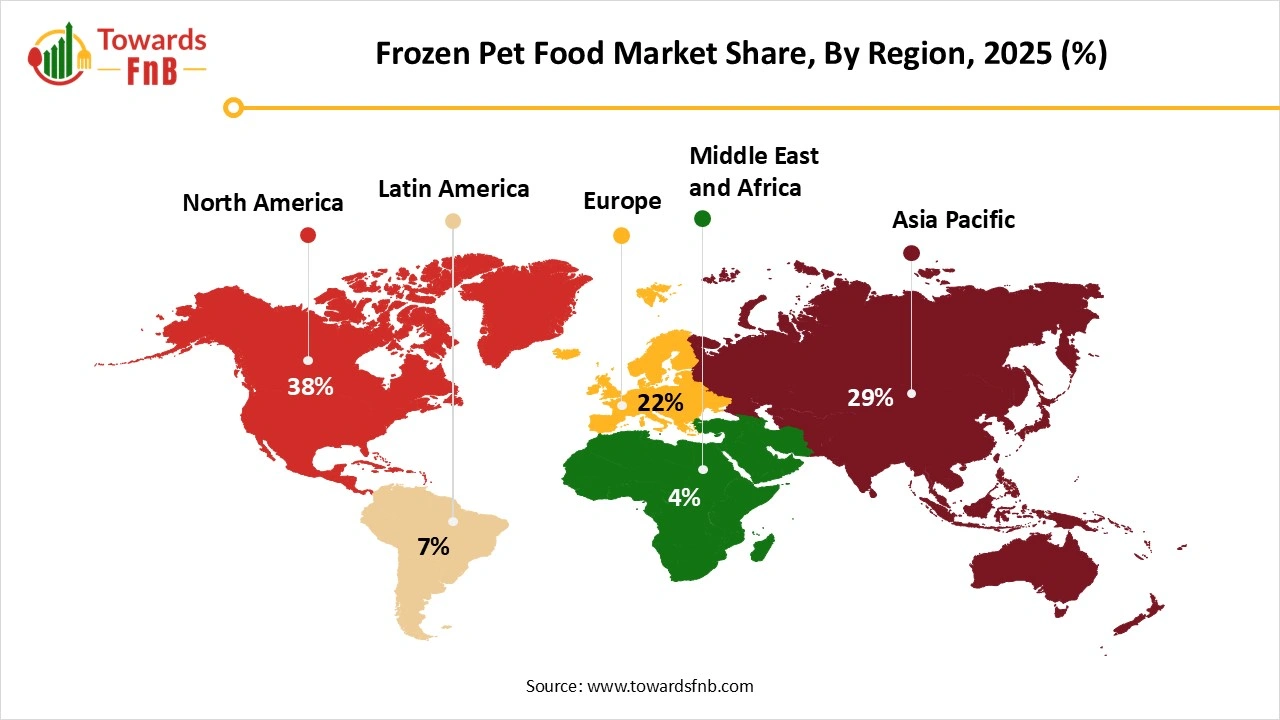
North America dominated the market in 2025. In North America, the frozen pet food market represents a burgeoning sector that has attracted considerable interest due to a rising demand for premium, healthy, and natural products. This market is expanding rapidly, driven by growing awareness among pet owners of the importance of nutrition and health for their pets. The range of products available within the market includes raw, minimally processed, and organic options, which align with consumers' increasing concerns regarding their pets well-being. These offerings resonate with prevailing trends favoring clean-label and natural ingredients.
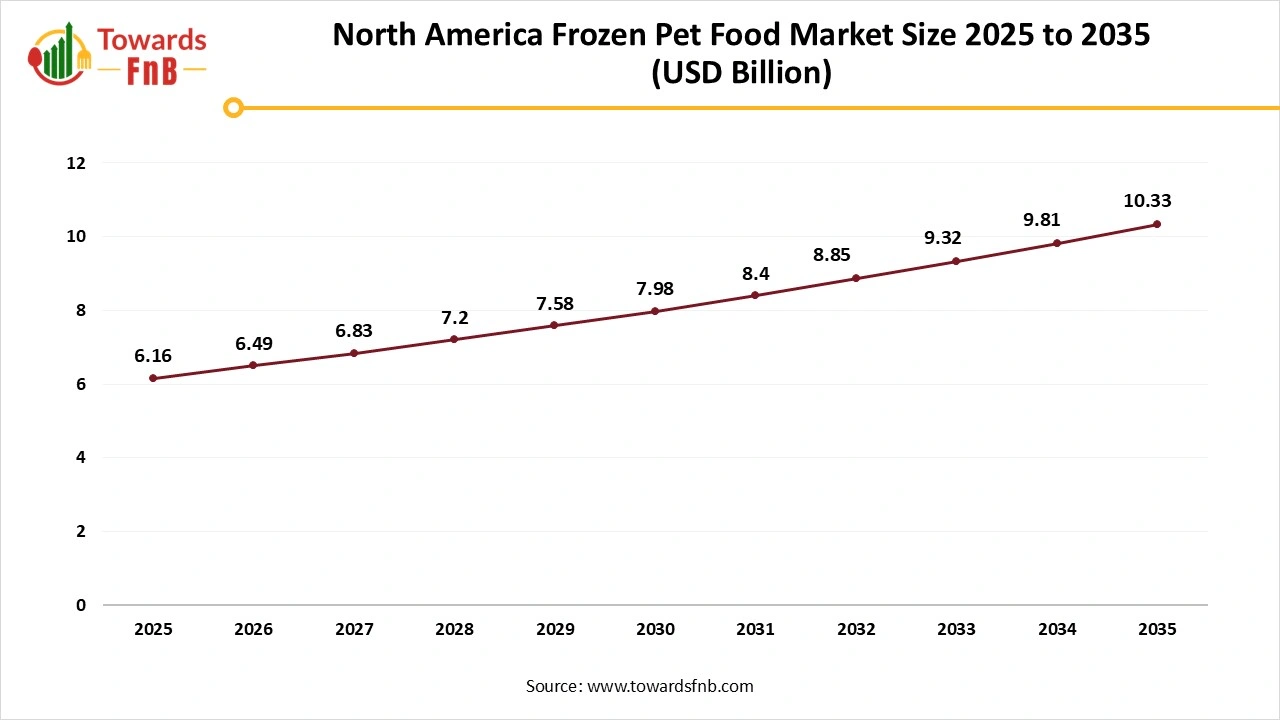
The North America frozen pet food market size was calculated at USD 6.16 billion in 2025 with projections indicating a rise from USD 6.49 billion in 2026 to approximately USD 10.33 billion by 2035, expanding at a CAGR of 5.3% throughout the forecast period from 2026 to 2035.
United States Frozen Pet Food Market Analysis
The United States frozen pet food Market has emerged as a vital segment of the broader pet food industry, fueled by escalating consumer demand for high-quality, nutritious, and convenient nutrition options for pets. The simplicity of serving frozen food, combined with their ability to maintain freshness without the need for artificial preservatives, is particularly appealing to busy pet owners seeking high-quality nutrition with minimal inconvenience. NielsenIQ data indicates a growth rate of 13.4%, representing an increase of US$208 million for refrigerated and frozen dog food in the United States, as reported by Thaís Matos, senior business reporter for GlobalPets.
Asia Pacific: The Fastest Growing Region in the Frozen Pet Food Market
The frozen pet food market in the Asia Pacific is experiencing fastest growth, primarily driven by an increase in pet ownership and the ongoing humanization of pets. As urbanization progresses and more individuals form nuclear families or live independently, pets are increasingly regarded as companions and integral members of the household. This shift in perception has resulted in higher emotional investments in pets and a greater willingness to allocate resources towards their care, particularly in relation to high-quality food that satisfies their health and nutritional requirements.
India's Frozen Pet Food Market Growth
The Indian market is expanding rapidly, propelled by rising pet ownership, increasing disposable income, and a transformation in attitudes towards pet care and nutrition. Urbanization and evolving lifestyles have prompted more families and young professionals to adopt pets, especially within metropolitan regions such as Delhi, Mumbai, Bengaluru, and Hyderabad. The number of pets in Indian households has surged from 26 million in 2019 to an estimated 32 million by 2024. The increasing number of pets is growing the frozen pet food market.
Europe the Notable Growing Region in the Frozen Pet Food Market
In Europe, the frozen pet food market is exhibiting notable growth as pet humanization continues to significantly influence consumer purchasing behavior. Pet owners are placing increased emphasis on health and nutrition. The rise of private labels and acquisitions by established companies is notably driving growth in this sector. Retailers are seizing opportunities created by the rising demand for fresh and chilled meals by introducing their own frozen pet food lines, thereby enhancing accessibility and affordability. Key industry players are expanding manufacturing facilities, launching new raw and grain-free frozen product lines, and investing in sustainable packaging to address the concerns of environmentally-conscious consumers in Europe.
UK Frozen Pet Food Market Study
The frozen pet food sector in the United Kingdom is on the verge of significant transformation, influenced by economic shifts, technological advancements, and an increasingly stringent regulatory environment. As consumer demand for premium, health-oriented pet nutrition escalates, import-export dynamics are becoming increasingly shaped by strategic procurement patterns and manufacturing transformations. The UK pet food industry is witnessing a robust shift towards high-quality, nutrition-focused offerings, driven by pet owners who are becoming more concerned about the health and longevity of their animals.
The Expanding Middle East and Africa Frozen Pet Food Market
In the Middle East and Africa, the rising cost of pet ownership and pet food acquisition is a significant driver of the regional market. As pet owners invest more in various types of pet food, the growth of this market is further supported by the increasing number of pets. Major market drivers include the rising adoption of dogs and cats, as well as a growing emphasis on enhancing productivity and health.
Saudi Arabia Frozen Pet Food Market Analysis
In Saudi Arabia, the frozen pet food market is exhibiting steady growth due to increased awareness among pet owners regarding the benefits of providing high-quality, nutritionally balanced meals for their dogs. Saudi Arabia predominantly imports its pet food from the United States, India, and Brazil. With a growing pet population and increasing disposable incomes, a rising number of pet owners are choosing premium frozen dog food options that offer convenience and health benefits. Key market players are focusing on product innovation and strategic marketing efforts to attract customers.
South America Frozen Pet Food Market Opportunity
Investment opportunities in the South American market are significant, driven by rising consumer demand for premium pet nutrition. Entering this market through strategic partnerships with local distributors can facilitate effective product penetration. Investment in advanced freezing and packaging technologies can enhance product freshness and safety, appealing to health-conscious consumers. Additionally, e-commerce platforms present substantial opportunities for direct-to-consumer sales, thereby expanding market reach beyond traditional retail channels. The increasing adoption rates of pets, particularly in urban areas, further support market expansion.
Brazil Frozen Pet Food Market Examination
The Brazil frozen pet food market is experiencing strong growth, driven by rising pet humanization and increasing demand for premium, natural, and nutritionally balanced diets. More Brazilian pet owners especially dog owners are shifting toward frozen formats due to their perceived freshness, minimal processing, and alignment with raw or natural feeding trends. Innovation in grain-free, organic, and species-specific frozen formulations, along with the expansion of e-commerce channels, is further boosting adoption.
Frozen Pet Food Market Share, By Pet Type, 2025 (%)
| Segments | Shares (%) |
| Dogs | 70% |
| Cats | 15% |
| Fish | 6% |
| Birds | 4% |
| Small animals | 5% |
Why did the Dog Segment Dominate the Frozen Pet Food Market in 2025?
The dog segment led the frozen pet food market in 2025 because of the high worldwide dog ownership rates and increased expenditure per dog in terms of food and nutrition. Dog owners are mainly looking for frozen pet foods that provide specific health benefits, like enhancing joint health or offering a balanced food for puppies. This has led to a proliferation of personalized frozen dog food items that cater to various breeds, sizes, and life stages, ensuring that this segment remains dominant.
The Cat Segment is Observed to Grow at the Fastest Rate During the Forecast Period.
The growth of the cat segment is projected to the increasing ownership of cats. Furthermore, in many nations, cats are considered a symbol of luck and fortune, mainly in Europe, which is the market share. In addition, cats need less space to live than dogs and require less living space compared to dogs and can stay alone at home for a longer time without human oversight. Between MRI-Simmons’ Spring 2021 and Spring 2025 survey reveals, the number of cat-owning households increased, mainly among Boomers, Gen X, and older seniors.
Frozen Pet Food Market Share, By Product Type, 2025 (%)
| Segments | Shares (%) |
| Frozen raw food | 60% |
| Frozen cooked food | 30% |
| Frozen treats | 10% |
Which Product Type Segment Dominated the Frozen Pet Food Market in 2025?
The frozen raw food segment held the dominating share of the market in 2025. The growth of the segment attributed due to it provide more biologically appropriate for pet digestive systems. This trend is supported by growing health consciousness, aversion to fillers, and the perception of raw as the most nourishing option, with brands providing convenient patties and nuggets that fulfil the popular BARF Biologically Appropriate Raw Food philosophy.
The Frozen Cooked Food Segment is Expected to Grow at a Fastest Rate During the Predicted Timeframe.
Pet owners who want to feed their pets with fresh, whole-food ingredients but don't want to have the safety risk that comes with handling raw meat prefer the cooked food. Mildly cooked frozen food has increased as an alternative to raw frozen food, offering consumers a convenient source of nutrition. Frozen cooked meals provide a convenient, ready-to-serve solution for busy owners.
Frozen Pet Food Market Share, By Retail Channel, 2025 (%)
| Segments | Shares (%) |
| Pet specialty stores | 40% |
| Mass merchandisers | 20% |
| Grocery stores | 13% |
| Online retailers | 17% |
| Veterinarians | 10% |
What Made the Specialty Stores Segment Dominant in the Frozen Pet Food Market in 2025?
The pet specialty stores segment dominated the market with the largest share in 2025. Specialty pet stores are the preferred option for premium, high-quality, and specialized pet food items, offering personalized services and expert advice. Customers are increasingly choosing transparency in ingredients and nutritional information, which specialty retailers presumably provide. In addition, these stores frequently engage knowledgeable staff who can give personalized advice and recommendations, improving the buying experience for pet owners.
The Online Retailers Segment is Expected to Grow at the Fastest Rate in the Market During the Forecast Period.
The increasing presence of D2C and personalized frozen pet food brands encourages the shift toward online shopping. As customers turn toward organic, premium, grain-free, and functional food, they shift to e-commerce platforms for wider product availability than local retail stores can offer. The convenience of fast delivery, subscriptions, and smooth digital shopping are some of the factors that are fostering the market growth.
Which Flavor Segment Dominated the Frozen Pet Food Market in 2025?
The chicken segment dominated the market in 2025, due to wide availability, easy digestibility, high protein content, cost-effectiveness, and suitability for pets with sensitive stomachs. Chicken-based frozen foods are preferred for their balanced protein-fat ratio, palatability, and compatibility with mixed cooked or raw feeding plans. Most dogs and cats find chicken highly appealing, making it a go-to protein that ensures pets eat their meals.
The Fish Segment is Observed to Grow at the Fastest Rate During the Forecast Period.
Growing demand for fish-based frozen pet food arises from increasing omega-3 awareness, the premiumization trend that links pet nutrition to human-grade standards, and advanced marine-protein processing technologies. Fish-based frozen pet food addresses the increasing customer demand for natural and functional ingredients, aligning with the pet humanization trend in the pet food sector.
Which Packaging Segment Held the Largest Share of the Frozen Pet Food Market in 2025?
The pouches segment led the market in 2025. Pouches provide convenient opening, resealability, and portion control, making them ideal for varying meal sizes. These pouches may incorporate specialized film layers to safeguard internal contents against punctures, moisture, contamination, exposure to sunlight, and other hazards. Furthermore, pouches are lightweight, facilitate ease of transport, present an attractive appearance on retail shelves, and are straightforward to reseal and store; additionally, pouch nozzles enhance usability.
The Tubs Segment is Experiencing the Rapid Growth During the Forecast Period.
As it aligns effectively with pet owners’ demands for convenience, portion control, freshness, and portability. This trend is particularly notable in light of the rising popularity of frozen pet food and e-commerce, which offers an improved user experience through ease of opening and resealing, as well as enhanced protection for premium raw or fresh foods compared to traditional bags or chubs. This shift corresponds with the growing humanization of pets and a heightened interest in healthy, natural options.
Tribal Pet Foods
Maev
By Pet Type
By Product Type
By Retail Channels
By Flavor
By Packaging Type
By Region




Principal Consultant
Vidyesh Swar, Senior Research Analyst at Towards Food & Beverages, specializes in market research, focusing on supply-demand evaluation, pricing analysis, alternative proteins, plant-based foods, and sustainable food technologies within the industry.
Learn more about Vidyesh Swar
Reviewed By
Aditi Shivarkar, with 14+ years in Food and Beverages market research, specializes in food, beverage, and eco-friendly packaging. She ensures accurate, actionable insights, driving Towards FnB's excellence in industry trends and sustainability.
Learn more about Aditi ShivarkarApril 2026
April 2026
April 2026
April 2026

Frozen Pet Food Market


 +1 804-441-9344
 Download Sample
 Schedule a Meeting