April 2026



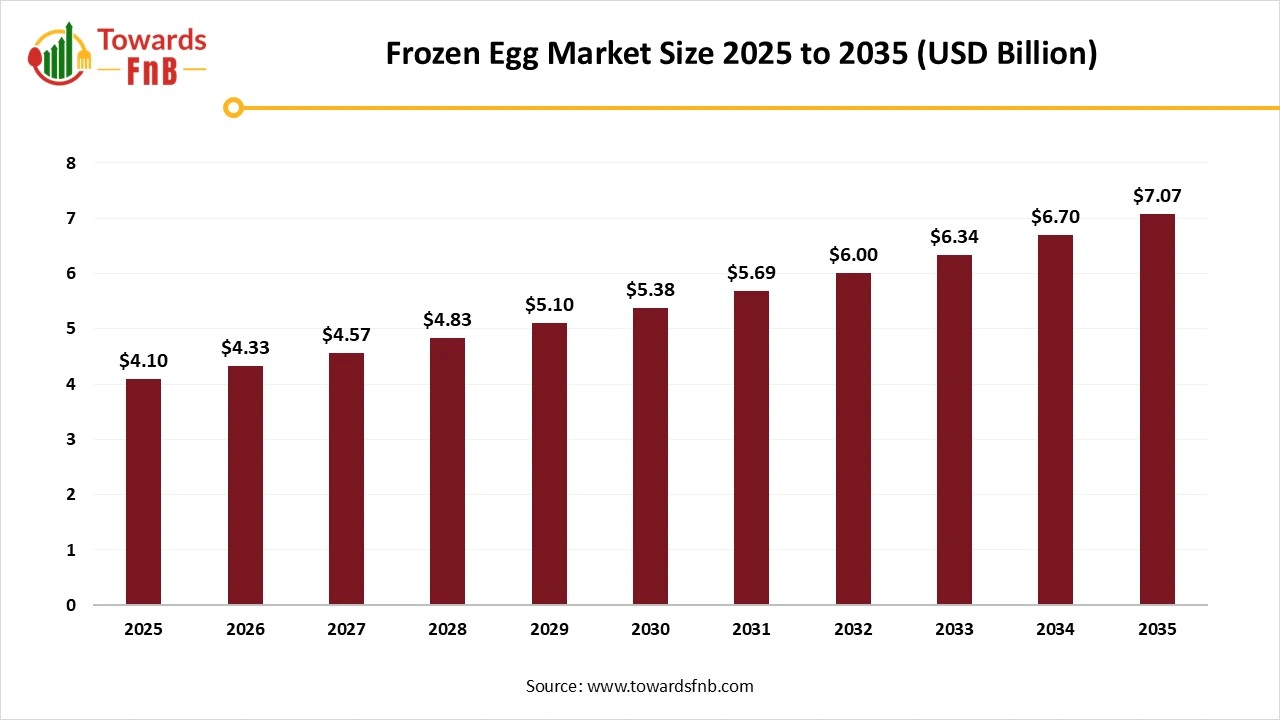
The global frozen egg market size reached at USD 4.10 billion in 2025 and is anticipated to increase from USD 4.33 billion in 2026 to an estimated USD 7.07 billion by 2035, witnessing a CAGR of 5.6% during the forecast period from 2026 to 2035. The growing foodservice industry and the increasing need for high-quality protein drive the market growth.
| Study Coverage | Details |
| Growth Rate from 2026 to 2035 | CAGR of 5.6% |
| Market Size in 2026 | USD 4.33 Billion |
| Market Size in 2027 | USD 4.57 Billion |
| Market Size by 2035 | USD 7.07 Billion |
| Largest Market | North America |
| Base Year | 2025 |
| Forecast Period | 2026 to 2035 |
| Regions Covered | North America, Europe, Asia-Pacific, Latin America, and Middle East & Africa |
Frozen egg is a liquid egg and egg products that are frozen at specific temperatures to ensure long-term safety. The various egg products are frozen egg whites, specialty blends, frozen whole egg, and frozen egg yolks. It offers benefits like food safety, nutritional retention, lowers food waste, minimizes storage space, and convenience. Frozen egg is widely used in applications like breads, ice cream, frozen sauces, meringues, dips, desserts, and dressings.
Frozen egg market growth is driven by growing availability of quick-service restaurants, increasing need for easy-to-prepare meals, focus on reducing food waste, expanding food processing industry, growth in commercial kitchens, trending high-protein diets, and increased production of bakery items.
The technological innovations are burgeoning in the frozen egg market due to rapid freezing techniques, sustainability focus, and higher product quality. The ongoing innovations like robotics, digitalization, automated grading, and individually quick freezing help in preserving nutritional integrity and enhancing operational efficiency. The major advancement is that the AI integration ensures consistency and manages the entire supply chain.
AI easily understands internal defects in eggs and monitors the freshness of eggs in real-time. AI selects high-quality eggs for the freezing process and helps in the egg-breaking process optimization. AI supports the pasteurization process and avoids over-processing of eggs. AI minimizes the overproduction of frozen eggs and manages temperature during the storage process. AI focuses on minimizing food waste and creates new products of frozen egg. Overall, the popularity of AI is growing in the frozen egg industry, which minimizes energy consumption and increases consistency.
Raw Material Procurement
Processing and Preservation
Quality Testing and Certifications
| Country | Type Majorly Used | Major Applications | Top Companies |
| United States | Frozen Whole Eggs | Baking Confectionery Prepared Meals |
Michael Foods Rose Acre Farms Cal-Maine Foods |
| China | Frozen Salted Duck Egg Yolk | Commercial Baking Pastry Production |
CP Foods Hanwei Group |
| France | Frozen Egg Whites Frozen Egg Yolks |
Pastry Making Confectionery Ready-Made Meals |
IGRECA Ovoteam Cocotine |
| Brazil | Pasteurized Liquid Whole Eggs | Bakery Pasta Food Service Sauces |
Netto Foods Granja Faria Naturovos |
Why North America Dominates the Frozen Egg Market?
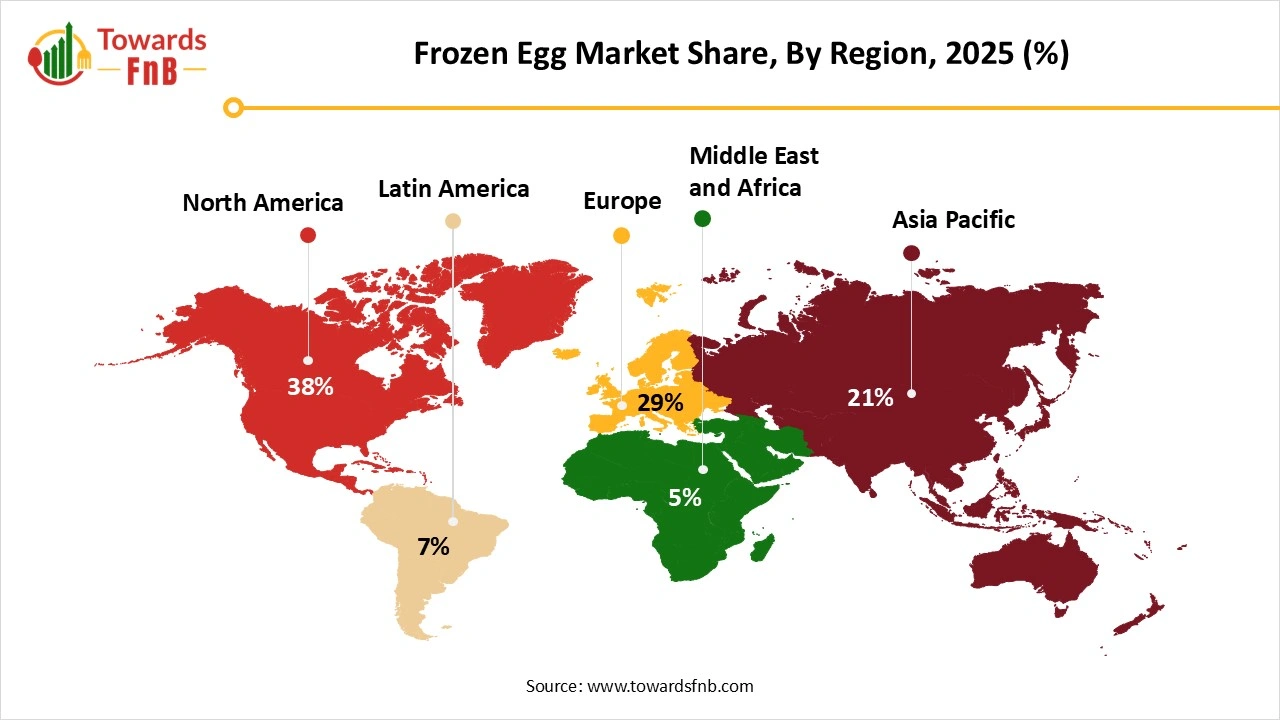
North America dominated the frozen egg market in 2025. The strong presence of a large-scale food processing base and the popularity of ready-to-eat meals increase demand for frozen egg. The strong focus on food safety and the well-developed food service industry creates higher demand for frozen egg. The rapid growth in bodybuilding communities and the surging protein-rich foods consumption increases demand for frozen egg, driving the overall growth of the market.
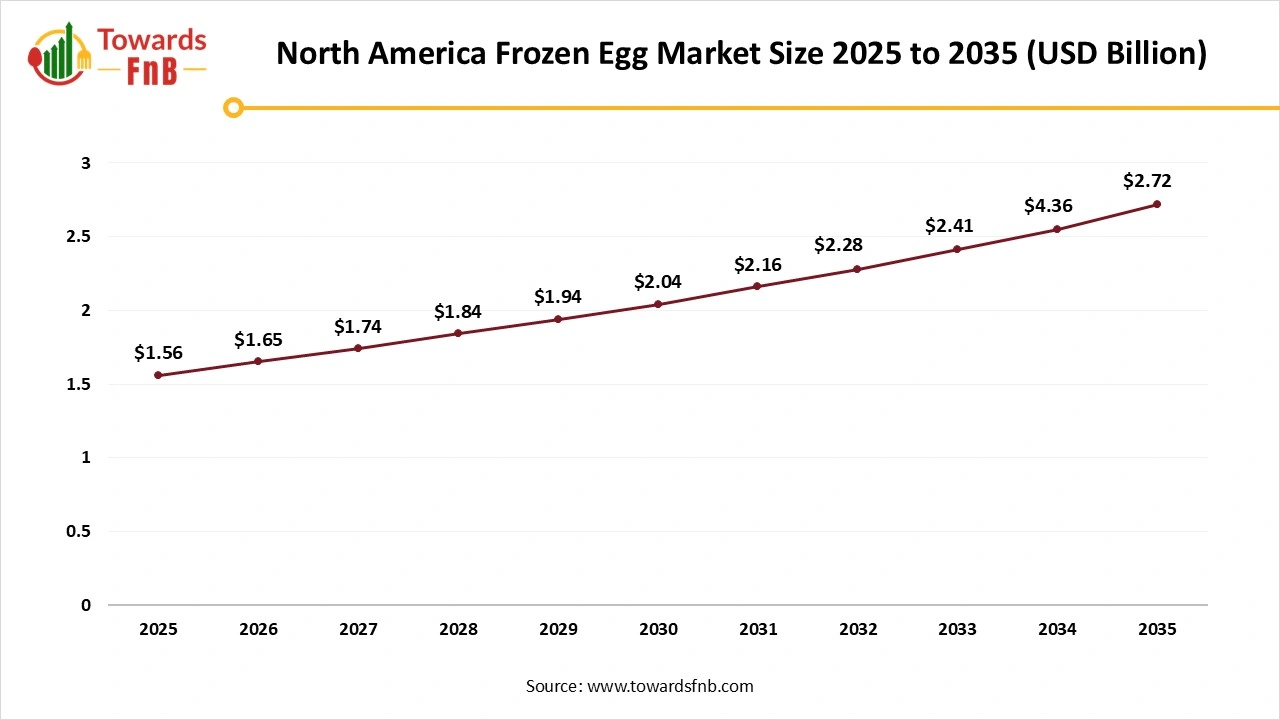
North America Frozen Egg Market Size 2025 to 2035
The North America frozen egg market size was calculated at USD 1.56 billion in 2025 with projections indicating a rise from USD 1.65 billion in 2026 to approximately USD 2.72 billion by 2035, expanding at a CAGR of 5.72% throughout the forecast period from 2026 to 2035.
Breaking the Shell: United States Revolution in Frozen Egg Production
The United States is a major contributor to the market. The high presence of convenience food and the robust food safety measures increases the adoption of frozen egg. The growing health-conscious consumer and the increased consumption of nutrient-dense foods increase demand for frozen egg. The robust food processing industry and the expansion of egg processing equipment require frozen egg, supporting the overall market growth.
How Big is the U.S. Frozen Egg Market?
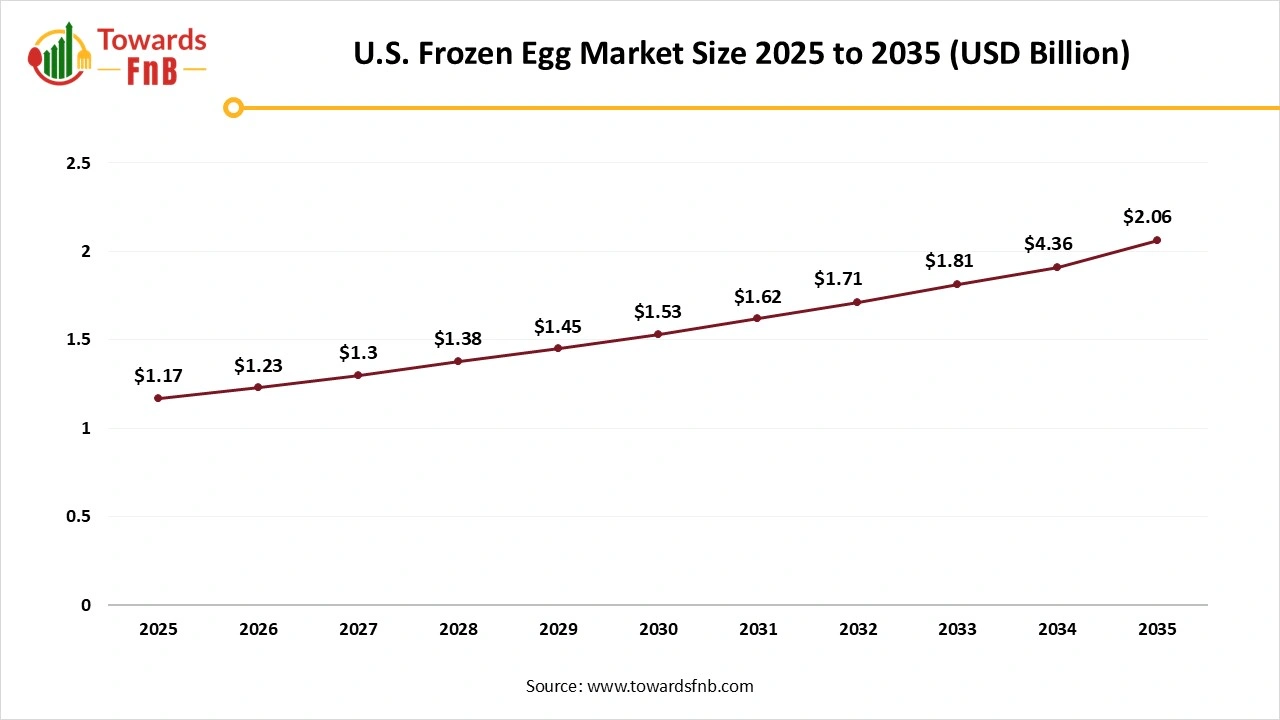
The global xxx market size was valued at USD 1.17 billion in 2025 and is expected to grow steadily from USD 1.23 billion in 2026 to reach nearly USD 2.06 billion by 2035, with a CAGR of 5.82% during the forecast period from 2026 to 2035.
Asia Pacific Frozen Egg Market Trends
Asia Pacific is experiencing the fastest growth in the market during the forecast period. The growing urbanization and the increased spending on packaged foods increase demand for frozen egg. The increasing popularity of processed eggs and the growth in consumption of eggs increases demand for frozen egg. The expansion of commercial bakeries and the transition towards processed products increases demand for frozen egg. The strong government support for food exports drives the overall market growth.
From Farm to Freezer: India’s Rising Contribution to Frozen Egg Industry
India is experiencing the fastest growth in the market. The growing popularity of frozen snacks and the large-scale production of eggs increases demand for frozen egg. The growing programs for dietary awareness and the expanding modern retail increase demand for frozen egg. The rise in bakery products and the availability of modern poultry farms increase the adoption of frozen egg, supporting the overall market growth.
Europe Frozen Egg Market Trends
Europe is growing notably in the market due to the strong focus on the consumption of protein-rich foods. The high preference for quick meal items and the increasing demand for natural protein source increases the adoption of frozen egg. The large-scale infrastructure of the food industry and the push for clean label products increase demand for frozen egg. The growing prices of egg drives the overall market growth.
Germany's Role in Frozen Egg Production
Germany is a key contributor to the market. The robust food manufacturing infrastructure and the increased consumption of ready-to-use ingredients increase demand for frozen egg. The string food safety rules and the strong focus on ethical sourcing increase demand for frozen egg. The presence of robust pasteurization processes and advancements in frozen egg preservation supports the overall market growth.
Frozen Egg Market Share, By Product Type, 2025 (%)
| Segments | Shares (%) |
| Whole Eggs | 30% |
| Egg Whites | 55% |
| Egg Yolk | 15% |
Why the Egg Whites Segment Dominates the Frozen Egg Market?
The egg whites segment dominated the frozen egg market in 2025. The strong focus on muscle building and the busy lifestyles of consumers increase demand for egg whites. The growing demand for dairy-free protein and the increasing need for a clean protein source increase demand for egg whites. The huge production of bakery items and the high protein powders consumption increase demand for egg whites, driving the overall market growth.
The Whole Eggs Segment is the Fastest Growing in the Market During the Forecast Period.
The focus on lowering preparation time and the increased production of sauces increases demand for whole eggs. Consumer focus on protein-rich food and commercial kitchen expansion increases demand for whole eggs. The growth in production of confectionery items and growing health trends increases demand for whole eggs, supporting the overall market growth.
Frozen Egg Market Share, By End-use, 2025 (%)
| Segments | Shares (%) |
| Food Processing Industry | 60% |
| Retail | 25% |
| Food Service Providers | 15% |
How did the Food Processing Industry Segment hold the Largest Share in the Frozen Egg Market?
The food processing industry segment held the largest revenue share of the frozen egg market in 2025. The growing popularity of frozen meals and the consumer shift towards fast food increases demand for frozen egg. The strong focus on preventing breakage losses of food products and the growing food production increases demand for frozen egg. The increased processing of various food products and the increasing need for food dressing creates higher demand for frozen egg, driving the overall market growth.
The Retail Segment is the Fastest Growing in the Market During the Forecast Period.
The increased consumption of protein-packed foods and the expansion of city areas increase demand for retail. The well-developed food chains and the convenience of stocking increase demand for retail. The availability of ready-to-use solutions and the expanding retail infrastructure support the overall market growth.
Frozen Egg Market Share, By Application, 2025 (%)
| Segments | Shares (%) |
| Bakery Products | 50% |
| Confectionery | 13% |
| Sauces and Dressings | 12% |
| Ready Meals | 17% |
| Others | 8% |
Which Application Segment Dominated the Frozen Egg Market?
The bakery products segment dominated the frozen egg market in 2025. The popularity of baked goods among generations and the strong presence of commercial bakeries increase demand for frozen egg. The focus on improving the texture of pastries and the increased consumption of cookies increases demand for frozen egg. The surging popularity of frozen bakery products and the expansion of industrial bakeries increase demand for frozen egg, driving the overall market growth.
The Ready Meals Segment is the Fastest Growing in the Market During the Forecast Period.
The urban lifestyles of consumers and the growing consumer interest in low-fat foods increase demand for ready meals. The increasing awareness about the consumption of protein-rich products and the strong presence of delivery services increase demand for ready meals. The time-saving capabilities, variety, and longer shelf life of ready meals support the overall market growth.
Noble Foods
By Product Type
By End-use
By Application
By Region





Principal Consultant
Vidyesh Swar, Senior Research Analyst at Towards Food & Beverages, specializes in market research, focusing on supply-demand evaluation, pricing analysis, alternative proteins, plant-based foods, and sustainable food technologies within the industry.
Learn more about Vidyesh Swar
Reviewed By
Aditi Shivarkar, with 14+ years in Food and Beverages market research, specializes in food, beverage, and eco-friendly packaging. She ensures accurate, actionable insights, driving Towards FnB's excellence in industry trends and sustainability.
Learn more about Aditi ShivarkarApril 2026
April 2026
April 2026
April 2026

Frozen Egg Market


 +1 804-441-9344
 Download Sample
 Schedule a Meeting