April 2026



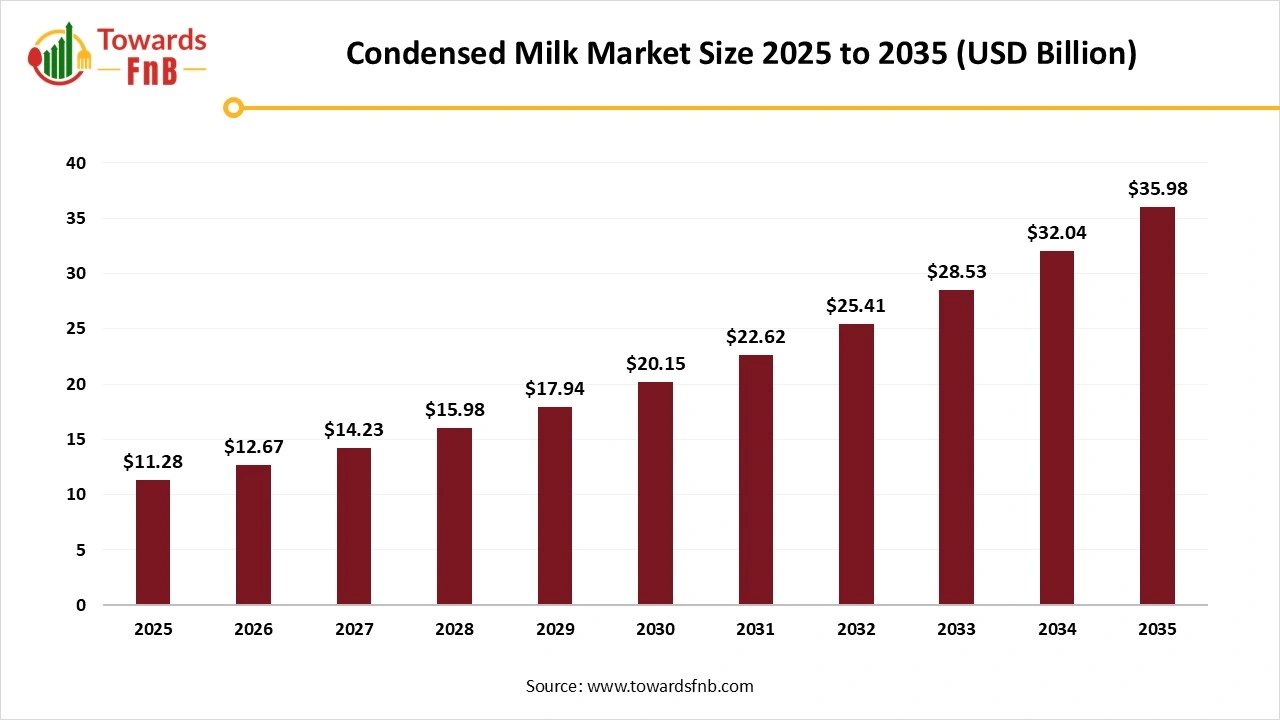
The global condensed milk market size reached at USD 11.28 billion in 2025 and is anticipated to increase from USD 12.67 billion in 2026 to an estimated USD 35.98 billion by 2035, witnessing a CAGR of 12.3% during the forecast period from 2026 to 2035. The growth of the market is driven by the increasing demand for culinary trends and dairy products.
| Study Coverage | Details |
| Growth Rate from 2026 to 2035 | CAGR of 12.3% |
| Market Size in 2026 | USD 12.67 Billion |
| Market Size in 2027 | USD 14.23 Billion |
| Market Size by 2035 | USD 35.98 Billion |
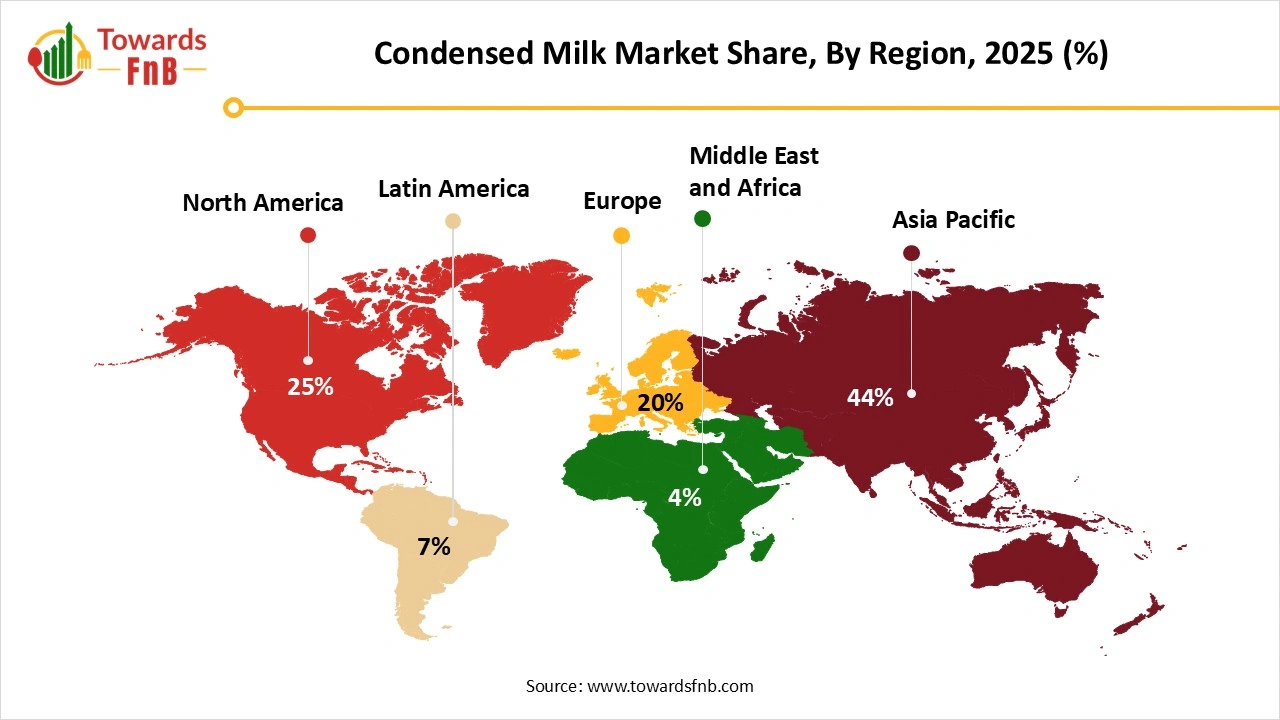
| Largest Market | Asia Pacific |
| Base Year | 2025 |
| Forecast Period | 2026 to 2035 |
| Regions Covered | North America, Europe, Asia-Pacific, Latin America, and Middle East & Africa |
The condensed milk market is significantly witnessing a major growth driven by the rise of innovative product offerings and evolving consumer preferences. The demand for condensed milk is likely to rise, as consumers increasingly seek convenience in their culinary endeavors. This product appears to be gaining traction across different demographics and is known for its versatility in both savory and sweet dishes.
The market growth is also driven by factors such as increasing consumer trends of home baking and cooking, enhancing the appeal of condensed milk as a staple ingredient, and increasing desire for homemade quality. In addition, with manufacturers exploring options that serve health aware consumers, the market is also experiencing a preference towards healthier alternatives, further driving the market growth.
The rise of technological advancements in the global market focus on product development such as sustainable packaging, digitalization such as supply chain analytics and e-commerce, processing innovations for shelf life and quality and automation such as AI and robotics for efficiency to address consumer demand, driving growth via tailored offerings, data-driven decisions and smarter factories. AI optimizes demand inventory and robots improve speed, which further expected to revolutionize the growth of the market.
Raw Material Procurement
Packaging and Branding
Waste Management and Recycling
| Country | Regulatory Body | Key Regulations | Focus Areas | Notable Notes |
| India | Food Safety and Standards Authority of India (FSSAI) | Food Safety and Standards (Packaging and Safety Regulations) and Licensing and Registration of Food Businesses) | Major focus areas in the condensed milk market focuses on innovation for strategic distribution, sustainable packaging, premiumization and health-conscious plant-based and natural dairy products | The market is growing industry by diverse culinary applications in desserts and beverages, the popularity of home baking and consumer demand for convenience foods. |
Why is Asia Pacific Dominating the Condensed Milk Market?
Asia Pacific dominated the market in 2025. The market is expected to grow fastest during the forecast period in the region, driven by increasing demand in confectionery and bakery, increasing disposable incomes and growing rapid urbanization, with India and China major consumption. The increased plant-based options, health-focused and sweetened condensed milk are developing, supported by strong retail or online channels and innovative packaging such as sachets and pouches. China, India, Japan and South Korea are the fastest growing countries in the region.
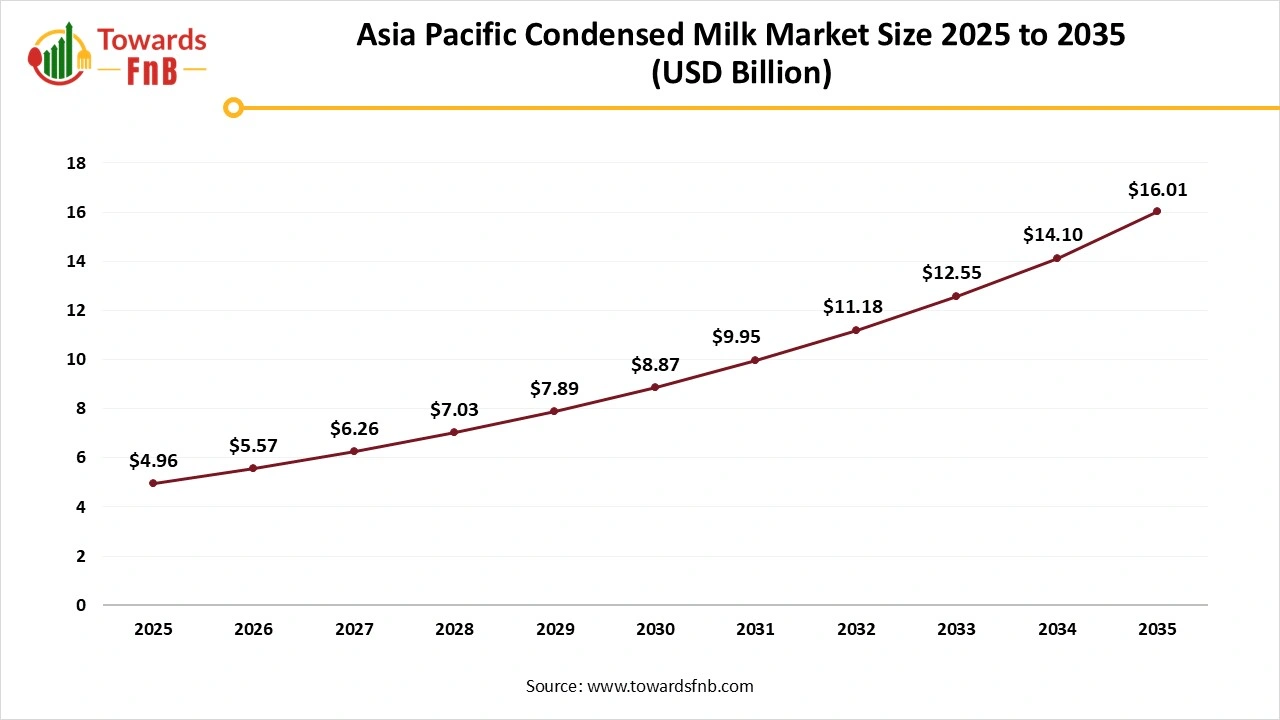
Asia Pacific Condensed Milk Market Size 2025 to 2035
The Asia Pacific condensed milk market size reached at USD 4.96 billion in 2025 and is anticipated to increase from USD 5.57 billion in 2026 to an estimated USD 16.01 billion by 2035, witnessing a CAGR of 12.43% during the forecast period from 2026 to 2035.
India Condensed Milk Market Trends
India holds the dominant share in the market. The condensed milk industry in India is witnessing rapid growth, driven by rise of product versatility, digital retail, rising rapid urbanization, increasing consumer shifts towards low-sugar trends, increasing demand for both flavored and sweetened options for diverse culinary uses and increased home cooking and baking with major players such as Amul and Nestle.
North America expects the fastest growth in the market during the forecast period.
The market growth is driven by clean-label trends, demand for convenience and ready-to-eat food products, increasing preference towards sustainability, demand for high quality and premium products and increasing demand for bakery, dairy products and confectionery. Major companies such as Arla Foods, Eagle Brand and Nestle are focusing on digital traceability, sustainable packaging, enhanced DTC/e-commerce, low-sugar options and plant-based alternatives to meet sustainability and health-conscious consumers.
The U.S. Condensed Milk Market Trends
The U.S. held significant share in the condensed milk market, driven by rise in plant-based options such as coconut and oat alongside dairy, increasing consumer preference towards home cooking and convenience trends, and increasing demand in baking, beverages and desserts. Major drivers such as supported by online channels and strong retail, innovations in product offerings, longer shelf life, and culinary versatility, with major players such as Nestle adapting to increasing consumer needs.
Why Does Europe Boosting the Condensed Milk Market?
Europe is expected to grow at a notable rate during the forecast period. The market growth in the region is attributed to the increasing demand from the food service industry, increasing home cooking and baking, and rising strong baking traditions. The market is also expanding with a rising trend in plant-based alternatives, new flavor variations and a focus on online retail.
The Germany Condensed Milk Market Trends
The condensed milk sector is growing, driven by the increasing demand for ready-to-drink beverages, increasing consumer preference towards functional products and plant-based options, increasing demand for dessert, coffee shops, baking and confectionery and rising innovation in plant-based, fortified and healthier alternatives.
How are the Middle East and Africa Fueling the Condensed Milk Market?
The condensed milk market is a fast growing, driven by health-aware consumers looking for premium and convenient food products, with the South Africa and UAE leading economics. In addition, consumption of modern ready-to-drink coffee, demand for desserts, increasing disposable incomes, rising rapid urbanization, increasing affordable dairy options and tastes for versatile and government support for dairy.
UAE Condensed Milk Market Trends
The condensed milk industry in UAE is witnessing rapid growth, driven by the increasing cafe culture for ready-to-drink coffee, rising demand for premium and convenient foods such as desserts, cookies and pastries, growing foodservice industry, diverse food culture in the region. Due to home cooking and baking significantly leads to the market. Major trends include growth in plant-based options, ready-to-drink beverages, and processed food.
Why does South America Driving the Condensed Milk Market
The market growth in the region is growing rapidly in South America, driven by the demand for high quality and convenience foods, such as bakery, dairy and confectionery, with Brazil as major share generators, increasing demand for traditional desserts and increasing demand for convenience food. Brazil and Columbia are the major countries boosting the market growth in South America.
Brazil Condensed Milk Market Trends
The condensed milk industry in Brazil is witnessing rapid growth, driven by the growing nutraceutical and foodservice industry, increasing popularity in sweets and beverages, growing e-commerce platforms, consumer preference towards home baking and cooking, demand for convenience foods, strong local production and increasing consumer shift towards innovative, affordable and nutritious dairy products.
Condensed Milk Market Share, By Type, 2025 (%)
| Segments | Shares (%) |
| Sweetened Condensed Milk | 50% |
| Unsweetened Condensed Milk | 20% |
| Evaporated Milk | 30% |
How is Sweetened Condensed Milk Segment Dominating the Condensed Milk Market?
The sweetened condensed milk segment dominated the market revenue in 2025. Sweetened condensed milk plays an important role for its extended shelf life, creamy texture and rich flavor, making its necessary in beverages, confectionery and bakery for texture and sweeteners. As a base for desserts like brigadeiro, its significance lies in its versatility, its ability to offer premium and convenience sensory experience in various recipes and role in enhancing indulgent treats, further driving demand in both food service and home cooking.
The Unsweetened Condensed Milk Segment is Expected to Grow Fastest During the Forecast Period.
Unsweetened condensed milk plays a crucial role in the market as it is catering to health-conscious consumers seeking lower sugar options and is shelf-stable and versatile base for as a fresh milk substitute and for coffee and savory dishes, complementing sweetened condensed milk's dominance in desserts, fulfilling needs in regions with limited fresh milk access and driving growth through culinary experimentation.
Condensed Milk Market Share, By Application, 2025 (%)
| Segments | Shares (%) |
| Bakery Products | 40% |
| Confectionery | 30% |
| Dairy Products | 20% |
| Beverages | 10% |
Why is Bakery Products Segment Dominating the Condensed Milk Market?
The bakery product segment dominated the global market revenue in 2025. The segment growth in the global market is driven by factors such as increasing demand for convenience and ready-to-eat foods, as condensed milk is highly used in cookies, pastries, desserts and other baked products. Major bakery products loke indulgent items such as tres leches cake, flan, caramel brownies and fudges with sweetened condensed milk dominating due to its extended shelf life, texture and flavor, boosting commercial production of desserts and home baking.
The Confectionery Segment is eExpected to Grow Fastest During the Forecast Period.
The growth of the confectionery segment in the market is driven by factors such as increasing demand for specialty cafes and sweets, rising product innovation, increasing demand for convenience and indulgent treats, functional properties as a shelf-stable and versatile ingredient, consumer preference for premium food options and sweets, expansion of e-commerce and food service and rise of home cooking and baking trends.
Condensed Milk Market Share, By Packaging, 2025 (%)
| Segments | Shares (%) |
| Cans | 50% |
| Pouches | 20% |
| Bottles | 13% |
| Tetra Packs | 17% |
What Factors Help Cans Segment to Grow in 2025?
The cans segment dominated the market revenue in 2025. Cans play an important role in the global condensed milk industry, significantly due to their ambient shelf life without refrigeration, airtight package that ensures a longer shelf life and superior ability to provide a durability. Cans are the major packaging format for condensed milk products. Cans are protecting the dairy product from gases, light and physical damage during storage and transport and provide excellent mechanical resistance.
The Tetra Packs Segment is Expected to Grow Fastest During the Forecast Period.
Tetra packs revolutionized the market by enhancing consumer convenience through aseptic packaging, improving logistics, preventing adulteration and offering longer shelf life without refrigeration. These lightweight and multilayered cartons protect milk from germs, air and light, reducing transportation costs, offering innovative designs and enabling distribution in areas with poor cold chains.
Why is Supermarkets/ Hypermarkets Segment Dominating Condensed Milk Market?
The supermarkets and hypermarkets segment dominated the market revenue in 2025. Supermarkets and hypermarkets are important in the global market offering frequent promotions, large shelf space, wide product visibility and one-stop shopping. Their ability to stock diverse formats and brands, strong supply chains and extensive reach make them key for essential for market penetration and convenience-seeking consumers.
The Online Retail Segment is Expected to Grow Fastest During the Forecast Period.
Online retail segment plays an important role due to the influence of social media and recipes, increased mobile or internet access in emerging markets, offers and discounts, wider product variety in plant-based, organic and flavors and convenience of home delivery, all enhancing accessibility and visibility for various brands.
Indomilk
By Type
By Application
By Packaging
By Distribution Channel
By Region




Principal Consultant
Vidyesh Swar, Senior Research Analyst at Towards Food & Beverages, specializes in market research, focusing on supply-demand evaluation, pricing analysis, alternative proteins, plant-based foods, and sustainable food technologies within the industry.
Learn more about Vidyesh Swar
Reviewed By
Aditi Shivarkar, with 14+ years in Food and Beverages market research, specializes in food, beverage, and eco-friendly packaging. She ensures accurate, actionable insights, driving Towards FnB's excellence in industry trends and sustainability.
Learn more about Aditi ShivarkarApril 2026
April 2026
April 2026
April 2026

Condensed Milk Market


 +1 804-441-9344
 Download Sample
 Schedule a Meeting