April 2026



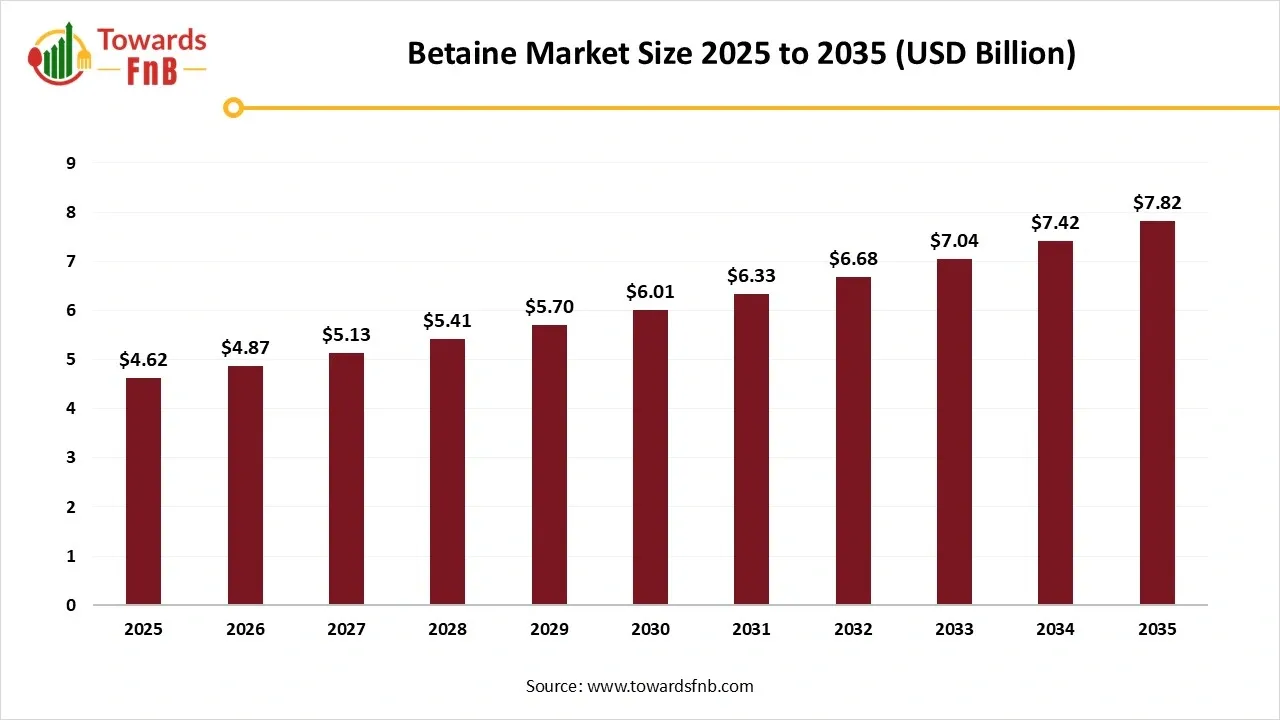
The global betaine market size reached at USD 4.62 billion in 2025 and is expected to grow steadily from USD 4.87 billion in 2026 to reach nearly USD 7.82 billion by 2035, with a CAGR of 5.4% during the forecast period from 2026 to 2035. The market is driven by its diverse applications in animal feed, personal care, and food and beverages.
| Study Coverage | Details |
| Growth Rate from 2026 to 2035 | CAGR of 5.4% |
| Market Size in 2026 | USD 4.87 Billion |
| Market Size in 2027 | USD 5.13 Billion |
| Market Size by 2035 | USD 7.82 Billion |
| Largest Market | North America |
| Base Year | 2025 |
| Forecast Period | 2026 to 2035 |
| Regions Covered | North America, Europe, Asia-Pacific, Latin America, and Middle East & Africa |
The betaine market is a growing global industry for the production and sale of betaine, a naturally occurring compound used in diverse applications like animal feed, cosmetics, and pharmaceuticals. Growth is driven by increasing consumer demand for natural and functional ingredients, especially in personal care and nutraceuticals, and the demand for effective and cost-efficient animal feed additives.
Recent advancements in the betaine sector involve more environmentally friendly extraction techniques, such as sustainable plant-based sourcing and microbial fermentation, along with improved product formulations for both feed and cosmetics, and the application of AI for optimizing supply chains and conducting market analysis. Innovations in betaine production technology are expected to lead to greater product efficiency and more cost-effective solutions. New extraction and purification techniques are also being developed to boost product yield and quality. As businesses respond to evolving consumer preferences, improvements in formulation methods might result in enhanced product quality and a lesser environmental impact, thereby reinforcing the Market.
Raw Material Procurement
Betaine Processing
Distribution
North America Betaine Market: Growth Analysis
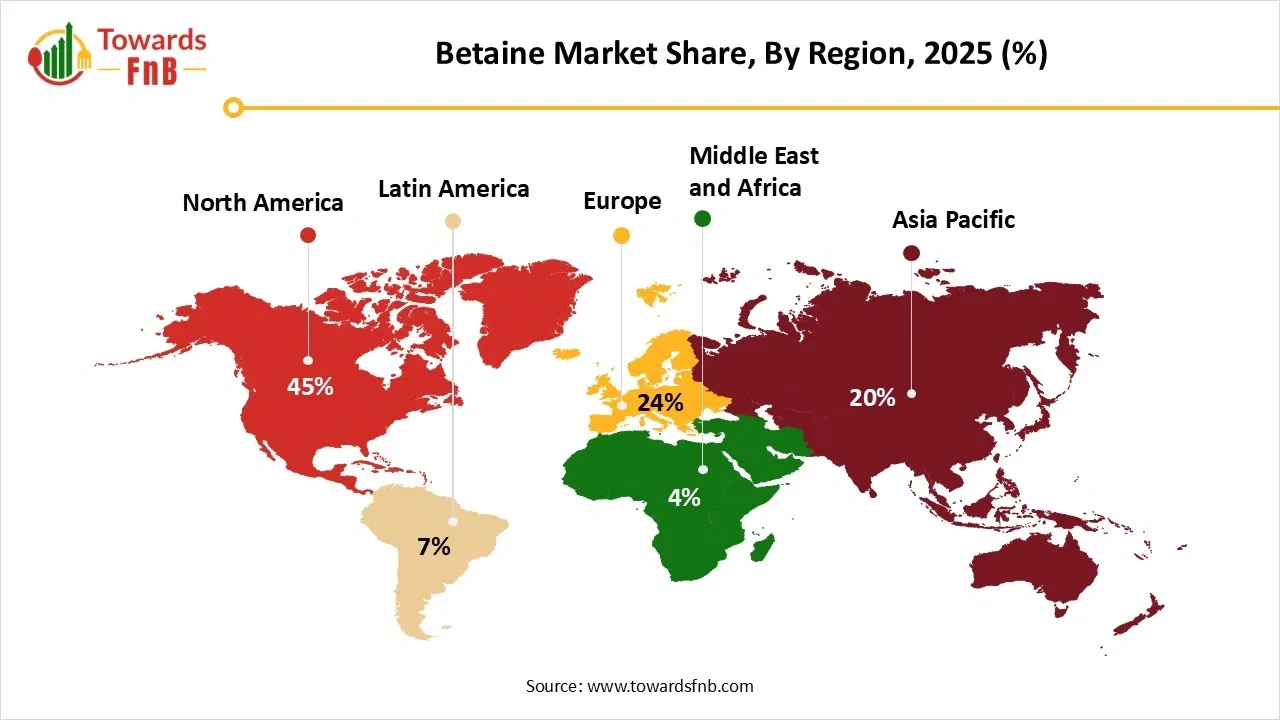
North America dominated the market in 2025. The market in North America is currently undergoing significant growth, driven by an increasing consumer awareness of health and wellness. This trend is largely influenced by a rising demand for natural ingredients in food and beverage products, as well as dietary supplements. The versatility of betaine, which finds applications in a range of sectors including animal feed, cosmetics, and pharmaceuticals, further enhances its market appeal. Moreover, regulatory support for natural additives may facilitate the expansion of this market segment. As consumers increasingly seek products that promote overall well-being, the market is expected to benefit from these evolving preferences.
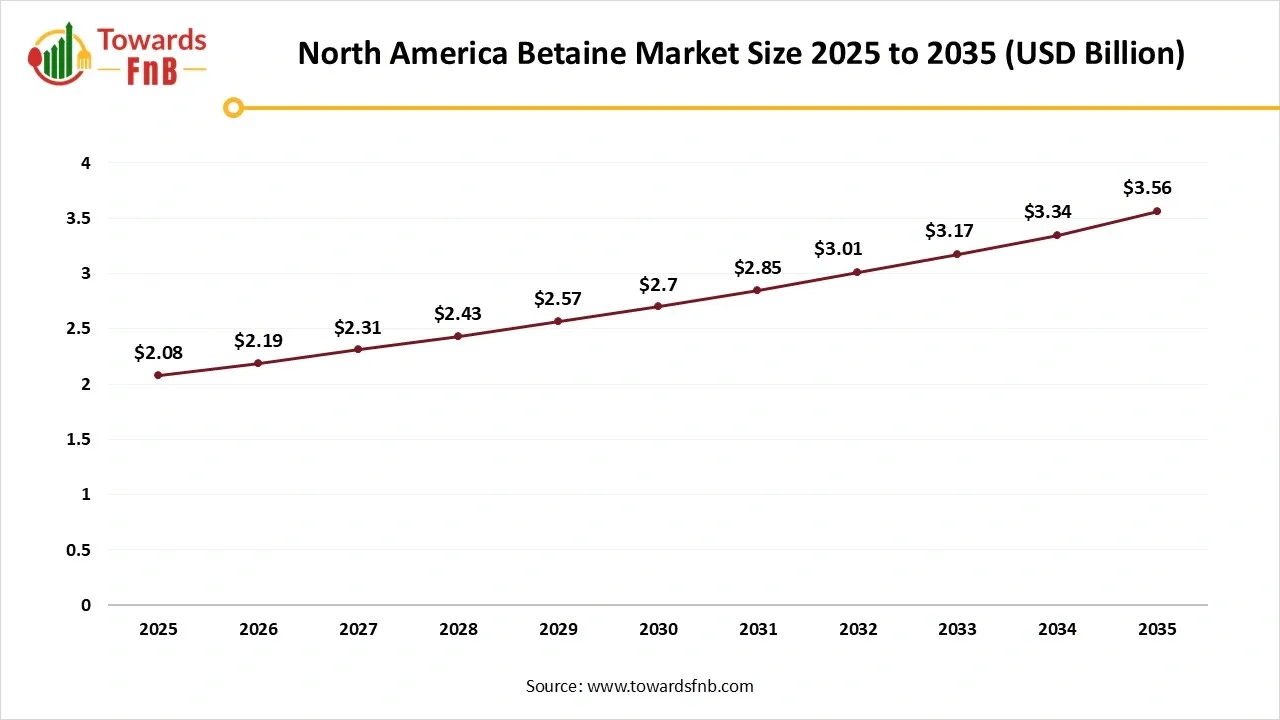
North America Betaine Market Size 2025 to 2035
The North America betaine market size was valued at USD 2.08 billion in 2025 and is expected to grow steadily from USD 2.19 billion in 2026 to reach nearly USD 3.56 billion by 2035, with a CAGR of 5.52% during the forecast period from 2026 to 2035.
United States Betaine Market
The United States betaine market, a key segment within the broader specialty chemicals and functional ingredients landscape, is experiencing robust growth due to heightened demand across various sectors such as animal nutrition, personal care, pharmaceuticals, and industrial applications. The health and wellness trend serves as a primary driver for betaine in the U.S. market, substantiating its incorporation in functional foods and dietary supplements. The sizable livestock industry in the United States utilizes betaine as an additive to enhance animal growth and feed efficiency.
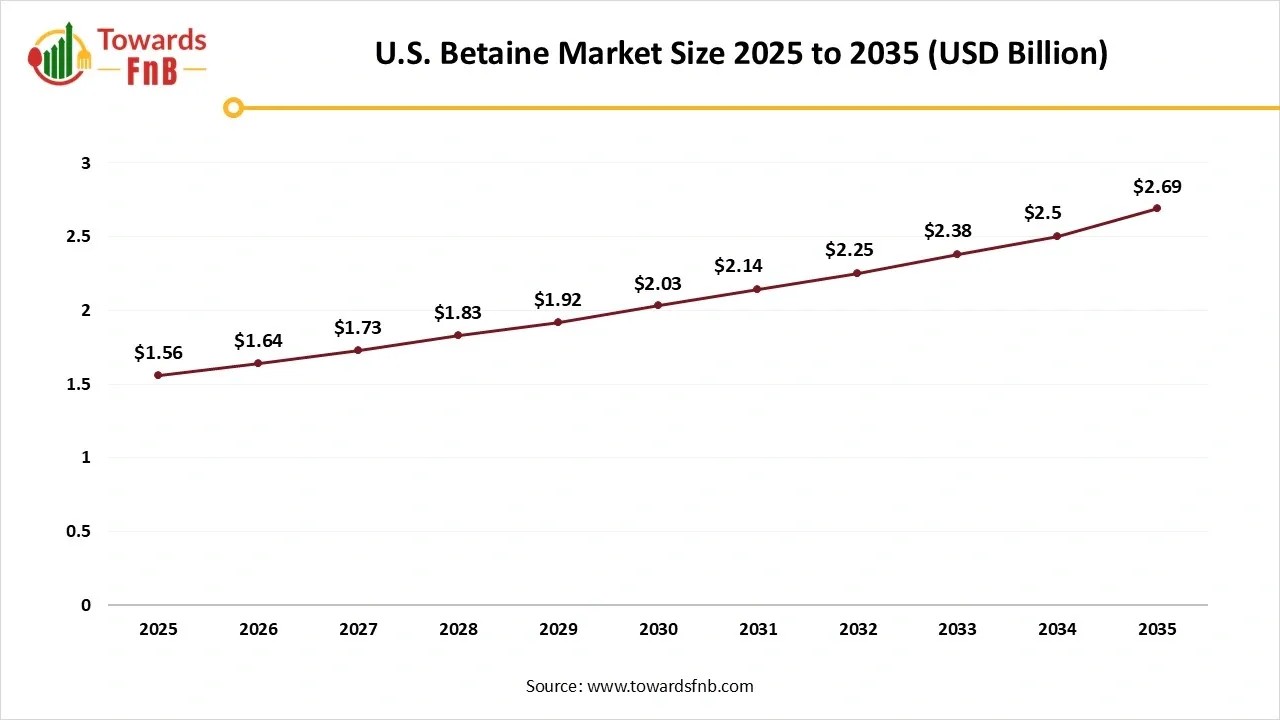
U.S. Betaine Market Size 2025 to 2035
The U.S. betaine market size was calculated at USD 1.56 billion in 2025 and is expected to grow steadily from USD 1.64 billion in 2026 to reach nearly USD 2.69 billion by 2035, with a CAGR of 5.6% during the forecast period from 2026 to 2035.
Fastest Growing Betaine Market of the Asia Pacific Region
Asia Pacific expects fastest growth during the forecast period. In the Asia-Pacific region, rapid urbanization and escalating population rates are propelling market growth. The high nutritional content of betaine has led to its use as an additive in animal feed across several countries within this region. This growth is further fueled by the increasing application of betaine in personal care products, a burgeoning pharmaceutical sector, and a rising demand from the food and beverage industries. Key markets such as China, India, Japan, and South Korea are driven by industrialization, a growing health-conscious populace, and a trend towards natural ingredients.
India Betaine Market
In India, the growing awareness of health and wellness among consumers is significantly influencing the market. As individuals become more discerning about their dietary choices, there is a discernible shift towards functional ingredients that provide health benefits. Furthermore, the increasing focus on animal health and nutrition is contributing to the expansion of the market in the country. There is a heightened demand for betaine in skincare and haircare products due to its moisturizing and anti-irritant properties. Government support for the food processing and animal husbandry sectors in India may present new opportunities for manufacturers of betaine.
European Betaine Market Growth
The growth of the nutraceuticals sector in Europe is considerably impacting the market. The rising popularity of sports nutrition represents a principal driver for the market in Europe. As fitness and athleticism gain prominence, there is an increasing demand for supplements that enhance performance and recovery. Additionally, a strong emphasis on sustainability and bio-based products in Europe, influenced in part by regulations such as the EU Green Deal, promotes the adoption of bio-based betaine.
Germany Betaine Market
The Germany expects the significant growth in the market. With increasing health consciousness among consumers, demand for natural and functional ingredients like betaine is rising. Germany's focus on sustainable sourcing and product innovation further enhances its market position, making it a key hub for betaine production and distribution within Europe.
The Middle East and Africa Betaine Market Expansion
The Betaine market across the Middle East and Africa is expanding due to several pivotal factors. The increasing demand in the animal feed sector, driven by the necessity for enhanced livestock nutrition and efficiency, is a significant contributor. Betaine's role as an effective feed additive that supports animal health and growth has led to its greater acceptance. Moreover, the growing pharmaceutical industry in the region, where Betaine is utilized for managing liver disorders and various health issues, is reinforcing market demand.
Saudi Arabia Betaine Market
In Saudi Arabia, the need for betaine is mainly fueled by its broad applications in multiple industries. In the food and beverage sector, betaine serves as a food additive to boost flavor, enhance texture, and extend shelf life. Additionally, the rising incidence of lifestyle-related health problems such as cardiovascular issues and obesity is amplifying the demand for betaine-containing pharmaceutical products in the country. The market is shaped by global pricing trends, costs of raw materials, and heightened awareness of betaine’s uses in health, wellness, and personal care. Major suppliers to Saudi Arabia include India and Malaysia.
Emerging Betaine Market of South America
The market in South America is being driven by the growing interest in biodegradable and natural beauty and personal care products. Additionally, strong demand in Brazil, Argentina, and Mexico can be attributed to expanding uses in the cosmetic and pharmaceutical fields. Furthermore, betaine is also an additive in animal feed that aids in brain development and supports the nervous system's functionality in animals. The widening applications of betaines across various sectors are boosting its demand in South America.
Mexico Betaine Market
Mexico represents a significant market within the South American betaine sector, which is driven by increasing needs for animal feed, dietary supplements, and the cosmetics and food and beverage industries. The market is anticipated to experience considerable growth, supported by government initiatives that foster sustainable agriculture and food security, along with rising consumer awareness regarding health and wellness.
Betaine Market Share, By Type, 2025 (%)
| Segments | Shares (%) |
| Synthetic | 85% |
| Natural | 15% |
Why did the Synthetic Segment Dominate the Betaine Market?
The synthetic segment led the market in 2025. Synthetic betaine is more cost-effective, scalable, and provides consistent quality compared to natural betaine. Its predictable production process ensures reliability for large-scale industrial applications in sectors such as animal feed, cosmetics, and detergents. In these industries, a stable supply chain and standardized composition are essential.
The Natural Segment is Observed to Grow at the Fastest Rate During the Forecast Period.
As consumer preference continues to shift towards clean label, plant-based, and sustainable ingredients, influenced by health and wellness trends, the demand grows. This trend is especially prevalent in the food, beverage, personal care, and dietary supplement sectors, where natural betaine is valued for its moisturizing effects, benefits to metabolic health, and the perception of being safer than synthetic options.
Betaine Market Share, By Form, 2025 (%)
| Segments | Shares (%) |
| Betaine Anhydrous | 75% |
| Cocamidopropyl Betaine | 15% |
| Betaine Monohydrate | 10% |
Which Form of Betaine Dominated the Betaine Market in 2025?
The betaine anhydrous segment held the dominating share of the market in 2025. Due to its high purity, stability, and versatility, this substance is deemed ideal for the expanding animal feed and dietary supplement industries. Its efficacy as a feed additive in animal nutrition, particularly in enhancing health and productivity, along with its applications in human health products aimed at improving liver function and sports performance, drives considerable market demand. The dry, crystalline form of the substance ensures a prolonged shelf life and stability across various applications.
The Betaine Monohydrate Segment is Expected to Experience Notable Growth During the Forecast Period.
Attributed to its extensive use in the high-demand animal feed sector, where it promotes performance and stress resilience in livestock. Additionally, its increasing integration into cosmetic and dietary supplement formulations aligns with the rising consumer preference for natural and functional ingredients.
Cocamidopropyl betaine (CAPB) is a rapidly growing segment of the market. It is a mild and versatile surfactant that is commonly used in personal care products such as shampoos and body washes. CAPB aligns with consumer demand for gentle, effective, and plant-derived ingredients. It produces a rich lather, enhances foam, and is compatible with sensitive skin, making it a preferred choice for formulators compared to harsher alternatives like sulfates.
Betaine Market Share, By Application, 2025 (%)
| Segments | Shares (%) |
| Food & Beverages | 55% |
| Animal Feed | 20% |
| Cosmetics | 15% |
| Detergents | 10% |
How did the Food and Beverage Segment Dominate the Betaine Market?
The food and beverages segment dominated the market with the largest share in 2025. Several factors contribute to the increasing demand for betaine, including a rising consumer interest in natural and functional ingredients, its numerous health benefits, and its versatility as a food additive. Betaine is used in products like sports drinks and dietary supplements to enhance their nutritional value. Moreover, the growth of the functional food has significantly boosted its demand.
CLR Berlin
VMI Sports
IFF
By Type
By Form
By Application
By Region





Principal Consultant
Vidyesh Swar, Senior Research Analyst at Towards Food & Beverages, specializes in market research, focusing on supply-demand evaluation, pricing analysis, alternative proteins, plant-based foods, and sustainable food technologies within the industry.
Learn more about Vidyesh Swar
Reviewed By
Aditi Shivarkar, with 14+ years in Food and Beverages market research, specializes in food, beverage, and eco-friendly packaging. She ensures accurate, actionable insights, driving Towards FnB's excellence in industry trends and sustainability.
Learn more about Aditi ShivarkarApril 2026
April 2026
April 2026
April 2026

Betaine Market


 +1 804-441-9344
 Download Sample
 Schedule a Meeting