April 2026



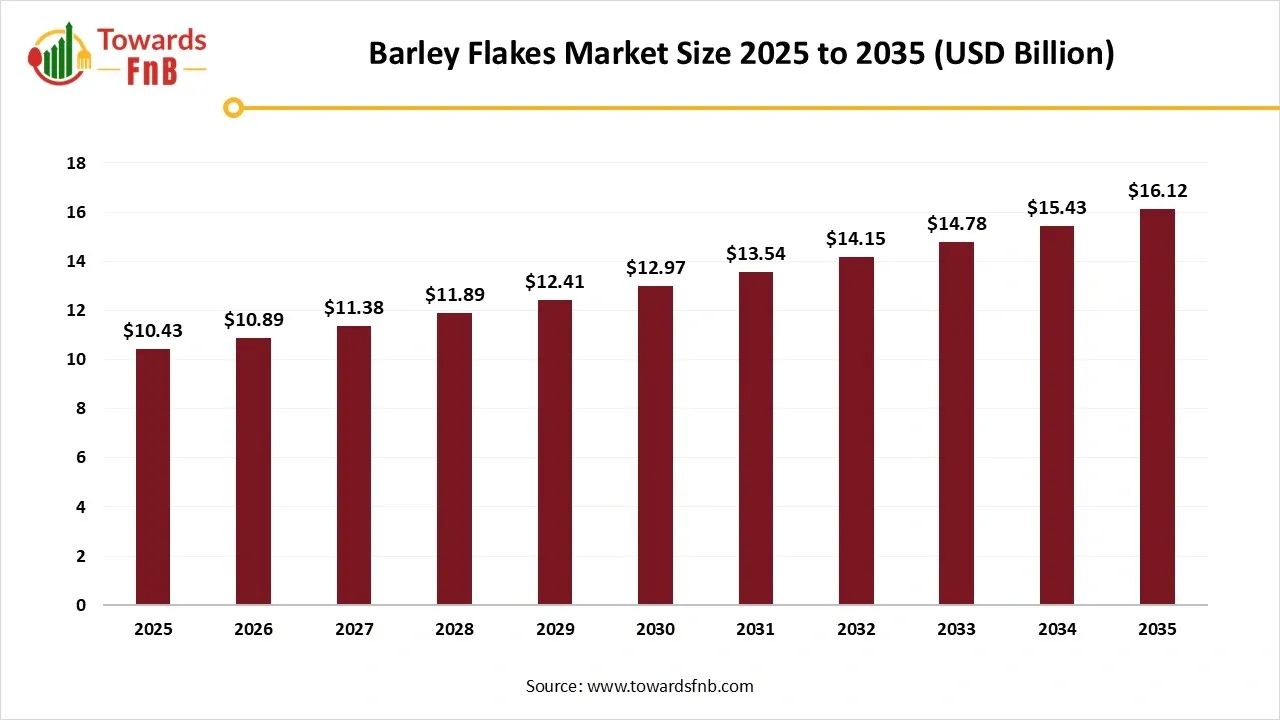
The global barley flakes market size reached at USD 10.43 billion in 2025 and is anticipated to increase from USD 10.89 billion in 2026 to an estimated USD 16.12 billion by 2035, witnessing a CAGR of 4.45% during the forecast period from 2026 to 2035. The market is driven by the increasing consumer preference towards nutritious and healthy on-the-go snacks.
| Study Coverage | Details |
| Growth Rate from 2026 to 2035 | CAGR of 4.45% |
| Market Size in 2026 | USD 10.89 Billion |
| Market Size in 2027 | USD 11.38 Billion |
| Market Size by 2035 | USD 16.12 Billion |
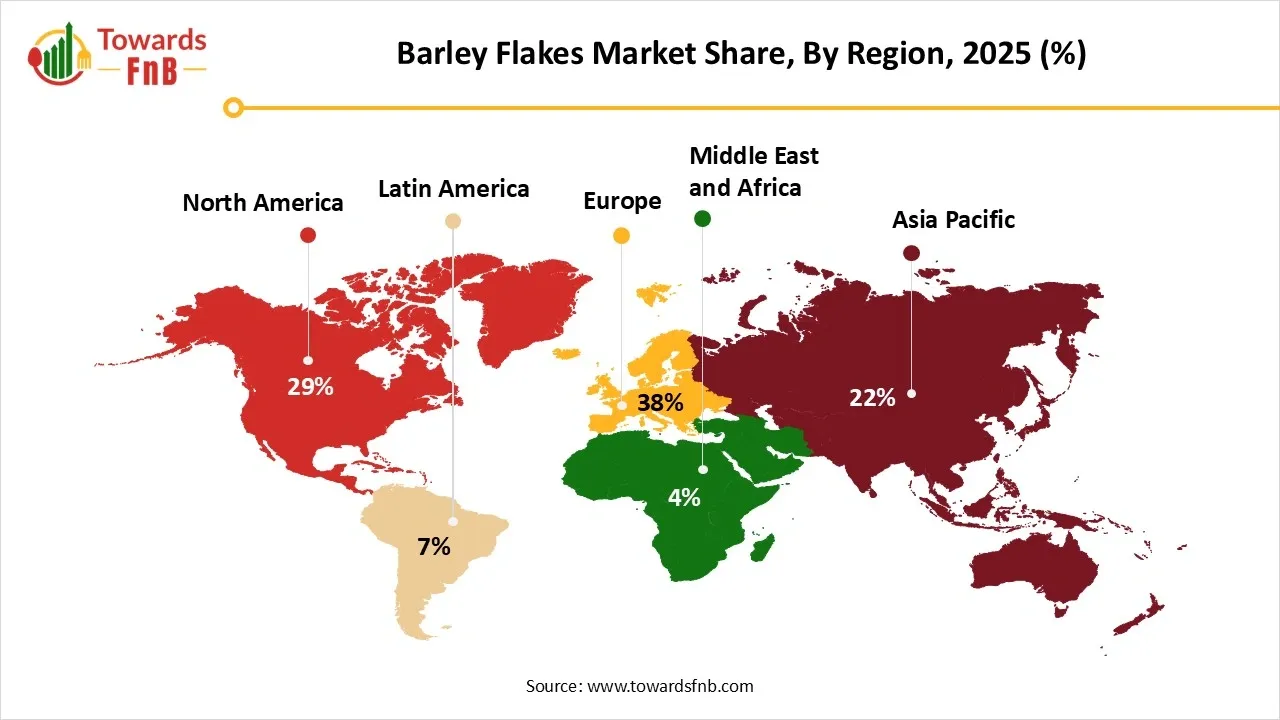
| Largest Market | Europe |
| Base Year | 2025 |
| Forecast Period | 2026 to 2035 |
| Regions Covered | North America, Europe, Asia-Pacific, Latin America, and Middle East & Africa |
The barley flakes are a good source of fiber, protein and other ingredients and basically made from whole grain or pearled barley kernels. These flakes are generally utilized as ingredients in products including bread, cookies, muffins, and others. The factors such as increasing awareness about the blood sugar level and cholesterol of the body, increasing prevalence of chronic diseases, increasing demand for nutritious breakfast and increasing awareness about the nutritional properties of barley flake.
The barley flakes market growth is also driven by factors such as the increasing consumer preference towards sustainable and healthy ingredients, rising constant innovations and developments by several well-developed manufacturers, and increasing popularity of gluten-free and plant-based diets. In addition, increasing demand for convenient breakfast options, growing food and beverages industry, increasing versatility of barley in several culinary uses and increasing consumer interest towards nutritious and health foods, which further expected to drive the market growth during the forecast period.
The rise of technological advancements in the barley flakes industry focuses on packaging, quality enhancement, and processing. The rising innovations such as optimized steam-rolling and using infrared/micronization to enhance shelf life, texture and quality. In addition, modernization also includes utilizing inline sensors to ensure product safety and consistency. To enhance food safety and extend, smart packaging with freshness indicators is being established. Furthermore, with the help of new applications, companies are using barley flakes in a huge range of products, including meat substitutes, energy bar and plant-based food products, which further revolutionize the growth of the barley flakes market in the coming years.
Raw Material Procurement
Packaging and Branding
Waste Management and Recycling
| Country | Regulatory Body | Key Regulations | Focus Areas | Notable Notes |
| India | Food Safety and Standards Authority of India (FSSAI) | Food Safety and Standards (Packaging and Safety Regulations) and Licensing and Registration of Food Businesses) | The barley flakes market focuses on health and wellness sector, enhanced by nutritional profile and sustainability and health and wellness. The market also focuses on consumer demand for plant-based, whole-grain and nutritious food options. | Barley flakes are highly utilized in the whole-grain and plant-based food options for their capacity to enhance the efficiency, consistency and quality of high-quality foods, to enhance nutritional profile system and health and wellness. |
Why is Europe Dominating the Barley Flakes Market Revenue in 2025?
Europe dominated the global market revenue in 2025. The market growth in the region is driven by factors such as the increasing consumer health awareness, increasing popularity of clean-label and organic products, increasing consumer trend towards plant-based and whole grain diets and increasing consumer awareness towards health benefits of barley, including its low glycemic index and high fiber content. Europe supported by a robust food processing industry and strong agricultural infrastructure. Major trends such as increasing demand for both organic and conventional flakes, used in several food products such as breakfast beverages and cereals. The UK, France and Germany are dominating countries driving the market growth.
Europe Barley Flakes Market Size 2025 to 2035
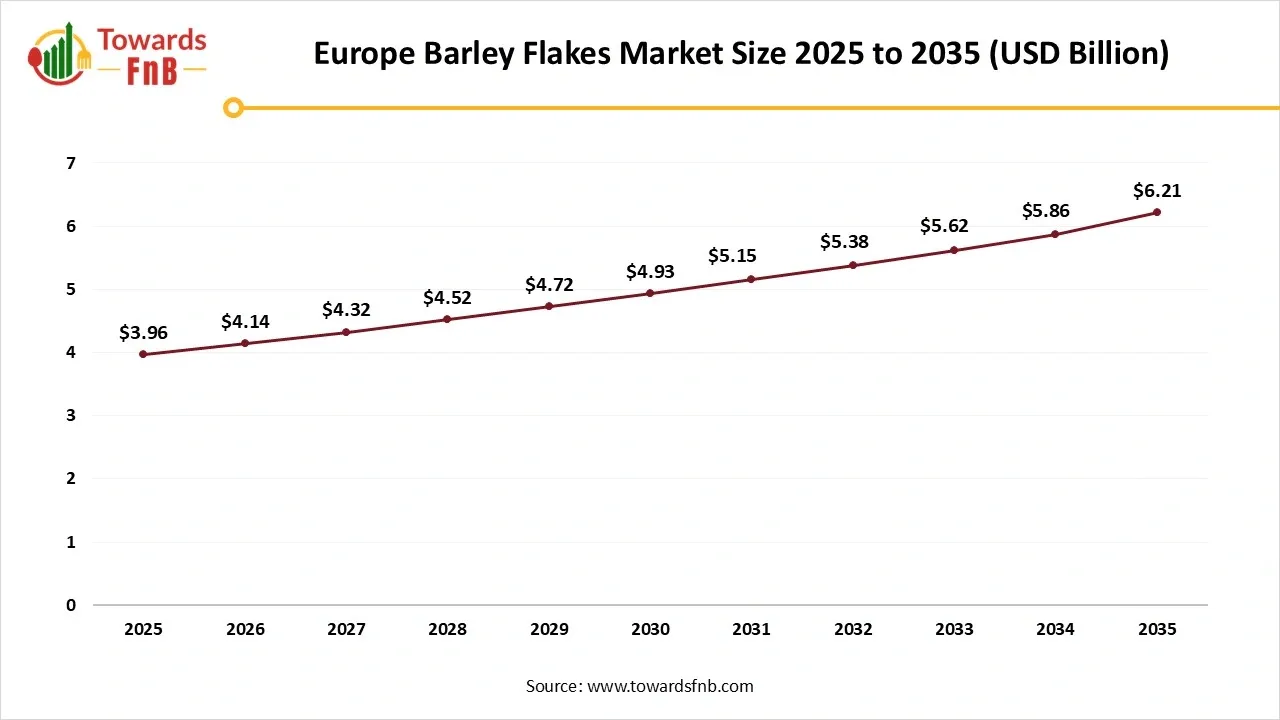
The Europe barley flakes market size was valued at USD 3.96 billion in 2025 and is anticipated to increase from USD 4.14 billion in 2026 to an estimated USD 6.21 billion by 2035, witnessing a CAGR of 4.6% during the forecast period from 2026 to 2035.
Germany Barley Flakes Market Trends
Germany dominated the barley flakes industry revenue in 2025. The market growth in the country is attributed to the increasing consumer trend toward plant-based diets, organic products and whole grains, increasing preference towards high-fiber and healthy foods such as baked goods, granola and breakfast options.
Asia Pacific Expects the Fastest Growth in the Market During the Forecast Period
The market growth in the region is driven by factors such as rising innovation in barley-based products such as gluten-free options and beverages, increasing shift towards Western breakfast cereals, increasing demand for convenient and healthy foods, increasing popularity of plant-based diets, rapid urbanization and increasing consumer health awareness. India, China, Japan and South Africa are the fastest growing countries driving the market growth.
India Barley Flakes Market Trends
India is expected to grow fastest during the forecast period. Major drivers such as increasing health awareness, increasing demand for nutritious and convenient breakfast options in urban areas, increasing busy lifestyles and the increasing popularity of traditional India dishes and gluten-free alternatives that use barley flakes such as barley khichdi, barley roti, sattu and dalia. The market is also supported in India by various manufacturers and suppliers, with prices varying based on packaging, processing and brand.
North America Expects the Notable Growth During the Forecast Period
The market growth in the region is driven by factors such as the increasing versatility of the product in various applications from cereals to baked goods and snacks, increasing demand for gluten-free options, and increasing popularity of barley flakes for their cholesterol and fiber-lowering benefits and increasing consumer demand for plant-based, whole-grain and healthy foods. Major players in the region are expanding distribution and innovating products, further increase the demand for barley flakes in the region. The U.S. and Canada are the notable countries driving the market growth.
The U.S. Barley Flakes Market Trends
The market trends in the U.S. is driven by factors such as the increasing shift towards plant-based diets, increasing focus on fiber and whole grains, increasing popularity of gluten-free, whole-grain and plant-based options, and increasing demand for convenient, increasing health awareness and healthy foods such as snacks and breakfast cereals.
Why are the Middle East and Africa being Driving the Barley Flakes Market in 2025?
The market growth in the region is driven by the increasing adoption of barley in both animal feed and human food, the rise of online sales, increasing versatility of barley flakes in animal feed and food, demand for whole grains and increasing consumer health awareness. South Africa, UAE, Saudi Arabia and Kuwait are the major countries fueling the market growth.
South Africa Barley Flakes Market Trends
The market for barley flakes in South Africa is growing, driven by the increasing popularity of plant-based diets, increasing demand for convenient foods and healthy breakfast options, increasing consumer awareness of barley’s nutritional benefits, increasing demand for easy-to-prepare and quick foods and increasing trend towards whole-grain and plant-based diets.
What Factors Help Barley Flakes Market to Grow in South America
The market growth in the region is driven by factors such as the rising product development such as fortified and gluten-free varieties, increasing adoption of organic and sustainable farming practices, increasing awareness of barley’s health benefits, including ability to help with heart digestion and health and increasing demand for healthy and convenient foods, particularly nutritious breakfast options.
Mexico Barley Flakes Market Trends
The market growth in Mexico is driven by factors such as the increasing demand for nutritious food options, increasing government initiatives promoting barley flakes consumption, increasing health awareness, increasing consumer interest towards organic options.
Barley Flakes Market Share, By Product, 2025 (%)
| Segments | Shares (%) |
| Conventional | 80% |
| Organic | 20% |
Why is Conventional Segment Dominating the Barley Flakes Market?
The conventional segment dominated the global market revenue in 2025. The segment growth in the global market is driven by the increasing versatility of the barley flakes in several culinary applications, increasing popularity of plant-based diets, and increasing demand for healthy whole grains. In addition, to keep the production costs lower, conventional barley flakes use traditional farming methods with chemical fertilizers. There is a increasing awareness of the health advantages of barley, including its high mineral, vitamin and fiber content, which may prevent chronic diseases and helps with digestion, which may increase the demand for whole grains.
The Organic Segment Expected the Fastest Growth During the Forecast Period.
The significance of organic barley flakes in the market is driven by consumer demand for natural and healthier products that attracts a health-aware consumer, who are willing to pay a premium costs. The segment growth is also driven by increasing consumer preference for sustainable and clean-label options and increasing consumer awareness of the environmental and health benefits related with foods grown without synthetic fertilizers and pesticides. In addition, organic barley flakes are pure option and perceived as a more healthful, which may expect to drive the market growth.
Barley Flakes Market Share, By Distribution Channel, 2025 (%)
| Segments | Shares (%) |
| Convenience Stores | 10% |
| Supermarket/Hypermarket | 75% |
| Online | 15% |
How Does Supermarkets or Hypermarkets Dominating the Barley Flakes Market?
The supermarket and hypermarket segment dominated the barley flakes market revenue in 2025. The segment growth in the market is driven by factors such as increasing popularity of gut-health focused foods, increasing demand for non-GMO and organic products, increasing demand for convenient and versatile food for convenience food and plant-based diets such as granola bars and cereals, increasing consumer awareness of barley’s nutritional benefits and consumer awareness towards health and wellness. In addition, hypermarkets or supermarkets enabling consumers to conveniently choose and compare from various brands and provide a huge range of products. The capability to physically purchase and inspect products also improves the shopping experience, contributing to increase the demand for supermarket or hypermarkets.
The Online Retail Segment Expects the Fastest Growth During the Forecast Period.
The online retail segment is driven by convenience of online shopping, which enables consumers to conveniently purchase and explore barley flakes from the comfort of their house. The increasing integration of internet access and smartphones to a huge consumer base. Online platforms often offer detailed competitive pricing, consumer reviews and product descriptions, further enhancing the shopping experience. In addition, the increasing option for home delivery and ability to compare various brands also contribute to the increasing popularity of barley flakes.
The convenience stores segment is expected to grow at a notable rate during the forecast period. Convenience stores play an important role the market for offering on-the-go and impulse purchase opportunities, particularly in urban areas, due to their extended hours and accessibility. Convenience stores provide a vital channel for consumers to make desire purchases, particularly for products such as barley flakes that are considered as a convenient breakfast option and healthy snack.
Kellanova
Fuel10k
By Product
By Distribution Channel
By Region




Principal Consultant
Vidyesh Swar, Senior Research Analyst at Towards Food & Beverages, specializes in market research, focusing on supply-demand evaluation, pricing analysis, alternative proteins, plant-based foods, and sustainable food technologies within the industry.
Learn more about Vidyesh Swar
Reviewed By
Aditi Shivarkar, with 14+ years in Food and Beverages market research, specializes in food, beverage, and eco-friendly packaging. She ensures accurate, actionable insights, driving Towards FnB's excellence in industry trends and sustainability.
Learn more about Aditi ShivarkarApril 2026
April 2026
April 2026
April 2026

Barley Flakes Market


 +1 804-441-9344
 Download Sample
 Schedule a Meeting