April 2026



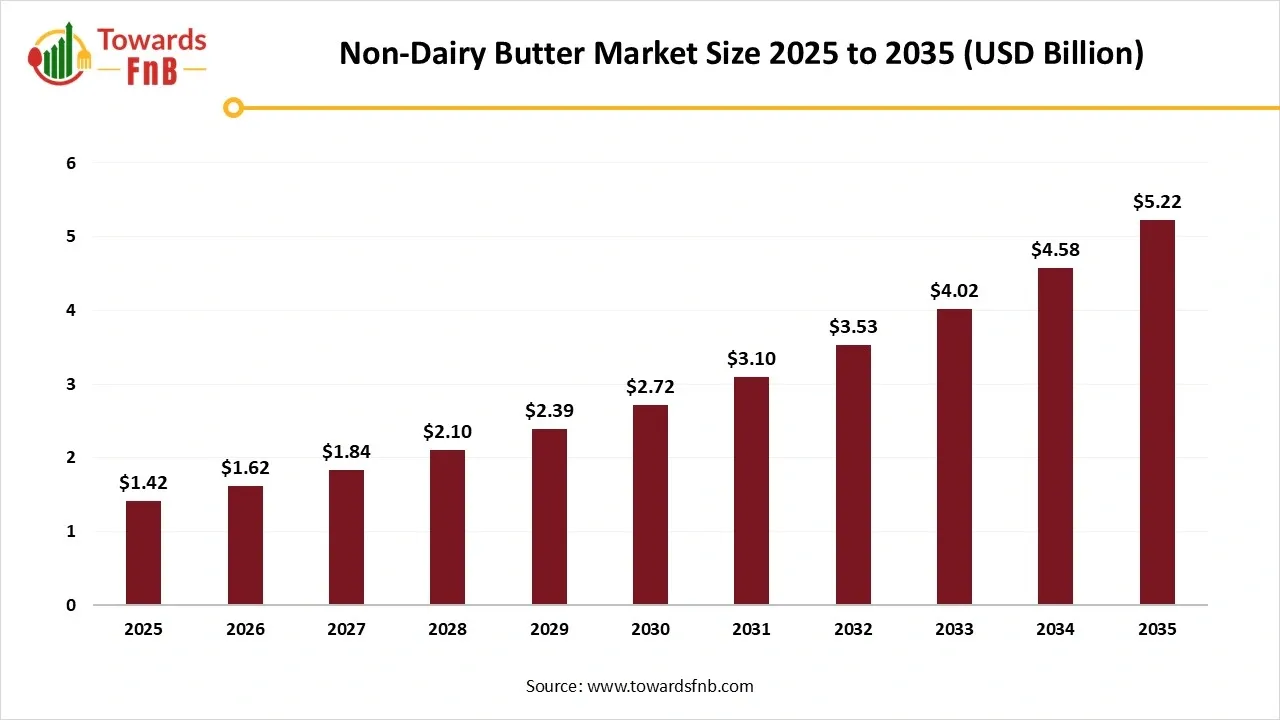
The global non-dairy butter market size reached at USD 1.42 billion in 2025 and is predicted to increase from USD 1.62 billion in 2026 to nearly reaching USD 5.22 billion by 2035, growing at a CAGR of 13.9% during the forecast period from 2026 to 2035. The market is growing rapidly due to increasing demand for plant-based and dairy-free options.
| Study Coverage | Details |
| Growth Rate from 2026 to 2035 | CAGR of 13.9% |
| Market Size in 2026 | USD 1.62 Billion |
| Market Size in 2027 | USD 1.84 Billion |
| Market Size by 2035 | USD 5.22 Billion |
| Largest Market | North America |
| Base Year | 2025 |
| Forecast Period | 2026 to 2035 |
| Regions Covered | North America, Europe, Asia-Pacific, Latin America, and Middle East & Africa |
The non-dairy butter market refers to the global industry that produces butter substitutes made from plant-based ingredients, such as coconut, avocado, and olive oil, which aim to replicate conventional dairy butter. This market is experiencing growth due to increased consumer demand driven by ethical, health, and environmental concerns. Factors contributing to this demand include a rise in lactose intolerance and a shift towards plant-based diets. The market encompasses products like vegan and plant-based butters, and it continues to expand as brands introduce more innovative options for both retail and professional use.
Technological advancements in food processing have enabled manufacturers to more closely mimic the texture, flavor, and mouthfeel of dairy butter. These innovations have expanded the consumer market by enhancing product quality and consistency. Key developments include advancements in ingredient science, processing methods, and entirely new fat production techniques. Innovations in non-dairy butter focus on achieving a sensory experience comparable to traditional dairy butter, improving functionality for cooking and baking, and enhancing sustainability with novel production practices. By utilizing traditional creamery techniques, companies are employing fermentation processes with live cultures on plant bases like cashew or oat milk to create the complex, tangy flavor profile and aroma typical of high-quality dairy butter.
Why did the North America Region Dominate the Non-Dairy Butter Market?
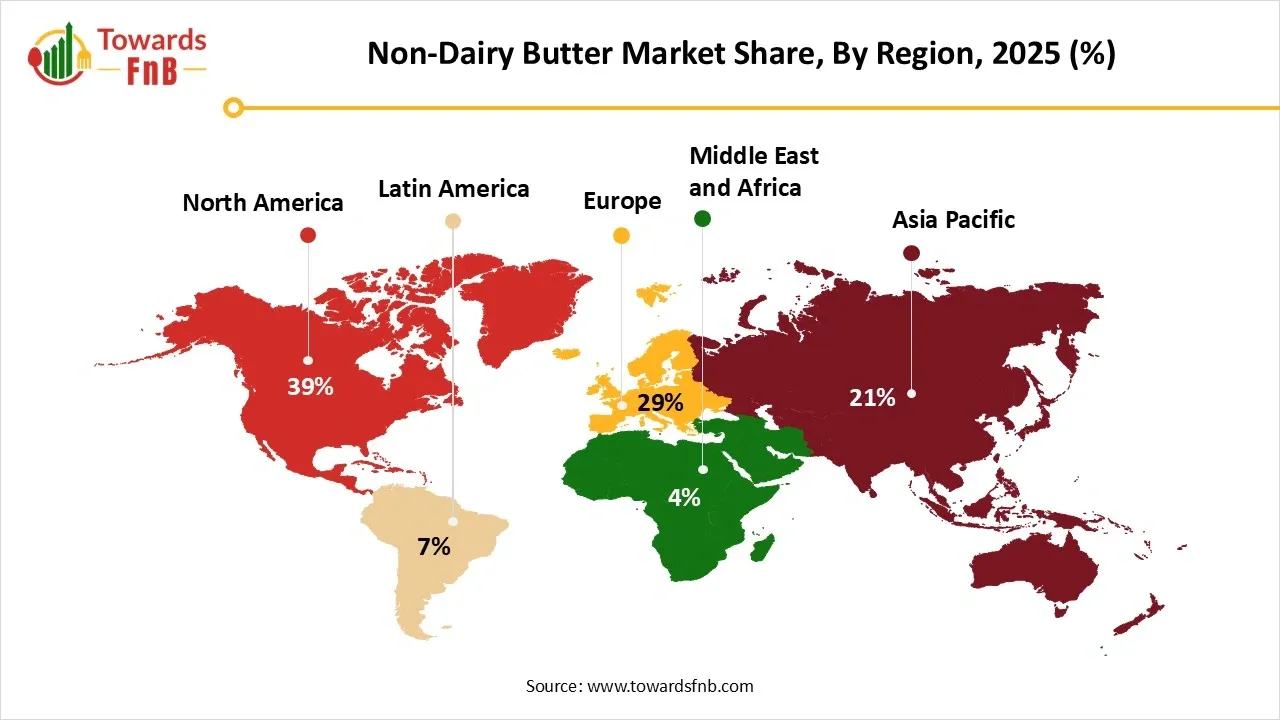
North America dominated the market in 2025. The North American non-dairy butter market is a significant and expanding area, spurred by heightened health awareness, the rise of plant-based diets, and increased lactose intolerance recognition. Consumers are becoming more concerned about the environmental effects of dairy farming and animal welfare, steering them towards plant-based options viewed as more sustainable and ethical. Companies are actively working to enhance the flavor, texture, and nutritional content of non-dairy butters, making them more competitive and attractive to a broader audience.
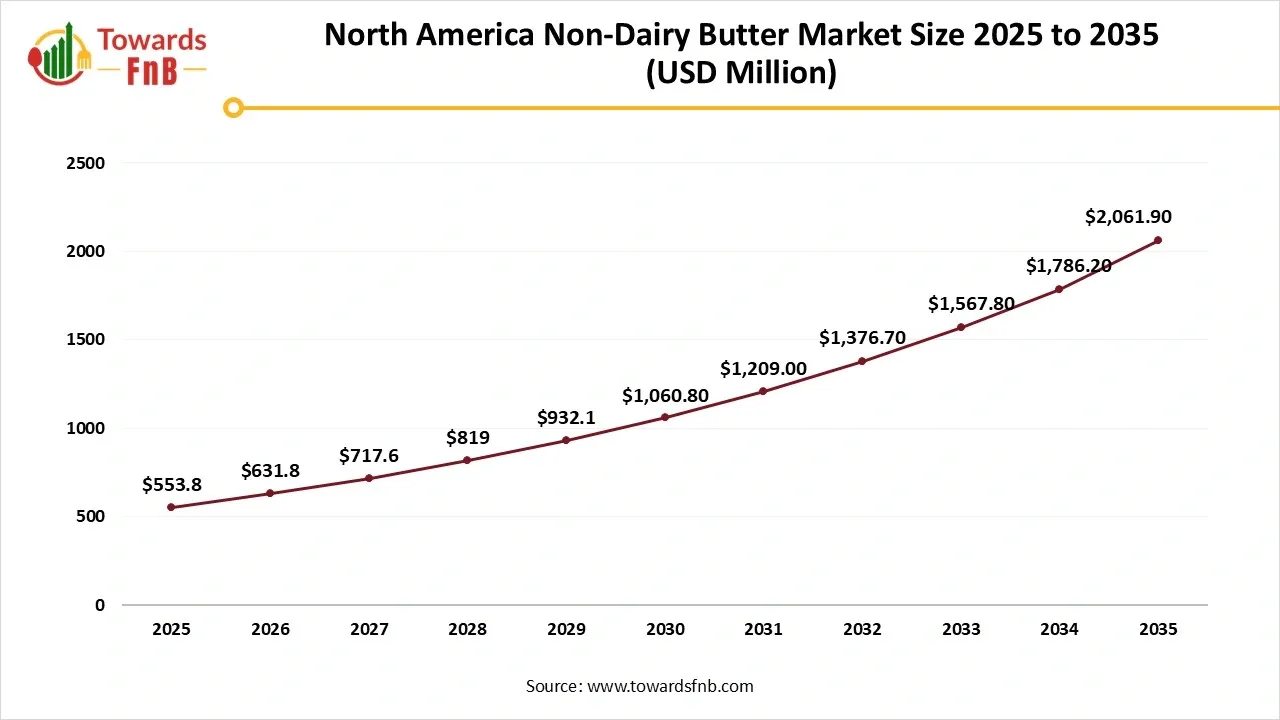
North America Non-Dairy Butter Market Size 2025 to 2035
The North America non-dairy butter market size was valued at USD 553.8 million in 2025 and is predicted to increase from USD 631.8 million in 2026 to nearly reaching USD 2,061.9 million by 2035, growing at a CAGR of 14.05% during the forecast period from 2026 to 2035.
United States Non-Dairy Butter Market
The non-dairy butter market in the United States has emerged as a dynamic sector within the broader plant-based and alternative dairy industry. This growth is attributed to increasing consumer awareness regarding health, sustainability, and dietary restrictions. Non-dairy butters comprised of almond, cashew, coconut, and other nut or seed-based spreads are experiencing significant expansion. Noteworthy investments are being directed toward companies such as Savor, which employs carbon-capture technology, alongside a notable trend of traditional dairy firms introducing their own plant-based butter alternatives. Major dairy enterprises, such as Land O'Lakes, are responding to evolving consumer preferences by launching their own plant-based options.
Asia Pacific: The Fastest-Growing Region
Asia Pacific is expected to be the fastest growing market for non-dairy butter, propelled by increasing health consciousness, high incidences of lactose intolerance, and expanding retail availability. Contributing factors to this trend include rising disposable income, urbanization, and product innovation. In this region, there is a remarkable transition in consumer behavior, characterized by an enhanced focus on health and wellness. A growing number of individuals are actively seeking nutritious and functional food products to foster healthier lifestyles.
India's Non-Dairy Butter Market
In India, the market is expanding steadily, as awareness of health, environmental, and ethical concerns continues to rise. Urban consumers, particularly in metropolitan areas, exhibit a strong interest in plant-based products due to an upsurge in lactose intolerance, diabetes, and heart-related conditions. Currently, approximately 60% of India's population experiences lactose intolerance, and around 9% of the population has adopted vegan dietary habits.
Europe's Non-Dairy Butter Market Expansion
In Europe, individuals diagnosed with heart diseases, obesity, or diabetes are frequently advised to adhere to fat-free diets and limit their intake of dairy products. The increase in expenditure on functional and health-oriented foods that bolster the immune system, combined with a greater emphasis on clean-label and vegan products, is propelling sales of plant-based snacks, spreads, dips, creamers, sauces, cheese, and other food and beverages. These factors are instrumental in driving growth within the European non-dairy butter market. Additionally, there is a heightened awareness of animal welfare, health implications, and environmental concerns associated with milk production, which serves as a raw material in traditional butter manufacturing, resulting in a significant shift in demand within the European non-dairy butter sector.
Non-Dairy Butter Market of Germany
Germany's increasing acknowledgement of lactose intolerance as a prevalent health issue is fundamentally transforming dairy consumption patterns across various demographic segments. The German consumer landscape has witnessed significant growth in the adoption of plant-based diets, driven by generational shifts and changing food cultural norms. Notably, a prominent supermarket group, which operates Penny in Germany and Billa in Austria, reported that vegan products constituted 54% of its sales in 2024. These factors are driving market in Germany.
Middle East and Africa Non-Dairy Butter Market Analysis
In the Middle East and Africa, there is currently a marked increase in the demand for ethical and sustainable food options. This trend is significantly contributing to the expansion of the market. Growing concerns regarding animal welfare, environmental sustainability, and personal health are motivating consumers to seek plant-based alternatives. In response to this heightened awareness, an increasing variety of dairy-free butter options are emerging to accommodate evolving consumer preferences within the region. Key international companies are actively engaged in developing and expanding the non-dairy butter market throughout the region.
South Africa Non-Dairy Butter Market
In South Africa, the market is undergoing a significant transformation due to shifting consumer preferences favoring natural and healthful foods. An enhanced understanding of the heart-healthy fats and protein content inherent in nut butter is driving demand among health-conscious consumers. Government initiatives aimed at promoting healthy eating and dietary guidelines further bolster this trend. Moreover, the expansion of South Africa's e-commerce industry is providing nut butter manufacturers with platforms to engage a broader audience, thereby facilitating convenient purchases and increasing product visibility.
Growing Non-Dairy Butter Market in South America
The non-dairy butter market in South America is primarily driven by rising consumer awareness concerning health and wellness, leading to increased demand for plant-based products. The rising prevalence of lactose intolerance and dairy allergies further propels the transition towards these alternatives. Additionally, the growing adoption of vegan and vegetarian lifestyles, alongside concerns over the environmental impact of traditional dairy farming, influences market growth.
Brazil Non-Dairy Butter Market
Brazil serves as a pivotal growth hub in South America for non-dairy butter, propelled by urban segments of vegan, flexitarian, and health-conscious consumers. Awareness of issues related to animal welfare, carbon emissions, and deforestation fosters the demand for plant-based spreads. Advances in product taste, texture, shelf life, and nutritional fortification contribute to enhanced consumer acceptance. Furthermore, online grocery channels and modern retail chains augment accessibility and affordability within this market.
Non-Dairy Butter Market Share, By Source, 2025 (%)
| Segments | Shares (%) |
| Soy | 50% |
| Peanut | 20% |
| Pistachio | 6% |
| Cashew | 4% |
| Almond | 12% |
| Others | 8% |
How did the Soy Segment Dominate the Non-Dairy Butter Market?
The soy segment dominated the market in 2025. Soy butter has several positive attributes derived from soybeans. It provides a well-balanced source of protein that is particularly high in lysine and contains all the essential amino acids needed for both children and adults. Soy butter, especially soynut butter spreads, is popular as a peanut-free alternative for those with nut allergies.
The Peanut Butter Segment is Experiencing the Fastest Growth During the Forecast Period
Peanut butter is a concentrated source of nutrition that offers various health benefits. It contains oleic acid and omega-6 fatty acids, which may help reduce the body’s insulin resistance. The increased demand for peanut butter reflects a broader trend towards healthier, low-calorie, and fiber-rich food products across different demographics, showcasing a shift in consumer preferences towards health and wellness.
The cashew segment is also growing rapidly during this forecast period. Cashews are rich in fiber, antioxidants, vitamins, and minerals. Many manufacturers are introducing new cashew nut butter products in various flavors to attract consumers, which has further fueled market growth. Online retail platforms are expanding access to a wider variety of cashew butter products, reaching a broader consumer base.
Non-Dairy Butter Market Share, By Distribution Channel, 2025 (%)
| Segments | Shares (%) |
| B2B | 7% |
| B2C | 60% |
| Supermarkets/Hypermarkets | 6% |
| Convenience Stores | 3% |
| Grocery Stores | 4% |
| Online Sales Channels | 20% |
Which Distribution Channel Dominated the Non-Dairy Butter Market?
The B2C segment accounted for the largest share of market in 2025. This dominance is largely due to the widespread availability of plant-based butter in retail outlets such as supermarkets, hypermarkets, and online platforms. Growing health consciousness and the rise of veganism have increased consumer demand for plant-based butter for home use, particularly in cooking and baking. The convenience and variety offered through B2C channels make them the preferred choice for individual consumers.
The Online Channels Segment Expects the Significant Growth During the Forecast Period
E-commerce platforms can provide a much wider range of non-dairy butters, such as those made from almond, cashew, coconut, and oat and flavors compared to the limited shelf space available in physical stores. Online shopping offers the added convenience of doorstep delivery, which is especially appealing to busy consumers.
Maison Linotte
UnButter
Savor
By Source
By Distribution Channel
By Region




Principal Consultant
Vidyesh Swar, Senior Research Analyst at Towards Food & Beverages, specializes in market research, focusing on supply-demand evaluation, pricing analysis, alternative proteins, plant-based foods, and sustainable food technologies within the industry.
Learn more about Vidyesh Swar
Reviewed By
Aditi Shivarkar, with 14+ years in Food and Beverages market research, specializes in food, beverage, and eco-friendly packaging. She ensures accurate, actionable insights, driving Towards FnB's excellence in industry trends and sustainability.
Learn more about Aditi ShivarkarApril 2026
April 2026
April 2026
April 2026

Non-Dairy Butter Market

 +1 804-441-9344
 Download Sample
 Schedule a Meeting