April 2026



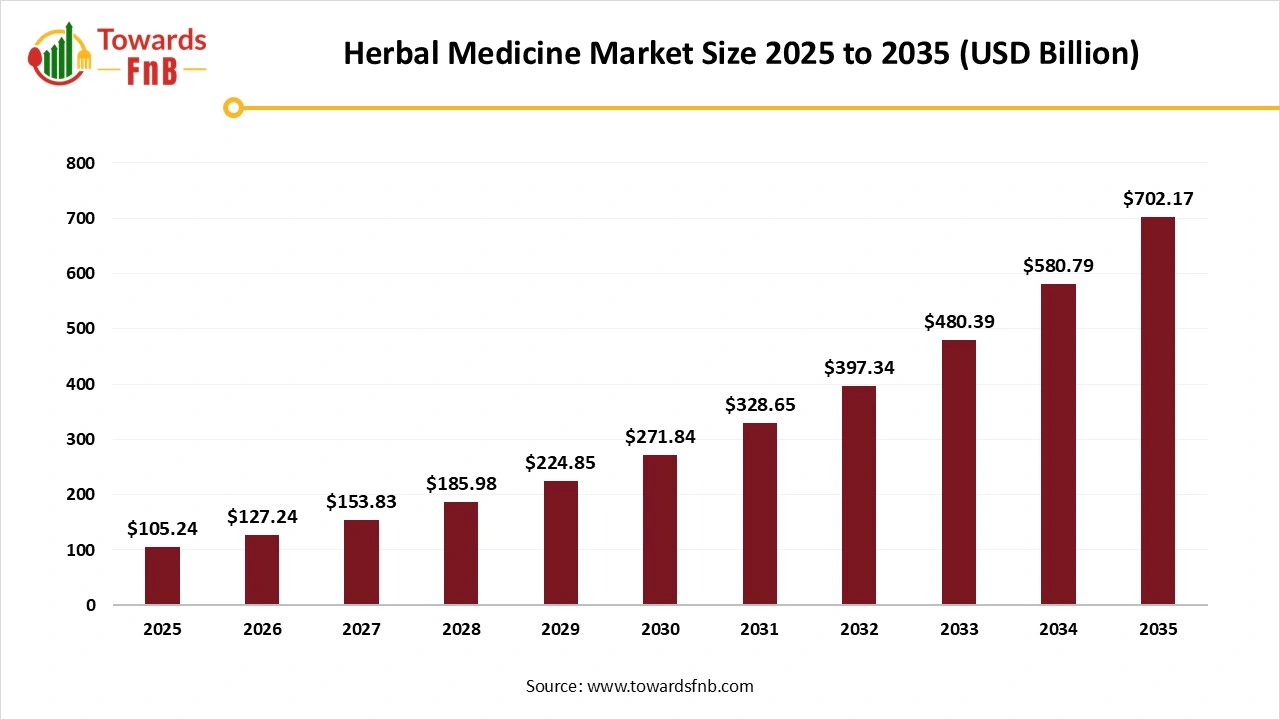
The global herbal medicine market size reached at USD 105.24 billion in 2025 and is predicted to increase from USD 127.24 billion in 2026 to reach approximately USD 702.17 billion by 2035, expanding at a CAGR of 20.9% from 2026 to 2035. The growth factor linked with herbal medicine is rising awareness of side effects from synthetic drugs, which drives demand for herbal alternatives. Consumers are growing increasingly concerned about the bad outcomes that are driving the growth of the market.
| Study Coverage | Details |
| Growth Rate from 2026 to 2035 | CAGR of 20.9% |
| Market Size in 2026 | USD 127.24 Billion |
| Market Size in 2027 | USD 153.83 Billion |
| Market Size by 2035 | USD 702.17 Billion |
| Largest Market | Europe |
| Base Year | 2025 |
| Forecast Period | 2026 to 2035 |
| Regions Covered | North America, Europe, Asia-Pacific, Latin America, and Middle East & Africa |
Herbal Medicine, which is also known as herbalism or herbal studies comprises botanicals for health and wellness. Pharmacognosy is the study or having knowledge of “medicinal substances originating from botanical and specifically elements obtained from plants”. The World Health Organization states that nearly 40% of pharmaceutical products in the current state are made up of natural and synthetic knowledge, which includes landmark drugs like artemisinin, aspirin, and childhood cancer treatment. On the other hand, historically, herbalists pursue the philosophy of wellness, which considers a person’s holistic demands, such as emotional, spiritual, and physical, as well as their personal levels of stress and other external factors.
Herbal medicine market shows promising growth factors associated with therapeutic factors with bioactive compounds, which communicate with biological systems to produce a huge range of pharmacological effects. Several herbal products have anti-inflammatory characteristics for adjusting inflammatory pathways. For instance, curcumin, which is an active compound found in turmeric, includes pro-inflammatory mediators like cytokines and prostaglandins. Herbs like berries, green tea, and grape seed extract are high in polyphenols and flavonoids, which counterbalance free radicals and lessen oxidative stress. These factors are extremely important to prevent chronic diseases such as diabetes, cardiovascular disorders, and neurodegenerative conditions.
The herbal medicine market is booming in terms of herbal supplements, as dietary supplements that come from one or more plants, such as leaves, flowers, and roots. Several of these herbs, as well as others from around the world, are utilized as herbal supplements by persons who seek to enhance their health and well-being. Herbal supplements are prevalently consumed in the form of powder, capsules, tablets, and teas. Despite some topical cosmetics that include selective herbs, which are not herbal supplements. Herbal supplements should be consumed to absorb their valuable constituents and realize the advantages they have to offer.
Personalization in herbal medicine is rising, too. In terms of herbal medicine, it means creating tailored formulations that meet specific health needs that are crucial to the consumer. For instance, a joint health formula including herbs like turmeric and Boswellia can be counted as personalized products that are of interest in joint care. Several formulations can be grown to align with consumer preferences and assist personalization. Targeting to make products that supply rising consumer segments is a smart strategy for personalization.
Despite serving several benefits, herbal medicines have many limitations and challenges with respect to availability, standardization, and many more. Herbal medicines are extensively utilized, but the accessibility of specific medicinal plants can be restricted due to seasonal growth, which includes overharvesting and regional limitations. The overall limited availability of the medicinal plants limits the growth of the herbal medicine market.
Raw Material Procurement
Processing
Packaging of Herbal Medicine
Europe Dominated the Herbal Medicine Market in 2025
Herbal tea has experienced a significant growth in consumer interest in healthier dietary choices. Similarly, in the industry of both organic and conventional spices and herbs, vital herbal tea production is rapidly growing and is expected to reach a greater number. Many species of herbal teas are treasured by consumers for their capable health benefits, which can include advantages like antioxidant, anti-inflammatory, calming, digestive, and immune-boosting effects. Herbal teas, like regular teas, have become a healthy drink to becoming famous in social and recreational settings.
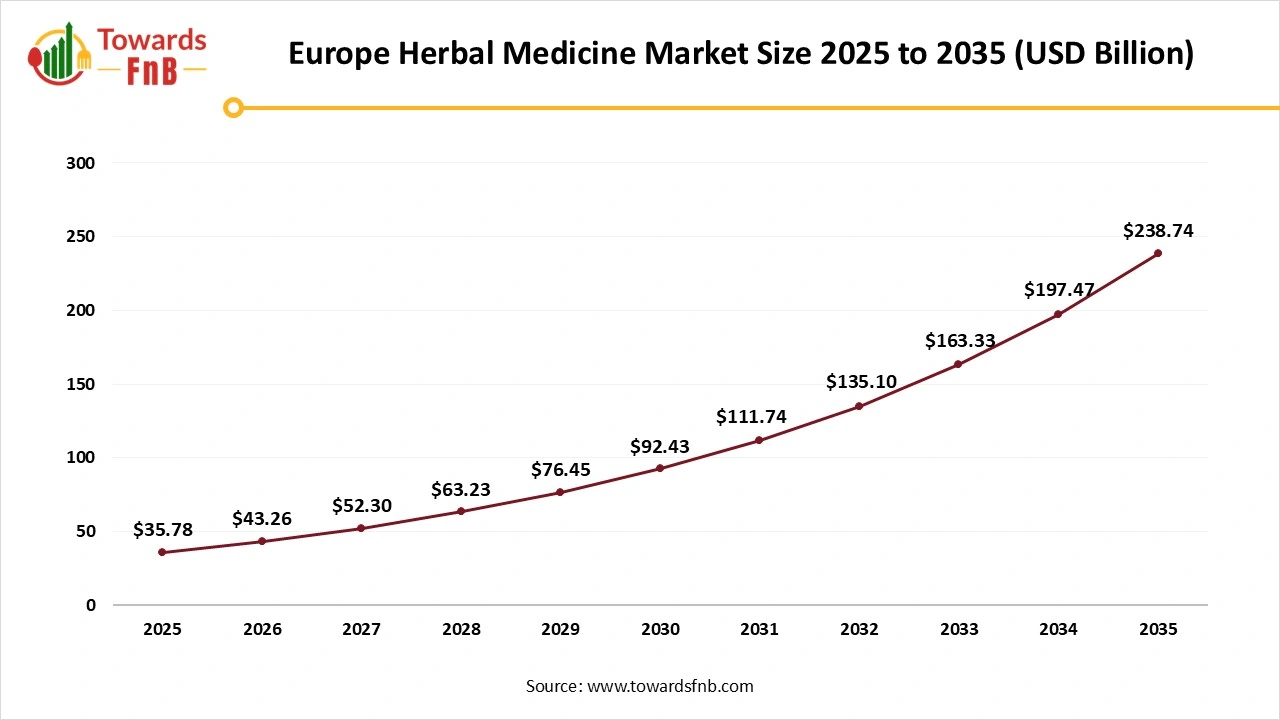
The Europe herbal medicine market size reached at USD 35.78 billion in 2025 and is predicted to increase from USD 43.26 billion in 2026 to reach approximately USD 238.74 billion by 2035, expanding at a CAGR of 20.9% from 2026 to 2035.
Germany is the major player in the regional market, contributing to growth due to Germany’s strong tradition of herbal medicines and support from a strong regulatory system that uses monographs for quality control and a growing consumer demand for organic and natural medicines. German innovative players, as shown by the international conference on herbal medicine and natural medicine held in Munich, are the key trends leading German herbal medicine.
Asia Pacific Expects Fastest Growth in the Herbal Medicine Market During the Forecast Period
Pharmaceutical companies in the Asia Pacific region are utilizing real-world data on different stages of product development, from the advanced design step to after-market supervision. Clinical guidelines and regulatory standards change in the Asia Pacific industry due to linguistic, cultural, regulatory differences, and economic factors, too. Pre-trial design includes site feasibility assessment, protocol development, investigator selection, navigating regulatory approval, and compliance with local ethical and regulatory standards. On the other hand, the Governments and payers in Asian countries are rapidly involved in their Health Technology Assessment (HTA) framework to assess the value of the latest interventions. HTA Agencies are investigating the usage of RWE to enhance the risk-benefit evaluation of innovative drugs.
India has a rich tradition of herbal remedies and Ayurveda, which is responsible for making it a hub for natural wellness products. Herbal Supplements, Ayurvedic formulations, and essential oils show a booming export classification, which shows considerable revenue and steady growth, too. Essential oils are one of the most demanding Ayurvedic exports, specifically which has usage in aromatherapy. Sandalwood oil and Indian rose are widely accepted for their therapeutic advantages and purity. Whereas India is leading in exporting Ayurvedic health supplements, which are admired for their natural healing quality. Well-known products include turmeric capsules for anti-inflammatory advantages, Chawanprash for immunity boosting, neem supplements for detox, and Ashwagandha for stress relief, too.
Traditional Chinese Medicine (TCM) includes a huge range of techniques crafted to activate the human body’s natural healing abilities, with an initial focus on restoring balance and harmony. These techniques are rooted in centuries of tradition that are designed to solve both physical and emotional health, reinforcing the body’s system. Herbal Medicine is a foundation of TCM, which uses an extensive pharmacopeia of minerals, plants, and animal-derived substances. Every herb is identified according to its characteristics, such as temperature, taste, and its effect on the specific organs and meridians.
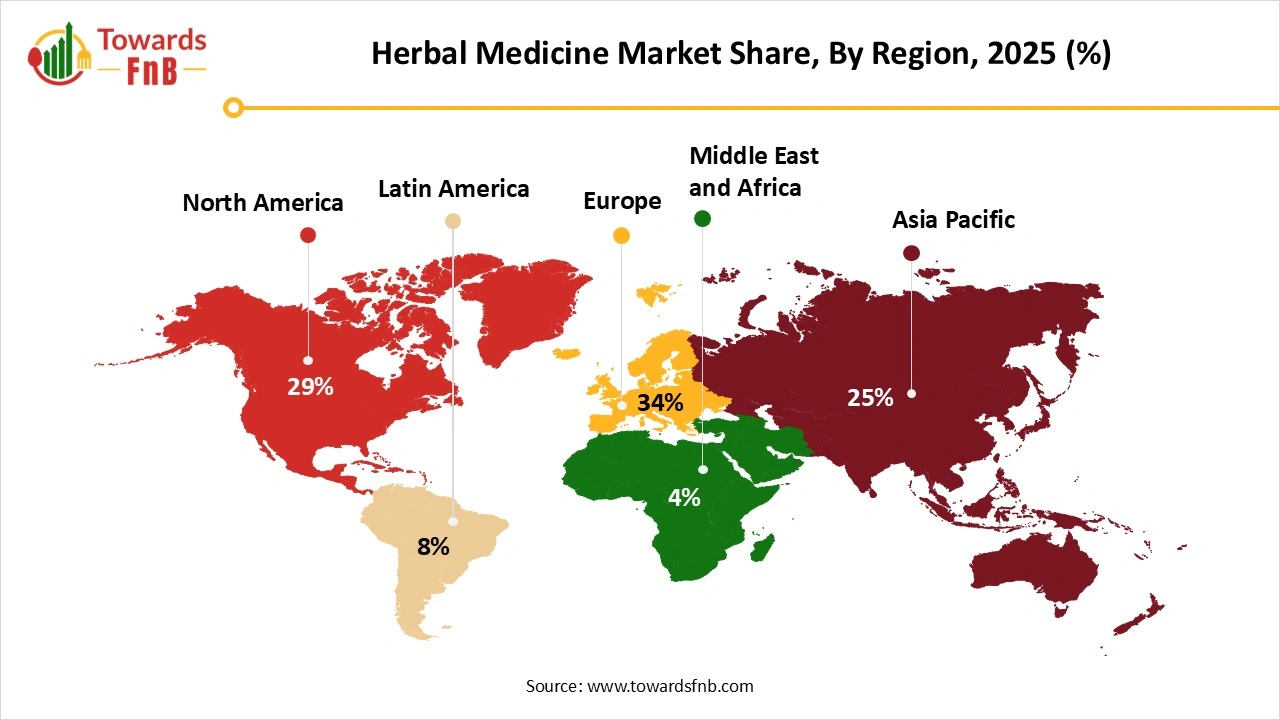
In recent years, consumer behavior in North America has significantly shifted, leading people to embrace natural and herbal health solutions. This change is driven by a growing awareness of the long-term effects of synthetic chemicals and the desire for cleaner, more holistic approaches to wellness. Consumers are increasingly demanding products that align with sustainable, organic, and environmentally friendly lifestyles. As a result, the healthcare and personal care industries are evolving due to the rising preference for herbal remedies.
The U.S. herbal medicine market is experiencing strong and consistent growth, fueled by increasing health consciousness, demand for natural products, chronic health conditions, and wellness trends. Projections indicate significant expansion towards the end of the decade. Key drivers include consumer interest in preventive care and integrative medicine, leading to increased sales of supplements, teas, and traditional remedies, such as Ayurveda.
In the Middle East and Africa, the herbal medicine market is also undergoing significant growth. Herbal medicine plays a vital role in MEA traditions, including Islamic medicine (Tibb-e-Nabawi) and various native African practices. This traditional knowledge, along with the availability of Halal-certified products, boosts consumer confidence and demand. More consumers are prioritizing preventive healthcare and seeking natural alternatives to synthetic drugs due to concerns about side effects.
The United Arab Emirates, known for its innovation and diverse cultures, offers an intriguing landscape for the herbal medicine market. Demand for herbal medicine in the UAE is steadily growing, driven by health trends, the rise of chronic diseases, and a shift towards natural wellness. Consumers are looking for holistic alternatives to conventional drugs, supported by e-commerce and influencer marketing. The market shows strong interest in single herbs, teas, and convenient forms like capsules.
The Latin American herbal medicine market is also seeing increased popularity for natural, plant-based medicine, partly due to the ongoing interest in whole-body health and the negative perception of chemically produced medicines. Many consumers have been using herbal products to prevent diseases, strengthen their immune systems, and manage chronic conditions. Key growth areas include herbal supplements, cosmetics, and beverages, supported by traditional use in countries like Brazil, Mexico, and Argentina, as well as integration with modern healthcare.
Supporting government policies and favorable regulatory environments are significant drivers of the herbal medicine market in Brazil. The government is increasingly encouraging the adoption of traditional and herbal medicine as part of its broader public health policy. The rapid growth of e-commerce and online marketing in Brazil is also contributing to the expansion of the market.
Herbal Medicine Market Share, By Intervention, 2025 (%)
| Segments | Shares (%) |
| Powder | 15% |
| Liquid/Gel | 25% |
| Tablets/Capsules | 50% |
| Others | 10% |
The Ayurveda Segment Dominated the Herbal Medicine Market in 2025
Ayurveda means the “science of life,” which is counted among the oldest and most extensive medical systems worldwide. Marking its beginning in India over 5,000 years ago, Ayurveda gives importance to a combined approach to balance the mind, body, and soul for engaging natural remedies for disease prevention and treatment. With more than just a medical system, it markets a lifestyle conducive to happiness, health, and harmony. Ayurveda recognizes the unique elements of every person, analyzed by their constitution, or Prakriti, which encourages their mental, physical, and emotional traits. It also counts lifestyle, entertainment, and seasonal effects on health.
Accordingly, Ayurveda serves customized, holistic solutions that are based on a person’s prakriti and vikriti (current health state). Ayurveda focuses on maintaining the body, mind, and daily routine, which employs efficient diagnostic procedures such as tongue, pulse, and urine analysis, and various treatments like Panchakarma (detoxification), yoga, herbal medicines, meditation, yoga, and massage to relieve the main symptoms of different acute and chronic diseases.
The Apitherapy Segment is Expected to Grow at the Fastest Rate During the Forecast Period
It is a form of alteration medicine that uses different bee products such as propolis, royal jelly, pollen, honey, and bee venom to cure and manage disease. It is a supplementary therapy that utilizes bee venom and honeybee products to cure a variety of human ailments. Bee venom is scientifically called apitoxin, which is a complicated mixture of biologically active compounds that is confidential by honeybees with the help of their stingers. It includes enzymes, peptides, and other molecules, and it gives the bee’s defense mechanism when it stings. Bee venom has different uses in skincare and medicine because of its unique properties and composition.
The Tablets/Capsules Segment Dominated the Herbal Medicine Market in 2025
Herbal tablets are an oral medication form that dissolves in the stomach and stays there for a long period of time. They are crafted to develop the bioavailability of drugs and deliver them locally to the stomach. Floating tablets can serve many advantages, which include site-specific drug and sustained drug delivery. Oral delivery of the drugs is the most advantageous route of drug delivery because of patient compliance, comfort of administration, and adaptability in formulation, etc, from instant release to plot of accurate delivery, oral dosage formats have developed.
The Powder Form Segment is Expected to Grow at the Fastest Rate in the Herbal Medicine Market During the Forecast Period
In Ayurveda, powder or churn is the most relishable form in terms of consumption. This pattern is perfect for storing the liveliness of the plant as it is slightly processed. It also serves instant communication with taste, texture, sensory organs, and smell. According to Ayurveda, taste (rasa) plays a crucial role in a therapeutic role that encourages the digestive fire (Agni) and the balance of the doshas. There are a few examples of ayurvedic powder such as Ashwagandha powder (utilized for nervous system tonic c, which is specifically recommended for calming vata), Triphala organic powder (an amalgamation of three fruits like haritaki, amalaki, and bibhitaki) and Tulsi powder which are extensively used in infusion which assist in clearing the respiratory tract and detoxify the mind. The last one is Amalaki powder, which is high in vitamin C, specifically regenerates and is acceptable for pitta, mostly consumed with honey and lukewarm water.
Herbal Medicine Market Share, By Source, 2025 (%)
| Segments | Shares (%) |
| Barks | 10% |
| Leaves | 25% |
| Roots | 50% |
| Others | 15% |
The Roots Segment Dominated the Herbal Medicine Market in 2025
They have become immensely acceptable due to their high concentration of bioactive compounds, which serve therapeutic advantages. Several medicinal plants store potent phytochemicals like alkaloids, essential oils, and glycosides in their roots. This kind of compound can assist in a variety of ailments, which include digestive disorders, inflammation, respiratory problems, and even chronic diseases. Roots like turmeric, ginger, ashwagandha, licorice, and ginseng have been utilized for centuries in regular medicine systems like traditional Chinese medicine, Ayurveda, and Native healing practices. The popularity of root-based treatment also stems from its minimal side effects as compared to synthetic drugs, natural origin, and rising scientific validation for its health advantages.
The Leaves Segment is Expected to Grow at the Fastest Rate in the Herbal Medicine Market During the Forecast Period
Humans utilize 10 to 15 % for different purposes like tools, food, and medicine. Some plants are also utilized as drugs for recreational and medicinal purposes. For many years, several cultures have utilized hallucinogens for religious and spiritual benefits as central nervous system stimulants to lead to relaxation and act as stimulants to improve social feelings or physical energy and endurance, too. There are some notable drugs derived from plants, such as Quinine, Aspirin, Paclitaxel, Digoxin, Atropine, Vinblastine, and Vincristine, too.
Herbal Medicine Market Share, By Distribution Channel, 2025 (%)
| Segments | Shares (%) |
| Direct Sales | 70% |
| E-sales | 30% |
The Direct Sales Channel Segment Dominated the Herbal Medicine Market in 2025
It has become acceptable for herbal medicine because of its potential to build trust and personal connections. Herbal products mostly depend on centuries-old knowledge and natural ingredients, and consumers are more expected to trust and buy such products when suggested by someone they know personally. Direct sales highlight this by allowing sellers, often from a similar community, to make known customers and share their self-experiences with the products. This person-to-person perspective not only grows credibility but also drives word-of-mouth promotion, which is specifically powerful in the health and wellness space.
The E-sales Segment is Expected to Grow at the Fastest Rate During in the Herbal Medicine Market the Forecast Period
Healthcare e-commerce carries several varieties, which include online pharmacies, telemedicine websites, and wellness and fitness websites through which herbal medicines are being sold in the comfort of the home of a customer. Online pharmacies permit customers to order over-the-counter medications that one can buy without a prescription. Some e-commerce pharmacies allow customers to buy and organize pre-sorted packs for daily use. Telemedicine websites mix e-commerce platforms and health consultations. After a virtual consultation, patients can directly order medications or diagnostic tests.
Aavin
Indus Valley Organic
By Intervention
By Product Form
By Source
By Distribution Channel
By Region




Principal Consultant
Vidyesh Swar, Senior Research Analyst at Towards Food & Beverages, specializes in market research, focusing on supply-demand evaluation, pricing analysis, alternative proteins, plant-based foods, and sustainable food technologies within the industry.
Learn more about Vidyesh Swar
Reviewed By
Aditi Shivarkar, with 14+ years in Food and Beverages market research, specializes in food, beverage, and eco-friendly packaging. She ensures accurate, actionable insights, driving Towards FnB's excellence in industry trends and sustainability.
Learn more about Aditi ShivarkarApril 2026
April 2026
April 2026
April 2026

Herbal Medicine Market


 +1 804-441-9344
 Download Sample
 Schedule a Meeting