April 2026



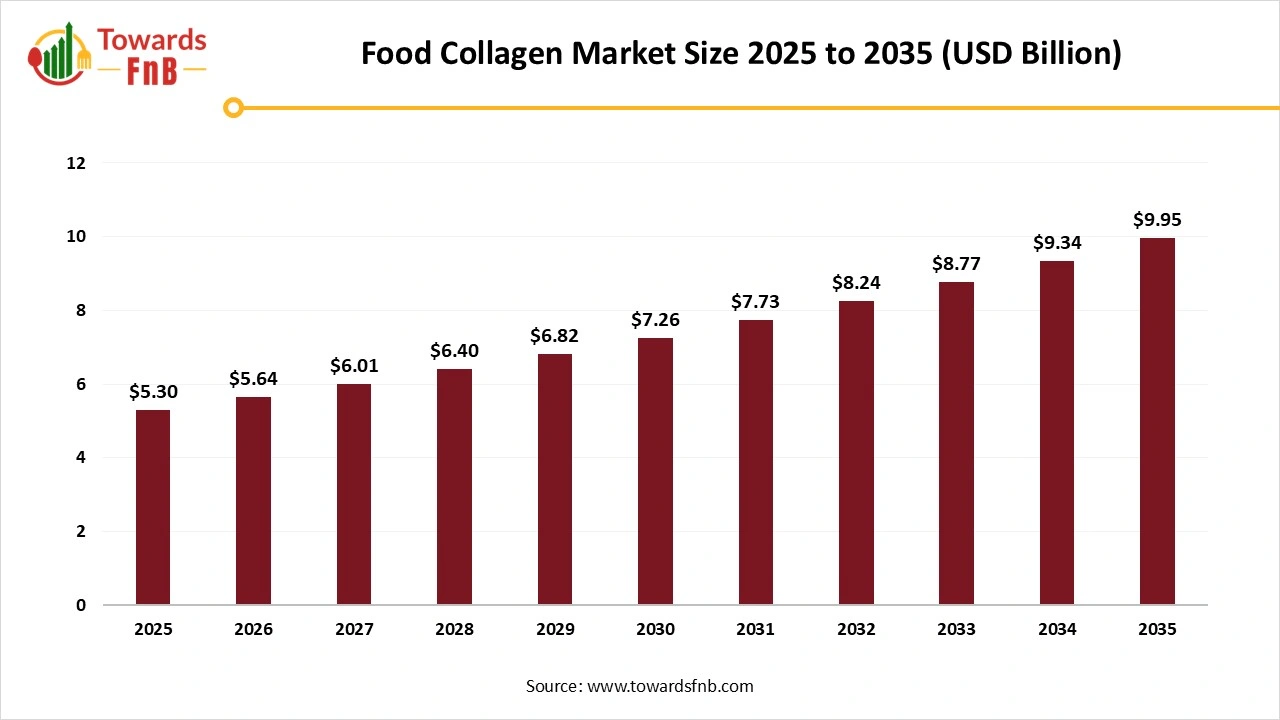
The global food collagen market size was valued at USD 5.30 billion in 2025 and is expected to grow steadily from USD 5.64 billion in 2026 to reach nearly USD 9.95 billion by 2035, with a CAGR of 6.5% during the forecast period from 2026 to 2035. The market is growing significantly, driven by increasing consumer demand for functional foods and beverages that support joint, skin, and bone health.
| Study Coverage | Details |
| Growth Rate from 2026 to 2035 | CAGR of 6.5% |
| Market Size in 2026 | USD 5.64 Billion |
| Market Size in 2027 | USD 6.01 Billion |
| Market Size by 2035 | USD 9.95 Billion |
| Largest Market | North America |
| Base Year | 2025 |
| Forecast Period | 2026 to 2035 |
| Regions Covered | North America, Europe, Asia-Pacific, Latin America, and Middle East & Africa |
The food collagen market is growing as consumers seek out more health-conscious ingredients for bone, joint, and skin health. Global adoption of collagen is being fueled by increased availability through retail and e-commerce channels, increased awareness of preventive health, and its addition to beverages, snacks, and dairy substitutes.
| Technological Shift | Description/Impact |
| Hydrolyzed Collagen Production | Enzymatic hydrolysis techniques improve bioavailability and solubility in foods and beverages. |
| Microencapsulation Technology | Encapsulates collagen to mask taste and odor, allowing integration into more products. |
| Plant-Based Collagen Alternatives | Use of vegan collagen peptides from fermentation or plant sources to meet dietary preferences. |
| Fortification & Blending Innovations | Collagen combined with vitamins, minerals, and probiotics enhances functional benefits. |
| Advanced Extraction Methods | Techniques like ultrafiltration and enzymatic extraction increase yield and purity from animal sources. |
| Ready-to-Drink Formulations | Development of stable liquid collagen beverages with extended shelf life. |
Raw Materials Procurement
Retail Sales and Marketing
Waste Management and Recycling
What Made North America Dominate the Food Collagen Market in 2025?
North America dominated with 41% share in the market, making it the most important area. Supplements for nutritional health and beauty are very well known here. The U.S. is home to numerous top collagen brands, which keep the area at the forefront. Sustained demand is also supported by robust regulatory frameworks and consumer willingness to spend money on wellness products.
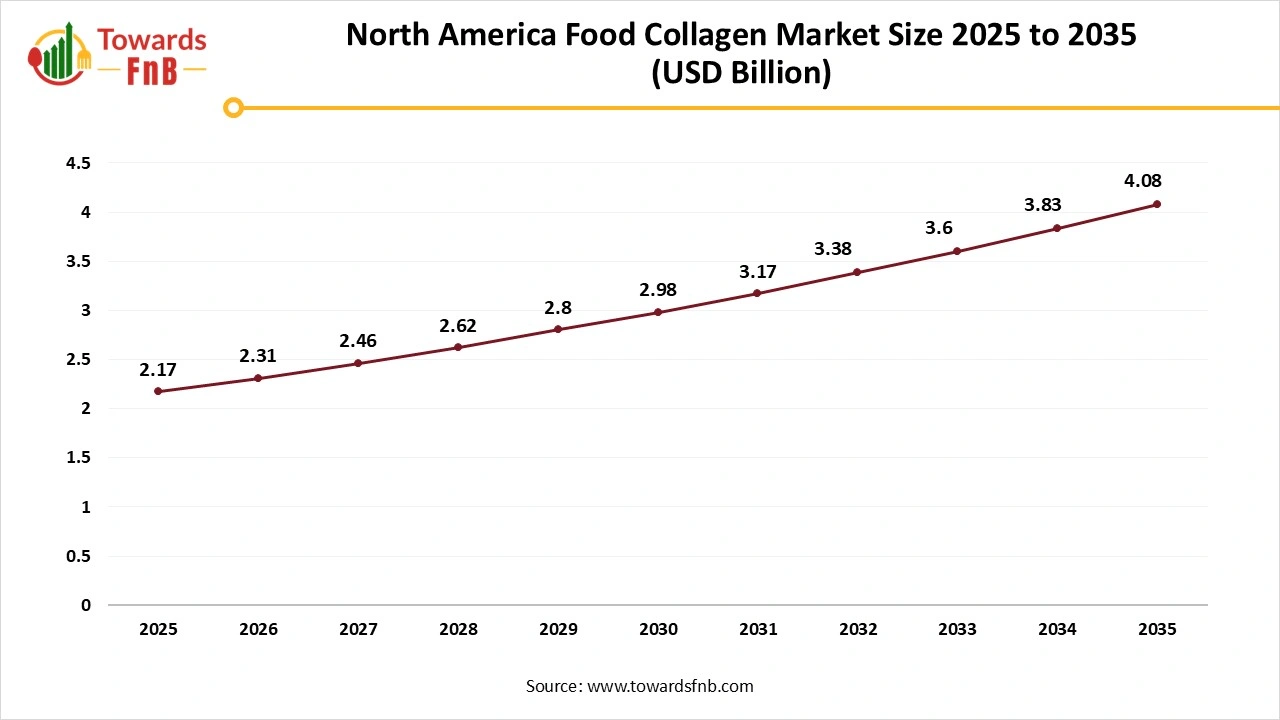
The North America food collagen market size estimated at USD 2.17 billion in 2025 and is predicted to increase from USD 2.31 billion in 2026 to nearly reaching USD 4.08 billion by 2035, growing at a CAGR of 6.5% during the forecast period from 2026 to 2035.
U.S. Food Collagen Market Trends
The U.S. market is strong because collagen is frequently used for joint, skin health, and physical fitness. The U.S. is characterized by large brands, a robust retail presence, and frequent product launches. To the U.S. collagen market, which is among the most developed.
Asia Pacific expects the fastest growth in the market during the forecast period. Gummy collagen drinks and beauty foods are already popular. Strong growth is being driven throughout the region by rising income and awareness of beauty. Rapid regional expansion is also being fueled by an increase in ready-to-drink collagen beverages and functional snacks, as well as growing urbanization and shifting eating habits.
India Food Collagen Market Trends
India’s food collagen market is growing fast as consumers learn more about the advantages of beauty and wellness. Demand is being increased by the growing use of powders, gummies, and collagen drinks, particularly marine collagen. The introduction of new products by Indian companies and e-commerce platforms is accelerating market expansion.

The European food collagen market is growing steadily due to clean-label products supporting nutrition and beauty supplements becoming more popular. Gummies, fortified drinks, and collagen powders are increasingly available in physical and online stores. Market expansion is also aided by strict regulations and a preference for premium marine collagen.
Germany Food Collagen Market Trends
Germany’s market is driven by a strong consumer interest in natural supplements, healthy aging, and fitness. Collagen drinks and powders are becoming more and more popular among older consumers and gym goers. Strict production guidelines and consumer demand for high-end, sustainably sourced collagen products for fuel market expansion.
The MEA & Africa market is expanding as consumers interest in wellness products and beauty from within trends grows. Sachets and powders containing collagen are becoming more popular, particularly in cities. Growing retail accessibility and global brand penetration fuel this market expansion.
UAE Food Collagen Market Trends
UEA is one of the fastest-growing markets in the region because there is a high demand for high-end nutrition, fitness, and beauty products. Health-conscious young people are big fans of collagen drinks, powders, and gummies. The growth of the market is fueled by strong purchasing power and wider availability in online and pharmacies.
The food collagen market in South America is growing as consumers look for functional food that promote joint skin and general well-being. Growing interest in fitness and healthy aging has led to an increase in the use of collagen in beverages candies and dairy products. Food companies awareness campaigns are increasing adoption even more. In major cities the trend toward natural and high-protein diets is bolstering market expansion.
Brazil Food Collagen Market Trends
Brazil leads the region because of its robust supply of cows and the growing demand for baked goods fortified drinks and collagen powders. Collagen foods that promote muscle recovery joint strength and beauty are being pushed toward consumers by a fitness-driven culture. Influencers on social media are raising awareness of collagen-rich diets. For everyday wellness benefits urban consumers are particularly embracing foods enhanced with collagen.
Food Collagen Market Share, By Product Type, 2025 (%)
| Segments | Shares (%) |
| Gelatin | 56.7% |
| Collagen Peptides | 30% |
| Hydrolyzed Collagen | 13% |
What Made the Gelatin Segment Dominate the Food Collagen Market?
Gelatin segment dominated the market with 56.7% share in 2025, making it the most used product because it works well in gummy desserts, dairy products, and snacks, and gives foods a smooth texture. It continues to be the best option because it is widely accessible, inexpensive, and simple to produce. Gelatin is preferred by many traditional food producers due to its stability during processing and reliability for reliable outcomes.
Collagen Peptides Segment Expects the Fastest Growth in the Market During the Forecast Period.
The product mainly because they mix well with food and beverages and are simpler for the body to absorb. They are preferred by people for their anti-aging properties, joint support, and skin glow. They are growing even more quickly thanks to new flavors and ready-to-drink collagen drinks. Peptides mix well in coffee smoothies and protein shakes because they dissolve readily, making them practical for everyday use.
Food Collagen Market Share, By Source, 2025 (%)
| Segments | Shares (%) |
| Bovine | 36.8% |
| Porcine | 15% |
| Marine | 25% |
| Poultry | 23% |
Why did the Bovine Segment Dominate the Food Collagen Market in 2025?
Bovine collagen segment dominated the market with 36.8% share in 2025 because it is inexpensive readily available and effective in a variety of food and supplement products it is the most popular source of collagen due to its robust and dependable supply chain because bovine collagen has a long history of use in food and health products and is generally accepted by regulators and many manufacturers trust it.
Marine Collagen Segment Expects the Fastest Growth in the Market During the Forecast Period.
Because it feels more upscale, is lighter, absorbs faster, and is cleaner. People like it. Additionally, it comes from fish scales and skin, which reduces waste and promotes sustainability. Marine collagen is frequently promoted as clean label or eco-friendly, which draws in customers who are concerned about their health and the environment.
Food Collagen Market Share, By Form, 2025 (%)
| Segments | Shares (%) |
| Powder | 57.8% |
| Liquid | 25% |
| Granules | 17% |
Why did the Powder Segment Dominate the Food Collagen Market?
Powder segment dominated the market with a 57.8% share in 2025. It is convenient for every use that lasts a long time and is simple to incorporate into food, coffee, and smoothies because it can be added to a variety of products and stores well. Manufacturers favor its powder form gives consumers flexibility; they can store it without refrigeration, add it to meals or beverages, and select their dosage.
The Liquid Segment Expects the Fastest Growth in the Market During the Forecast Period.
The consumers enjoy easily portable collagen beverages and ready-to-drink shots. Young consumers are increasingly drawn to flavored collagen drinks. Liquids are more popular in urban markets because they don't require mixing, making them ideal for busy lifestyles.
What Made the Dietary Supplements Segment Dominate the Food Collagen Market?
Dietary supplements segment dominated the market with a 34.7% share in 2025. People are looking for better skin, joints, and general wellness, which has led to the popularity of collagen powders, gummies, and capsules. This market is strong because it is easily accessible both online and in-store. Clinical claims and studies are frequently used to support supplements that foster consumer confidence and promote repeat business.
Functional Beverages Segment Expects the Fastest Growth in the Market During the Forecast Period.
Collagen coffees, waters, juices, and protein drinks are very popular for dairy routines because they provide health benefits in an easy-to-drink format. These beverages suit contemporary hectic lifestyles, and their taste, convenience, and extra ingredients like vitamins draw in customers beyond supplement consumers.
Food Collagen Market Share, By Distribution Channel, 2025 (%)
| Segments | Shares (%) |
| B2B | 72.3% |
| B2C | 27.7% |
Why did the B2B Segment Dominate the Food Collagen Market?
B2B segment dominated the market with a 72.3% share in 2025, indicating that the majority of collagen is supplied to food supplements and nutrition companies in large quantities. Collagen is a component used by these businesses in their finished goods. Demand in large quantities maintains this channel's leadership. Collagen producers can provide a stable supply, consistent quality, and cost-effectiveness to B22 clients on a large scale.
B2C Segment Expects the Fastest Growth in the Market During the Forecast Period.
Because consumers now purchase collagen directly from retail chains, online retailers, and brand websites. The market is growing thanks to appealing packaging and effective social media advertising. Additionally, direct sales to foster relationships with consumers provide subscription models and react swiftly to wellness and beauty trends.
By Product Type
By Source
By Form
By Application
By Distribution Channel
By Region




Principal Consultant
Vidyesh Swar, Senior Research Analyst at Towards Food & Beverages, specializes in market research, focusing on supply-demand evaluation, pricing analysis, alternative proteins, plant-based foods, and sustainable food technologies within the industry.
Learn more about Vidyesh Swar
Reviewed By
Aditi Shivarkar, with 14+ years in Food and Beverages market research, specializes in food, beverage, and eco-friendly packaging. She ensures accurate, actionable insights, driving Towards FnB's excellence in industry trends and sustainability.
Learn more about Aditi ShivarkarApril 2026
April 2026
April 2026
April 2026

Food Collagen Market


 +1 804-441-9344
 Download Sample
 Schedule a Meeting