April 2026



The global cooking wine market size reached at USD 452.55 million in 2025 and is expected to grow steadily from USD 474.27 million in 2026 to reach nearly USD 723.23 million by 2035, with a CAGR of 4.8% during the forecast period from 2026 to 2035. Integration of the global cuisine and growing awareness regarding the taste of wine in food preparation are driving the market.

| Study Coverage | Details |
| Growth Rate from 2026 to 2035 | CAGR of 4.8% |
| Market Size in 2026 | USD 474.27 Million |
| Market Size in 2027 | USD 497.04 Million |
| Market Size by 2035 | USD 723.23 Million |
| Largest Market | Europe |
| Base Year | 2025 |
| Forecast Period | 2026 to 2035 |
| Regions Covered | North America, Europe, Asia-Pacific, Latin America, and Middle East & Africa |
Cooking wine is wine specifically made for cooking, often with added salt and preservatives for a longer shelf life, making it shelf-stable. The market is mainly driven by interest in authentic global cuisines, food trends, and convenience, used for flavor enhancement, deglazing, and tenderizing meats, and is also seeing growth through online retail and premiumization trends.
The latest technological advancements are concentrated on artificial intelligence, the Internet of Things, augmented reality, and blockchain. The platform Vivino, a widely used wine application, employs AI to provide personalized wine suggestions based on user preferences by scanning wine labels or lists and offering essential details, including ratings, reviews, and average prices, thereby making the wine selection process more accessible and tailored to individual users. Additionally, emerging biotechnologies and non-thermal techniques present valuable solutions for modulating the sensory profiles and stability of new wines, addressing consumer desires for innovative sensory experiences, reduced chemical additives.
Raw Material Procurement
Processing of cooking wine includes steps like fermentation, but often uses different bases and additions for specific culinary purposes, focusing on flavor enhancement, tenderizing, and deglazing.
Distribution
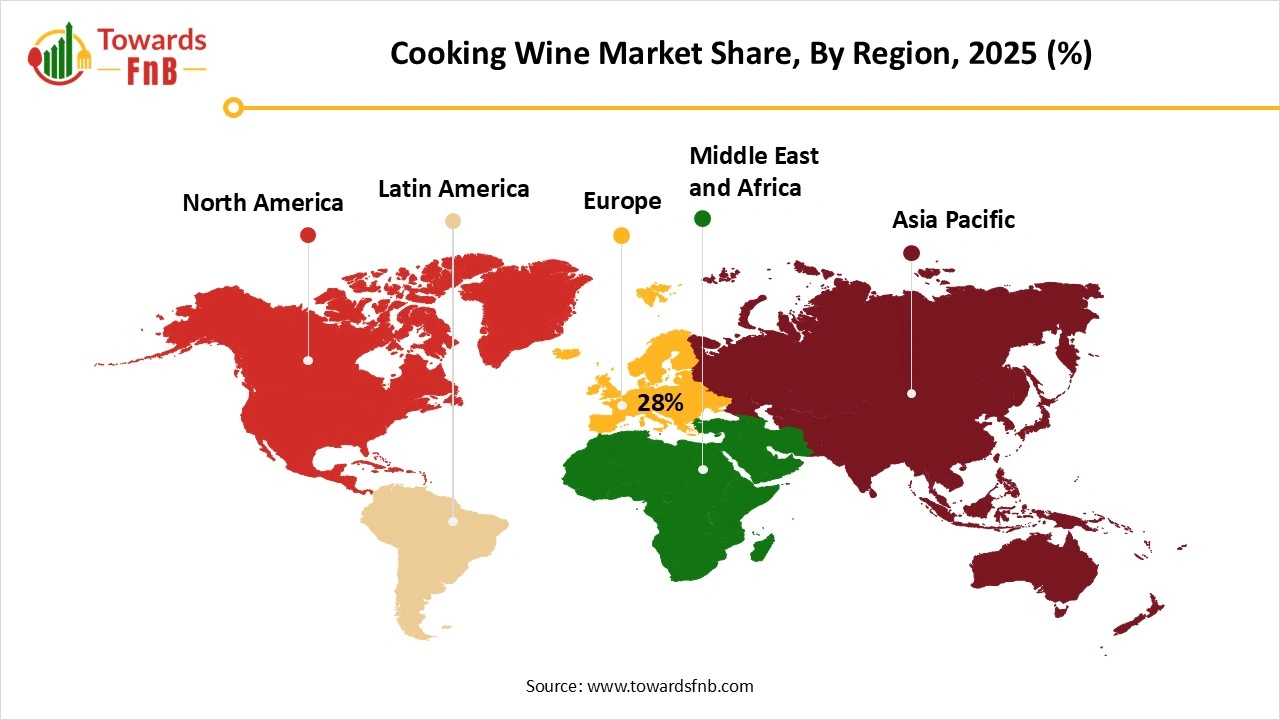
Why did Europe Dominate the Cooking Wine Market in 2025?
Europe dominated the cooking wine market in 2025. The market in Europe has witnessed considerable growth, propelled by increasing culinary experimentation, a rising demand for premium and authentic ingredients, and an expanding food service sector across the region. As consumers aim to enhance their culinary experiences, the market is evolving through innovative product offerings and strategic market expansions by key players. Countries such as France, Italy, and Spain are particularly influential, given their extensive use of cooking wine in a wide array of dishes. The established demand and cultural integration of wine in European cuisine contribute to its leading position in the market.
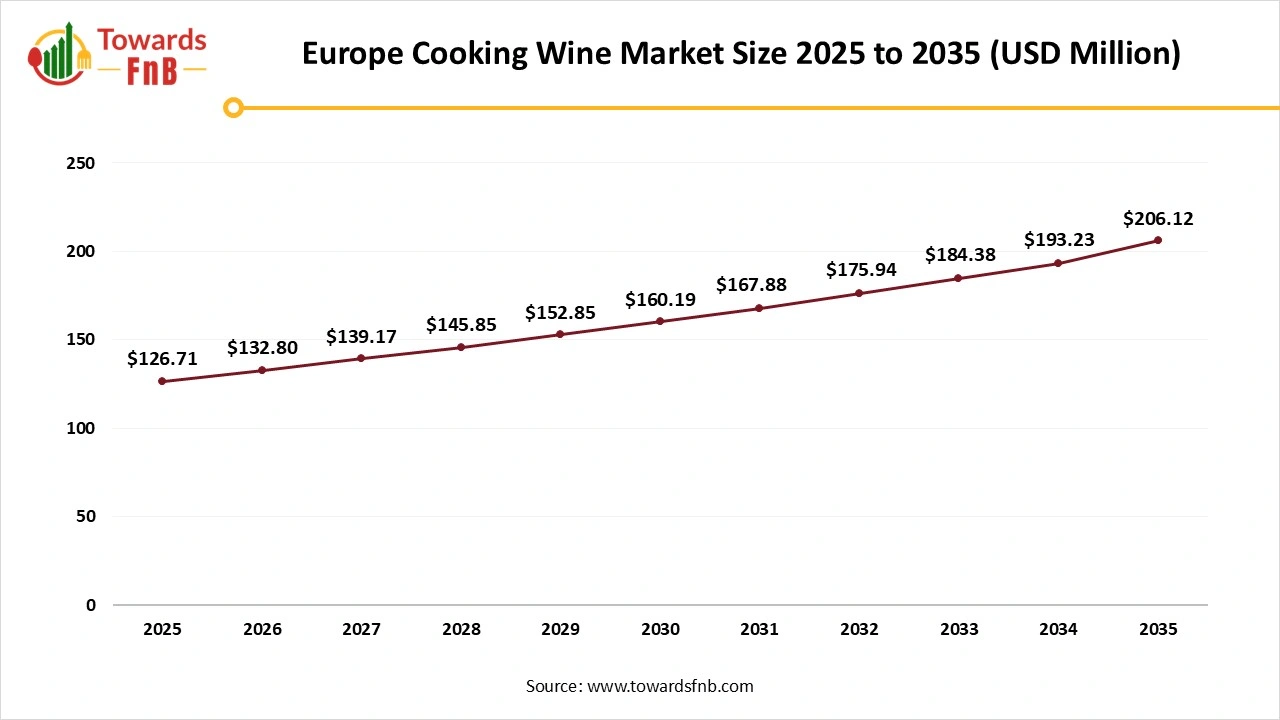
Europe Cooking Wine Market Size 2025 to 2035
The Europe cooking wine market size was calculated at USD 126.71 million in 2025 and is expected to grow steadily from USD 132.80 million in 2026 to reach nearly USD 206.12 million by 2035, with a CAGR of 4.9% during the forecast period from 2026 to 2035.
Germany Cooking Wine Market Growth
Germany represents one of the most attractive wine markets, exemplified by its status as the fourth-largest wine-consuming market, and therefore boosts the demand for cooking wine. The utilization of wine, particularly local white varieties like Riesling, Silvaner, and Elbling, is prevalent in German cooking for imparting fresh acidity to fish, poultry, and vegetable dishes, while drier styles such as Pinot Noir provide depth to pork, duck, and robust preparations, often involving deglazing or braising for rich saucing. The market is driven by substantial domestic wine consumption, a robust food processing sector, and growing demand for sustainable and organic options.
Asia Pacific: The Fastest-Growing Region in the Cooking Wine Market
Asia Pacific expects fastest growth during the forecast period. The market in the Asia Pacific is experiencing rapid and consistent growth, driven by evolving consumer preferences toward premium, organic, and sustainably produced wines. Organic and low-sodium cooking wines are gaining popularity, particularly among health-conscious consumers who seek flavor without added salt. Many brands are now introducing these variations to cater to consumers looking for more natural, diet-friendly options. Furthermore, Southeast Asia is presenting new growth opportunities, with countries such as Vietnam, Thailand, and Indonesia emerging as promising markets for wine, spurred by rising affluence, urbanization, and a growing appetite for more sophisticated beverage choices.
China's Cooking Wine Market Growth
In China, the rapid expansion of the market is facilitated by extensive kitchen upgrades, an increasing adoption of flavored wines, and the presence of prominent industry players. The most distinguished application of alcohol in culinary practices is rooted in Chinese culture, where various dishes prominently feature Chinese cooking wine as a key ingredient. Examples include Drunken Chicken, stir-fried vegetables, Buddha Jumps Over the Wall, red-braised mushroom soup, and braised dishes, among numerous others. In Chinese tradition, rice wine transcends being merely a beverage or a cooking element, as it is believed to offer several health benefits, such as improvements in blood circulation, digestion assistance, and stress reduction.
North America Cooking Wine Market Trends
The North American cooking wine market constitutes a burgeoning sector, propelled by an increase in home cooking, an appetite for gourmet flavors, and the rising trend of food processing. The presence of leading market players in this region is projected to further bolster the growth of the North American cooking wine market during the forecasting period. Additionally, consumers in North America exhibit a heightened awareness of emerging food trends and concepts, which is expected to inspire the incorporation of cooking wine into daily culinary practices. Furthermore, consumers in this region generally have high disposable incomes.
The United States Cooking Wine Market Growth
The growth of the cooking wine market in the United States is primarily fueled by a rising consumer interest in gourmet cooking and enhanced home dining experiences. As individuals explore diverse culinary styles, the demand for specialized ingredients such as cooking wine is anticipated to increase. The expanding foodservice sector, inclusive of restaurants and catering services, plays a significant role in this market growth as chefs utilize cooking wine to enrich flavor profiles. Moreover, the increasing multicultural demographics in the United States have fostered a greater appreciation for international cuisines, thus driving demand for cooking wines commonly utilized in Mediterranean, Asian, and European recipes.
The Middle East and Africa Cooking Wine Market Expansion
The market in the Middle East and Africa is growing notably. This upward trajectory is supported by regulatory changes in the Gulf region, a surge in tourism investments, and a rise in disposable incomes, all guiding consumers toward premium brands. Concurrently, infrastructure improvements in Egypt, Morocco, and the United Arab Emirates are streamlining the supply chain. Recently, Cru Wines, a London-based fine wine and spirits firm, established operations in Dubai, with additional producers eyeing opportunities in the UAE.
UAE Cooking Wine Market Analysis
Over the past decade, the United Arab Emirates has emerged as a global destination for luxury experiences, transforming tourism through innovative offerings and cultural sophistication. Among these, cooking wine has gained prominence, providing connoisseurs and leisure travelers with the opportunity to appreciate the nuances of world-class wines while remaining within the comforts of the Emirates. Luxury hotels and resorts curate menus that feature international cuisines, gourmet appetizers, and locally inspired dishes, driving the demand for cooking wine.
South America's Cooking Wine Market Growth
Increasing demand for premium wines is anticipated to drive growth in the South American cooking wine market. As wine consumers become more discerning, there is a notable shift toward high-quality products. Particularly among the expanding middle class, South American consumers seek unique culinary experiences, thereby enhancing the market for quality cooking wines that add depth, antioxidants, and balance to dishes, in addition to a general increase in the overall wine market within the region.
Brazil Cooking Wine Market Analysis
In Brazil, the demand for cooking wine is on a steady rise, attributed to a heightened interest in home cooking, international culinary traditions, and convenience. Over the past decade, wine production and consumption in Brazil have experienced significant growth, indicative of shifts in cultural practices and consumption patterns. Brazil imported wine valued at approximately US$523 million last year, with Chile emerging as the primary source at US$202 million, followed by Argentina at US$98 million. (Source: Gambero Rosso International)
Cooking Wine Market Share, By Product, 2025 (%)
| Segments | Shares (%) |
| Dessert Wine | 40% |
| White Wine | 20% |
| Red Wine | 25% |
| Others | 15% |
Why Did the Dessert Wine Segment Dominate the Cooking Wine Market in 2025?
The dessert wine segment led the cooking wine market in 2025. As consumer preferences become increasingly adventurous, there is a discernible inclination toward wines that offer a harmonious balance of sweetness and acidity, appealing to a wider audience. Dessert wines, characterized by their rich flavors and often intricate production processes, are rapidly gaining popularity as consumers seek distinctive and indulgent experiences. Such wines contribute richness, sweetness, complexity, and balance to sauces, caramel, ice creams, custards, and beyond.
The Red Wine Segment is Seen to Grow at a Notable Rate During the Predicted Timeframe
Red wine plays a crucial role in enhancing the depth of flavor in various dishes, thereby enriching overall taste through the addition of richness and acidity. It can introduce complexity and balance to both savory and sweet recipes. Popular varietals such as Cabernet Sauvignon, Merlot, and Pinot Noir each provide unique characteristics that complement different culinary applications, although it is advisable to utilize dry red wines with low residual sugar, as excessive sweetness may disrupt the balance in savory dishes.
Cooking Wine Market Share, By Application, 2025 (%)
| Segments | Shares (%) |
| B2B | 70% |
| B2C | 30% |
Which Application Segment Dominated the Cooking Wine Market in 2025?
The B2B segment dominated the market. The dominance of cooking wines in the market is predominantly driven by robust demand from the food service industry, which encompasses restaurants and catering companies. In the context of food service, these wines enable establishments to enhance the dining experience by offering patrons dishes that are rich in flavor, thereby encouraging repeat patronage. Moreover, cooking wines play a crucial role in food manufacturing, serving as a key ingredient in the preparation of ready meals distributed in supermarkets and other retail venues. Their ability to impart complexity and enhance the appeal of ready-to-eat dishes ensures that manufacturers can deliver high-quality products that meet consumer expectations.
The B2C Segment is Projected to Experience the Fastest Growth During the Forecast Period.
This trend is attributed to a significant increase in home cooking, with consumers demonstrating heightened enthusiasm for home meal preparation, the emergence of new culinary techniques, and a growing interest in gourmet and healthy food practices. Such factors have led to substantial demand for cooking wines within households, particularly during special occasions or holidays when elaborate meals, such as roasts and slow-cooked stews, are typically prepared.
The Leela Palace
American Vinegar Works
By Product
By Application
By Region




Principal Consultant
Vidyesh Swar, Senior Research Analyst at Towards Food & Beverages, specializes in market research, focusing on supply-demand evaluation, pricing analysis, alternative proteins, plant-based foods, and sustainable food technologies within the industry.
Learn more about Vidyesh Swar
Reviewed By
Aditi Shivarkar, with 14+ years in Food and Beverages market research, specializes in food, beverage, and eco-friendly packaging. She ensures accurate, actionable insights, driving Towards FnB's excellence in industry trends and sustainability.
Learn more about Aditi ShivarkarApril 2026
April 2026
April 2026
April 2026

Cooking Wine Market


 +1 804-441-9344
 Download Sample
 Schedule a Meeting