April 2026



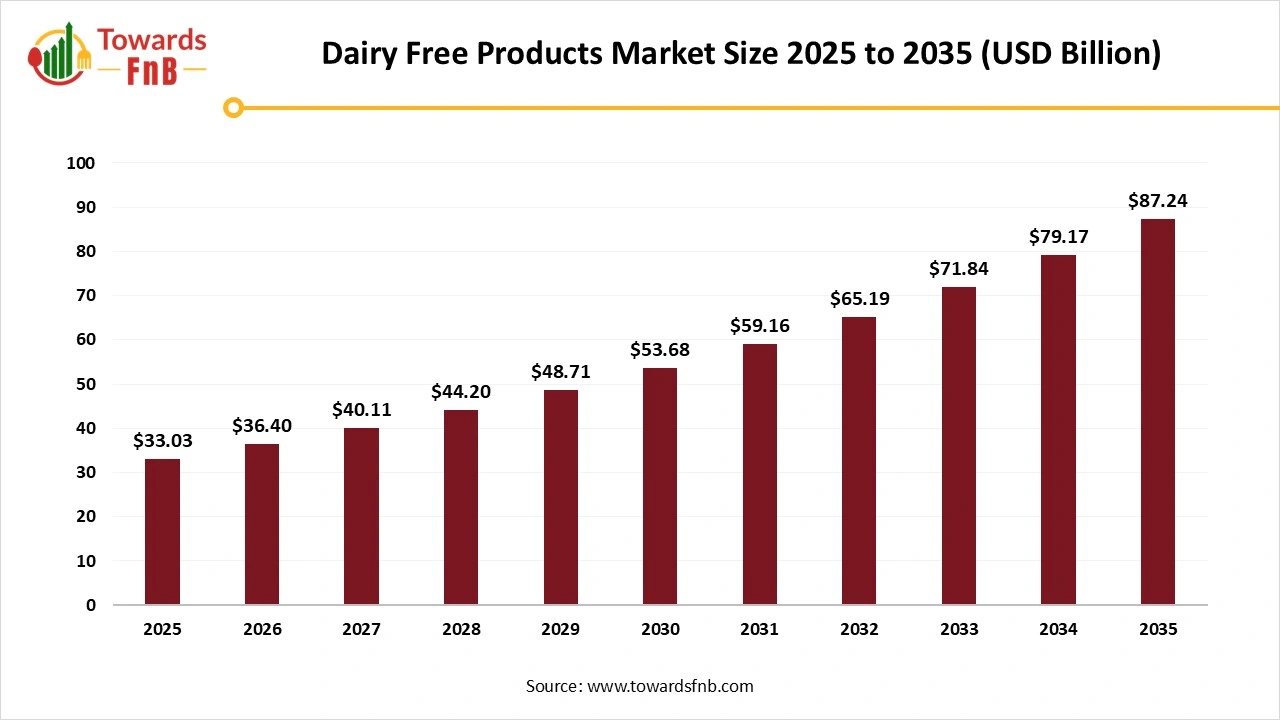
The global dairy free products market size was valued at USD 33.03 billion in 2025 and is expected to grow steadily from USD 36.40 billion in 2026 to reach nearly USD 87.24 billion by 2035, with a CAGR of 10.2% during the forecast period from 2026 to 2035. With an escalating number of individuals aiming to cut down or remove dairy from their meals, and the rise in the veganism accelerate the growth of the market.
| Study Coverage | Details |
| Growth Rate from 2026 to 2035 | CAGR of 10.2% |
| Market Size in 2026 | USD 36.40 Billion |
| Market Size in 2027 | USD 40.11 Billion |
| Market Size by 2035 | USD 87.24 Billion |
| Largest Market | Asia Pacific |
| Base Year | 2025 |
| Forecast Period | 2026 to 2035 |
| Regions Covered | North America, Europe, Asia-Pacific, Latin America, and Middle East & Africa |
Dairy free products market is expanding and experiencing significant demand because of shifts in consumer eating habits and dietary trends. The increasing incidence of milk allergies and lactose intolerance is anticipated to foster the demand for dairy free products soon. The prevalence of cow's milk allergy is about 2 to 4.5% in infants and below 0.5% in adults. Many children surpass cow's milk allergy during early childhood, especially that related to baked milk items.
Lactose intolerance is another reason for the spur in popularity of dairy free products. A large segment of the people experiences lactose intolerance, which means they struggle to digest lactose, the sugar present in dairy items. For these people, dairy free products offer a remedy, enabling them to relish milk-like items without any sufferings.
The growing need for dairy free products is a complex situation influenced by health awareness, environmental issues, ethical factors and the availability of diverse options. As this trend keeps gaining traction, the dairy alternatives market is expected to advance even more, with heightened investment in research and development, expanded plant-based product options and a wider consumer audience. For health, ethical, or environmental motivations, dairy free products are reshaping our perceptions and consumption of dairy items, showcasing change in the food sector and food habits.
Fortification and enrichment mainly done for prevention of diseases caused by nutrient deficiencies. Although calcium fortification of soy beverages has become quite common, the addition of other minerals and vitamins is still uncommon. The inclusion of minerals in plant-based yogurts is also rare, even though fortification provides an extra chance to encourage wellness advantages. Minerals like calcium, magnesium, potassium, and zinc when added to dairy free product help to improve bone health and immunity. Enrichment with mineral salts can enhance the mineral levels and also the flavor of dairy free products.
Development of dairy free products requires significant upfront investments, increased energy consumption, and continual maintenance costs, leading to higher production expenses which elevate the cost of the product and limits the expansion of dairy free products market. The requirement for extended processing periods and additional infrastructure hampers efficiency and elevates quality control demands, affecting expenses for manufacturers.
Moreover, handling lactose-free dairy encounters challenges such as controlling temperature and time impacts on enzymes, necessitating extended hydrolyzation durations and increased storage, which demands additional investment in infrastructure and specialized machinery, influencing production efficiency.
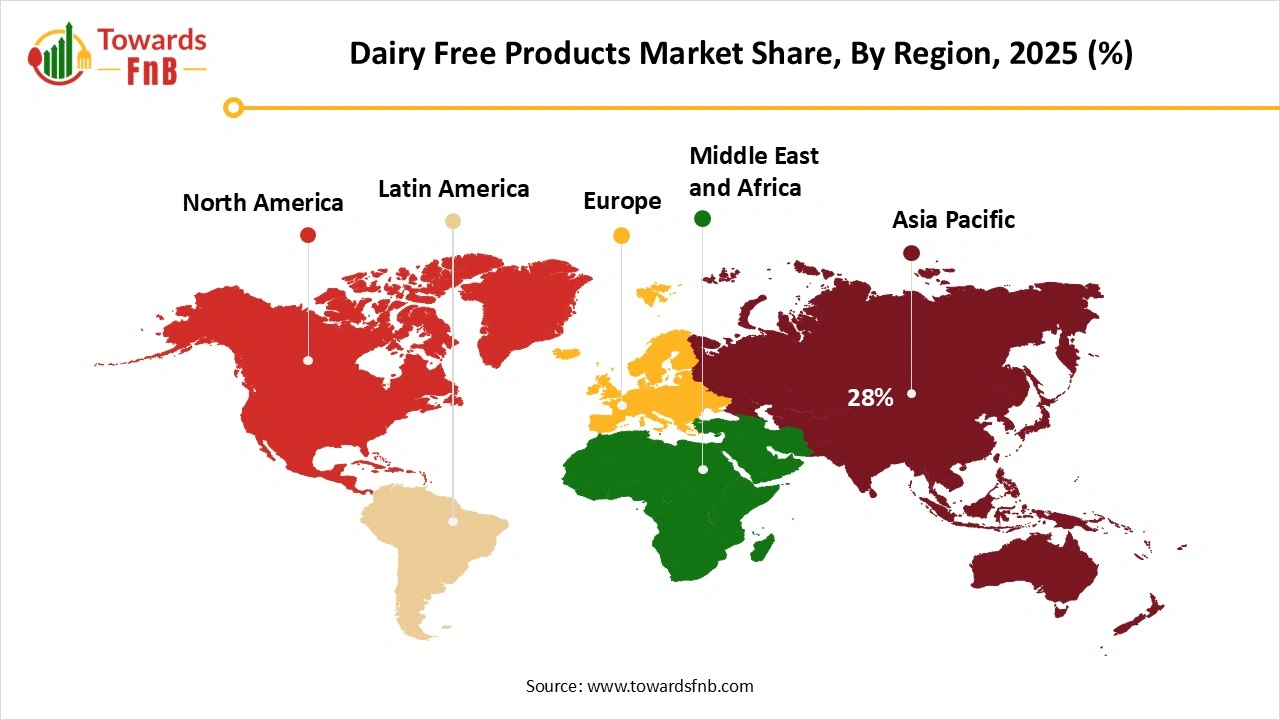
Asia Pacific Dominated the Dairy Free Products Market in 2025
The use of dairy free product is increasing throughout the region due to a noteworthy increase in the vegan demographic, along with a larger population of those who are lactose intolerant. Lactose intolerance is prevalent in Asian nations, especially in East Asia, where approximately 70-100% of the people are lactose intolerant. These factors are driving the market of dairy free products.
Asia Pacific Dairy Free Products Market Size 2025 to 2035
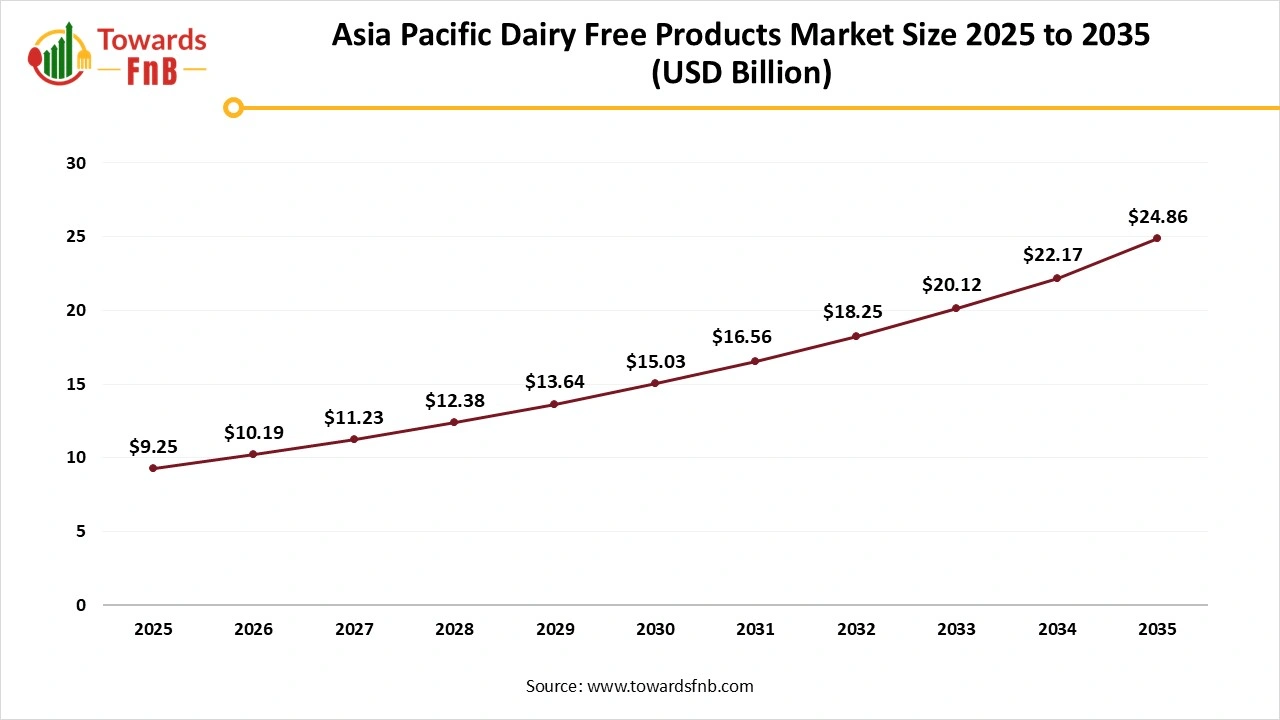
The Asia Pacific dairy free products market size was calculated at USD 9.25 billion in 2025 and is expected to grow steadily from USD 10.19 billion in 2026 to reach nearly USD 24.86 billion by 2035, with a CAGR of 10.39% during the forecast period from 2026 to 2035.
The dairy free sector, on the other hand, is a rapidly growing industry, with numerous brands competing for market share by emphasizing flavor and nutrition. As per the Chinese company database Qichacha, more than 5,000 businesses related with plant-based milk are currently registered in China. The Chinese government has been emphasizing the importance of more nutritious food items as a key component of its Healthy China initiative. Additionally, nutritional guidelines in China significantly contribute to shaping consumer eating behaviours. Major portion of Chinese population is lactose intolerant, further driving the market of dairy free products.
North America Expects the Significant Growth in the Market During the Forecast Period
The recent rise in the demand for dairy free products can be linked to the popularity of plant-based milk substitutes. Vegan milk is at the forefront and is extensively marketed as a healthy, eco-friendly, and animal welfare-conscious alternative. The increasing incidence of lactose intolerances and milk allergies is expected to further drive demand. Many food and drink items are consequently utilizing these products to attract the increasing number of consumers who are choosing dairy free products.
The U.S. is a major player in the regional market, driven by the increased vegan population in the U.S. The U.S. consumers are becoming aware of health and sustainability, driving focus on plant-based diets. The expanding adoption of plant-based alternative products to conventional animal products in various retail markets and strong consumer adoption are driving the market. growing focus on lactose-free products, driven by rising lactose intolerance, is further adding to the market growth. Almond and oak milk segments are leading the U.S. market. additionally, expanding e-commerce platforms and accessibility to new alternatives are fueling this growth.
Europe Dairy-Free Products Market Trends
The dairy-free products market in Europe is expected to grow due to the rising demand for healthy food and beverages in the region. Dairy free-products are often consumed as substitutes for dairy products. Manufacturers are focusing on new product development, including soya juice mixes and fresh soya drinks. It is anticipated that the increasing use of dairy substitutes in food applications such as cheese, desserts, and snacks will positively impact market growth.
In Germany, the dairy-free products sector is experiencing rapid growth due to increasing consumer awareness of lactose intolerance and the rise of vegan lifestyles. Major global players like Oatly, Alpro, and various local startups are implementing innovative industry-specific solutions, including functional formulations with added probiotics and fortified nutrients, to capture market share and differentiate their products.
Middle East and Africa Dairy-Free Products Market Trends
In the Middle East, the consumption of various dairy-free products has risen steadily over the past few years, driven by a growing vegan population. The increasing emphasis on plant-based nutrition has contributed to the demand for dairy-free products in the region. Significant consumption of dairy alternatives is observed in Saudi Arabia, the United Arab Emirates, and Iran. Additionally, consumers who are allergic to milk are increasingly interested in plant-based milk products.
The United Arab Emirates represents one of the most dynamic markets for dairy-free products in the Middle East, with robust growth supported by its cosmopolitan population and strong health and wellness trends. The UAE's retail landscape features numerous specialty stores and premium outlets catering to health-conscious consumers. The country's commitment to sustainability and health initiatives has created a favorable environment for plant-based products, and innovation is particularly strong. Manufacturers are introducing new flavors and formulations to meet sophisticated consumer preferences.
Latin America Dairy-Free Products Market Trends
The Latin American dairy-free products market has seen significant growth over the past decade, fueled by changing consumer preferences, increased health consciousness, rising cases of lactose intolerance, and greater awareness of environmental sustainability. Countries like Brazil, Argentina, Chile, and Colombia have emerged as key players in the regional market, showing growing demand for plant-based milk, yogurts, cheeses, and other dairy substitutes.
In Brazil, dairy-free products are gaining popularity as alternatives to traditional food products. The consumption of plant milk is on the rise among Brazilian consumers. Industry players report that the market for milk alternatives has been growing at a strong double-digit rate. Supermarkets of varying sizes are adapting their shelves to allocate more space for these products. The demand for plant-based products has reached a size that cannot be overlooked by any food companies.
Major entities in the sector, such as Burger King, McDonald’s, Subway, JBS, Marfrig, Danone, and Nestlé, have embraced the veggie trend by developing products and making investments. Additionally, new Brazilian start-ups are emerging, investing in the development of plant-based products across various categories, including dairy, meat, egg replacements, protein supplements, and more.
Dairy Free Products Market Share, By Type, 2025 (%)
| Segments | Shares (%) |
| Milk | 38% |
| Ice Creams | 14% |
| Yogurt | 18% |
| Probiotic Drinks | 8% |
| Cheese | 22% |
| Cheddar | 8% |
| Cottage | 4% |
| Hard | 5% |
| Soft | 5% |
The Milk Segment Held Dominant Position in Dairy Free Products Market in 2025
Producers are developing a diverse assortment of lactose-free milk products, including flavored milk, organic versions, and enriched choices with additional vitamins and minerals. This variety addresses varying consumer preferences and aids in broadening the market beyond fundamental products. Further easy availability of lactose free milk at supermarkets and hypermarkets rising the demand.
Whereas ice cream segment is expecting a significant growth in the market during the forecast period. The growth of health-oriented consumer groups that favour lower-calorie and lower-fat choices is increasing demand. Moreover, the increase in funding from leading food producers and new companies to produce and market dairy-free ice cream drives market expansion.
Dairy Free Products Market Share, By Form, 2025 (%)
| Segments | Shares (%) |
| Lactose-Free | 52% |
| No Added Sugar / Reduced Sugar Claims | 28% |
| Reduced Lactose Products | 20% |
The Lactose Free Segment Dominated the Dairy Free Products Market in 2025
The quality and variety of products in the lactose-free dairy sector have been rising considerably, providing consumers more enticing options to choose from. Lactose-free dairy offers the crucial nutrients found in regular dairy items, such as calcium and vitamins, for individuals who cannot digest lactose.
This product category now holds a broad and increasing health attraction for consumers. Furthermore, no sugar segment expects a significant growth in the market during the forecast period. Growth of this segment is majorly attributed to the rising prevalence of diseases like diabetes and obesity. Craze of no added sugar or reduced sugar is driving the demand for dairy free products without sugar.
Dairy Free Products Market Share, By Category, 2025 (%)
| Segments | Shares (%) |
| Organic | 58% |
| Inorganic | 42% |
The Organic Dairy Free Products Segment Dominated the Dairy Free Products Market in 2025
The increasing consumer preference for natural and organic dairy items, fuelled by health awareness and environmental sustainability, is driving market growth. Agriculturalists are implementing rotational grazing, organic feed, and sustainable farming techniques to yield premium organic products, thus promoting market expansion. Whereas inorganic dairy free products segment expects a significant growth in the market during the forecast period. Growth is projected to the factors like increased lactose intolerance and rising demand for vegan food.
By Type
By Form
By Category
By Region





Principal Consultant
Vidyesh Swar, Senior Research Analyst at Towards Food & Beverages, specializes in market research, focusing on supply-demand evaluation, pricing analysis, alternative proteins, plant-based foods, and sustainable food technologies within the industry.
Learn more about Vidyesh Swar
Reviewed By
Aditi Shivarkar, with 14+ years in Food and Beverages market research, specializes in food, beverage, and eco-friendly packaging. She ensures accurate, actionable insights, driving Towards FnB's excellence in industry trends and sustainability.
Learn more about Aditi ShivarkarApril 2026
April 2026
March 2026
March 2026

Dairy Free Products Market

 +1 804-441-9344
 Download Sample
 Schedule a Meeting