April 2026



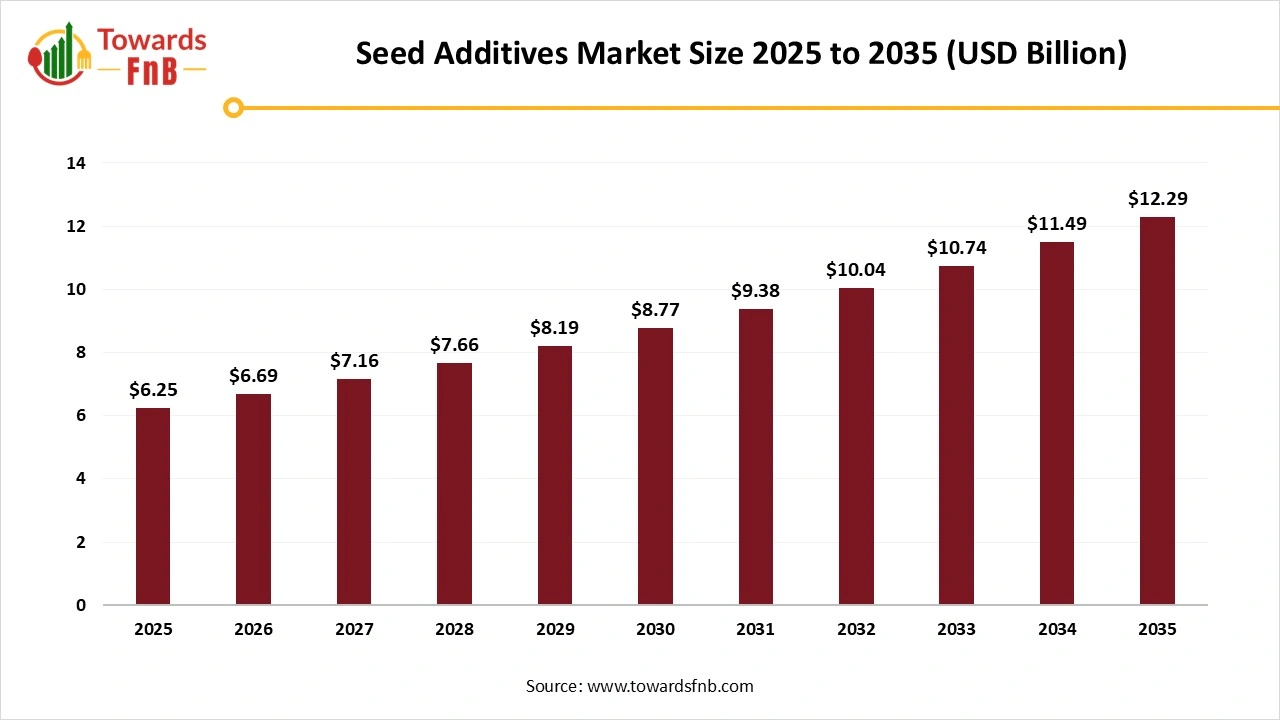
The global seed additives market size reached at USD 6.25 billion in 2025 and is anticipated to increase from USD 6.69 billion in 2026 to an estimated USD 12.29 billion by 2035, witnessing a CAGR of 7% during the forecast period from 2026 to 2035. Growing demand for yield-enhancing, stress-resilient seeds and sustainable agriculture is significantly driving the market.
| Study Coverage | Details |
| Growth Rate from 2026 to 2035 | CAGR of 7% |
| Market Size in 2026 | USD 6.69 Billion |
| Market Size in 2027 | USD 7.16 Billion |
| Market Size by 2035 | USD 12.29 Billion |
| Largest Market | North America |
| Base Year | 2025 |
| Forecast Period | 2026 to 2035 |
| Regions Covered | North America, Europe, Asia-Pacific, Latin America, and Middle East & Africa |
The seed additives market encompasses unique materials used on seeds to improve germination, safeguard against pests or diseases, and promote early plant development, leading to increased demand for better yields and sustainable agriculture. Furthermore, the market is expanding due to technological advancements and environmentally friendly solutions. This market plays a crucial role in the larger seed treatment industry, exhibiting trends such as research and development, AI integration, and consolidation, while encountering challenges like expenses and regulations, yet providing opportunities for innovative, sustainable formulations.
Recent innovations in seed technology are revolutionizing agricultural practices by promoting higher yields and achieving sustainability. Advanced seed coating techniques enable the controlled release of nutrients, improve seed handling, and bolster resilience against environmental stressors. Various seed additives, including polymers, bioactive compounds, and beneficial microorganisms, are crucial in protecting seeds and fostering healthy seedling establishment. The incorporation of nanomaterials enhances the efficiency of nutrient delivery, while bio-based additives present environmentally friendly alternatives to synthetic chemicals. Furthermore, the integration of precision farming technologies with seed treatment processes is progressing rapidly. Data-driven technologies empower farmers to apply optimal seed additives tailored to specific crops and agroclimatic conditions.
Raw Material Procurement
Processing
Logistics and Distribution
Why did the North America Dominate the Seed Additives Market in 2025?
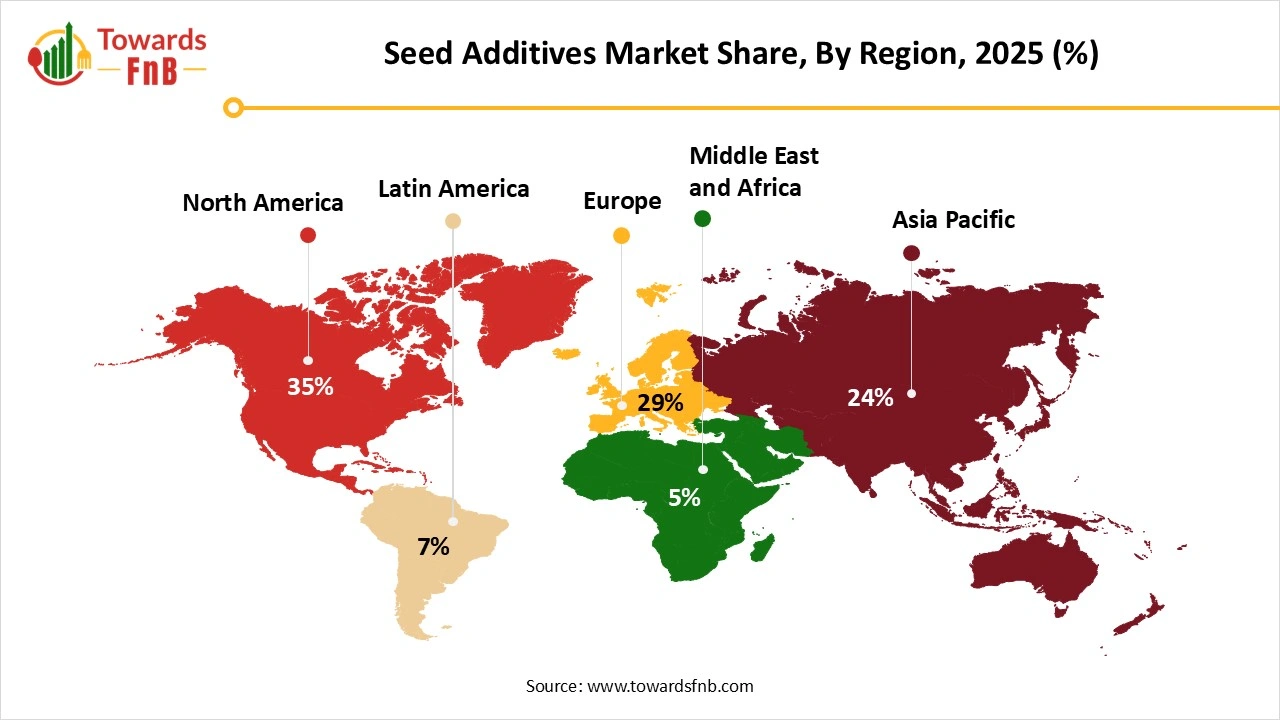
North America dominated the market in 2025, driven by an escalating demand for higher crop yields, advancements in agricultural technologies, and an increasing focus on sustainable farming practices. As farmers and agribusinesses seek more efficient and environmentally friendly solutions, seed additives have emerged as essential components of contemporary agriculture. The market's growth trajectory is reinforced by supportive regulatory frameworks, technological innovations, and an emphasis on integrated pest management. The United States leads the regional market, supported by expanding adoption in Canada and Mexico, positioning the industry for sustained expansion. The integration of bio-based and eco-friendly additives further highlights the sector's commitment to sustainability.
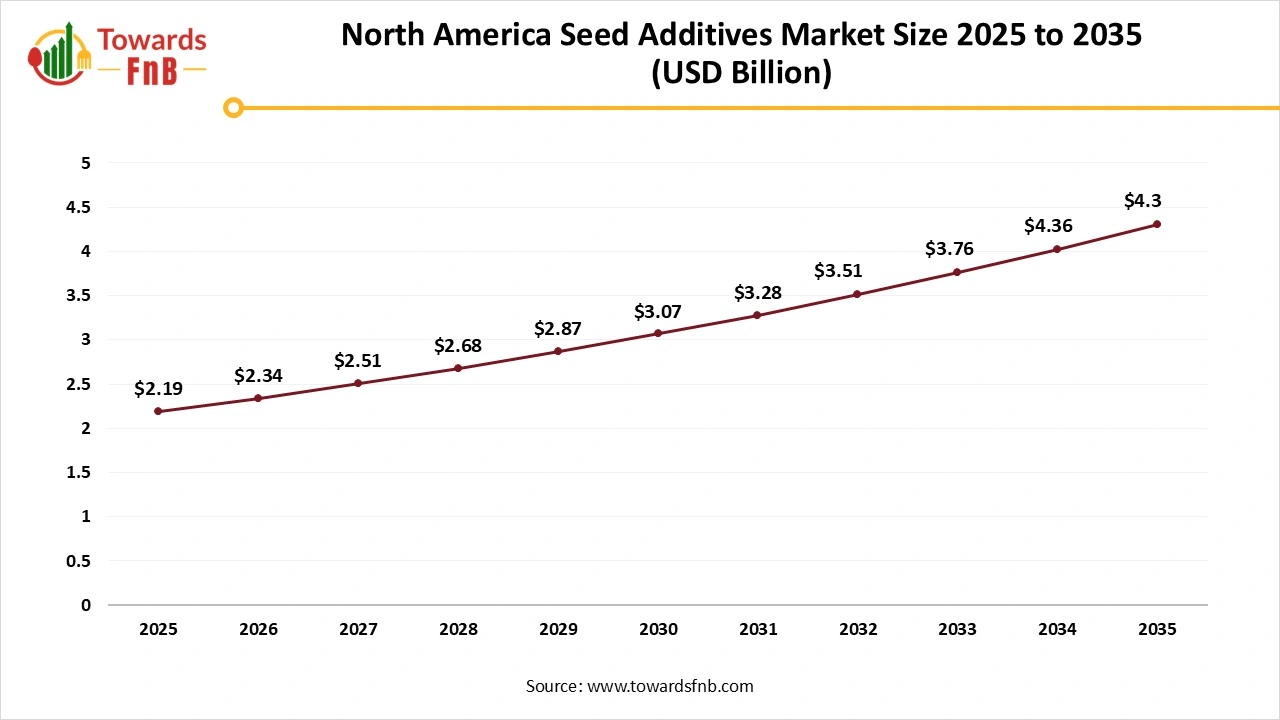
The North America seed additives market size estimated at USD 2.29 billion in 2025 and is predicted to increase from USD 2.34 billion in 2026 to nearly reaching USD 4.30 billion by 2035, growing at a CAGR of 7% during the forecast period from 2026 to 2035.
United States Seed Additives Market Trends
The seed additives market in the United States has been witnessing considerable growth, driven by factors such as the increasing demand for food security, the rising adoption of seed treatment products, and heightened awareness among farmers regarding the benefits of seed treatments. The need for higher crop yields, spurred by a rapid increase in crop consumption, has further intensified demand within the market in the United States.
How Big is the U.S. Seed Additives Market?
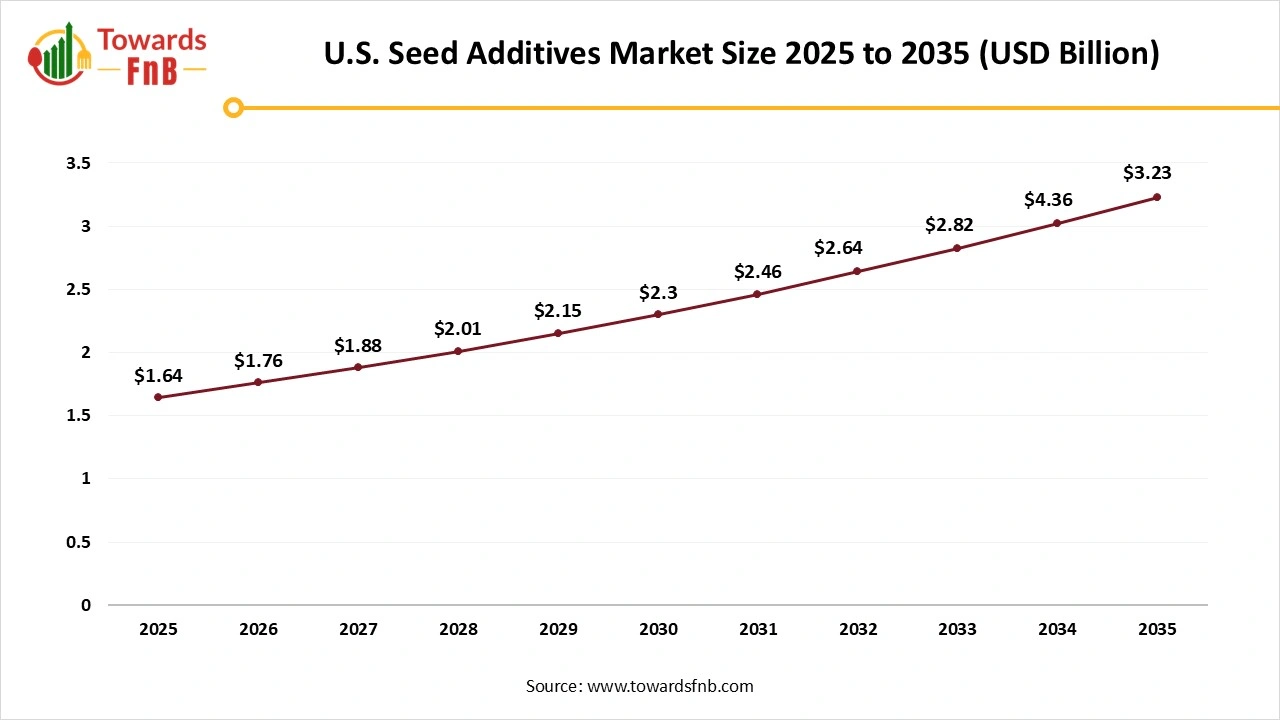
The U.S. seed additives market size was calculated at USD 1.64 billion in 2025 with projections indicating a rise from USD 1.76 billion in 2026 to approximately USD 3.23 billion by 2035, expanding at a CAGR of 7% throughout the forecast period from 2026 to 2035.
Asia Pacific: A Fastest Growing Region
The acceleration in the Asia Pacific is rooted in governmental regulations that promote extensive seed coverage, increasing resistance in significant pest populations, and the continuous use of combination products that integrate insecticidal and fungicidal mechanisms. The area is anticipated to make a significant contribution to the worldwide organic farming industry. The farming sector continues to be critical for people's livelihoods and the stability of the world economy. The demand and use of crops for food, feed, and fuel are expanding, leading to a growing necessity for enhanced crop yields. Additionally, the rise of biodegradable seed coatings is anticipated to provide substantial growth potential for participants in this sector.
India Seed Additives Market Analysis
The market is witnessing strong expansion as Indian farmers increasingly embrace advanced seed treatment technologies. As awareness grows regarding the benefits of seed additives for enhancing crop yield, seed germination, and safeguarding against pests and diseases, there has been a noticeable transition towards integrating these solutions into agricultural practices. Supportive government policies and initiatives serve as a crucial driving force for the growth of the market. The Indian government’s dedication to sustainable farming and enhanced crop yields has led to strategic measures that encourage the adoption of seed additives.
Europe Seed Additives Market Expansion
The expansion of the European seed additives market is mainly fueled by the rising need for high-yield and disease-resistant crops, which require efficient seed treatment solutions. The growing agricultural sector in Europe, combined with an emphasis on crop yield and quality, maintains market dynamism. Additionally, advancements in additive formulations that improve seed performance and compatibility with different seed varieties persist in drawing investments and adoption throughout the region. The swift development of precision agriculture technology within European farming is driving industry growth and creating a corresponding demand for seed improvement solutions that ensure reliable performance, enhance resource efficiency, and promote sustainable agricultural intensification.
Germany Seed Additives Market Trends
The market is changing with a greater emphasis on innovation, sustainable farming, and advanced seed technologies. Various seed varieties and characteristics are being created to address the needs of different crops and agricultural conditions in multiple areas. Enhancements in availability and technological progress are fostering adoption among cultivators. The market's expansion is backed by strategic partnerships and research funding focused on improving seed quality and agricultural yield. These elements together impact the competitive environment and upcoming prospects in the German seed additives market.
The Middle East and Africa Seed Additives Market Growth
The expansion of the seed additives market in the Middle East and Africa is mainly fueled by the rising need for agricultural productivity, greater use of modern farming technologies, and the necessity to safeguard crops against pests and diseases. Government programs supporting sustainable farming and food safety also have an important impact. Moreover, the increasing recognition by farmers of the advantages of seed additives, including enhanced germination rates and higher crop yields, drives market growth. The growing agricultural sector in the region, along with climate issues such as droughts and pests, promotes the use of seed additives.
UAE Seed Additives Market Trends
The UAE seed additives market is crucial for bolstering the nation's agriculture sector by supplying high-quality seeds suited to local environments. In the UAE, the seed additives industry is growing swiftly, fueled by the rising need for premium seeds in the agricultural sector. With farmers focusing on maximizing crop yield and quality, the demand for effective seed processing technologies has increased.
South America Seed Additives Market Potential
South America continues to be a significant player in the global agricultural industry, and its market has been growing steadily over the years. Growing soybean cultivation, stringent sustainability regulations, and steady technology upgrades are driving demand for premium seed additives across Brazil, Argentina, and Chile. Rising adoption of drought-tolerant biotech seeds, wider IPM use, and the rise of crop protectants all reinforce the upward path for the South American seed additives market.
Brazil Seed Additives Market Study
The intensification of agricultural practices acts as a fundamental catalyst for the growth of the market, driven by an increasing emphasis on optimizing crop yield and enhancing farm efficiency. Brazil's status as a global agricultural leader creates significant demand for advanced seed protection solutions, particularly in key crops such as soybean, corn, and cotton. Ongoing research developments have resulted in improved active ingredients, enhanced delivery systems, and innovative biological treatments that aim to maximize seed protection and promote plant health. The future of seed additives in Brazil appears promising, with advancing technology contributing to greater effectiveness and environmental sustainability.
Seed Additives Market Share, By Type, 2025 (%)
| Segments | Shares (%) |
| Polymers | 40% |
| Pellets | 12.5% |
| Colorants | 6.2% |
| Minerals/Pumice | 6.3% |
| Active Ingredients | 25% |
| Other Additives | 10% |
How did the Polymers Segment Dominate the Seed Additives Market in 2025?
The polymers segment held the largest share of the seed additives market in 2025. Polymers constitute specialized formulations applied to seeds to enhance their handling, uniformity, protection, and planting performance. These polymers serve as carriers for active ingredients, including fungicides, nutrients, and growth promoters, while simultaneously improving the physical properties of the seeds. Furthermore, the increasing adoption of polymer-based biodegradable and water-soluble formulations aligns with sustainability trends, further driving market demand.
The Active Ingredients Segment is Observed to Grow at the Fastest Rate During the Forecast Period.
Active ingredients are essential for enhancing crop yield and safeguarding plants against pests and diseases, thereby increasing productivity. Innovations, including bio-based active ingredients and advanced formulations, are being developed to address the rising demand for environmentally friendly solutions. The introduction of new formulations and active ingredients that exhibit higher effectiveness and environmental compatibility is anticipated to stimulate market growth.
Seed Additives Market Share, By Crop Type, 2025 (%)
| Segments | Shares (%) |
| Oilseed & Pulses | 20% |
| Cereals & Grains | 50% |
| Vegetables | 15% |
| Flowers & Ornamentals | 10% |
| Others | 5% |
Which Crop Type Segment Dominated the Seed Additives Market in 2025?
The cereals and grains segment dominated the market in 2025. The cereals and grains segment focuses on agrochemical additives specifically designed to enhance yield, protect against pests and diseases, and optimize nutrient absorption, reflecting the critical nature of these crops within the global food supply. These crops are foundational to food security in both developed and developing nations, resulting in sustained demand for high-quality treated seeds. Additionally, large-scale commercial farming operations in major agricultural economies, such as the United States, China, Brazil, and India, have accelerated the adoption of coated cereal seeds, thereby ensuring higher yields and improved operational efficiency.
The Vegetables Segment is Seen to Grow at a Notable Rate During the Predicted Timeframe.
The increasing utilization of biopesticides for treating vegetable seeds, coupled with consumers growing preference for healthy lifestyles and chemical-free food products, is projected to drive market growth throughout the forecast period. As the global population continues to grow rapidly, this surge serves as an impetus for advancements in vegetable seed technology and market expansion. With the rising demand for vegetables stemming from population growth and dietary shifts toward plant-based food, the hybrid seed segment is expected to maintain a robust market presence.
Seed Additives Market Share, By Distribution Channel, 2025 (%)
| Segments | Shares (%) |
| B2B | 50% |
| B2C | 15% |
| Store-based Retailing | 7% |
| Hypermarkets/Supermarkets | 12% |
| Convenience Stores | 3% |
| Discount Stores | 4% |
| Independent Small Groceries | 6% |
| Online Retailing | 8% |
Which Distribution Channel Dominated the Seed Additives Market In 2025?
The B2B segment led the market in 2025. The B2B segment is characterized by large agricultural input companies, such as seed producers and distributors, who are the primary purchasers seeking bulk, specialized coatings that enhance seed performance (including germination and protection). This leads to long-term contracts, customized solutions, and efficient supply chains tailored to high-volume requirements, rather than direct consumer sales. B2B models facilitate effective downstream packaging, branding, and distribution for seed companies, solidifying their role as the foundation of the seed enhancement industry.
The Online Retailing Segment is Expected to Grow at the Fastest Rate in the Market During the Forecast Period.
The rise of digitization and convenience-driven online shopping platforms specializing in organic seeds has emerged, providing consumers with accessible options and a broad range of seeds without geographical limitations. The introduction of bio-based treatments and smart packaging, such as QR codes for quality information, enhances online offerings and traceability, thereby appealing to environmentally conscious consumers.
Ashland
UPL Corp
By Type
By Crop Type
By Distribution Channel
By Region





Principal Consultant
Vidyesh Swar, Senior Research Analyst at Towards Food & Beverages, specializes in market research, focusing on supply-demand evaluation, pricing analysis, alternative proteins, plant-based foods, and sustainable food technologies within the industry.
Learn more about Vidyesh Swar
Reviewed By
Aditi Shivarkar, with 14+ years in Food and Beverages market research, specializes in food, beverage, and eco-friendly packaging. She ensures accurate, actionable insights, driving Towards FnB's excellence in industry trends and sustainability.
Learn more about Aditi ShivarkarApril 2026
April 2026
April 2026
April 2026

Seed Additives Market


 +1 804-441-9344
 Download Sample
 Schedule a Meeting