January 2026



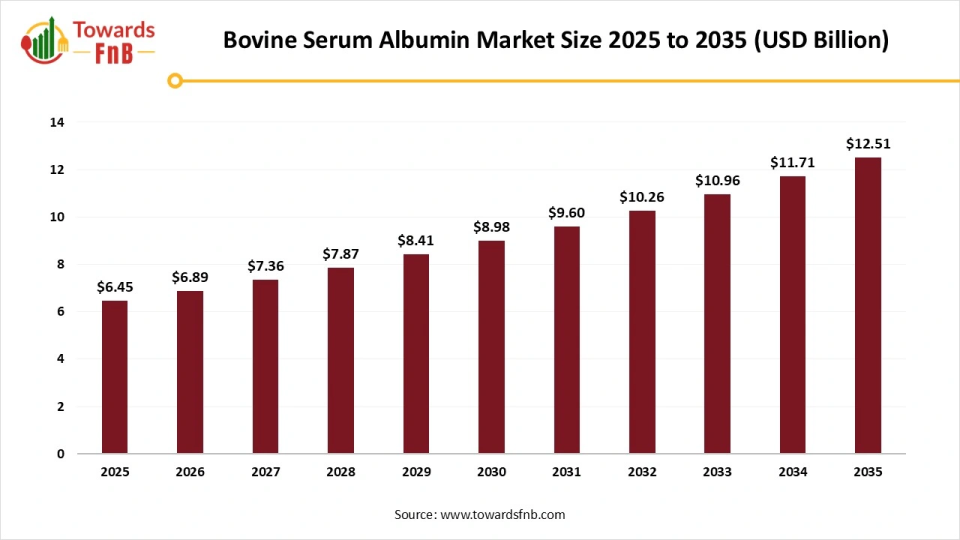
The global bovine serum albumin market size reached at USD 6.45 billion in 2025 and is anticipated to increase from USD 6.89 billion in 2026 to an estimated USD 12.51 billion by 2035, witnessing a CAGR of 6.85% during the forecast period from 2026 to 2035. The rapid growth in gene therapy and the expansion of tissue engineering drive market growth.
| Study Coverage | Details |
| Growth Rate from 2026 to 2035 | CAGR of 6.85% |
| Market Size in 2026 | USD 6.89 Billion |
| Market Size in 2027 | USD 7.36 Billion |
| Market Size by 2035 | USD 12.51 Billion |
| Largest Market | North America |
| Base Year | 2025 |
| Forecast Period | 2026 to 2035 |
| Regions Covered | North America, Europe, Asia-Pacific, Latin America, and Middle East & Africa |
Bovine serum albumin (BSA) is a type of protein obtained from cow blood plasma. The BSA is composed of 583 amino acids and has a hydrophobic cleft. It is soluble in water and is non-antigenic. The types of BSA are fatty acid-free BSA, low-endotoxin BSA, heat shock-treated BSA, fraction V BSA, protease-free BSA, and low IgG BSA. It works as a stabilizer, protein standard, antioxidant, blocking agent, osmotic pressure regulator, and transport protein. It is useful in applications like biomaterial coatings, drug delivery systems, immunoassay blockers, and cell culture supplements.
The bovine serum albumin industry growth is driven by growing R&D in the pharmaceutical industry, expansion of gene therapy, increased protein production, increasing use of diagnostic kits, expansion of protein supplements, popularity of recombinant BSA, rising protein standardization, growth in IVD, and growing protein research.
The bovine serum albumin industry is witnessing key technological changes driven by demand for sustainability, process optimization, and advanced purification. Technological changes, such as advanced purification, Internet of Things, machine learning, and edge processing, enable better quality control and higher purity. The integration of artificial intelligence (AI) is the key shift in the market that accelerates the synthesis of protein.
AI helps in managing the fermentation process of complex proteins and enhances the serum traceability. AI supports dynamic simulations and develops custom BSA. It helps maintain high safety in the production process and enhances the stability of the protein. It also analyzes issues in the production process and accelerates the research process. AI supports the purification process and understands the behaviour of proteins. Overall, AI helps maintain higher quality standards of bovine serum albumin.
Raw Material Procurement
Processing and Preservation
Quality Testing and Certifications
Why North America Dominated the Bovine Serum Albumin Market?
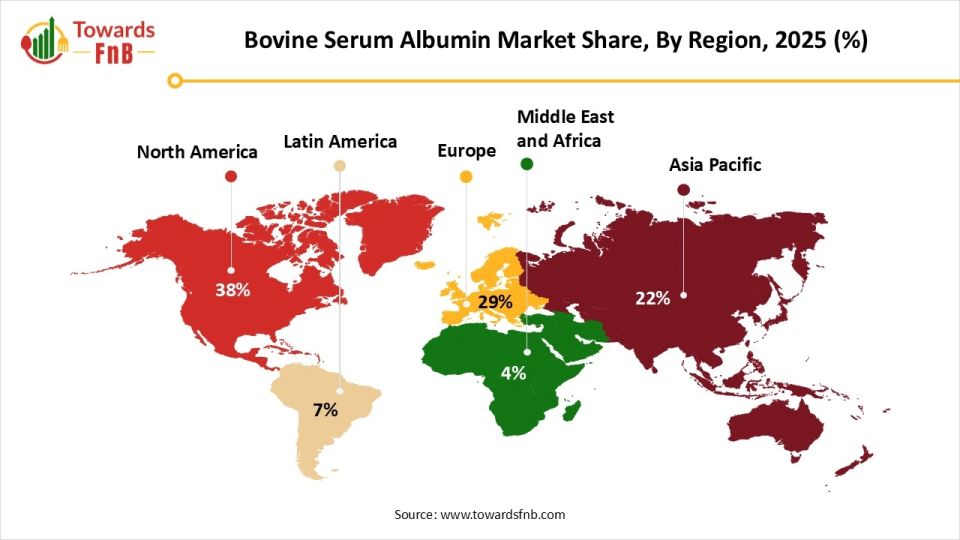
North America held a major market share of 38% in 2025 due to the presence of well-established biopharmaceutical companies. The increased spending on R&D of pharmaceuticals and the strong life science industry increase the adoption of BSA. The increased use of therapeutic protein treatment and the growing number of biotechnology research centers increase demand for BSA. The presence of advanced research infrastructure drives the market growth.
North America Bovine Serum Albumin Market Size 2026 to 2035
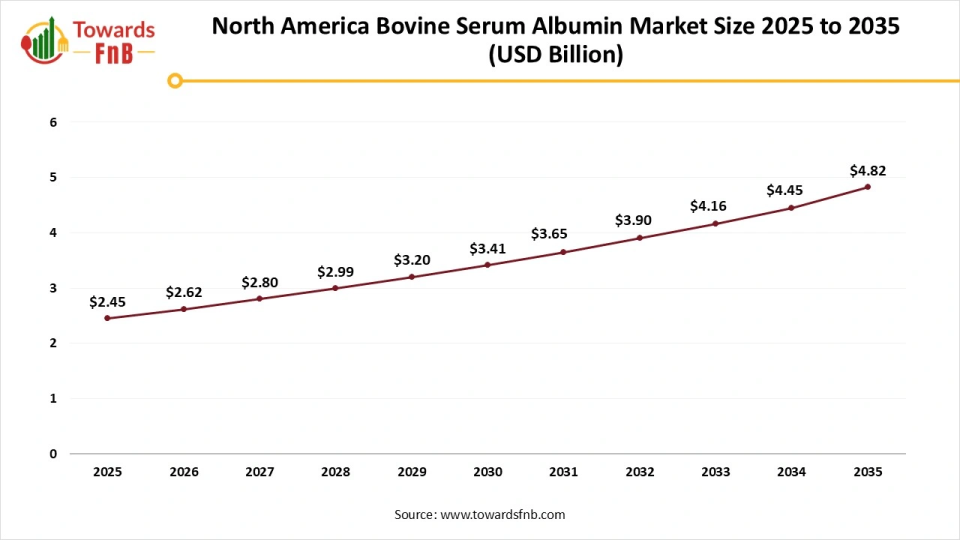
The North America bovine serum albumin market size estimated at USD 2.45 billion in 2025 and is predicted to increase from USD 2.62 billion in 2026 to nearly reaching USD 4.82 billion by 2035, growing at a CAGR of 7% during the forecast period from 2026 to 2035.
From Cow to Clinic: United States Excellence in Bovine Serum Albumin
The United States is a robust contributor to the market. The well-established biotechnology firms and the extensive clinical trials increase demand for BSA. The surging use of albumin-related treatments and the huge pharmaceutical concentration increase the adoption of BSA. The expansion of advanced diagnostics and the extensive plasma collection support the overall market growth.
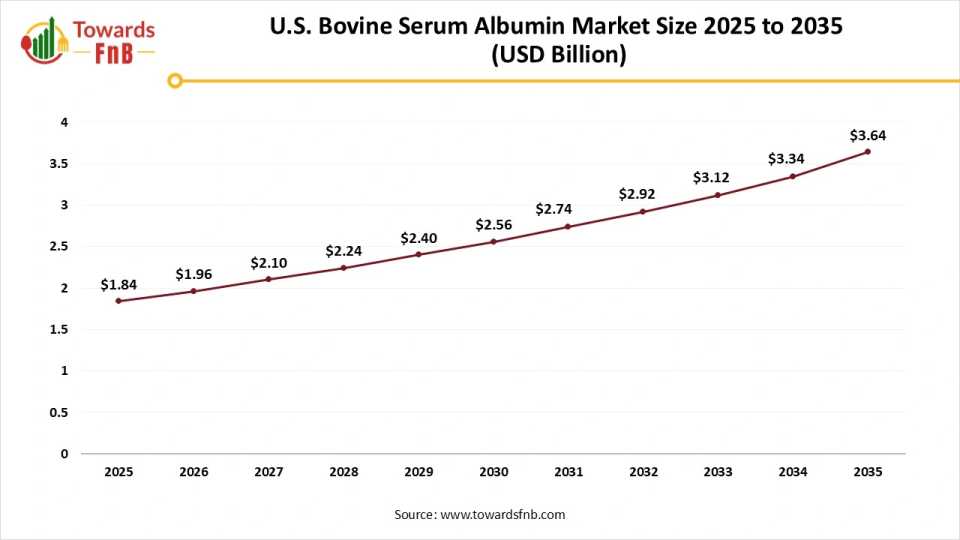
U.S. Bovine Serum Albumin Market Size 2026 to 2035
The U.S. bovine serum albumin market size was calculated at USD 1.84 billion in 2025 with projections indicating a rise from USD 1.96 billion in 2026 to approximately USD 3.64 billion by 2035, expanding at a CAGR of 7.06% throughout the forecast period from 2026 to 2035.
How is Asia-Pacific Growing in the Bovine Serum Albumin Market?
Asia-Pacific is expected to experience the fastest growth with a CAGR of 8.4% during the predicted timeframe, due to the growing pharmaceutical manufacturing. The expansion in the capacity of biopharmaceutical production and the huge investment in healthcare facilities increase demand for BSA. The surge in vaccines and the rising development of liver disease treatment increase the adoption of BSA. The increased development of reagent-grade BSA drives the overall market growth.
From Farms to Industry: China’s Role in Bovine Serum Albumin
China is the leading contributor to the market. The increased manufacturing of monoclonal antibodies and growing research funding increase the demand for BSA. The strong focus on better diagnostics and the high spending on medical diagnostic laboratories increase the adoption of BSA. Robust growth in serum processing supports the overall market growth.
The Fraction V BSA Segment Dominated the Market with 42% of Market Share in 2025
The fraction V BSA segment dominated the bovine serum albumin market with a 42% share in 2025 due to the increased use in standard laboratory procedures. The growth in sensitive diagnostics and the expansion of the food industry increase demand for fraction V BSA. The high demand for the diagnostic kit and the need for enzyme stabilization increase the use of fraction V BSA. The rise in academic research drives the segment’s growth.
The low endotoxin BSA segment held the second-largest market share of 20% in 2025 and is expected to grow at the fastest CAGR of 8.3% during the forecast period due to the burgeoning biopharmaceutical manufacturing. The expansion of stem cell research and advanced drug delivery increases the adoption of low-endotoxin BSA. Stricter cell culture and expanding vaccine formulations boost the segment’s growth.
The fatty acid-free BSA segment held the third-largest market share of 18% in 2025 due to its increasing use in applications of sensitive cell culture. The development of pure protein components and the development of tailored, customized formulations require fatty acid-free BSA. The innovative cell-based therapies and the growing precision research increase the adoption of fatty acid-free BSA, supporting the segment’s growth.
The globulin-free BSA segment held the fourth-largest market share of 12% in 2025 due to the robust growth in diagnostic research. The focus on the identification of accurate proteins and the growing immunological studies increases the adoption of globulin-free BSA. The growth in bioprocessing and the formulation of innovative regenerative medicine requires globulin-free BSA, fueling the overall segment’s growth.
The Life Sciences & Research Segment Led the Market with 38% of Market Share in 2025
The life sciences and research segment dominated the bovine serum albumin market with a 38% share in 2025 due to the growing protein stabilization in laboratories. The huge investment in research on drug delivery systems and increased institutional funding increases the adoption of BSA. The focus on mammalian cell growth and the surging omics research requires BSA, driving the segment’s growth.
The pharmaceutical and biopharmaceutical manufacturing segment held the second-largest market share of 26% in 2025 and is expected to grow at the highest CAGR of 8.2% during the forecast period due to the growing demand for stabilizers in pharmaceutical formulations. Spending on personalized medicine and the development of biosimilars increases the adoption of BSA. Innovative drug therapies and increased biologics regulatory approval support the segment’s growth.
The diagnostics segment held the third-largest market share of 22% in 2025 due to the increased adoption of immunoassays. The increasing disease burden and focus on enhancing the output of diagnostics increase the adoption of BSA. The increasing use of diagnostic tests in chronic disorders and the expanding diagnostic industry increase the adoption of BSA, supporting the overall segment’s growth.
The food and nutraceuticals segment held the fourth-largest market share of 8% in 2025 due to the increased development of protein supplements. The growing use of stabilizers in food processing and the focus on enhancing the nutritional value of food products increase the adoption of BSA. The huge demand for protein-rich foods and nutraceutical product stability boosts the segment’s growth.
The Powder Segment Held the Largest Market Share of 68% in 2025
The powder segment held the largest revenue share of 68% in the bovine serum albumin market in 2025 due to its ease of storage. The growing long-term research and the focus on lowering shipping costs increase the adoption of powder form. The rising diagnostic assays and the growth in bioprocessing increase the adoption of powder form. The increased use of powder form in manufacturing units and cell culture drives the segment’s growth.
The liquid segment held the second-largest market share of 32% in 2025 and is expected to grow at the fastest CAGR of 7.6% during the forecast period due to the increased use in clinical settings. Vaccine development and the growth of ELISA have increased the use of the liquid form. Enhanced stability, ready-to-use, easy measuring, consistent performance, and higher efficiency of liquid form support the segment’s growth.
The Pharmaceutical & Biopharmaceutical Companies Segment Contributed the Highest Market Share of 34% in 2025
The pharmaceutical and biopharmaceutical companies segment accounted for the highest revenue share of 34% in the bovine serum albumin market in 2025 due to the increased biologics production. The production of therapeutic proteins and the increased need for stabilizers in drugs increase the adoption of BSA. The huge growth in personalized medicine and the development of immunoassay diagnostic kits drive the segment’s growth.
The research institutes and laboratories segment held the second-largest market share of 28% in 2025 due to the continuous clinical research. The focus on enzyme assays and the innovations in proteomics increases demand for BSA. The increasing need for high-purity BSA in research institutes and increased funding in laboratory activities support the segment’s growth.
The diagnostic laboratories segment held the third-largest market share of 16% in 2025 due to the increased use of reagents in diagnostic testing. The expansion of immunological techniques and the surging number of diagnostic facilities globally increase demand for BSA. The rising biotech research boosts the overall segment’s growth.
The CROs segment held a market share of 10% in 2025 and is expected to grow at the fastest CAGR of 8.4% during the forecast period due to the growing demand for outsourcing research activities. The increased manufacturing of biological drugs and the rise in outsourcing drug production increase the adoption of BSA. Huge demand for high-quality reagents in clinical trials also contributes to the segment’s growth.
The Direct Sales Segment Dominated the Market with 46% of Market Share in 2025
The direct sales segment dominated the bovine serum albumin market with a 46% share in 2025 due to the growing direct procurement among large pharmaceutical firms. The rise in large-scale purchasing in research institutions and the focus on batch-to-batch consistency increase the adoption of direct sales. A strong supplier relationship and bulk procurement drive the segment’s growth.
The distributors and wholesalers segment held the second-largest market share of 34% in 2025 due to its easy accessibility to smaller institutions. The growing cell-based research and stringent transportation conditions increase the adoption of distributors & wholesalers. The focus on high-purity sourcing and efficient supply chains increases adoption of distributors & wholesalers, supporting the overall segment’s growth.
The online sales segment held the third-largest market share of 20% in 2025 and is expected to grow at the fastest CAGR of 8.6% during the forecast period due to the small-scale labs' focus on convenience. The focus on product traceability and the increased sourcing of specialized BSA increases the adoption of online sales. The 24/7 accessibility, immediate availability, and supply chain digitalization in online sales boost the segment’s growth.
Evergreen Connect
Clever Carnivore
By Product Type
By Application
By Form
By End-User
By Distribution Channel
By Region





Principal Consultant
Vidyesh Swar, Senior Research Analyst at Towards Food & Beverages, specializes in market research, focusing on supply-demand evaluation, pricing analysis, alternative proteins, plant-based foods, and sustainable food technologies within the industry.
Learn more about Vidyesh Swar
Reviewed By
Aditi Shivarkar, with 14+ years in Food and Beverages market research, specializes in food, beverage, and eco-friendly packaging. She ensures accurate, actionable insights, driving Towards FnB's excellence in industry trends and sustainability.
Learn more about Aditi ShivarkarJanuary 2026

Bovine Serum Albumin Market

 +1 804-441-9344
 Download Sample
 Schedule a Meeting